FW
Southeast Asia emerges a winner in the US-China trade dispute
"American tariffs on Chinese-made goods have led to a rapid shift of contract manufacturing to ASEAN (Association of Southeast Asian Nations) countries, such as Vietnam and Thailand. Even though, the increase in FDI in this bloc has been underway for a few years, the trade war is driving even more capital into the region. A red-hot economy, business-friendly policies and a Communist party led by free-traders are the incentives Vietnam is using to attract global investors amid the US-China trade war."
 American tariffs on Chinese-made goods have led to a rapid shift of contract manufacturing to ASEAN (Association of Southeast Asian Nations) countries, such as Vietnam and Thailand. Even though, the increase in FDI in this bloc has been underway for a few years, the trade war is driving even more capital into the region. A red-hot economy, business-friendly policies and a Communist party led by free-traders are the incentives Vietnam is using to attract global investors amid the US-China trade war.
The country has already made a head start. It began making athletic shoes and sportswear for Adidas, Nike and other firms in the 1990s. Samsung now makes most of its mobile phones in Vietnam. The nation has become the chief source for the world’s largest phone producer, while the company is Vietnam’s largest employer.
Like Vietnam, Thailand too believes that the US-China trade war is good for its business. The country has growing clusters of vehicle assembly plants for Japanese, US, and Chinese auto companies. It also makes components for tier 1 suppliers. Panasonic is joining the latter by shifting production of auto stereos from China. Meanwhile, Thai electronics maker SVI has been sifting through requests from firms which, until now, had their work done in China.
Not this entire shift from China to Southeast Asia is in high-tech or high-value goods. Cambodia captured the bicycle production for U.S.-based Kent International, other light manufacturing for export, such as in apparel and furniture, is also picking up across ASEAN countries.
Trade war affects key players’ outlook
The US-China trade war has affected key players’ outlooks as well as results with 18.5 per cent either moving their production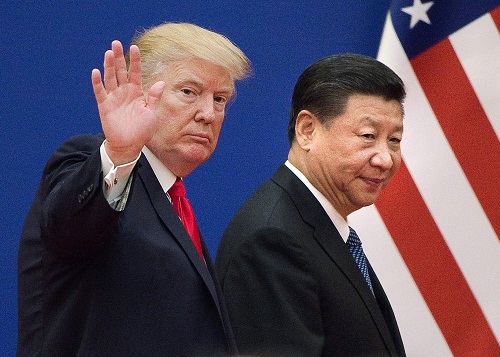 to Southeast Asia or considering it. Attendees at the Asian Financial Forum in Hong Kong, held early this year, noted 39 per cent of good investment returns to come from Southeast Asia, 35 per cent from China and 16 per cent from the USA.
Labor costs have been a fundamental driver behind the shift of manufacturing to Southeast Asia. ASEAN wages can run as low as one-third to one-half those in China. Also, majority of industries are incorporating new technologies and smart automation.
Tech skills and infrastructure need improvement
However, there are a few challenges that need to be tackled. Tech skills need to improve in many ASEAN nations including Vietnam and Thailand. Infrastructure also needs to be built across the nation as ASEAN countries are facing an increasing infrastructure deficit mainly due to rapid urbanisation and population growth.
Moreover Southeast Asia is not entirely safe from the effects of the US-China trade war. The region is likely to suffer in the short run from lower trade volumes and a lack of investor confidence. As both the US and China are major export markets for Southeast Asia, lower trade volumes from China negatively affected countries that are more reliant on international trade, like Singapore, Malaysia, Thailand and Vietnam.
The growth of the worldwide denim market
"Even as joggers and leggings have emerged as the top fashion bottom worldwide, the classic appeal of jeans along with new styles continues to attract consumers. A top reason for this is the addition of stretch to both men’s and women’s jeans. And Marshal Cohen, Chief Industry Advisor, NPD Group credits stretch with boosting the sales of women’s denim by 5 per cent to $16.4 billion in the year ending July 2018. Between 2011 and 2017, the percentage of denim jeans that contained stretch in the US increased from 44 to 75 per cent, according to Cotton Incorporated’s Retail and Lifestyle Monitor™ surveys. In China, the percentage increased from 26 to 56 per cent."
 Even as joggers and leggings have emerged as the top fashion bottom worldwide, the classic appeal of jeans along with new styles continues to attract consumers. A top reason for this is the addition of stretch to both men’s and women’s jeans. And Marshal Cohen, Chief Industry Advisor, NPD Group credits stretch with boosting the sales of women’s denim by 5 per cent to $16.4 billion in the year ending July 2018. Between 2011 and 2017, the percentage of denim jeans that contained stretch in the US increased from 44 to 75 per cent, according to Cotton Incorporated’s Retail and Lifestyle Monitor™ surveys. In China, the percentage increased from 26 to 56 per cent.
Robust growth expected for the denim market
As per a global market review published by Just-Style, the world market for denim jeans grew at an impressive 8.9 per cent between 2013 and 2018. It is expected to reach nearly $60 billion by 2023. United States ($20.1 billion) and Europe ($19.75 billion) account for 69 per cent of the world’s total value share in jeanswear, even though the population of these two continents represents less than 15 percent of the world’s total. While North America and Europe dominate the global denim market, the fastest growth is expected to come from Asia, South America, and Africa.
As per Monitor™ research, and CCI and Cotton Incorporated’s Global Lifestyle Monitor™ Survey, almost 77 per cent of Latin Americans prefer wearing jeans. This figure decreases slightly to 65 per cent in China and further to 55 per cent in the US.
Denim at all times for Mexican and US consumers
Monitor™ research indicates the US citizens prefer wearing jeans for running errands, at school, while going out to dinner, doing yard work, hanging out at home, on a date and also to work. While Chinese consumers prefer them when going to dinner and running errands followed by work.
In Mexico, denim is the preferred bottomwear for work, running errands, going out to dine, looking stylish or fashionable and hanging out at home (22 per cent). The Mexican consumer owns more pairs of jeans than US and Chinese. Mexican consumers also wear their denim more often than those in the US and China.
Growing demand for performance features
CCI and Cotton Incorporated’s Chinese Consumer Survey indicates that the Chinese prefer jeans that are made from 100 per cent cotton, having performance features , are moisture wicking, have extra stretch, are able to be wash less, and are created more sustainably. On the other hand, US consumers would be willing to pay more for denim jeans that fit them perfectly, are higher quality/last longer (79 per cent), are custom made to their fit and style (70 per cent) and kept their shape all day long (69 per cent), according to Monitor™ research.
While denim makers have started adding stretch, there are other athleisure-inspired features that can give their denim even more appeal. For instance, 64 per cent consumers are interested in moisture management in their clothing. Yet, moisture management is only available in 9 per cent clothing, according to Cotton Incorporated’s Retail and Lifestyle Monitor™ studies. Additionally, 61 per cent are interested in thermal regulation, yet it has just 2 per cent retail availability.
Indeed denim can evolve to meet customer desires and expectations, now it’s time for brands to rise to the challenge.
75 countries to commence informal talks on global e-commerce rules
More than seventy-five countries agreed to commence informal talks on fixing global e-commerce rules on the sidelines of the World Economic Forum meet at Davos in January 2019.
The talks—as reflected in the joint statement issued by the proposing WTO members—would be in conformity with existing WTO rules and would pay special attention to the interests and circumstances of LDCs and SMEs while aiming for high-standard outcomes.
The talks would take place outside the WTO with a negotiating agenda likely to take shape during the course of the year. However, with nearly half of WTO members agreeing to join the talks, the negotiations might formally shift to the global trade body in the foreseeable future.
Urban Outfitters net sales up three per cent
For the fourth quarter Urban Outfitters’ net sales rose 3.7 per cent.
Comparable retail segment sales increased three per cent in the period, reflecting double-digit growth in the retailer’s digital channel, partially offset by negative store sales. Wholesale revenues rose three per cent. Both the company’s Urban Outfitters and Free People brands posted an increase in comparable retail segment sales of four per cent while Anthropologie saw a rise of two per cent.
Urban Outfitters, based in the US, is a fashion and lifestyle group. A better assortment, higher consumer spending, and disciplined inventory control helped the company keep the discounting low. The company feels there is still scope for a reduction in this metric.
For the full fiscal year 2019, Urban Outfitters’ sales were up 9.3 per cent. Comparable retail segment sales increased eight per cent reflecting double-digit growth in the digital channel and positive retail store sales. Wholesale segment net sales rose ten per cent. Over the course of the fiscal year, the group opened a total of 18 company-operated stores and added the company’s first five franchisee-owned locations to its retail network.
Anthropologie plans to accelerate its European expansion in the coming year, with store openings planned in Germany, France, Holland and Spain.
Turkey hosts GOTS seminar
A Global Organic Textile Standard (GOTS) seminar was held in Turkey, February 18, 2019.
The one-day seminar brought together more than 150 participants from local brand offices, manufacturers, certifiers as well as academics with the aim to connect, exchange and discuss innovations, experiences and best-practices regarding GOTS and the organic textile market. The seminar was split in three sessions. After a general GOTS introduction including the newest figures and buying markets updates, standard criteria and labeling requirements, experts from brands and processors as well as certification bodies shared their views. Certified processors emphasized the risk management GOTS provides, manufacturers pointed out how GOTS certification benefits their reputation. Certification bodies explained how the certification can serve as an assurance for end consumers and brands.
Turkey is the country with the third most GOTS certified facilities worldwide, following India and Bangladesh.
Consumers already actively inform themselves on organic production and hold brands within the domestic market responsible. Therefore, more consumer information about GOTS’ benefits and more visibility is needed. Achieving GOTS certification is perceived as challenging due to the strict and different requirements but provides competitive advantages in comparison to non-certified goods, on the domestic as well as on foreign buying markets. It is also an advantage to be geographically closer to the big buying markets in Europe.
India: SIMA hails Tamil Nadu Comprehensive Textile Policy 2019
The Southern India Mills Association has hailed the Tamil Nadu Government for releasing the Tamil Nadu Comprehensive Textile Policy 2019 announcing various unique benefits.
The policy extends the 2 per cent interest subsidy for modernising spinning machines of above 15 years old. Out of 24 million spindles in the State, around 11 million spindles are above 15 years old and this benefit would help the spinning sector to modernize the same.
SIMA welcomed the various benefits extended for the weaving and garment sectors including 10 per cent capital subsidy for all new machines. It appreciated the announcement of 25 per cent of the project cost with the ceiling of Rs.10 crore for trade facilitation centre. It stated that 10 per cent capital subsidy for wider width fabric processing, 5 per cent interest subsidy for common effluent treatment plant, 15 per cent capital subsidy for the individual effluent treatment plant, Rs.1 crore RD assistance for effluent treatment plant would greatly benefit the processing segments in Tamil Nadu.
SIMA also appreciated the slew of incentives offered for technical textiles including 9 per cent capital subsidy, 6 per cent interest subsidy, 100 per cent stamp duty exemption and Rs.1 crore assistance for overseas study. The incentives offered for setting up the mini textile parks by extending 50 per cent subsidy or Rs.2.5 crore per park were also appreciated.
Sri Lanka invites Italian investors
Sri Lanka and Italy are strengthening bilateral ties.The two countries have maintained excellent relations over the years.
Sri Lankans working in Italy are required to make a pension contribution amounting to around nine per cent of their salary. They qualify for a pension after working for 20 years. However many workers do not get to enjoy this benefit as most of them work only for a few years in the country.
Sri Lanka wants Italy to adjust this scheme so that a person would receive his contribution immediately upon relinquishing his employment in Italy, irrespective of the number of years worked. The Sri Lankan community in Italy presently comprises around 1,20,000 residing in different parts of the country.
Italy has been offered skilled workers especially IT professionals, nurses, and healthcare supporters as Sri Lanka provides special certifications and training in these areas.
Italy as a member of the European Union worked toward lifting the ban on fisheries exports of Sri Lanka to the EU in 2016 and restoration of the GSP Plus facility to Sri Lanka in May 2017.
Italy has been encouraged to set up operations in Sri Lanka for sectors such as textile and apparel, leather footwear, confectioneries, gem and jewelry and food processing.
SRF revenue up 41 per cent
SRF’s total revenue increased by 41 per cent in the first nine months of the current financial year.
Established in 1970, SRF is a chemical-based multi-business entity engaged in production of industrial and specialty intermediates. The company’s diversified business portfolio covers technical textiles, fluorochemicals, specialty chemicals, packaging films and engineering plastics. Anchored by a strong workforce of more than 6,300 employees working across 12 manufacturing plants in India, two in Thailand and one in South Africa, the company exports to more than 70 countries.
SRF continues to maintain its market leadership in nylon tyre cord fabric, which is expected to remain a key business in the segment and a generator of steady cash flow. Other sub-segments of technical textiles have started contributing to its performance. Also, the improving macro-economic environment is expected to have a positive impact on the belting fabric segment. In the coated fabrics business, SRF continues to maintain its domestic market leadership. In laminated fabrics, the company has reported consistent sales in hot laminations. It has successfully commercialized two new products during the current year.
The company proposes to install additional spinning and textile capacity at Manali and Gwalior at Rs 80 crores to be incurred over the next three years.
Sinterama, a specialist in polyester yarns
Sinterama offers specialist polyester yarns, serving the market for customised solutions.
Based in Italy, the group founded in 1968 has expanded to multiple global locations with a footprint in the UK, Bulgaria, Brazil, and China.
For Sinterama sustainability is a way of life. The company tries its best to reduce plastic in its manufacturing process, recycles its plastic bobbins, cartons and monitors its resource use – materials, fuel, energy. It works with clients on reusing packaging and encourages employees to use less plastic, not just at work but in their own homes as well. The company communicates with all stake holders – clients, suppliers, employees, associates – the importance of respecting the environment and using sustainability as the basic mantra in all their business practices.
Big brands with high visibility want to be seen using sustainable materials but they demand that the supply chain make it cost-neutral. So in effect the full additional cost burden of making a sustainable product is shifted to the supply chain’s shoulders. Big brands need to step forward and be willing to listen to the supply chain and participate in the cost burden. Asking suppliers to deliver a recycled yarn-based fabric or garment at no extra cost is in itself unsustainable. The challenge is finding big brands willing to accept cost-differentiation for recycled yarn based products.
Rise in Indian textile and apparel sales
For the nine month period India’s overall textile and apparel sales increased by nine per cent.
Ebitda increased by 17 per cent. Raw material cost saw an increase of eight per cent. While employee cost saw an increase of seven per cent, other costs also saw an increase of ten per cent for the same period.
For the top textile and apparel companies, there was an increase in overall sales and ebitda margins by nine per cent and 17 per cent, respectively.
India’s overall textile and apparel exports witnessed a growth of two per cent while apparel exports declined by eight per cent during the nine-month period. Meanwhile, textile and apparel imports rose five per cent with a significant 52 per cent rise in apparel imports.
Indian textile and apparel exports go to all countries including China. The recovery in the US economy has given a boost to India’s textile and apparel exports. Since the US economy is on a continuous growth path, India’s textile and apparel export growth is expected to continue. India registered a growth of 5.37 per cent in textile and apparel exports in 2017. India’s share in world trade in textile and clothing is estimated to be 4.95 per cent. With these exports, India is ranked second among suppliers in the world.