


FW
Price drives US garment purchases
US consumers’ spending on clothing has dropped by more than half since 1987 says consulting, auditing, and risk-management firm Deloitte. In 1987, US shoppers devoted about five per cent of their discretionary spending on clothes. In 2017, it was about two per cent. Younger shoppers tend to spend a bit more, but the overall trend has been consistent across age groups. What’s driving the decrease, though, isn’t consumers buying less clothing. Rather, clothes are getting cheaper.
For decades, fashion brands have engaged in intense price competition seeking out ever-cheaper places to make their clothes. While retail prices overall have risen in the US, clothing hasn’t kept pace. Consumers still look to value, product, and convenience as the overwhelmingly important attributes while making decisions. Perhaps cheap clothing offers consumers at least one low-cost thrill, while big purchases get tougher to afford. Deloitte asked shoppers their reasons for choosing to shop at a retailer. Price was the most common response, beating out product selection, convenience, and several other factors.
Apart from clothing how much of their money American consumers are spending on different categories, such as entertainment, dining out, alcohol, and furniture, has remained relatively stable. In the entertainment category, for example, income level—rather than age—is a bigger factor in driving additional spending.
Miami ATS gets a huge response
Apparel Textile Sourcing (ATS) Miami was held from May 28 to 30, 2019. The show kicked off with great fanfare and drew record attendance. More than 1,200 visitors passed through the doors on opening day alone. The event featured 200 international apparel and textile exhibits and unprecedented networking and business opportunities with international suppliers, industry-leading seminars and educational sessions.
A panel unveiled the benefits and incentives for companies of all sizes to establish and grow their business operations in Florida. There was an update on the key issues and developments in US trade policy including insights into today’s changing trade landscape, strategies for fashion brands, retailers, and manufacturers to mitigate the impact on their businesses. A unique Fashion Lab Seminar Series taking place on the show floor highlighted top fashion industry experts who provided an overview for young local talent about the necessary steps in creating a brand and the power of social media in the fashion industry. Specialists in fashion strategy and brand development revealed tips on everything designers need to know about breaking through the clutter and launching a successful collection. Design industry experts shared top mistakes designers make and how to avoid them. A Fashion Day featured South Florida established brands and up-and-coming designers who showcased their latest creations.
Global denim grows at four per cent
The global denim market is growing at 4.60 per cent. Rapid urbanization coupled with the development of cities is likely to augur well for the market owing to the migration of consumers. Innovations in denim apparel with relation to size, shape, and color are enticing customers to purchase.
Celebrity endorsements are paving the way for the denim market to thrive successfully and reach new consumer demographics. Celebrities can act as the face of denim products and use social media channels for reaching out to their fan base. The Asia Pacific market is projected to register the highest growth rate thanks to expansion of the working class and investments by cloth manufacturers to make it affordable.
The market is segmented into loose fit, slim fit, and others. The slim fit segment is the fastest growing. Heavy demand for casual and rugged wear by men globally is projected to bode well for the denim market. By distribution channel, the market has been segmented into store-based and non-store-based. The store-based segment is expected to be the largest segment till 2023 owing to the preference for personalized experiences by consumers. The non-store-based segment is expected to register a CAGR of 5.30 per cent due to the penetration of e-commerce stores.
Global cotton prices fall by 17 per cent
Global cotton prices have fallen by 17 per cent. Another concern looming over cotton market is increased US production. US output is forecast to jump 20 per cent in the year from August 2019 to next July 2020. The US inventory of cotton at the end of July 2020 is expected to be up 38 per cent on the year. From August 2018 to March 2019, Chinese imports of raw American cotton were half the amount recorded in the same period a year earlier. On the other hand, the US has been slapping tariffs on cotton thread and other fiber products imported from China, raising concerns over a decline in demand for these goods.
China accounts for one-third of global cotton consumption, importing the material from the US and Brazil. China also distributes cotton thread domestically for manufacturing cotton fiber products, before exporting the finished goods to the US. The US, for its part, ranks third among raw cotton producers behind India and China, and is the top exporter of the material.
In Japan, price of domestically produced cotton threads are under pressure from imports of cheaper Vietnamese and Indonesian products. Southeast Asian countries are exporting more to Japan to compensate for the decrease in exports to China, as the global hub of the garment industry imports less thread.
Garment companies fail to pay living wages
Global garment companies are failing to meet living wage promises to workers, says a study by researchers at the University of Sheffield today. They said it would take a "step-change in approach" for major corporations like Nike, Primark and Adidas to pay wages that "meet the basic needs" of workers and their families. The study by researchers at the Sheffield Political Economy Research Institute (SPERI) at the University of Sheffield found many companies do not have concrete, measurable action plans for achieving a living wage in their global supply chains, or benchmarks for calculating living wage rates.
The global garment industry is extremely profitable but workers in the supply chains that produce clothes are not benefiting from the value they are creating. Until companies can take such steps, living wage commitments are likely to remain in the realm of rhetoric rather than leading to substantial changes that address low wages for workers in the global garment supply chain. A change in approach is necessary for garment companies to achieve living wages in their supply chains.
A lack of transparency around the wages workers receive makes it extremely difficult to evaluate companies’ progress toward meeting their own living wage promises. Instead of altering their purchasing practices to make it possible for suppliers to pay living wages, most garment corporations are outsourcing their living wage commitments to external initiatives.
Some are part of multiple external initiatives, each with different definitions and approaches to living wages, which mean that corporate commitments lack clarity. Corporate supplier codes of conduct are often out of step with the requirements of the external initiatives they are involved with.
NACC urges EU to continue tariff-free access to Cambodian brands
In an open plea, National Union Alliance Chamber of Cambodia (NACC representing 400,000 Cambodian workers in manufacturing industries, including the garment industry, asked the EU not to revoke the tariff-free access Cambodia currently enjoys to European markets.
Cambodia is one of 49 countries covered under the EU’s “Everything but Arms” (EBA) trade agreement. The agreement allows the world’s poorest nations to export their products, except arms and ammunition, to European markets without incurring duties.
If the EU and US revoke Cambodia’s EBA trade access, garment workers in the country will suffer as brands will relocate to cheaper places for making their clothes. This will result in loss of 43 per cent of jobs for garment workers and 20 per cent jobs for footwear workers.
The EU began the procedure to suspend Cambodia’s preferential trade status in February, by establishing a monitoring period and putting pressure on Cambodia to reform. A month earlier, US senators Ted Cruz (R-Texas) and Chris Coons (D-Del.) introduced a bill that, if passed, would require the US to review its own preferential trade status for Cambodia.
Brands shirk wage issue
Garment brands are under rising pressure from campaigners and consumers alike to improve conditions for some 60 million workers in their supply chains, ending abuse and modern slavery.
But the desire for affordable, throwaway fashion persists, squeezing wages for the workers who stitch most western clothes. The world’s top clothing brands are failing to fulfil their own promises to pay workers a fair living wage that covers basic family needs. Most major garment companies lack plans for calculating - let alone achieving - a living wage in their global supply chains. A living wage is supposed to cover the cost of normal family life - from rent and food to healthcare - plus allow for modest savings and be paid within a normal working week. There is little evidence that corporate commitments to living wages are translating into meaningful change on the ground. Consumers are purchasing products they may believe are made by workers earning a living wage, when in reality, low wages continue to be the status quo.
There is widespread inconsistency and confusion among firms over the definition of a living wage. Far too many companies stop at assuring that minimum wages are paid, which is clearly a long way off from working towards a living wage.
Applied DNA Sciences closes traceability loop
Applied DNA Sciences has closed the loop on traceability for Egyptian Pima using DNA-based genotyping for cotton authentication. The solution closes the loop for the cotton industry that has been under a cloud of controversy surrounding evidence of cotton products labeled as Egyptian cotton versus those which are actually grown in Egypt. There is no substitute for DNA analysis when it comes to cotton traceability and transparency because of its ability to do what other technologies cannot do, which is to forensically authenticate the fiber through to yarn and finished goods.
In August 2016, the controversy of home bedding and other products labeled 100 per cent Egyptian Cotton hit an all-time high when a number of US retailers recalled many products from retail shelves due to label claim violations, and consumers were informed that products did not meet the standard or label requirement. Three years later, Applied DNA will begin to validate and market test products that are labeled to contain 100 per cent Egyptian Pima.
Many products use cotton grown in the US and Egypt. Applied DNA’s system can provide a useful tool to enable brands and manufacturers to verify their products at any stage of the supply chain that is more exact than other methods claiming to do the same without the same degree of precision.
Over 30 Quebec companies to participate in a special mission at ITMA 2019
A special mission to ITMA 2019 will include over 30 companies and organisations from Québec’s textile and apparel sectors. The exhibition, being held from June 20 to 26, 2019 in Barcelona, Spain, is the most important international exhibition for technological innovations in manufacturing. The mission, led by TechniTextile Québec, the CTT Group, the Fashion Cluster mode and the Workforce Sector Committee in Textile (CSMO Textile), will enable the companies to learn about the latest advances in manufacturing technologies and invest in state-of-the art equipment to pursue their growth.
The exhibition stand will be strategically positioned at the heart of the Fira de Barcelona, Gran Via (booth #UL-D108). Companies like CDRM, Beaulieu Canada, Distribution Club Tissus, Duvaltex, Eko-Terre, Filature Lemieux, FilSpec, General Recycled, Logistic Unicorp, Niedner, Oratex,Produits Belt-Tech, Quartz Co., Rayonese Textile, Régitex, RJAM, Stedfast, STEPHAN/H, Tapis Venture, Techno Diesel, Texel Matériaux techniques, Textiles Monterey, TM Couture, Tricots Duval et Raymond, Tricots Maxime, Vêtements Flip Design, Vêtements SP and Vêtements Wazana will be part of the mission.
Brands become honest as transparency gains importance
"Brands are slowly realising the importance of the dictum, ‘Honesty is the best policy.’ They are embracing transparency by listing their supply chains on their websites and also making public transparency pledges on these issues."
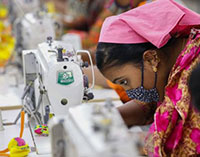 Brands are slowly realising the importance of the dictum, ‘Honesty is the best policy.’ They are embracing transparency by listing their supply chains on their websites and also making public transparency pledges on these issues.
Bangladesh leads transparency initiative
Businesses are working with other industry stakeholders -- including NGOs -- on industry-wide initiatives. They are also collaborating with their competitors on sustainability initiatives. Bangladesh leads the transparency front as both the Bangladesh Accord and the Alliance for Bangladesh Factory Safety carried out major safety programs across the Bangladesh RMG sector whose information was made publicly available on the websites of these respective bodies.
The Bangladesh Supreme Court recently extended the tenure of the Accord on Fire and Building Safety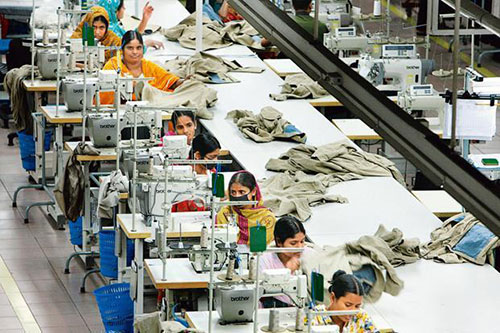 agreement in Bangladesh by 12 months through to 2020. Once the agreement is handed over to a new, national body in Bangladesh, all existing transparency features of the Accord will be maintained, including full disclosure of all results of inspection and remediation activities on a public website.
Earlier this year, a Bangladeshi team of researchers began mapping every single garment factory in the country. Equipped with new mobile apps these researchers carry out a door-to-door census besides visiting thousands of factories. This enables them to collect GPS-linked data points from factory-owners, workers, and organisations in the garment supply chains.
C&A Foundation and BRAC University collaborated with BGMEA to administer the digital factory map. The aim of this map is to permanently transition accountability for apparel factory improvements in Bangladesh.
Transparency improves brands’ reputations
One of the biggest benefits of transparency business is that it improves business reputation. Apparel companies such as H&M, Levi’s and Nike have incorporated transparency in their operations encouraging other brands like Benetton, Primark, Hugo Boss, and Abercrombie and Fitch to follow suit. As a research from Fashion Revolution notes, by April 2019, 180 brands across 75 companies had disclosed at least some of the facilities making their clothes. Businesses disclosing their suppliers have been applauded by their customers. On the other hand, apparel brands that did not disclose their supply chains have been reprimanded.
Operational and legal benefits of transparency
The transparency policy also offers certain operational and legal benefits. Publishing the lists of their suppliers can help brands deal with unauthorised sub-contracting besides highlighting workplace issues such as labor violations, providing stronger due diligence, and offering better compliance with current regulatory regimes.
There has been growing consensus around the issue of transparency over the years from organisations such as the German Partnership for Sustainable Textiles and the US-based Fair Labour Association (FLA). It won’t be long before other affiliate groups follow this example and demand full supply chain disclosure from their members.











