


FW
US women’s denim goes retro
Women’s denim brands in the US are offering a taste of nostalgia in terms of dyes, color and sustainable stories.
Premium denim 7 For All Mankind has nostalgic styles like ’90s-inspired low rise boot cut jeans as well as nods to the brand’s signature squiggle back pocket stitching. Ecru jeans are trimmed with contrast braiding and a dramatic pleated flare jean. Novelties include tie-dye jeans with a crinkled paper texture, the 70/30, 70 per cent indigo and 30 per cent bleached, and a fresh crop of pink, yellow and mineral green denim. Mavi captures the spirit of the ’90s in its women’s collection. The brand’s show piece is a figure-flattering high rise, carrot-shape jean with front yoke details and a bleached-out wash. Ética has a line of sustainable fashion denim.
Water-saving e-flow technology by Jeanologia is used through the wash process as well as a mix of hand finishing and laser finishing. The brand has layered the two techniques to achieve some unique vintage effects. Ética’s tie-dye garments include some colored with botanical dyes derived from chrysanthemums, coffee plant roots and cypress bark. The dye technique is used on jeans with deconstructed side seaming, boxy camp shirts with vintage snap buttons and tees with kimono-style sleeves.
Surat polyester production halves
Polyester fabric production in Surat has fallen by almost half from last year. One reason is GST, since its imposition growth polyester fabric production decreased 40 per cent a year. Also the higher cost of raw material, including yarn, is posing a major threat to the manmade fabric sector. Import of cheap fabrics from China, Bangladesh and other Asian countries has contributed to the decline in production.
Due to the drastic cuts in subsidies under the Amended Technology Upgradation Fund (ATUF) scheme, investments have decreased. About seven projects have been scrapped due to the reduction in subsidy under the ATUF. The restoration of the 30 per cent subsidy under the ATUF is necessary to encourage and maintain modernisation in the manmade fabric sector.
Surat is the country’s largest manmade fabric hub. It is facing issues. Prior to implementation of GST, there were 6.50 lakh power loom machines in Surat. Now the total number of weaving machines has been reduced to just 5.50 lakhs. Some 20 textile dyeing and processing mills in Surat have shut shop. One reason is falling demand for polyester. Daily production has gone down to three crore meters a day from 4.5 crore meters a day.
Manmade fiber adds two per cent to India’s GDP
The manmade fiber industry contributes two per cent to India’s GDP and provides jobs to over 18 million people directly and more than 20 million indirectly.
Manmade fiber exports contribute 16 per cent to textile and clothing exports from India. The country is the second largest producer of polyester and viscose in the world and exports the entire manmade fiber textile value chain including fiber, yarn, fabrics and made-ups to nearly 140 countries. More than 60 per cent of the exports are of value-added items such as made ups and fabrics. India produces over 1,441 million kg of manmade fibers and over 3,000 million kg of manmade filaments a year. GST on manmade fiber yarns has been reduced from 18 per cent to 12 per cent. Products such as fiber, yarn and fabric in the textile value chain are being strengthened and made competitive.
With an increasing focus on protecting the environment, the demand for manmade fibers as a substitute for cotton is growing globally. Globally, increasing price volatility, durability and sustainability concerns have made leading fashion brands gradually shift the fiber mix in favor of synthetic fibers, especially polyester and viscose. Manmade fabrics dominate global textile fiber consumption with a 72:28 ratio —manmade fabrics 72 per cent and natural fibers 28 per cent.
Global luxury apparel market expanding at 13 per cent
The global luxury apparel market is expanding by 13.2 per cent. Brands are offering numerous growth opportunities, be it in branding of products or investing huge sums of money on research and development strategies.
Luxury apparels are the symbol of class and only people with a good financial background can afford luxury apparels. The global market for luxury apparel is growing due to the increase in disposable incomes. Luxury apparels are in demand among the young generation. Another factor envisioned to boost demand is the emergence of online shopping services. It is easier to do shopping online instead of having to go places and try various outfits. Easy return facility has further boosted the market and attracted more prospective consumers. Digital marketing advertises the benefits of online shopping and enhances the urge for developing a classy taste of fashion among people.
The market is dominated by the Asia Pacific region. This region is witnessing rapid growth due with rising disposable incomes along with a change in lifestyle of people and improved standard of living especially in emerging nations of China and India. Europe, on the other hand, has already attained maturity because of the presence of many luxury brands.
Covestro develops elastic textile fibers
Covestro, based in Germany, has developed elastic textile fibers using CO2-based thermoplastic polyurethane (TPU). The elastic fibers are made with a chemical precursor, cardyon, which is partially made of CO2 instead of oil. The fibers are made from CO2-based TPUs using a technique called melt spinning, in which the TPU is melted, pressed into very fine threads and finally processed into a yarn of endless fibers. The materials can be used for stockings and medical textiles and might replace conventional elastic fibers based on crude oil.
Unlike dry spinning, which is used to produce conventional elastic synthetic fibers such as elastane or spandex, melt spinning eliminates the need for environmentally harmful solvents. A new chemical method enables carbon dioxide to be incorporated in the base material, which also has a better CO2 footprint than traditional elastic fibers. The CO2-based material could be a sustainable alternative to conventional elastic fibers in the near future.
What makes the CO2-based TPU fibers so special is their properties. They are elastic and tear-proof and so can be used in textile fabrics. Companies from the textile and medical engineering sectors have already tested the CO2-based fibers and processed them into yarns, socks, compression tubes and tapes.
Iran revamps garment units
Iran is revamping the garment and textile industry. There are about 8,000 production units across the country providing jobs to 2,60,000 people. Last year Iran’s garment and textile exports rose by 36 per cent and 25 per cent in volume and value terms.
Over the last few years, the industry has been going through tough phase owing to smuggling of garments into the country and sanctions that have badly hit the local textile firms.
Iran is imposing restrictions on imports. The country has taken measures aimed at renewing the country’s garment manufacturing industry, in a bid to enter international markets. Exporting apparel products to neighboring countries, including the CIS and, in particular, Azerbaijan, is on the agenda. There are about 50,000 apparel manufacturing units in the country. Foreign representatives, branches and distributors of apparel in Iran who seek business licenses have been mandated to produce goods worth 20 per cent of their import value inside Iran and to export at least 50 per cent of this domestic production. The initiative is aimed at increasing domestic production, creating jobs and reviving Iran’s apparel industry. Public interest in domestic products has dramatically surged over recent months.
Indian cotton spinners face weak demand
Cotton spinners in India are grappling with the twin challenges of weak export demand and uncompetitive cotton prices. The impact is likely to be more pronounced for leveraged companies that have undertaken a sizeable debt-funded capital expansion in recent years and have higher repayments scheduled in the near term.
With India exporting roughly one-third of its cotton yarn production every year, trends in export demand play a crucial role in determining the overall performance of the domestic spinning sector. India’s cotton yarn exports declined 33 per cent in the first quarter and stood at a seven-year low in June 2019. As a result, spinning mills have had to face stock pile-ups and resorted to production cuts. As compared to a 50 per cent decline in cotton yarn exports to China during the first quarter, exports to other markets too declined by 20 per cent.
The pressure is primarily originating from higher cotton prices in the domestic market, which has made Indian yarn manufacturers uncompetitive in international markets. As a result, the near-term outlook on Indian cotton yarn exports is quite weak at present. Even otherwise, a large proportion of spinners has not undertaken capacity expansions in recent years, given the discouraging demand trends.
Esprit partners with Deichmann
Esprit has entered into an agreement with online retailer Deichmann. This mean that Esprit’s new footwear line will be available at the online and offline platforms of Deichmann.
Esprit, a fashion retail giant offers high quality fashion for men, women and children as well as the latest fashion accessories and furnishings. Esprit is in the middle of a restructuring process. Esprit has committed to increase sustainable viscose production. The fashion brand will work with suppliers and viscose manufacturers to move to a closed loop production system by 2023-25. With this, Esprit commits to improve the manufacturing process of viscose and modal fibers. The German company closed the first nine months of its fiscal with a 16.1 per cent drop in revenues. Deichmann is the biggest footwear group by revenue in the world. Deichmann, based in Germany, operates in 25 European countries and the United States, and generates 60 per cent of its income outside Germany. Deichmann has extensive growth plans for 2019. Investments will be made both in the modernisation of the store network and the opening of new brick-and-mortar stores, as well as in internationalisation and digitalisation. For 2019, the group is planning on opening 229 new stores worldwide and modernising 256 stores.
Global athleisure market growing at nine per cent
Demand for comfort, performance and style has driven the need for a multifunctional wardrobe which has given a huge boost to global athleisure market which is growing at nine percent. Consumers who purchase sports clothing for exercise also wear such items for eating out or shopping. This willingness to pair sportswear with core wardrobe pieces has opened sportswear brands up to new audiences and allowed them to diversify into new product areas, boosting their share of the global clothing and footwear market. Active wear brands are selling consumers a lifestyle, and fashion retailers are leveraging their style credentials to produce affordable fitness ranges to sell alongside core casual and formal wear collections. Increasing consumer appetite for comfort has also fuelled sales of active wear and trainers with brands utilising their technical expertise in ensuring products offer freedom of movement, aid temperature and sweat control, shape the body and provide support.
While fashion trends and influencers have driven the success of athleisure market, sustainability movement will continue to support the desire for a multifunctional wardrobe. Consumers are purchasing more consciously and reducing spend on fast fashion, playing into the hands of those retailers and brands that can showcase the versatility of their items, as well as the durability and quality.
India: Boost synthetics, low duties, compliance to revive textile industry
"With low growth in synthetics, Indian apparel industry stands to be less competitive. The synthetic segment in India failed to make a mark in the global market because of low exports, low wages in factories producing synthetics and low investments in the sector. Indian textile units run for only six months in a year to produce cotton apparels. In the remaining six months, these units are either shut or run at a low capacity as they do not have orders for synthetics/ winter wear."
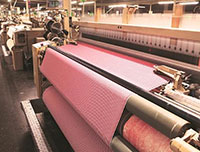 With low growth in synthetics, Indian apparel industry stands to be less competitive. The synthetic segment in India failed to make a mark in the global market because of low exports, low wages in factories producing synthetics and low investments in the sector. Indian textile units run for only six months in a year to produce cotton apparels. In the remaining six months, these units are either shut or run at a low capacity as they do not have orders for synthetics/ winter wear.
Absence of synthetics impacts worker wages
Making winter wears is more expensive than making informal cotton wear, hence, workers making suits earn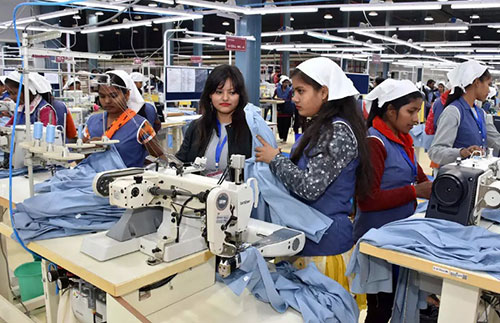 more money than workers making say a blouse. Thus, the absence of synthetics affects workers’ wages. Also, India has a few large firms that produce 90 per cent of synthetics raw materials consumed domestically. This compels local traders to import synthetics which are expensive due to high customs and anti-dumping duties on raw materials like PTA, PSF, PFY, acrylic fibers, etc. Though duty-free imports to exporters offer some relief, but the domestic synthetics ecosystem remains stunted.
Lack of expertise and technology
Moreover most weaving and processing units lack expertise, scale and technology. Power outage and reduced capacity use doubles the cost of weaving in India, making it as expensive as in the EU or the US. Same is the case with processing units which engage in batch processing that often results in varying shrinkage, feel and shades. Most Indian processors also struggle to meet the zero-liquid discharge (ZLD) norms set by Madras high court in 2011.
Indian exporters are also ill-prepared to meet the demands of global fast-fashion leaders like Walmart, Zara, H&M, Gap, and online-only retailers like Amazon, Zalando. These leaders conjure new fashion trends and convert designs into affordable clothing within a few weeks. FFI leaders therefore, place orders with only those firms that deliver fast and are compliant with labor and other rules. In order to unshackle the sector and set it on a high growth plan, textile leaders need to adopt a three-fold strategy.
Strategies to push up synthetics sector
Firstly, lowering duty on synthetics raw materials is important as this will reduce their prices by 30 per cent to 50 per cent. This will encourage the apparel industry to invest more in synthetics.
Second, strengthening weaving and processing segments is prime. Indian manufacturers should set up at least 10 big scale weaving and processing units annually.
Thirdly, making factories FFI complaint. India has about 1,200 compliant factories supplying cotton products to FFI and other large buyers. Many of these would invest in synthetics and export new products to the same set of buyers.
These actions would make India a significant player in apparel trade and ensure a bright outlook for its future.











