FW
China emerges as an influential fashion trendsetter
China, once dubbed as the world’s sweatshop, is now an influential fashion trendsetter.
Chinese designers want to break the stereotype that clothes from China are poor in quality and lacking in originality. They want the world to realise that they can be very creative and really know how to make high-quality production. So for instance they use such basic colors as grey, white and black as well as power tailoring to create elegant and confident looks for career women. Another stereotype is the necessity to incorporate symbols like the dragon, panda and the color red into Chinese designs. Chinese designers are instead focusing more on promoting universal values and expressing their own attitudes rather than selling Chinese culture.
The influence of Chinese fashion has fast expanded, reaching larger audiences around the globe as home-grown designers, spending power and fashion aesthetics keep growing. Apart from designer brands, Chinese fabric manufacturers and garment suppliers have also become more influential internationally. Last year China exported 36 per cent of the world’s exports of textile and apparel. The country is proactively moving toward automation and smart production through technological innovation and nurturing indigenous brands to move up the value chain. The rising fashion industry is an epitome of China’s fast development over the past few decades.
Dow Jones lists Burberry yet again
Burberry has been included in the Dow Jones Sustainability Index (DJSI) for the fifth consecutive year.
Sustainability metric DJSI evaluates a company’s economic, environmental and social impact and is a trusted benchmark for investors who integrate sustainability considerations into their decision-making and investments.
Burberry has a longstanding commitment to sustainability, with social and environmental programs in place for more than 15 years. During 2018-’19, Burberry reduced its market-based emissions by 43 per cent and procured 58 per cent of its total energy including 68 per cent of its electricity from renewable sources. Burberry aims at being 100 per cent carbon neutral by 2022.
Driving a more circular economy for fashion is central to Burberry’s sustainability agenda and as part of this Burberry continues to expand ways to reuse, repair, donate and recycle products and materials. Burberry is working at eliminating problematic or unnecessary plastic packaging. This includes ensuring plastic in packaging can be easily reused, recycled or composted and circulating any plastic packaging so that it can be made into new packaging or products. Recently, Burberry launched new sustainable packaging made from recycled coffee cups, with the resulting product fully recyclable. Burberry is also committed to supporting the people and communities that sustain the luxury industry through youth inspiration, community cohesion and social and economic empowerment programs.
Yarn Expo Autumn 2019 to offer solutions for all sourcing needs
"To be held from September 25-27, 2019, Yarn Expo Autumn 2019 will offer yarn and fiber solutions for every sourcing need – with eco-friendly, functional and fashionable options and a new display area for fancy yarn. To be held over 26,000 sq m at the National Exhibition and Convention Center in Shanghai, the exhibition will feature 542 suppliers from 14 countries and regions. These include new exhibitors from Lithuania, Nepal and Taiwan."
 To be held from September 25-27, 2019, Yarn Expo Autumn 2019 will offer yarn and fiber solutions for every sourcing need – with eco-friendly, functional and fashionable options and a new display area for fancy yarn. To be held over 26,000 sq m at the National Exhibition and Convention Center in Shanghai, the exhibition will feature 542 suppliers from 14 countries and regions. These include new exhibitors from Lithuania, Nepal and Taiwan.
To be organised by Messe Frankfurt (HK) and the Sub-Council of Textile Industry, CCPIT, Yarn Expo Autumn 2019 will be held concurrently with the 25th Autumn Edition of Intertextile Shanghai Apparel Fabrics, as well as CHIC and PH Value.
The Overseas Yarn Zone
Yarn Expo Autumn has shown reliable growth and expansion over the years, making it an important industry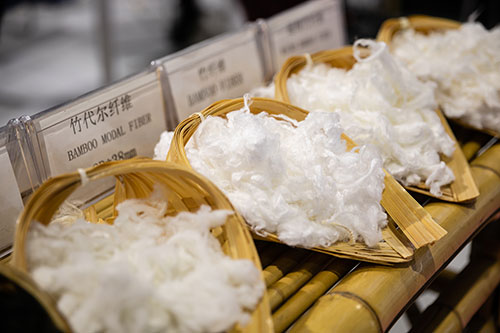 event and a popular choice for leading global suppliers to unveil their latest collections and innovations.
The Overseas Yarn Zone at the expo will house 132 suppliers from countries and regions including Hong Kong, India, Indonesia, Korea, Lithuania, Nepal, Pakistan, Singapore, Taiwan, Turkey, the US, Uzbekistan and Vietnam. This zone will include:
India Pavilion: The India Pavilion features 55 exhibitors with a huge variety of products including cotton, fancy synthetic yarn, Lysell linen, Modal linen, Tencel, viscose, polyester and more. Highlighted companies include GTN Patspin Group of Companies, Lahoti Overseas, Premier Cotton Textiles and RSWM.
Pakistan Zone: The Pakistan Zone will feature 15 leading suppliers including Abtex International, who will showcase their new hybrid colour mixing yarns and fancy yarns; Fabcot International with cotton yarns and greige and Hussain Mills who will offer organic cotton.
Birla Satellite: This zone will house 15 exhibitors including Birla Cellulose which will showcase its environmentally-friendly regenerated cellulose fibers. The company is known worldwide for soft and eco-friendly viscose fibers, including Birla Viscose, Birla Modal, Birla Spunshades and Birla Excel.
Other highlighted exhibitors from different countries & regions include:
• Naturalus Pluostas (Lithuania)
• Reliance Spinning Mills (Nepal)
• Everest Textile (Taiwan)
• Tung Ho Textile (Taiwan)
Fashionable and functional yarns from domestic suppliers
Suppliers will also display fashion-forward and functional yarns to ensure that their end pieces stand out from the crowd. Some of these fashionable products include fancy yarn, quality wool yarn and eco-friendly linen. These will be displayed by leading Chinese exhibitors including Hongqi, Lida, Zhongxin Resources, Lugang, Haoye and Dalang Wool Yarns. These domestic suppliers will be categorised into product zones, making it easier for visitors to navigate the comprehensive product range in the hall.
• Fancy & Specialty Yarn Zone: The size of this zone has increased by 30 per cent, while number of exhibitors has increased to 140. In this edition, the zone will launch Fancy Yarn Vision (booth A02) - a display area featuring creative fancy yarns and application products from exhibitors.
• Functional Chemical Fiber Zone: This zone displays the trends of Chinese fiber fashion alongwith themed displays of multi-functional and eco-friendly products and an Industry Alliance Zone.
• Natural Cotton Yarn Zone: This zone will feature over 100 high-quality cotton spinners, including Kang Pinna, Litai, Peixian Cluster, Gyeonggi, Wuxi Yimian, Anhui Huamao, etc.
Brexit has UK fashion in a tailspin
The uncertainty over a no-deal Brexit is making things difficult for the UK fashion business. From designers to models and garment-makers are keen to know the impact leaving the European Union will have on their industry.
Benefits from overseas trade deals outside the EU with countries like Australia, the US and Canada would take time to have effect. Exchange rates are causing difficulties because of how fashion companies work. It’s common for brands to forward sell. Essentially, they agree to sell clothes at a certain price a few months in advance. But it’s hard to know how to price things because of the changing value of the pound. The clothes showcased at a fashion week this month will be on sale to customers in February next year, so placing orders on those goods is a total gamble with fluctuating rates.
But Brexit could push more clothing factories to open in the UK. Leaving the EU could lead Britain to offer more competitive prices. There may be growth within garment manufacturing and more garment manufacturers may arise. However when it comes to the high street, costs could go up because of taxes on imports and exports. Imports involve delays and transport issues, logistics and tariffs. So prices can go up.
FW goes circular through repair
The circular economy is helping brands hit their environmental and economic targets and succeed in today’s marketplace.Outdoor clothing brand FW’s new range of clothes has been designed to help put an end to throwaway consumerism, emphasizing durable, high-quality construction and materials to ensure the garments last and last. By repairing every garment it can, FW is selling clothes that could be worn for life. This is an important move away from the usual practice of simply disposing of clothes when they become damaged. Through a dedicated service designed to make clothes last longer, customers will have the option of having garments repaired for free within a warranty period. Repairs will still be available to customers at a low cost beyond the warranty period.
A repair service is one of several models companies may integrate into their business to create more value and profit, while reducing their environmental impact. Repairing products helps to keep them in use for longer and builds loyalty with the customer. Several market players across the fashion sector illustrate the competitive advantage of circular business models, which can help build not just a more sustainable business but customer loyalty too. People are waking up to the impacts of their shopping habits and increasingly demanding more sustainable options from brands.
Brands go beyond just selling garments, for entire retail experience
Brands are diversifying their offer to provide not only fashion, but an entire experience. They are looking to generate experience in its clients a 360 degrees’ experience, where they don’t only find garments in its stores but also an entire concept. This encompasses everything, from music to salads. Armani has a megastore in Italy, where it has a cafeteria, a decoration division and even a bookstore. Hermès has partnered with Apple to launch the Apple Watch. Gucci collaborated with Fiat to launch the Fiat 500.
H&M, for example, offers in its flagship in Spain the option of going shopping and, at the same time, in the same place, to have salad in the restaurant. Urban Outfitters has always focused its offer on a variety of products so the client stays as long as possible in its stores. Bershka has allied with a live streaming music platform. At the new concept of the Primark store clients can get a haircut or drink a coffee.
Brands are looking for a way of staying afloat especially in times where new business models are entering the markets. A way of conquering the consumer and fighting sales deceleration. Even if this means diversifying their offers and generating new ones for the consumer.
American clothing companies push for India - US FTA
American clothing companies, scouting for greater investment opportunities in India following the US-China trade war, have made a case for a free trade agreement between the US and India to increase trade in the sector.Other suggestions given by a group of 15 American companies to Textile Minister Smriti Irani was to improve the ease of doing business on the ground, provide higher skills to workers and draw up a sustainable growth plan for the sector.
The delegation, which comprises representatives from American textile majors such as Ralph Lauren, the PVH Group (which owns brands like Calvin Klein, Timmy Hilfiger, Van Heusen and Arrow) and Carter’s Inc, also discussed future possibilities with Niti Aayog.
An FTA between the US and India would promote business in the textiles sector. The Amcham delegation also met the faculty of the National Institute of Fashion Technology (NIFT) to exchange ideas on the latest trends in design.
Cotton agency avoids middlemen
Cotton Corp of India (CCI) purchases only good quality cotton directly from farmers and avoids intermediaries.The price gap between cotton sold by the Cotton Corp of India and that prevailing in the market has widened significantly in the last few days after global prices fell by a steep 15 per cent.
The fall in local prices that followed was not as steep as that of the global market, mainly due to the extremely tight supply. This was because output in the current year was at a decade-low due to droughts in key producing states of India. The agency would rather hold stocks instead of cutting prices and incurring losses. Cotton lying with Cotton Corp is of premium quality than the variety benchmarked to Cotlook.
Bangladesh meets over 60 per cent of its cotton requirements from India and figures in the world’s top two exporters in various textile products. The country has been the top destination for Indian cotton over last few years. India’s cotton yarn exports have fallen by more than 50 per cent in August 2019 and down over 35 per cent in April to August. India’s exports are down due to bilateral trade pacts and because of competitors such as Vietnam, South Korea and Bangladesh getting preferential access in the global markets.
Market for flame retardant apparel to grow by 6.2 per cent
As per Fact.MR’s latest analysis, global flame retardant market is likely to grow by 6.2 per cent in 2019. Imposition of stringent regulatory rules and growing awareness about workers’ safety in high-risk industries worldwide will continue to drive the growth of this market. It will also be driven by macroeconomic factors, notably stability in global oil prices and capital injection in infrastructure projects. The report opines that effective implementation of workplace safety guidelines in developing countries can open up new opportunities for manufacturers.
The Fact.MR study analyses growth parameters of global flame retardant apparel market to provide comprehensive and insightful information about the future prospects of the global flame retardant apparel market. According to the study, demand for flame retardant apparels will be complemented by healthy adoption in the power industry. Evolving workplace safety regulation in power, electronics electrical, and automotive & transportation industries are also likely to influence growth.
The study finds EU at the forefront of global fire retardant clothing demand, with over one-third volume share in 2018. The constantly evolving regulatory framework for personal protective equipment in Europe has accelerated the demand for flame retardant apparels in the region. The mandatory conformity to the Regulation (EU) 2016/425 adopted by the European Commission has been instrumental in boosting growth of the Europe flame retardant apparel market.
Huntsman develops performance program
Huntsman Textile Effects’ High IQ performance assurance program helps mills, brands and retailers meet demand for garments with durable moisture management and produce high-performance textiles with built-in sun protection, freshness, friction protection and water repellence, in bright whites and color that lasts.
The program allows garments to breathe, while transporting moisture away from the body. This ensures consumers can stay cool, dry and fresh throughout. The program is built on the industry’s broadest and most advanced moisture management agents to deliver durable, long-lasting performance. The unique technology supports accelerated evaporation, ensuring garments dry quickly for long-lasting comfort. Unique quick-dry properties created by the natural microclimate of the garment help reduce post-exercise chill, making the effects highly suitable for sports and active wear.
As consumers around the world adopt more active lifestyles and outdoor activities, the need for cool, dry and comfortable sports and athleisure wear is on an upward trend.
Huntsman Textile Effects is a leader in intelligent effects. The technology that drives the High IQ Cool Comfort program complies with the requirements of bluesign for safe and sustainable textile production. Fabrics produced with High IQ Cool Comfort are suitable for Standard 100 by Oeko-Tex certified textile products.