FW
WRAP initiates investigation on Page Industries
A top apparel industry watchdog, Worldwide Responsible Accredited Production (WRAP) has launched an investigation into Jockey International's Indian partner Page Industries following allegations of human rights abuses at one of its factories. The investigation follows Norway's $1 trillion sovereign wealth fund dropping Page from its investment portfolio due to concerns of human rights violations at "Unit-III" in Bengaluru.
Page has denied these allegations and called them outrageous. However, Seth Lennon, spokesperson, WRAP, said, such violations could normally result in a factory losing certification. The Page site under investigation is certified until November 15.
Bengaluru-headquartered Page is the exclusive licensee for Jockey wear in India and six other countries. The company also makes apparel for Britain-based swimwear maker Speedo, but in a smaller capacity. Its unit-III factory in Bengaluru employs about 1,000 workers. Page, which reported roughly $400 million in revenue in the fiscal year ended March 31, did not disclose what proportion of sales came from Unit-III. It has engaged with the Norwegian wealth fund's Council on Ethics - the body which recommended the fund exclude Page from its portfolio after its investigation.
Low labor costs, favorable policies make Cambodia an attractive investment destination
 A fast developing nation, Cambodia has not received any orders for garments since May this year. And as a CCF Group report suggests, around 256 garment, footwear and travel goods factories in the country have suspended operations, affecting over 130,000 workers. A report by the National Bank of Cambodia highlights, garment exports by the country have diminished by over 5 per cent to approximately $3.78 billion in the first half of this year. Imports too have declined by 5 per cent due to a 15 per cent drop in import of garment raw materials. Textile and garment raw materials have declined due to interrupted supply from China, which was affected by tough COVID-19 restrictions in early 2020.
GMAC stalls minimum wage discussions
As per the country’s labor ministry, garment factories have not received any orders since May this year. Around 256 garment, footwear and travel goods factories in the country have suspended operations while 169 tourism companies too have temporarily closed their manufacturing units, laying off around 16,891 workers. The Cambodian government has decided to pay $70 a month to each unemployed worker.
The Garment Manufacturers Association in Cambodia (GMAC) has requested the labor ministry to stall minimum wage negotiations in textile, garment, and footwear sector for 2021 while Better Factories Cambodia (BFC) has started a hotline number to protect workers in the garment, footwear, travel goods and bag industries against the spread of COVID-19.
The Cambodian government has also permitted GMAC to produce all kinds of face masks, medical equipment and protective clothing for domestic consumption and export them under the threat of rapid spread of COVID-19.
EBA suspension to cause further unemployment
Meanwhile GMAC and the Cambodia Footwear Association (CFA) have requested the EU to postpone partial withdrawal of the Everything but Arms agreement (EBA). EU had earlier suspended Cambodia’s eligibility for EBA due to gross violations of human rights in the country. On June 2, the GMAC, CFA and with European Chamber of Commerce (Eurochambers) sent a letter to EU requesting it to postpone the scheduled August 12 implementation of the partial suspension of EBA benefits for Cambodia.
GMAC argues COVID-19 has already devastated conditions of Cambodian workers. Partial EBA would serve as a double blow to the countries textile and garment sector and prevent further employment in the sectors.
New FTAs to boost exports and investments
Cambodia is finalizing Free Trade Agreements (FTAs) with China and South Korea. These FTAs are expected to boost exports and raw material investments and boost bilateral trade $10 billion by 2023. And the new investment law will help Cambodia attract new investors and sign more agreements with South Korea, Japan, UK, India, Mongolia, the Eurasian Economic Union (EAEU) and the US.
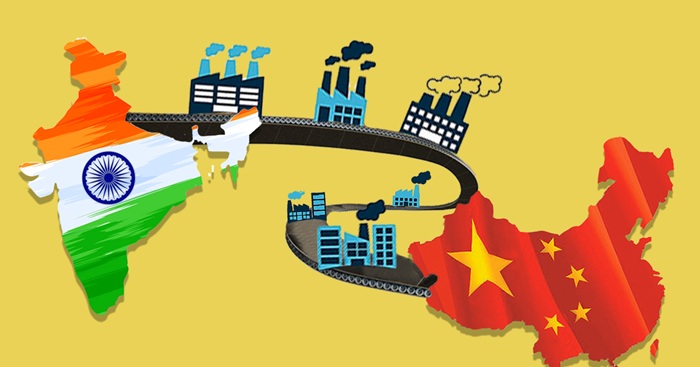
As per a Fitch Solutions report, China reduction of apparel manufacturing operations has encouraged Cambodia to expand its manufacturing services to North America and Euro. Low labor costs and favorable investment policies along with full foreign equity ownership in textiles is further supporting this shift. The country not only imports its raw materials from China but also uses its transport facilities.
EU to approve LVMH’s acquisition of Tiffany
EU is likely to approve LVMH’s acquisition of US jeweller Tiffany. The EU decision comes amid a legal battle between LVMH and Tiffany, with the latter suing the Louis Vuitton owner in a Delaware court, alleging that the French company has deliberately been stalling the completion of the deal.
Tiffany has alleged that LVMH has improperly tried to renegotiate the deal, which was agreed in November last year before the COVID-19 pandemic emerged and hit countries and companies worldwide.
LVMH has countersued Tiffany, alleging that the U.S. company has been mismanaged during the COVID-19 pandemic.
The European Commission, which is scheduled to decide on the deal by October 26, declined to comment. LVMH and Tiffany did not immediately respond to a request for comment.
The two companies had several overlaps in some areas but these are not serious enough to trigger competition concerns, the people said. The US Committee on Foreign Investment and antitrust enforcers in Australia, Canada, China and South Korea have already given the green light to the deal.
US home textile imports surge 20.7 per cent in Q3
There was a 20.7 percent surge in US’ imports of home textiles in the third quarter, including a 361 per cent surge in shipments linked to Welspun, says Panjiva, the supply-chain research unit of S&P Global Market Intelligence. The country’s imports of winter apparel fell by 21.1 per cent during the quarter, which included a 24.7 per cent drop in shipments linked to Sumec Corp, a Chinese importer of bulk commodities including apparel and textiles.
Panjiva’s data shows, total US imports of apparel, footwear and textiles imports rose by 0.8 percent year-over-year in September 2020. However, imports of apparel and footwear fell by 1.6 percent and 17.0 percent year-over-year, respectively, while textile imports spiked by 18.9 percent.
COVID-19 has driven many shoppers to invest in athleisure apparels instead of work-appropriate attire. This can be corroborated by a rise in shipments of athleisure apparel, while imports of suits and shirts dropped 17.6 percent. Even spending on kids’ apparel for kids has slowed as parents faced uncertainties over what the school year would bring.
Fast Retailing profit to rebound 70 per cent next fiscal: Refinitiv
Japanese apparel group Fast Retailing, which owns Asia’s biggest fashion brand, Uniqlo, is seeking to draw a line under a weak fiscal year ended August. According to Refinitiv data, the company’s profit is expected to rebound around 70 per cent in the next fiscal year, as people in Japan and China, the company’s two main markets, resume shopping.
Uniqlo’s domestic same-store sales jumped by 10 per cent in August from a year earlier, thanks to its re-usable “Airism” masks and baggy pants. The brand’s emphasis on practical, daily essentials and quality-for-money proposition has positioned it well, helping it avoid major inventory mark-downs, with some spring items like light coats carrying over into the fall season without discounts.
The brand’s full recovery will rely not only on the pandemic coming under control but also on its ability to offer more than its cost-effective casual wear. Resurrection of its partnership with designer Jil Sander may help the brand achieve this.
Pakistan textile exports plunge 62 per cent in FY20
As per Synthetic and Rayon Exports Promotion Council (SRTEPC), Pakistan’s textile profits fell by 62 per cent Y-o-Y in FY20 due to a dismal Q4 FY’20 performance. Its textile exports dropped by 6 per cent Y-o-Y to $12.5 billion due to lower quantity exported. In the first eight months of FY20, Pakistan’s textile exports increased by 8 per cent Y-o-Y. They dropped by 29 per cent Y-o-Y in last four months due to either postponement or cancellation of orders amidst COVID-19.
Textile revenues declined 21 per cent Y-o-Y due to the closure of retail shops during the lockdown period. As a result, overall revenues declined by 3 per cent Y-o-Y in FY20. Gross margins too declined by 2.2 per cent Y-o-Y. This was largely due to weak economies of scale due to the pandemic, higher cotton prices as local production declined further, and higher energy costs.
Cotton prices jumped by 5per cent Y-o-Y to Rs8,984/mound during 2QFY20, the main cotton procurement period, over the news of cotton shortage.
Luxury brands to lose $35 billion in brand value due to COVID-19: Report
As per the latest ‘Brand Finance Luxury & Premium 50 2020 report, world’s top luxury and premium brands could lose up to $35 billion of brand value cumulatively as a result of the COVID-19 pandemic. The report analyzes the three subsectors of apparel, automobiles and cosmetics and personal care within the luxury and premium ranking. These sub sectors are likely to be impacted differently by coronavirus, with apparel brands facing a 20 per cent loss of brand value, while automobile are set to be moderately impacted, facing a 10 per cent loss of brand value and cosmetics brands largely sheltered from the damage of the pandemic.
The report states, the value of the 500 most valuable brands in the world, ranked in the Brand Finance Global 500 2020 league table, could fall by an estimated $1 trillion as a result of the coronavirus outbreak.
The report ranks Porsche as the world’s most valuable luxury and premium brand following a 16 per cent increase in its brand value to $33.9 billion. Givenchy has been ranked as the fastest-growing brand with its brand value growing by 74 per cent to $2 billion, simultaneously jumping 11 spots in the ranking from 37th to 26th.
Five French brands feature in the top 10 list with their brand values growing on average by 14 per cent. In third place in the top ten ranking, Louis Vuitton has been ranked as the fastest growing brand with 21 per cent increase in brand value to $16.5 billion, while fifth-ranking Chanel recorded a solid 20 per cent brand value growth to $13.7 billion.
In addition to measuring overall brand value, Brand Finance also evaluates the relative strength of brands, based on factors such as marketing investment, familiarity, loyalty, staff satisfaction and corporate reputation. According to these criteria, Ferrari has retained its position as the world’s strongest luxury and premium brand with a Brand Strength Index (BSI) score of 94.1 out of 100 and a corresponding elite AAA+ brand strength rating.
SLCGE extends support to Brandix Group
Amidst COVID-19 crisis, the Sri Lanka Chamber of Garment Exporters (SLCGE) has extended its support to the Brandix Group and its employees especially those working in the Yakahatuwa, Minuwangoda plant.
A responsible association representing the SMEs in the apparel industry, SLCGE has actively supported the health and law enforcement authorities to eradicate the impact of COVID-19. By doing this, it is helping the national economy to generate foreign exchange which is the need of the day.
With over 1,000 garment workers from the Minuwangoda factory testing positive for COVID-19, several allegations were levelled against the parent company – Brandix Apparel about how they handled the upsurge of cases. At the onset of the indefinite curfew period in March, many garment workers were at the receiving end of a challenging situation where many junior workers lost their jobs and those who went on leave weren’t paid.
Egypt's RMG factories reduce production of winter clothes
Egypt’s readymade garment factories have reduced production of winter garments by 50 per cent due to the impact of the pandemic, said, Mohamed Abdel-Salem, Chairman, Egypt’s Readymade Garments Chamber. Factories expect demand for winter clothes to be low this season, as was the case with summer clothes earlier this year. Abdel Salem revealed that the prices for these winter garments will be the same as last year.
Amr Hassan, Head-Garments sector, Cairo Chamber of Commerce, attributed the decline in sales to the curfew imposed by the government to curb the spread of coronavirus, which decreased demand and forced shops to close early. Cairo Chamber of Commerce was the first Egyptian Chamber established in Cairo by Abdelkhalek Madkour Pasha in the name of the "Cairo Trade Secret " in1913 . The chamber includes a large number of traders representing about 60 per cent of those who are engaged in trade activities in the Arab Republic of Egypt.
No deal Brexit may prove to be the final nail in the coffin for European fashion
 COVID-19 outbreak and a no-deal Brexit may prove to be a double whammy for the UK fashion industry as domestic brands will face burdensome intellectual property laws and labeling requirements and the exit of the EU preferential trading zone will make nearshoring more expensive.
New for renegotiating supply terms
International brands operating in the UK currently face 8-12 per cent tariffs on their fashion imports while domestic brands face 6 -12 per cent duties, reports Vogue Business. Post Brexit, the government plans to scrap tax-free shopping for international visitors. As per estimates by the British Fashion Council and Oxford Economics, this may result in UK fashion industry’s revenue dipping by up to a quarter this year. It may also increase fashion prices across the country, crippling demand further. To avoid significant costs and delay, brands will have to negotiate with material suppliers, logistics firms and customs agents even though it may seem a bit overwhelming given the current economic pressures.
To continue trading with the EU post Brexit, UK brands will need to process new documents and follow new protocols, including obtaining a registration and identification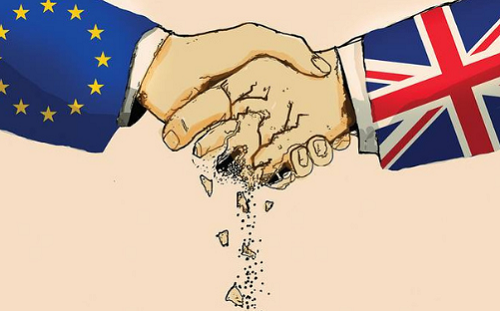 number known as an EORI. Once they have an EORI, they would have to gather the relevant paperwork and forms to move goods across the border. For this, they would also have to collaborate with partners including suppliers and freight companies.
Monitoring contract terms
Besides tariff codes and export documentation, brands would also have to consider diverging rules on data protection, labeling and intellectual property besides checking contracts to ensure that the same terms apply once the UK leaves. Small and medium-sized brands can dampen price-increases by reaching a zero-tariff deal.
To avoid unnecessary transportation of goods, fashion retailers across price points are increasing their share of European warehouse space and directing goods shipped from Asia to Europe. International brands are familiarizing themselves with customs procedure as they are likely have a presence outside Europe in future.
The final straw
In January, the UK government plans to end tax-free shopping that allows tourists from outside EU to claim back 20 per cent of the cost of luxury purchases. This may encourage tourists to choose Paris and Milan over London for their international shopping. Brands may also face a two-delay in getting goods over the border.
Other complications that brands may face include the rules of origin as goods manufactured across the borders of Europe and its Mediterranean neighbors like Morocco, Turkey and Tunisia will no longer be duty-free after entering the UK. To deal with this, brands will have to prepare themselves to face the worst. However, with many companies currently being at a risk of shutting down, Brexit may prove to the final nail in the coffin for European fashion.