FW
Lenzing presents new Lenzing FR fiber offering at Techtextil
Leading global producer of wood-based specialty fibers Lenzing presented its new carbon- neutral Lenzing™ FR fiber offering for the protective wear segment at Techtextil Frankfurt. Lenzing collaborated with long-term partner Textil Santanderina, a Spanish textile company for the venture. The textile company also collaborated with European fabric manufacturer Klopman to showcase the applications of its carbon-zero Tencel ™ branded fibers launched in 2020.
These two partnerships mark an important milestone in Lenzing’s tenure as the company engages itself in providing eco-friendly alternatives for manufacturers in various segments through collaborating with leading industry partners. The carbon-neutral Lenzing™ FR fibers are made using a sustainable cellulosic solution for the protective wear segments. In addition to the benefit of reduced carbon footprint, these fibers also offer supply chain transparency as part of Lenzing’s fiber identification technology. This technology enables full traceability of the fiber and protects products from counterfeiting.
Weavers in China holding higher inventory than last year
Unlikely to get any new orders in the next three months, weavers in China are holding higher inventory compared to the same period last year. High price fluctuation of feedstock and rising inventories of fabric mills are major causes of concern. Orders for cotton grey fabric in China remained bleak in May as weavers had to liquidate previous orders to clear inventory backlog. As per a CCF Group report, weavers did not have any new orders due to low consumer enthusiasm.
Home textile orders remained flat in June, as weavers mainly purchased stocks amid right demand. On June 2, weavers had orders lasting only 5.5 days production, down about half from the same period last year. Fabric plants reported negligible sales while the frequency of orders by regular customers also declined. A few fabric mills extended holidays despite the end of the Dragon Boat Festival. Those mills that resumed production did it on a limited basis.
Bluesign to develop sustainable chemistry index with SCTI
Swiss creator of the Bluesign System Solution for sustainable textile production, Bluesign will develop a sustainable chemistry index in collaboration with Sustainable Chemistry for the Textile Industry (SCTI) to develop a sustainable chemistry index. As per The Spin Off report the index will provide a standard guide for communication between chemical suppliers, manufacturers, brands and NGOs. It will enable stakeholders to assess the sustainability of textile chemical products while safeguarding the intellectual property of participating chemical companies.
The index will be implemented and managed by Bluesign as an independent authority having a holistic approach to helping companies throughout the textile supply chain improve their sustainability performance. The index will be reserved for substances that are transparent about the chemical’s circularity viability, greenhouse gas emissions during production, and the source of the raw materials. It will also require that the downstream use of the chemical is optimized, meaning, for example, that it promotes resource saving in textile finishing. Additionally, excellent corporate governance paired with well-defined environmental and social (ESG) goals will be a pre-condition.
Bangladesh RMG sector yet to recover from pandemic onslaught: Report
Bangladesh readymade garment and textile sectors have not yet fully recovered from the onslaughts of pandemic, says a report by The Business Standard. The situation has worsened due to rising global freight costs and weakening of the local currency against the US dollar and a looming recession and customers’ changing habits.
The report states, the Ukraine crisis has led to many issues in the country including a looming recession likely to affects its markets in the US and Europe. Inflation caused by soaring energy and food prices along with a sharp rise in housing costs and mortgages have begun to affect consumer spending patterns as they are left with dwindling disposable income.
With dollar strengthening against the Taka it has also taken a toll on brand’s profits in their home countries. For example, H&M in Sweden and Inditex in Spain have faced such fate. Also, major brands are stuck with excess inventory which will slowdown future orders. The report warns RMG and textiles sectors to be careful in coming days as they are likely to get fewer orders at lower prices. A proposed hike in source tax would also have a long-term impact on the industry, the report says.
Buyers might also delay payments due to the impending slowdown. This will add to the strain on the EDF facilities. Additionally, the hike in energy prices alongwith a rise in cost of doing business will make business more challenging for manufacturers, the report adds.
India’s textile dyes market to grow to $8 billion by 2031: IBEF
The latest India Brand Equity Foundation (IBEF) report forecasts, India’s textile dyes market will grow to $8 billion by 2031. Most of the growth will be stimulated by rapidly evolving fashion trends encouraging manufacturers to experiment with new color combinations and designs. The market will grow at a CAGR of over 6 per cent through 2031.
Dyes market to grow driven by Asian region
By 2022-end, the textile dyes market is expected to reach a value of $6 billion. Its estimate growth rate during the year will be 5 per cent. Most of this growth will be driven by the Asian region with India and China emerging as growth leaders. By 2031, the India, South Korea and Australia markets will collectively reach a value of over $600 million by 2031.
Demand for direct textile dyes is expected reach over $2 billion by 2031. Meanwhile reactive textile dyes will experience fastest growth at approximately 7 per cent CAGR until 2031. This will be followed by polyester textile dyes which too will grow at 7 per cent CAGR while dyes for viscose fibers will grow at 6 per cent CAGR.
India’s textile production, which grew 6 per cent in FY2018-19, is expected to reach $23 billion by 2027 the IBEF report states. According to Textile World estimate, China will dominate the textile dyes market in this period with 66 per cent of global production exceeded 50 million tons. China will generate $2 billion revenues from textile dyes during the period.
Rising concerns over excessive use of synthetic chemicals is propelling demand for organic dyes, says a senior analyst. The FactMR report names Lanxess AG, Huntsman International LLC, Atul Ltd, Anand International, Dystar Singapore, Kiri Industries as some of the prominent textile dyes manufacturers in India. The report states, Lanxess AG acquired 100 per cent share of Emerald Kalama at a purchase price of $1billion. The move aims to consolidate the company’s position as specialty chemicals manufacturers.
In June 2019, Organic Dyes and Pigments LLC enhanced its capabilities by relocating two of its facilities. These included combining scattered offices in Rhode Island into one single facility, and combining their Concord NC and Union SC offices into one.
Cotton demand, production, supply remain below estimates during the 2021-22 season: CAI
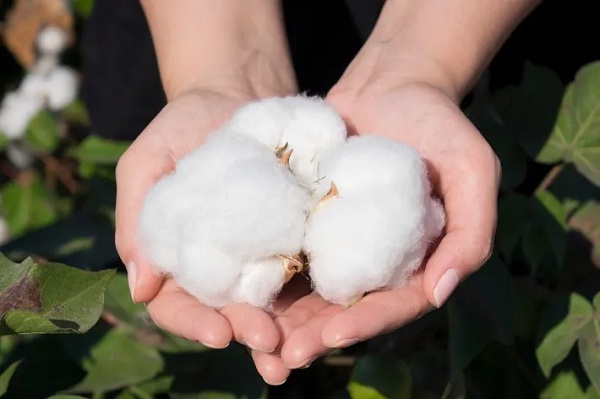
Against its earlier prediction of cotton production reaching 323.63 lakh bales of 170 kg each, during the 2021-22 season, Cotton Association of India (CAI) now estimates, cotton production for the season, starting from October 01, 2021 to May 2022, declined by 8.31 lakh bales to 315.31 lakh bales of 170 kg each.
Demand declines to 315 bales
Cotton demand declined during the current crop year to 315 lakh bales of 170 kg each as against the previous demand estimate of 320 lakh bales of 170 kg each. Domestic demand for cotton is estimated to have reached 225 lakh bales of 170 kg till May 31, 2022. Export shipments until the period are estimated to have reached 38 lakh bales of 170 kg each. CAI is estimated to have left with stocks equivalent to 104.22 lakh bales of 170 kg each by May 21, 2022. This included 70 lakh bales of 170 kg each stocks with textile mills, and the remaining 34.22 lakh bales of 170 kg each stocks with the CCI, Maharashtra Federation and others.
Opening stock remains stagnant
CAI further estimates, the association supplied 368.22 lakh cotton bales of 170 kg each from October 2021-May 2022. This mainly included arrivals of 288.38 lakh bales of 170 kg each, 7 lakh bales imports of 170 kg each and the opening stock of 71.84 lakh bales of 170 kg each at the beginning of the season. The opening stock for the season is estimated to have been 71.84 lakh bales of 170 kg each. This is equivalent to stock finalized by the Committee on Cotton Production and Consumption (COCPC) at its meeting on May 23, 2022 by revising its crop estimate by 3.16 lakh bales of 170 kg each in its earlier opening stock estimate of 75 lakh bales of 170 kg each.
Supply declines by 11.47 lakh bales
As per CAI Crop Committee, total cotton supply till September 30, 2021 declined by 11.47 lakh bales to 402.16 lakh bales of 170 kg each as against it previous estimates of 413.63 lakh bales of 170 kg each. This included the opening stock of 71.84 lakh bales of 170 kg each at the beginning of the cotton season on Ocober 1, 2021, production of 315.32 lakh bales of 170 kg each as against the previous estimate of 323.63 lakh bales of 170 kg each and the imports of 15 lakh bales of 170 kg each.
Domestic demand during the period declined to 315 lakh bales of 170 kg each as against the previous estimate of 320 lakh bales of 170 kg each. The association export’s as 40 lakh bales of 170 kg each (equivalent to 42.50 lakh running bales of 160 kgs. each). Exports declined to 78 lakh bales of 170 kg each while end stocks declined to 47.16 lakh bales of 170 kg each.
Mango to shut operations in Russia
After 23 years of operating in Russia, Fashion Company, Mango has decided to definitively abandon direct sales in the country and hand over its store to franchisees to deal with uncertainties arising out of current geopolitical situation.
As reported by 'El País'in order to provide aguarantee coverage to its 800 employees in Russia, Mango will cease to operate directly in the country, and has reached an agreement with several of its franchise partners to divest its business to them.
Last March, as a result of the war in Ukraine, Mango decided to temporarily suspend its operations in Russia, leaving the 55 stores it owns in the country -another 65 are franchises- and the online sales platform without activity.
According to the company, it has from the beginning of its operations prioritized the safety of its teams in Ukraine and Russia and its distribution network. The company has made a 20 million provision to cover the impact of the situation in Russia, the first two points-of-sale will be sold next week, with a further 22 expected to be added between this month and the following month.
Sexy women’s underwear makes a comeback with new lingerie collections by brands
Sexy women's underwear is making a comeback with Dior launching a babydolldresss over a black thong at a show in Paris this winter.
Similarly, lingerie brand Chantelle has joined the trend, launching a new Chantelle X line that prioritizes sexiness.
Experts say this trend emphasizes women wearing lingerie for themselves rather than trying to impress others.
Victoria's Secret -- which was seen as symbolising a narrow beauty ideal in the past -- has abandoned its slogan "The Perfect Body" and its army of "Angels" in favour of more full-figured models and strong personalities such as footballer Megan Rapinoe.
The company, previously known for its monochrome close-ups on bums and breasts, is now running ads that show faces, sometimes staring straight into the lens.
Aline Tran, Founder, Les Rituelles says, said there needs to be less anxiety around seduction, and it should instead be seen as something empowering.
CISMA to be held from July 29-August 01, 2022
After three times postponement, China International Sewing Equipment Exhibition (CISMA) will now be held from July 29 to August 01, 2022 at Ningbo Int’l Conference and Exhibition Center, Ningbo.
The show was originally scheduled to be held from September 26-29, 2021 in Shanghai which got postponed till January 2022 and the venue was also shifted to Ningbo in view of resurgence of COVID-19 cases.
Since pandemic woes weren’t over even in January ’22, the show was further postponed till April ’22. Amongst the exhibits, sewing machines account for 51 per cent of the total space in CISMA; sewing and comprehensive equipment account for 25 per cent space; and embroidery machines as well as functional parts account for 12 per cent space each.
Usha Yarns to introduce Circularity Partnership Program at Premier Vision Show
Largest producer of recycled knitting yarns in India, Usha Yarns will introduce Circularity Partnership Program to international brands, buyers and manufacturers at Premier Vision Show to be held in Paris from July 5 to 8, 2022. Launched to tap the production waste of brands and garment manufacturers, the Circularity Partnership Program aims to increase Usha Yarn’s direct collaborations with brands to ensure traceability and zero landfills.
The program urges manufacturers to collaborate with Usha Yarns in to handle their waste in a responsible manner. It assures them of complete recycling of waste, helping them earn their partner brands complete trust.
Usha Yarns’ recycling facilities are dependent on garment waste for acquiring feedstock. The company has been engaged in recycling cotton garment waste to regenerate the best colored years since over a decade now.