FW
Russian-Ukrainian war impacts Indonesian textiles
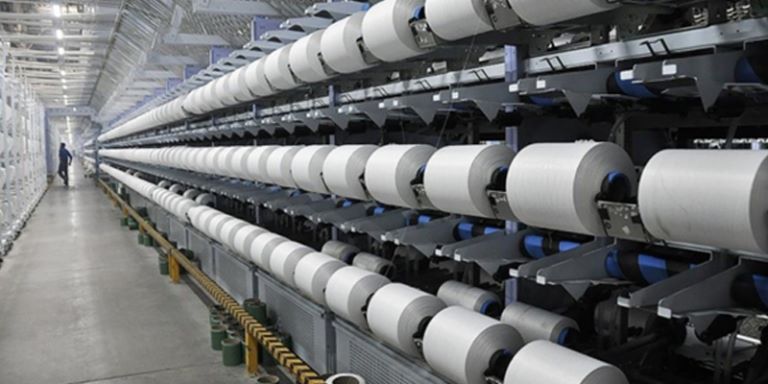
The global crisis as a result of the impact of the Russian-Ukrainian war is being felt by the textile industry in Indonesia.
Indonesia’s textile exports have dropped dramatically after the Russia-Ukraine war. The loss of this export market has made textile companies in Indonesia overstock.
On the other hand, the domestic market is not available since it is flooded with imported products. So this condition causes domestic textile products to go nowhere and the impact of which has been that textile companies in Indonesia are experience overstock.
This has also caused textile companies to take policies to lay off their employees. In just 16 days, more than 85,000 employees throughout Indonesia have been laid off. It is difficult to predict when the textile industry in Indonesia will recover from the current crisis caused by the war. The recession can be said to have begun. If domestic demand revives the export market that is currently missing can be replaced and textile companies in the country can survive. The industry feels that suppression of imports, especially the flood of illegal imports of used clothes, can help textile enterprises to revive.
In the third quarter of 2022, Indonesia’s textile industry grew by eight per cent year on year.
Schoeller collaborates with Nativa
Schoeller is using Nativa wool to make fabrics. Nativa is the first global wool brand to provide blockchain traceability from farm to consumer. This transparency in the supply chain, enabled by the Nativa certification and powered by blockchain, means brands can truly show the journey of their wool. A unique QR code is generated for each product of each brand. This code is a connection between the Nativa blockchain platform and the Nativa blockchain website. Customers can scan the QR code to view the website, where they can trace in real time the journey of their wool, from farm to brand.
Nativa wool comes from certified farms in Australia, New Zealand, South Africa, North America, Uruguay and Argentina. The farms comply with strict levels of animal welfare, and management and ethical work policies. To ensure animal welfare each farmer has a management plan, assessing feeding, breeding, behaviour, animal handling and health and infrastructure. This includes the prohibition of mulesing and stress-free shearing. All following steps such as wool sourcing, combing, spinning and weaving are also monitored and certified to the highest ethical and quality standards.
The use of materials produced in a conscious and environmentally friendly manner is of fundamental importance to Schoeller, which fulfills its responsibility toward humans, animals and the environment with great care. Therefore, the company has chosen to collaborate with Nativa.
US to host digital textile printing event
Digital Textile Printing Conference will take place in the US, December 7 to 8, 2022.
What started as an experimental collaboration has become an annual event. Now in its seventh consecutive year, the event connects leaders and innovators in the digital textile printing community.
There is something for everyone at this year’s event – direct-to-garment, home décor, design, screen printing, sustainability, and more. This year’s Digital Textile Printing Conference features a packed agenda highlighting notable speakers, networking receptions, lunches, and an exhibitor space where attendees can explore new technology and products. The event’s theme is Driving Digital Textile Transformation … Go! which reflects in the overarching common thread of the thought-provoking presentations that will be presented by industry thought leaders across the two days.
There will be sessions on business growth and digital textiles, textile industry updates, empowering the print community to better understand the interior design industry, on demand direct print, digital product passports, formulating pigment inkjet inks for fashion and apparel applications, computer to screen applications for garment printing, digital textile printing as an artistic medium, performing color process control in digital textile printing, advances in digital textile manufacturing. Tabletop exhibits and networking breaks are key benefits of the Digital Textile Printing Conference.
Pakistan October textile exports down 15 per cent
Pakistan’s textile exports fell by 15 percent in October 2022 on a year on year basis. On a month on month basis, textile exports fell 11 percent in October 2022 compared to September 2022.The country’s textile exports declined by one percent during the first four months of the current fiscal year compared to the same period of last year.
Cotton yarn exports fell 27 percent during the first four months of the current fiscal year. On a year on year basis, cotton yarn exports fell 53 percent while on a month on month basis they fell by 35 percent. Raw cotton exports grew 100 percent during the first four months of the current fiscal year on a year on year basis.The country’s overall exports during the first four months of the fiscal grew by one percent compared to the same period last fiscal.
Exports in October 2022 fell two per cent compared to September 2022 and by three percent compared to October 2021.The main commodities of exports during October 2022 were knitwear, readymade garments, bedwear, cotton cloth, rice, towels, madeup articles, fish and fish preparations, rice basmati and cotton yarn.
Sustainable jeans brand Kings of Indigo files for bankruptcy
Dutch jeanswear brand Kings of Indigo has filed for bankruptcy.
The brand which was launched in 2012 survived the bankruptcy of its previous owner, Varova Fashion Holding, in 2018 but could not handle the combined factors of a challenging business transition, pandemic-related problems, late deliveries and inflation.
Pioneering sustainable brand Kings of Indigo was able to contribute to making the fashion industry more sustainable, showing other brands how to work cleaner and with more care for the people involved in this industry, without compromising on quality. The label was a sustainability forerunner with its use of biodegradable stretch denim, waterless washes and blockchain technology to trace material back to its source to exclude greenwashing. The latter was a key part of its traceable denim collection that it launched in 2021.
Kings of Indigo made quality denims, tops and accessories inspired by American classics with a Japanese eye for detail. The collection was mainly made from environmentally preferred fibers such as recycled or organic cotton and processed in a sustainable way. The organic cotton used was GOTS certified. Most of fabrics used in the woven tops were with organic cotton, linen or Tencel. To guarantee quality, the organic cotton was processed in the best denim mills.
Hohenstein opens lab in Gurugram, India
Hohenstein has opened a testing laboratory in Gurugram.
The new addition to Hohenstein’s expanding lab network will focus on physical, colorfastness and restricted substance testing of leather, footwear and personal protective equipment. The lab will complement Hohenstein’s established textile testing labs in Asia, helping global brands and retailers ensure world-class quality products from India. Leather and footwear services will include testing quality and performance characteristics to international standards.
With more than 40 offices and laboratories, Hohenstein is an international partner for independent testing, certification and applied research around human-textile-environment interaction. It develops science-based methods and standards that consider the user in real life, not just in the lab. Through standard or customized testing, and interpretation of the results, Hohenstein experts solve problems, verify claims and help partners bring better, safer products to the market – more sustainably.
Hohenstein is a founding member and leading provider of the Oeko-Tex portfolio of services and is certified by the US Consumer Products Safety Commission as a third-party, independent laboratory for CPSIA compliance verification.
Hohenstein is at work developing a protein-based water and dirt-repellent finishing agent to provide an alternative to hydrophobic processes using fluorocarbon chemicals.The aim is to functionalise textiles in a stable, economical and sustainable way using fungal proteins produced with biotechnology as a replacement for per- and poly fluorinated hydrocarbons that are potentially dangerous to humans and the environment.
Currency slide doesn’t help Bangladesh exporters
When the currency began sliding against the dollar textile and readymade garment exporters in Bangladesh were supposed to gain from the development. But the reality turned out to be different for them as they saw lower profits or even losses.
Bangladesh’s currency depreciated by about 25 per cent against the dollar between February and September, driven by the Russia-Ukraine war.A currency depreciation, if orderly and gradual, usually improves a nation’s export competitiveness, but exporters in Bangladesh could not make the most of the depreciation since they had to buy dollars at a higher price while opening letters of credit to import raw materials needed to serve the global markets.
Most textile and apparel manufacturers in Bangladesh purchase raw materials from international markets and they have had to pay higher prices while opening letters of credit. So though exporters benefited from the depreciation of the local currency, the gains were gobbled up by the huge difference in the buying and selling price of the dollar. As a result, costs rose. Prices of raw materials surged in the global market at the beginning of the quarter before falling towards the end.
Insufficient energy supply also hurt the textile and garment sectors since they are heavily dependent on energy.
Bangladesh factories receive Sustainability Leadership Awards
Eighteen textile and readymade garment factories in Bangladesh have been honoured with the Sustainability Leadership Award for their outstanding performance in three categories – social standards, environmental excellence and innovative excellence.
The award has been instituted by the Bangladesh Garment Manufacturers and Exporters Association (BGMEA) and the German-based Deutsche Gesellschaftfür Internationale Zusammenarbeit.
The main objective of this award is to recognise the best of the readymade garment industry and present them to the global audience in order to promote complianceand encourage the country's apparel makers to keep prioritising sustainability in the coming days.
Today, Bangladesh’s clothing factories are not only safer but also dynamic, modern, energy-efficient and environment-friendly. Germany which ranks top among the EU countries in importing textiles made in Bangladesh is committed to continuing its support to the compliant factories.
Among the winners, Vintage Denim Studio was announced champion and Echotex runner-up for the most convincing factory setup, while Ananta Garments and Pacific Jeans received the award for women empowerment at the workplace. Epyllion Knitwear and Flamingo Fashions were picked for the best-supported social initiatives in the neighbourhood of factories. Envoy Textiles and Zaber&Zubair Fabrics were recognised as environmental champions while Color City and Universal Jeans were honoured for water use reduction.
Grim outlook for 2023 Vietnamese textile exports
The economic downturn and high inflation in many major export markets are causing difficulties for Vietnam’s textile exporters.
The prospect of orders for Vietnam’s textile and garment sector for the fourth quarter of 2022 and the first six months of 2023 are not bright because many major export partners are facing high inflation and high unsold inventories.The number of orders placed in the fourth quarter of 2022 fell 25 per cent to 50 per cent from the second quarter of 2022. So it has become extremely difficult for enterprises to plan business for 2023.
They have to closely monitor the world economic situation, especially the major export markets of the textile and garment sector. The number of orders in November and December decreased by 30 per cent compared to the average number of the third quarter of 2022, even though difficulties are forecasted to last into next year.
Additionally, processing orders are also squeezed in price by about 15 per cent while input costs continue to increase.Inflationary pressures in many major economies are hampering recovery. Tightening monetary policies in many major economies have reduced the demand for goods, impacting the production and export of many countries, including Vietnam.
Burberry Q2 sales up 11 per cent, aims to refocus on Britishness
For the second quarter Burberry’s sales grew by 11 per cent. The progress happened due to increased tourist spend. For the first half of the year the brand’s revenue rose by five per cent. Adjusted operating profit for the period climbed six percent.
The strategy for the next phase for growth includes a target to double sales of leather goods, shoes, and women’s ready to wear.
British luxury brand Burberry has an extraordinary legacy, a unique British heritage and a very strong platform to build on. The strategy also aims at refocusing on Britishness and strengthening the connection with British design, craft and culture.
As the pandemic effect eases Burberry’s boutiques are all open back up fully. Burberry has been pursuing a fusion between social media celebrities and the blockchain, including the launch of NFTs in the gaming world. Burberry’s ultra-savvy marketing drives are helping the company win new style-hungry customers across the world, desperate to get their hands on a slice of the brand and willing to pay full price for the privilege.
In January 2022, Burberry’s higher quality business saw its full-price sales rise 26 per cent in the quarter versus comparable 2019 levels, while its total same-store sales slid three per cent.