FW
EU August imports up 13 per cent
The European Union’s imports of textile and apparel increased 13 per cent in August 2022.
From January 2022 to August 2022 the year on year increase was ten per cent. In terms of import value, textile and apparel imports in August 2022 were up 50 per cent and the cumulative year on year growth rose 35 per cent from January 2022 to August 2022.
From the perspective of imported varieties, knitted clothing, textile products and woven clothing accounted for more than half, followed by chemical fiber yarn, accounting for about 20 per cent. The proportion of cotton products, yarn, and yarn fabrics was relatively small.
The EU’s imports of knitted clothing mainly came from Bangladesh and China, followed by Turkey. Woven clothing came mainly from China and Bangladesh while the share of Turkey and Pakistan was relatively small. Other manufactured goods were mainly sourced from China, followed by India and Pakistan, and Turkey only accounted for a relatively small proportion. Chemical staple fiber and yarn mainly came from China and Turkey, followed by India. China was also the largest source of the EU’s chemical filaments and fabric imports. For cotton products and yarn, the sources were mainly Turkey, followed by India and Pakistan.
Chinese consumers get more discerning
China’s clothing industry has developed rapidly. The country accounts for 25 per cent of the world’s footwear and clothing market. The United States is the second largest, accounting for 21 percent, and Western Europe is around 20 percent.
China’s fashion consumption has experienced four stages in the past 20 years: basic, developed, enjoyable and emotional consumption. The shifts have been driven by the drastic rise in per capita GDP that China has seen since its reform and opening-up,powering the development of a high-quality domestic clothing industry catering to ever-more refined tastes.
As Chinese consumers are becoming more mature, key purchasing factors are becoming more diversified and decentralized, which has shifted patterns of material consumption from tangible to intangible, including spiritual, cultural and emotional consumption. At the same time, the cultural confidence of millennials and Generation Z, who grew up in the period when China’s economy was booming, has greatly improved, further promoting the vigorous development of brands. Over 31 percent of Gen Z buyers display more individualistic consumption patterns, preferring niche and unique brands over famous commercial brands.
The pandemic has contributed to growing economic uncertainty, making them care more about quality-to-cost ratios.At the same time, sustainable fashion and environmental protection are becoming the consensus of the younger generation of designers.
Remake’s Fashion Accountability Report 2022 shows fashion companies not meeting green commitments
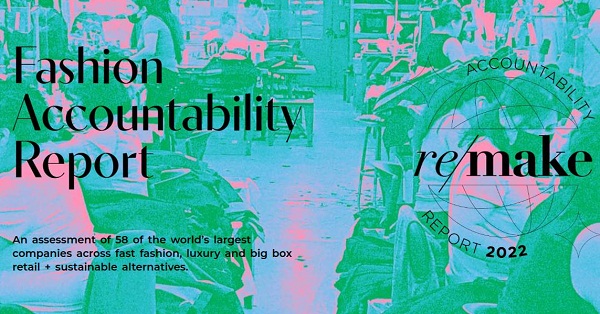
After the two years of the pandemic that turned the world upside down, Remake World – a global advocacy organization that fights for fair pay and climate justice in the $3 trillion clothing industry- is all out to revamp sustainability issues and repair and remake the future of fashion.
Remake World released its second annual 2022 Remake Fashion Accountability Report in early November, which assesses around 58 major fashion retailers, including new entries such as Chanel, J.Crew, and Allbirds among others. It has updated its evaluation framework and expanded the list of brands to go beyond transparency and to measure accountability levels instead of just looking at profits and progress figures among the big players in the fashion industry.
New sustainability fashion policies
One of the key positive 2022 trends in the apparel industry is that fashion policy has taken centre stage and moved into the mainstream while shaping global legislative agendas around the world. The hard-won recent passing of the Garment Worker Protection Act (SB62) in California in 2021 has tried to inspire a wave of proposed policies in the US and Europe that will protect labour and human rights in the poorer parts of the globe. To follow up further, in May 2022, The US Congress introduced a successor law to SB62 called the Fashioning Accountability and Building Real Institutional Change or FABRIC Act, which has strong provisions that both hold companies accountable for supply chain wages and incentivize investments in domestic manufacturing.
Climate criteria issues met only by few brands
In the wake of this, Remake’s 2022 Fashion Accountability Report's key finding is that global fashion companies are making bold promises on climate change policies but they are all half-hearted. Just about three companies comprising 5 per cent of the listed ones, Burberry, Everlane and H&M Group have managed to meet all four climate criteria levels of Remake. These four criteria include: disclosure of full emissions, short-term 1.5℃ pathway-aligned Science Based Targets, ambitious long-term net-zero targets and lastly, a bigger reduction in their total greenhouse gas.
Further breakdown of the report shows four companies or 7 per cent which include Hanesbrands, Patagonia, Ralph Lauren and Reformation have shown some progress towards a living wage in their supply chains in addition to disclosing the methodology they use to quantify a living wage.
Another five companies or 9 per cent which include Burberry, Kering (Gucci, Balenciaga), Marks & Spencer, PUMA and Reformation have shown partial information which points out that a few of their direct employees, such as corporate employees or retail workers were earning a living wage. “As companies reveal their full supply chain emissions, the scale of the problem is clear: Inditex (Zara’s) annual emissions are equivalent, for example, to consuming 39 million barrels of oil,” says the report.
The report states, a third of the assessed companies are reducing their packaging waste and 20 per cent now offer upcycling or repair services. Despite a rise in resale platforms and some repair initiatives, there has not been a transition away from linear production. We continue to see companies co-opting customer interest in circularity – like Shein’s new resale platforms – to greenwash.
This year has been a tug-of-war with two opposing forces making a mark in the fashion segment. There’s been a pull-back in status quo with Shein’s rise and Boohoo’s greenwashing move among others, at the same time, some better policy reform like the Fabric Act, regulatory backlash to greenwashing as well as a lot of global organizing between unions, civil society and citizens such as the Levi’s Accord campaign are happening. The industry remains in hope that 2023 will continue to see more industry support from big companies for worker-driven policies and binding agreements which will make the world a better place for everyone.
Indian cotton gains market share in Turkey’s textile sector
October 2022 saw a decline of cotton prices globally and Turkish cotton growers are feeling the pinch as they are struggling to control their production cost to meet worldwide prices. However, between January and October 2022, Turkiye has seen an overall growth in its textile exports, primarily led by Africa. Morocco has become the country with the highest increase in imports from Turkiye.
Overall as a group of countries, in terms of export Africa’s share was 11.6 per cent. The calculated increase stood at 14.9 per cent and was valued at $1.2 billion. Textile and clothing are key export products for Turkiye and its clothing industry has successfully created popular brands for the African and European markets with quality material and on trend designs. Today, many Turkish brands enjoy a good reputation in high street fashion across Europe.
The Istanbul Textile and Raw Materials Exporters’ Association (ITHIB) published an export sector report titled ‘Textile and Raw Materials Sector October 2022 Export Performance’ and stated the sector’s exports were up 4.8 per cent from January to October this year with a value of $10.9 billion. The data was comparative to the same period in 2021.
Exports to EU remain steady
The export growth figures for Turkish textile exports show despite price rises, the EU market bank on the Turkish brand equity of quality. It’s most important market Italy increased import by 8 per cent, valued at $996 million. Whilst valued at $832 million, the Germans imported 1.1 per cent less of Turkish textiles this year, attributed to the tightening of the fuel crisis in the country. Exports to the US in this period increased by 8.1 per cent and reached a value of $745 million contributing to a 6.8 per cent share of total textiles exported. Spain came in the fourth place with exports valued at $501 million, a 27.7 per cent increase. The only European country where Turkiye experienced a sharp 16.5 per cent decrease was the UK, valued at $418 million.
Turkish yarn exports decline 0.9 per cent
Overall, a key export component, Turkish yarn did not perform as well as textiles. Within the export product group yarn, cotton yarn came in as the second largest contributor with a share of 32.2 per cent, a decrease of 5.4 per cent and valued at $701 million. This may be attributed to the inability of local producers to drive cost-efficiency well enough to match the current low prices offered globally. In fact, Turkiye increased its import of cotton, cotton yarn and cotton textile by a whopping 51 per cent valued at $4.3 million. Top cotton trading partners of Turkey in 2021 were the US with a share of 15.2 per cent valued at $567 million, Brazil with a share of 13.6 per cent valued at $508 million and Uzbekistan with a share of 13.4 per cent valued at $497 million. China continues to be the single largest supplier of cotton yarn and garments to Turkiye, followed by India. Synthetic and artificial filament fibers were Turkiye’s largest exported items in this group with 35.7 per cent share, valued at $778 million.
Interestingly for India, the tag of Indian cotton has gained traction in Turkiye and the country nudged China out to become the second largest importer of Indian cotton, after Bangladesh.
Customised tees grow 9 per cent globally
The global custom T-shirt printing market is growing at nine per cent a year.
Customised T-shirts are gaining immense popularity among young customers. The growing trend of wearing graphic, pre-printed T-shirts with movie logos and slogans is propelling the sales in the custom T-shirt printing market.
The popularity of customized T-shirts among the young is because of the availability of a wide range of colours, patterns, garments, words or images printed on the shirts. As a result, sales of pre-printed and creative graphic T-shirts are increasing.Subsequently, the availability of trendy, fashionable, stylish, and unique customized T-shirts which reflect individual personalities is also favouring the growth. In addition to this, cost-effective prices of these T-shirts, especially across emerging economies, will also accelerate the sales in the market.
Moreover, the use of custom-printed T-shirts to raise social awareness, raise a voice, and support a cause is on the rise. Furthermore, customers in industries such as hospitality, logistics, construction, industry, and medicine are increasingly providing custom printed T-shirts to their employees as a marketing tool.The growing influence of bloggers, promotional strategies, and improved standard of living is also driving the demand for custom printed T-shirts. Manufacturers of custom T-shirts are focused on aggressive promotional strategies, advertisements, and new product launches.
Coats back in business
Coats is pretty much back to normal on the performance front. For July 1 to October 31, 2022, the threads and footwear components manufacturer recorded strong organic revenue growth after the very strong first half. Year-to-date revenue growth was 14 per cent.
Meanwhile improved pricing and productivity continue to offset inflationary pressures.But there was a moderation compared to the first half due to an industry-wide softening in demand, mainly in apparel, toward the end of the period. Apparel and footwear revenue increased three per cent year on year in the period and 14 per cent yeartodate. Apparel experienced some order cutbacks by customers, as a result of the macroeconomic environment.
Footwear continued to see positive end market sentiment across the US, Europe and Asia with Coats’ acquisitions of Texon and Rheno flex performing in line with expectations.Revenue in Performance Materials increased 15 per cent with all segments continuing to perform well. The group’s pricing actions and self-help efficiency programs continue to offset the significant inflationary pressures in the supply chain. In addition, strategic projects remain on track, and are delivering significant operational and financial benefits.
Brands fail to cut emissions: Standearth
Fashion companies are setting topline net-zero targets. But most targets exclude the majority of their supply chains and the sector is still not tackling the emissions arising from the excessive use of synthetic materials. So says environmental NGO Standearth, which assessed ten large fashion firms’ plans.
Additionally, many of these brands’ targets have loopholes for the supply chain, despite the fact that most large fashion firms will see the majority of their emissions footprint being upstream.
Just two of the companies, H&M and Kering, have pledged to at least halve their Scope 3 (indirect) emissions this decade.These same two companies are the only two committed to 100 per cent renewable energy across the supply chain by 2030.Only half of the brands assessed had set independent targets to phaseout thermal coal in supply chains. None share baseline data on coal use in supply chains.None of the companies have emissions targets that cover the entirety of their supply chains with no exclusions.
None of the ten companies have public targets to reduce fossil-fuel-derived material use this decade. This is despite the fact that these materials represent around 20 per cent of the fashion sector’s emissions footprint.
Gucci creative director quits
Alessandro Michele is stepping down as creative director of Gucci.
He had been at the creative helm of the brand since 2015 and played a fundamental part in making the brand what it is today through his groundbreaking creativity.His passion, his imagination, his ingenuity and his culture put Gucci center stage. Gucci, founded in Italy in 1921, is one of the world’s leading luxury brandsand continues to redefine luxury while celebrating creativity, Italian craftsmanship, and innovation at the core of its values. The Italian fashion house wants to be the world’s biggest luxury label.
Gucci also targets an operating margin of more than 40 per cent. It has had a top-to-bottom makeover, from new product ranges to stores redesigned to make them more welcoming, in vivid hues and draped in velvet.The brand expects sales to grow at twice the market rate in the coming years.Gucci is part of the global luxury group Kering, which manages the development of a series of renowned brands in fashion, leather goods and jewelry. Kering places creativity at the heart of its strategy while crafting tomorrow’s luxury in a sustainable and responsible way. Kering has more than 42,000 staff members.
IAF rebuilds trust issues in garment export segment
A fairer distribution of risk and reward between buyers and producers is the main focus of International Apparel Federation (IAF) in the aftermath of Covid years. IAF, the world’s leading federation for apparel manufacturers, (SME) brands, their associations and the supporting industry with membership across 40 countries, is currently putting the spotlight on supply chain issues urgently needed for quicker industry transition and rebuilding of trust issues in a changed post-pandemic world.
Suppliers of the apparel industry were left in a lurch when Covid 19 broke out and the big Western brands collapsed and randomly cancelled completed orders and broke an unwritten business trust. At least 1,931 brands delayed and cancelled orders worth $3.7bn from garment factories in Bangladesh and other poorer manufacturing countries of the world, which led to complete mayhem all through the two Covid years.
The IAF has begun emphasizing on supply chain issues guided by the urgency of the need for industry transition in a changed world. “We believe the supply chain, to function well, literally and figuratively speaking, needs a new contract. It needs to operate with a greater sense of equity. That is why the IAF has teamed up with the STAR Network of industry associations, GIZ, Better Buying and the OECD in a project in which around 10 associations will build their recommendations for payment and delivery terms” IAF said in one of its priorities.
Bangladesh to focus on a better global industry infrastructure
The IAF has however now set many priorities for a better world by making companies adapt policies and core values that will help in the long run although it comes at a steeper cost. The basic essence of the greening of the industry is a wide supply chain, collaborative approach and pledges to reduce CO2 emissions among others. The costs and the rewards of transformation need to be shared in the supply chain and more education can bridge the current gap.
“Our industry needs profit so we can share the profits with all our workers. In Bangladesh, we need to go for higher quality, value-added garments and design backup. Bangladesh needs to focus on and invest in technology and backward linkage industry and produce value-added garment items to retain a larger share of export proceeds here in the country and get better prices from buyers,” says President Cem Altan, President of IAF.
The upcoming Christmas season and major holidays in Western countries should now be utilized to push up demand and end the inventory of buyers while giving a boost to apparel industry. As per the IAF, apparel industry needs a better global, institutional industry infrastructure which promotes more inclusivity while reducing audit and standard fatigue. Some of its other priorities are working on institutional infrastructure, education and training, digitization and transparency.
IAF to promote green investment initiative
IAF now plans to work on enhancing global coordination of industry education by alignment priorities and quality and efforts to reduce the chances of overlap so there is no training fatigue. Some of its other priorities are working on institutional infrastructure, education and training, digitization and transparency. The apparel industry needs a better global, institutional industry infrastructure, promoting more inclusivity and one of the main aims of this is to reduce audit and standard fatigue.
A big new change in the apparel industry is that the European Union from the beginning of 2023 will start asking for a 'product passport' with the implementation of its new legislation as part of its move to reduce carbon emissions. The EU wants to reduce carbon emissions by 55 per cent by 2030 and zero emissions by 2050. The product passport would ensure traceability at every stage of production and also show the carbon emission level of products.
Bangladesh is currently doing well in its green investment campaign with eight out of ten USGBC LEED-certified factories already in the country.IAF is working with Sustainable Terms and Trade Initiative (STTI) for common audit standards and also working on ethical garment practices of global apparel buyers, so that the mayhem of cancellation and non-payment of orders is not repeated in business history again.
India’s Welspun expects 60 per cent revenue growth in three years
Welspun India expects revenue to grow by 60 per cent in the next three years. The home textiles firm also operates in segments such as flooring solutions, advanced textiles, retail, hospitality, and wellness.
Export is expected to play a key role in the company meeting its targets. Welspun India is a prominent player in terry towels and sheets and expects demand to pickup in the next couple of quarters. The company is strengthening its core business in the bath and bed sheet segment and is foraying into blankets and throws. Besides, it is increasing its reach by expanding brand and license business share in key markets such as the US, UK, EU, and south east Asia.
It expects overall domestic business to contribute around 11 per cent of its total revenue by fiscal year 2026, rising from three per cent last fiscal. The group is focusing on emerging businesses which include domestic retail, licensed and owned brands, e-commerce, flooring and advanced textiles.
Welspun India expects the topline of its flooring business to grow by 40 per cent by fiscal year 2026. The company has an installed annual capacity of 27 million square meters and expects full utilisation of annual installed capacity by fiscal year 2026.