FW
Shenzhen Underwear Fair (SIUF) Wraps Up Showcasing Expanding Focus: Beyond lingerie
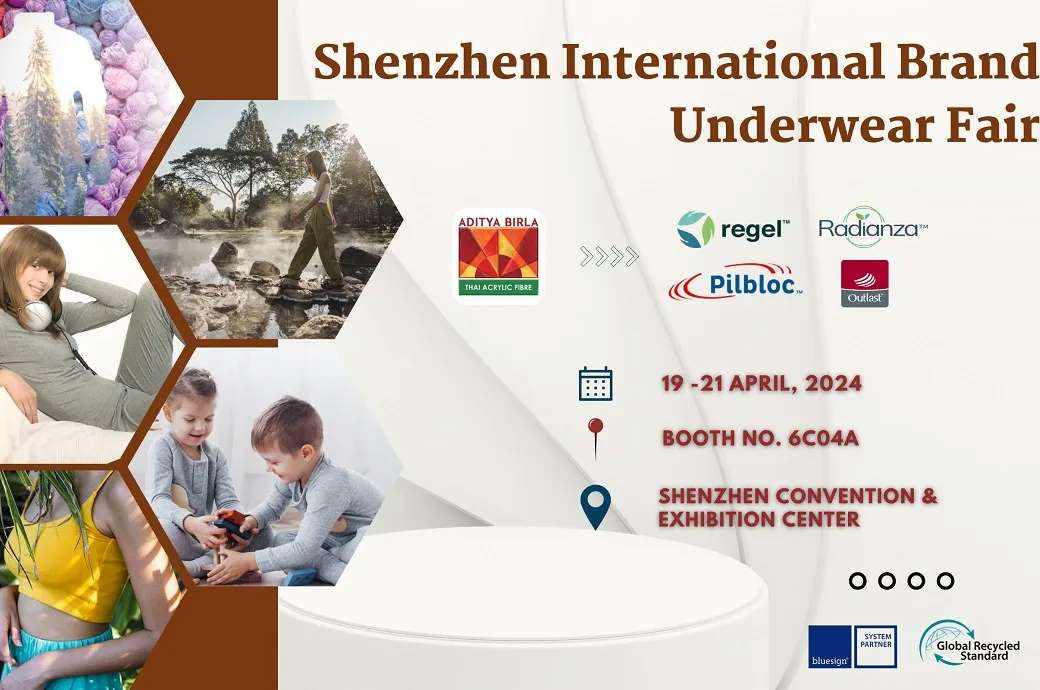
The 2024 China (Shenzhen) International Brand Underwear Fair (SIUF) concluded yesterday, April 21st, marking the end of a three-day event brimming with the latest trends and innovations in the intimate apparel industry. Held at the Shenzhen Convention & Exhibition Center from April 19th to 21st, SIUF cemented its reputation as Asia's most influential underwear trade fair.
This year's SIUF expanded its focus beyond traditional lingerie, showcasing a wider range of undergarments including swimwear, loungewear, and functional activewear. This reflects the evolving consumer preferences towards comfort and versatility in their undergarments. Sources reported a strong presence of brands showcasing seamless designs, sustainable materials, and athleisure influences, catering to the growing demand for active lifestyles.
Fostering Connections: A hub for business
Beyond product exhibits, SIUF served as a premier platform for industry professionals. The event facilitated business networking through designated exhibitor zones and matchmaking sessions, fostering new partnerships and collaborations. Renowned for its ability to connect key players in the global underwear market, SIUF attracted a significant number of industry representatives seeking to explore business opportunities. A major highlight was the "Underwear Innovation Forum," a high-profile conference featuring industry experts discussing the latest technological advancements and their impact on garment design and manufacturing.
Celebrating Excellence: From runway shows to awards
The SIUF wasn't just about commerce – it also celebrated excellence in the industry. The event featured a grand opening ceremony, captivating fashion shows showcasing the latest styles, and prestigious award ceremonies recognizing outstanding achievements by brands and individuals. The runway dazzled with collections from established and emerging designers, highlighting bold color palettes, intricate lacework, and innovative fabrications. Notably, local designer Li Wei took home the "Best Sustainable Design" award for her eco-friendly lingerie line.
Shaping the future of undergarments
The successful conclusion of the 2024 SIUF underscores its position as a leading event in the global intimate apparel industry. By showcasing cutting-edge trends, facilitating business connections through dedicated networking events and conferences, and recognizing industry leaders, SIUF plays a crucial role in shaping the future of undergarments.
Birkenstock to open new stores across Austin and Nashville
After opening a store in the Design District, Miami, Birkenstock plans to open new stores across Austin and Nashville.
Many fashion brands have been opening their stores in Nashville and Austin in recent years and Birkenstock has a huge opportunity to expand here, says David Kahan, CEO, Birkenstock Americas. The brand currently has stores across five other locations in the US. It will launch the Austin store on South Congress Ave in June, while Nashville will be launched later in the year.
According to Kahan, besides New York and LA, other cities in the US are also becoming hubs for fashion, innovation and creativity.
Birkenstock has introduced a self-service hybrid retail model that allows customers to shop independently to find their own style and size. The store also has staff on site to assist with fittings.
The first of these hybrid stores have been opened in Sevierville, Tenn, while another in Westgate, Arizona will debut later this month. The two locations were chosen for their reputation of being outdoor lifestyle centers, adds Kahan. This model helps the company to meet more consumer demand for accessibly priced product. For example, these locations will be used to stock Birkenstock’s EVA collection — which retails form $35 to $60.
The 250-year old German footwear brand also continues to build its digital business and strengthen relations with wholesale partners. Its Q1 FY24 revenues grew by 22 per cent to € 302.9 million from €248.5 million ($269.4 million) the same time last year.
As a part of its recent ‘Make Room for Shoes’ campaign launched in partnership with Nordstrom, Birkenstock plans to sell four silhouettes and color combos through Nordstrom.com, Birkenstock.com, and Nordstrom and Birkenstock stores in the US — for a limited time.
Kenya to launch new clothing company to boost apparel exports
William Ruto, President, Kenya will inaugurate a new clothing company, Nexgen Packaging Kenya, in Athi River on April 23, 2024. Specialising in the production of garment accessories including hangers, patches and woven labels, the facility will boost Kenya’s apparel exports to the United States, thus enhancing its forex reserves. The facility will also help Kenya create an estimated 20,000 new jobs.
The new facility will specialise in the production of various garment accessories, including hangers, patches, and woven labels. These woven labels will play a crucial role in raising consumer awareness by displaying details like fabric composition, such as ‘100 per cent cotton.’
Establishment of the factory has been facilitated by a grant from the United States Agency for International Development (USAID). The event will be accompanied by a ‘Made in Kenya’ expo, showcasing 14 Kenyan apparel and textile businesses that have benefited directly from American support. This expo will highlight the positive impact of US-Kenyan collaboration in strengthening the local textile sector.
The strategic decision to designate Kenya as the primary production hub for Africa affirms the nation's growing importance in the textile industry. This new facility will undoubtedly complement existing operations in Ethiopia, Egypt, and West Africa.
Sales of Korea’s luxury fashion houses decline in 2023
Following a period of robust growth during the height of the COVID-19 pandemic, sales of luxury fashion houses in Korea declined notably in 2023.
Sales of renowned French label, Chanel declined last year after over 30 per cent growth in 2021 and 2022. The brand’s operating profits decreased by 34 per cent Y-o-Y to 272 billion won, a stark contrast to the robust profit surges of 2021 and 2022.
Similarly, Louis Vuitton witnessed negative growth in both sales and operating profits last year. Sales dipped by 2.4 per cent to 1.65 trillion won following impressive growth rates of 40 per cent and 15 per cent in 2021 and 2022, respectively. Operating profits plummeted by 31.4 per cent to 286.7 billion won in 2023, after surges of 98 per cent and 38 per cent in the previous two years.
Christian Dior, another esteemed French luxury brand, saw a 12 per cent increase in sales last year, surpassing the 1-trillion-won mark for the first time. However, the growth rate slowed compared to the 51 per cent surge in 2022.
Among the top five luxury brands in Korea, Hermes was the only company to register growth in both sales and operating profits last year. Sales reached 797.2 billion won, up by 22.7 per cent, with operating profits climbing by 12 percent to 235.7 billion won.
Celine and Rimowa also stood out with rapid growth last year. Celine Korea's annual sales skyrocketed by 513 per cent to reach 307.2 billion won, while Rimowa Korea saw a 77 per cent increase in sales to 63.5 billion won. Operating profits for both brands also experienced substantial growth.
Additionally, the source noted a significant decline in sales and profits for luxury accessories brands such as Rolex, Omega, and Bulgari last year.
Interfiliere Shangai to offer unparalleled industry insights
Scheduled for October 15-16 in Shanghai, Interfiliere is poised to offer unparalleled insights, inspirations, and networking opportunities for stakeholders in the global body fashion industry.
On April 11, 2024, Interfiliere Shanghai debuted its much-anticipated roadshow, drawing in over 25 international and local media representatives, alongside prominent figures from the intimate apparel fashion sector.
Spearheaded by Yvette Hu, Managing Director, Eurovet Asia, the event offered deep insights into the prevailing global trends in intimate apparel fashion. Hu shed light on the burgeoning business prospects within the global body fashion industry, particularly in Southeast Asia. Moreover, she highlighted the significance of forthcoming Interfiliere Shanghai 2024 as a platform for forging new business alliances and collaborations.
Orchestrated by Comexposium (Shanghai) Co, a premier event organiser on the global stage, Interfiliere Shanghai 2024 is renowned for its pioneering role in the intimate apparel domain. With esteemed partners such as La Fédération De La Maille & De La Lingerie and esteemed trendsetting entities like Concepts Paris and La Federation, the event is set to define the pulse of global body fashion trends.
Marking its 20th anniversary, Interfiliere Shanghai 2024 promises an array of festivities, including trend forums, conferences, celebratory galas, and international awards ceremonies.
H&M halts sourcing from Myanmar over labor abuse allegations in garment factories
World's second-largest fashion retailer, H&M has announced its decision to gradually halt its sourcing from Myanmar, citing increasing reports of labor abuses in the country's garment factories. This move follows similar actions by other major brands such as Zara owner Inditex, Primark, and Marks & Spencer.
The decision comes amid a backdrop of political turmoil and humanitarian crisis in Myanmar, exacerbated by a military coup in February 2021. The resulting violence and disruptions to the economy have raised significant challenges for companies operating in the country.
H&M disclosed that it is investigating 20 alleged instances of labor abuse at Myanmar garment factories supplying them. A report by the Business and Human Rights Resource Centre revealed a substantial increase in reported cases of worker abuse, including wage theft and forced overtime, since the coup.
Despite the challenges, H&M emphasised that its decision to withdraw from Myanmar was not solely based on the report but rather stemmed from its own evaluation of the situation. The company stated its commitment to a responsible exit strategy, developed in collaboration with IndustriALL, a global union advocating for brands to cease operations in Myanmar.
Vicky Bowman, Director, Myanmar Centre for Responsible Business, expressed highlighted the potential negative impact of the brand’s decision on thousands of women workers in Myanmar. However, she acknowledged the challenging environment for labor rights organisations and trade union organisers under the military junta.
Other brands like Primark have also announced their exit from Myanmar, with shipments expected to cease by the end of the year. However, concerns remain about the potential repercussions on local communities and workers, as withdrawing could deprive them of vital investment and wages.
This move by H&M and other corporations reflects the complex ethical dilemmas faced by multinational companies operating in regions with poor human rights records. Despite the desire to distance themselves from labor abuses, their exit could have unintended consequences for vulnerable workers and communities.
Oerlikon’s Polymer Processing Solutions Division to participate in ITM 2024
Oerlikon’s Polymer Processing Solutions Division, alongside its joint venture partner BB Engineering, is gearing up to participate in Turkey's premier textile machinery exhibition ITM 2024 from June 04-08, 2024 at Stand 706 in Hall 7 of Tekstil Servis.
Oerlikon will showcase comprehensive solutions spanning from melt to yarn, fibers, and nonwovens at the event. The company also plans to embrace sustainability at the event. It will showcase mechanical and chemical recycling technologies for bottles and textiles, biopolymers, and circular economy models.
Along with its subsidiaries and partners like Oerlikon Barmag Huitong Engineering (OBHE) and Barmag Brückner Engineering (BBE), Oerlikon will present tangible concepts addressing these challenges.
Moreover, Oerlikon will emphasise energy efficiency, economic viability, environmental sustainability, and ergonomic considerations at ITM 2024, while also marking the 20th anniversary of their e-save initiative. André Wissenberg, Head - Marketing, Corporate Communications, and Public Affairs, Oerlikon Textiles, reiterated the company's commitment to profitable and sustainable growth, emphasising performance, quality, sustainability, and commitment as the pillars of their daily operations.
Further, Oerlikon will showcase concrete solutions such as OBHE’s homogenisation technology for mechanical recycling of polyester waste and BB Engineering's VacuFil system for PET recycling. Additionally, Oerlikon Neumag's EvoSteam process promises more sustainable staple fiber production with significant savings in energy, water, raw materials, and operational costs.
Innovations like bicomponent yarns for carpet production demonstrate Oerlikon Neumag's response to market demands for quality, efficiency, and resource optimisation, says Arnd Luppold, Sales Director.
Furthermore, the event will demonstrate Oerlikon's prowess in digitalisation, featuring their Plant Operation Center (POC) and atmos.io platforms, which empower customers with enhanced control over complex systems and data flow in their businesses.
With over 350 installations globally, Oerlikon continues to lead the way in leveraging digital technologies for operational excellence in the textile industry.
Indo Count acquires home fashions brand Wamsutta
A prominent bed linen manufacturer and exporter from India, Indo Count has acquired the esteemed international home fashions brand, Wamsutta from Beyond, Inc. Renowned for its luxurious bed, bath, and home fashion products, Wamsutta has captivated consumers for generations. Finalised on April 18, 2024, this acquisition strengthens Indo Count’s brand portfolio and presence in the premium market segment.
With a legacy dating back to 1846, Wamsutta is known for its exceptional quality and brand heritage. Under Indo Count’s leadership, the brand is poised for significant growth.
Mohit Jain, Executive Vice Chairman, Indo Count, says, with this acquisition the company aims to enhance the brand's value proposition and unlock its global potential. The synergy between Wamsutta’s brand equity and Indo Count’s global reach will propel the brand to unprecedented heights, marking a significant milestone in its expansion strategy.
Luxury brands reassess the role of outlet stores
In the wake of shifting consumer behaviors spurred by the pandemic, alongside inflation spikes and supply chain disruptions, luxury brands are reassessing the role of outlet stores.
In 2023, sales of luxury outlets increased by 35 per cent to reach $50 billion. This growth outpaced other channels, including monobrand and online platforms. Notably, amidst this surge, traditional luxury travel retail faced a significant setback, declining by 14 per cent since 2019 due to pandemic-induced challenges.
While the presence of luxury brands in discount environments might raise eyebrows, many are adopting marketing strategies leaning more towards mass appeal than pure luxury. This shift is partly driven by the pressure to meet investors' expectations for consistent quarterly growth. Consequently, luxury brands are actively pursuing customers rather than waiting for them to come.
Consumers, seeking the allure of luxury without the full price tag, are increasingly turning to outlets as a means to stretch their budgets. The rise in outlet mall traffic, particularly among young, upwardly mobile couples, reflects this trend. Gen Z adults, in particular, are forming habits that prioritize value without sacrificing quality, making outlet malls an attractive destination for budget-conscious luxury shoppers.
Recognising the evolving consumer landscape, industry players like Tanger Outlets are adapting their offerings to align with shifting preferences. By incorporating experiential amenities typically found in open-air shopping centers and diversifying their tenant mix, outlets aim to appeal to a broader audience while maintaining their luxury appeal.
Stephen Yalof, CEO, Tanger Outlets, emphasizes the importance of creating a lifestyle environment within outlet to cater to diverse customer needs. With the acquisition of non-outlet properties, such as mixed-use centers, outlets are poised to integrate learnings from different retail formats to enhance the overall shopping experience.
New platform identifies forced labor risk in supply chains
Supply Trace, a pioneering collaboration between Northeastern and Sheffield Hallam Universities, has unveiled the first open platform designed to identify potential exposure to forced labor within supply chains. Focused initially on the apparel sector, Supply Trace's pilot phase targets shipments linked to the risk of forced labor in China's Uyghur Autonomous Region.
Utilizing trade records and machine learning algorithms, the platform traces relationships between entities and applies risk analysis intelligence. Spearheaded by a team of Uyghur experts, Supply Trace aims to combat forced labor by providing transparent insights into global supply chains.
This launch comes amid escalating global regulatory pressure on companies to address human rights abuses in their supply networks. Legislation such as the Uyghur Forced Labor Prevention Act in the US and the pending EU Corporate Sustainability Due Diligence Directive highlight the urgency for businesses to take proactive measures.
Shawn Bhimani, leading the development, emphasizes the platform's transformative potential in reshaping global sourcing practices. He stresses that addressing human rights concerns is no longer just a corporate social responsibility but a crucial business imperative.
Supply Trace's democratization of trade risk data promises to empower stakeholders across industries, facilitating informed decision-making to mitigate forced labor risks and drive positive change in global supply chains.