FW
AEPC kickstarts seminars
Apparel Export Promotion Council (AEPC) kickstarted the first of fashion forecasting seminars in the month of November 2017 for autumn/winter 2018-19.
The second series of seminars began on March 9, 2018, from Mumbai for the spring/summer 2019 season.
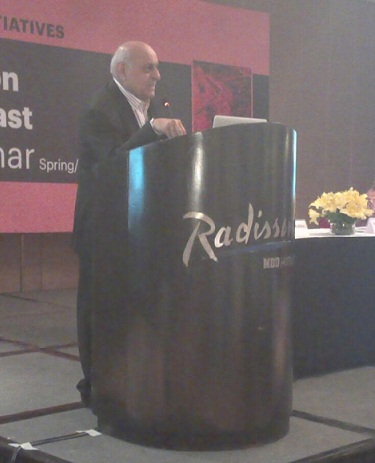
The season is divided into three broad themes, Common Ground, In Touch and Creative Manifesto. The context for Common Ground is de-globalization in a connected world. For better or for worse, the current political landscape will have lasting effects on globalization, well beyond 2019. In a time of de-globalization, many consumers and countries will turn away from the world economy and focus on domestic growth. At the same time, many people long to connect both locally in real life and globally through social media. It’s time to find a common ground.
In Touch highlights that in the time of constant change, consumers swing between tracking their personal data, social media and the news to wanting to opt out entirely. One thing is for sure, people will want to get back in touch with the things that touch them, both emotionally and physically, including sexuality, moods, microbes and food.
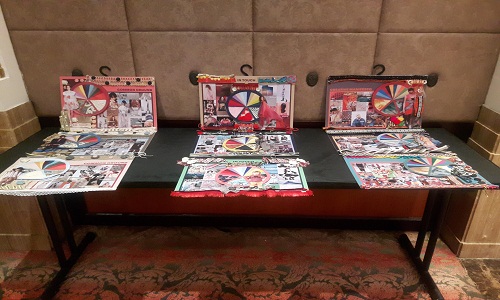
The context for Creative Manifesto is the inequalities and pressures for conformity. In a world in which people are clamoring for truth and transparency, manifesting a desire to be different, to be heard and make an impact, creativity and self expression will flourish, both above and underground. In such times of upheaval, creativity should be encouraged in both business and design as a weapon for change.
The seminars are being organized by AEPC in association with WGSN, the leading trend forecasting agency of the world. The speaker at the event will be Kim Mannino, head of WGSN LIVE, from the WGSN London office. Kim is a very seasoned and experienced professional and has worked for over 30 years in the industry. She has worked with Promostyle for over 20 years and is currently leading the live presentations division of the company.
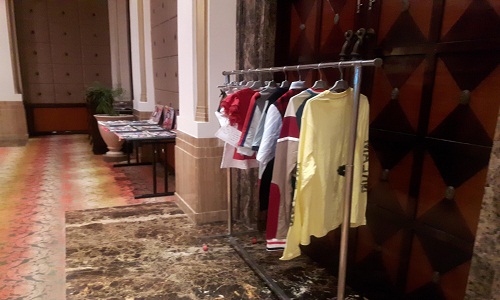
All the above trends will be brought to life by 3D mood boards developed by WGSN and key commercial items of the season which were developed in-house by WGSN clients in India.
The seminars are being organized in Mumbai on March 9, 2018; Bangalore on March 11, 2018; Ludhiana on March 12, 2018; and Noida on March 13, 2018.
Hong Kong Polytechnic University, Alibaba team up for AI
Hong Kong Polytechnic University and Alibaba have jointly established a fashion dataset for systematic analysis and labeling of fashion images based on fashion characteristics and key points of a piece of clothing. By integrating fashion knowledge and machine learning formulation, the establishment of the dataset will enable machines to better understand fashion, bringing a new horizon to the fashion retail industry through the application of AI (Artificial Intelligence).
The dataset can greatly facilitate understanding fashion images and related algorithm design and developing machine learning. It would help improve the accuracy of online fashion image searching, enhance the effectiveness of cross-selling and up-selling, create an innovative buying experience and facilitate the customization of online shopping platforms.
Fashion attributes are the basic design elements of an apparel and their combination determines the product category and styles of a fashion item. With the wide variety of fashion attributes, attribute recognition is a complicated process. A systemic classification of fashion attributes is essential to accurately label fashion attributes, facilitating research on deep learning and algorithm design for fashion image searching, navigating tagging and mix-and-match ideas, etc.
Fashion AI is a bridge that connects AI with fashion. It aims to explore the wider applications of AI in scenarios including fashion mix-and-match with the hope of bringing new values to the fashion industry.
US trade war with India may hurt growth
The US has been running a trade deficit with India for several years. Trade surplus means that we export more to the US than we import from the country. Increasingly protectionist measures by the US, however, threaten to derail the global economic growth engine. India’s exports account for a hefty 15 per cent of the US’ aggregate trade with the world.
Gems and diamonds are India’s biggest goods exports to the US, followed by pharmaceuticals, textiles, fish and petroleum products. As of now, these exports are not on the radar of the US, but there is a risk of retaliatory tariffs on these goods.
An all-out trade war will prove detrimental to global markets. Global economic growth hinges on the free movement of goods. The US has come down heavily on higher import duty on US-made Harley Davidson motorbikes. It previously threatened to slap retaliatory taxes on motorcycles coming into the US from India.
While India responded by slashing customs duty on imported high-end motorcycles to 75 per cent from the earlier 100 per cent, and eventually cut it down to 50 per cent, the US was left unimpressed and made it clear that the cuts were not enough.
Nepali garment exports up 11 per cent this fiscal
Nepal’s readymade garments exports in the first half of the current fiscal increased 11 per cent compared to the corresponding period of the previous fiscal. However, the expiry of the multi fiber agreement in 2005 has hit the industry hard. The agreement provided duty-free access for Nepali garments to the US. Since then, over 85 per cent of garment factories have pulled their shutters.
Nepali readymade garment producers feel if they are given facilities they can be more competitive in the global market. As of now the high cost involved in importing raw materials and exporting finished products is the major reason for Nepali garments being less competitive in the international market.
Incentives to the sector can have a significant impact on the growth of small and medium enterprises, ancillary industries and also generate jobs. A garment processing zone is being developed to promote the export of readymade garments. The aim is to revitalize the garment sector by providing low-cost financing for investment in the latest machines and kick start the economy. The industry has asked for tax incentives and export incentives.
Major export destinations for Nepali garment products are the European Union, India and the US, among others.
BGMEA seeks another year to demolish building
The Bangladesh Garment Manufacturers and Exporters Association (BGMEA) has filed an application before the Supreme Court, seeking another year for relocating its office, constructed at Dhaka's Hatirjheel in violation of environmental laws. On October 8 last year, the Supreme Court had given the BGMEA seven more months to demolish its office. A five-member apex court bench, headed by Chief Justice in-charge Abdul Wahhab Miah, passed the order.
The 16-storey building was constructed in the Hatirjheel area in 2006. The headquarters, popularly called BGMEA Bhaban, was built in a prime location in violation of the Wetlands Protection Act. The Rajdhani Unnayan Kartripakkha (Rajuk) has allocated a land in Sector 13 of Uttara in Dhaka for constructing the BGMEA office complex. But BGMEA needs more one year time for relocating its 15-storey building from Hatirjheel area.
The BGMEA has been ordered to demolish the 15-storey building named ‘BGMEA Complex’ which stands on a critical spot in the capital, blocking the connection between two large water bodies Hatirjheel lake and Begunbari canal. If BGMEA would fail to follow through, Rajuk was instructed to take over the work within 90 days of receiving the copy of the verdict. In this case, they would get the cost of the demolition from BGMEA.
The BGMEA building was built about two decades ago, endangering wetlands in Dhaka. In 1998, then Prime Minister Sheikh Hasina laid the foundation stone of the building. The construction began the same year. The building was inaugurated in 2006 by Khaleda Zia as the prime minister.
The BGMEA has created a fund for constructing its new office-building and the construction work is going on.
Bangladesh innovating to create viscose from jute
Bangladesh is looking to extract viscose from raw jute. This semi-synthetic fiber is seen as a substitute for cotton and capable of meeting the growing demand for cotton. Bangladesh has sent raw jute to Finland and Sweden for further feasibility studies for its possible use for viscose production. Viscose yarns are soft, strong, bright and of highly quality. Cellulose, a basic component in green jute plants, is the main element of viscose. About 65 per cent cellulose content in jute plants is the basic ingredient of viscose.
Bangladesh’s textile mills import cotton in huge amounts. A positive outcome would help Bangladesh save huge amounts of foreign exchange annually now spent for cotton imports. The country annually produces just 1.50 lakh bales of cotton against the domestic demand for 55 lakh bales.
Bangladesh is the largest cotton importer and consumer worldwide. More than 90 per cent yarns and fabrics are made from cotton. The country imports more than 60 per cent of its required cotton from India, the single largest source of the raw material for the country. The shorter lead time is very necessary for the garment business. Bangladesh is the only country that is still dependent on raw cotton for making yarns and fabrics.
Tech offers an edge over others in fashion retail
"While designers are busy offering trendy clothes every season but is that enough? In the millennium it’s the tech edge that will help fashion retailers win over consumers. At a recent conference, Tommy Hilfiger reflected on the importance of technology. In fact they were the first to do a chatbot with Facebook (Messenger)…and believe in Snap:Shop (an app that lets consumers instantly shop items from the moment models hit the runway). In a recent advancement, Hilfiger has a digital showroom that has no garments but allows buyers to view a big screen that they can also view from home."

While designers are busy offering trendy clothes every season but is that enough? In the millennium it’s the tech edge that will help fashion retailers win over consumers. At a recent conference, Tommy Hilfiger reflected on the importance of technology. In fact they were the first to do a chatbot with Facebook (Messenger)…and believe in Snap:Shop (an app that lets consumers instantly shop items from the moment models hit the runway). In a recent advancement, Hilfiger has a digital showroom that has no garments but allows buyers to view a big screen that they can also view from home. From this, they make their apparel, shoe and accessory selections, put them in the different store doors and choose their floor plans, and in a couple of clicks, they have their entire seasons mapped out.
Technology gives the edge

Nancy Johnson, Founder, President & CEO, Optimyze, points out multiple forms of technology are essential to stay competitive in today’s fashion business. Whether it’s through their marketing, or stores, or information they are capturing at their point of sale, all these are allowing companies to create their competitive advantage by using big data. Nesli Danisman, Founder, Angora Group explains new RFID hangers that move from the sales floor to checkout to track what individual customers are buying, allowing stores to sculpt future tailored marketing for each shopper. Anthony Bruce, CEO, Applied Predictive Technologies, refers to how his firm helps retailers and brands test and learn about any new retail action on a small scale, before doing a full rollout. Prior to putting in new fixtures or rolling out new products or changing operating hours, their philosophy is to try it first. That includes more tailored communications with consumers. He explained how data drawn from a test run could prove to be successful.
Johnson says, other applications are also helping to put a new spin on customer experience. Companies are working with augmented reality, like AR mirrors that allow you to walk into a fit room and see different things on your body. For instance, Zara was meeting the tech challenge with its new pop-up store in London. Tabea Soriano Hughes, Managing Partner, Futuremade opines consumers can place online orders, and make returns and exchanges. Associates have big iPads to help with selection. The retail space isn’t for store inventory, its more for larger fitting rooms and interactive mirrors. If you try on one item, the mirror shows other recommendations in suitable sizes and colours. Customers can check out via the Zara app, with their smartphones or with self-checkout. Delivery can be same- or next-day. Similarly, LVMH has bought shape-shifting mannequins that expand into multiple sizes to adjust in a much more customised way.
Making purchase decision
According to Cotton Incorporated Lifestyle Monitor Survey, currently, just over half of all consumers (54 per cent) say they love or enjoy clothes shopping. Seven of 10 purchases are planned, with shoppers buying clothes 19.2 times per year in-store and 8.4 times online. Monitor data shows two of five consumers (43 per cent) would be interested in apparel brands and retailers using virtual reality to enhance their shopping experience either online or in a physical store. This percentage increases with younger consumers.
For most consumers (75 per cent), fit is the top factor when making an apparel purchasing decision, according to Monitor Research. That goes for whether people are slow to change styles (38 per cent) or consider themselves fashionistas (36 per cent). Bruce informed that retailers should be more specific to take advantage of patterns of success. Those that invest in these tailored and targeted responses are the ones that are going to not just survive but thrive.
Pakistan needs capacity expansion to boost textiles industry
Pakistan’s textile industry has witnessed dwindling investments over the last decade. Currently around 35 per cent of the textile industry’s production capacity is impaired. Prospective investors are reluctant to make new investment decisions due to high cost of doing business. As a result, the industry lost technological advantage over its competitors.
The sector will need an additional 10.3 million bales of raw cotton, 345 million kg of manmade fiber, 1.983 billion kg of additional yarn and an additional 7.928 billion square meters of processed fiber. Cotton-producing area and cotton production, however, have declined 30 per cent and 38 per cent respectively in Punjab since 2011.
Readymade garments have shown an impressive growth over the years despite the overall poor performance of the textile sector. Exports of readymade garments registered 5.55 per cent year-on-year growth against the overall flat growth of the textile sector.
The industry wants long-term financing facility for indirect exports, Islamic financing and building of infrastructure for garment plants. It has also sought a long-term policy which includes consistent energy prices across the country, removal of the surcharge on the electricity tariff along with extending the duty drawback scheme for five years with drawbacks to be increased every year by one per cent for garments (up to 12 per cent) and made-ups (up to ten per cent) against realisation of export proceeds.
May edition of Apparel Textile Sourcing Miami to attract 200 exhibitors
Apparel Textile Sourcing will be held in Miami, May 21 to 23, 2018. It will bring in over 200 exhibiting companies and 2500 visitors from the US, Latin America, and Caribbean. The centerpiece of the event will be The Americas Pavilion, a section devoted to manufacturers from Latin America with an emphasis on the fashions and production benefits of sourcing from Latin America.
The Latin American region is one of the world’s leading producers of apparel and textiles. The pavilion will showcase the products of Mexico, Guatemala, Honduras, Nicaragua, and El Salvador. Mexico is the second largest exporter of blue jeans to the US; it is also the third largest exporter of knits and the fourth exporter in cotton pants. Worldwide, Mexico is the 13th largest exporter of textile products, and in the footwear sector, it ranks among the top 10.
Latin America produces 15 per cent of all apparel purchased in the US. The Americas Pavilion will feature a curated selections of companies gathered to build communication channels between suppliers and buyers. Product categories exhibited on the show floor will include: apparels for men, women, children, active and intimate wear, socks, home textiles, bed and bath, denim, knits, synthetics, linen, and accessories like handbags, hats, wallets, ties, and more.
India breathes easy with CPTPP as exports may not be affected
The Comprehensive and Progressive Agreement for Trans-Pacific Partnership (CPTPP) is unlikely to dent India’s export prospects meaningfully due to the absence of its key market, the US. Instead it will cut tariffs in nations that together make up for just over 13 per cent of the global economy. With the US, it would have represented 40 per cent of world GDP.
CPTPP is the mega Asia-Pacific trade pact signed by 11 nations, including Japan and Singapore. But the deal could see more pressure being put on India to help conclude the 16-nation Regional Comprehensive Economic Partnership (RCEP) agreement at the earliest without being too emphatic about its own demands in the services sector.
The absence of the US is a relief for India’s garment industry. The US was the original proponent of the TPP but decided to withdraw from it fearing it would be the death blow for American manufacturing. The CPTPP is not expected to impact India much as six of the 11 CPTPP countries are already part of the group negotiating the RCEP in which India is also a participant.
CPTPP comprises Australia, Brunei, Canada, Chile, Japan, Malaysia, Mexico, New Zealand, Peru, Singapore and Vietnam. Fears of key competitor Vietnam gaining duty-free access to the US, India’s single-largest market for such products, have abated.