FW
Bangladesh, Nepal PTA on the anvil
As Bangladesh and Nepal look forward to finalizing a preferential trade agreement soon. Bangladesh has demanded zero-duty benefit on export of 140 products to Nepal, reports Daily Star. Bangladesh sought duty-free benefit for export of garment items, including men's T-shirts, knitwear and children's clothes, fruit juice, cement and agro-processed food items like noodles and pastas, he said.
On the other hand, Nepal demanded duty-free benefit on shipment of agricultural products, handicrafts and brooms. Nepal has also demanded Bangladesh's customs set the minimum import value, based on which duties are imposed on Nepalese products.
Nepalese customs also has two such rates for products entering it from abroad, a low one for India and a higher one for the rest of the world. Bangladesh demanded that its goods be valued as those of India, he said.
Once the draft of the PTA is finalized, it would be sent to the cabinet meeting for approval for formal signing between the two countries as soon as possible. It is expected that the PTA between Bangladesh and Nepal can be signed by the end of this year after completion of all formalities.
ZhejiangTex to be held from May 12
Incorporating the 21st Yiwu China International Trade Fair for Knitting & Hosiery Machinery, ZhejiangTex will take place from May 12-14, 2021 at the Yiwu International Expo Centre in Zhejiang, China. The event will showcase world-class textile machinery and cutting-edge technologies. Under the theme of ‘Technological Innovation Promotes Diversified Trans-Boundary, Intelligent Textiles Contributes A Healthy Future’, the exhibition will take the industry to a whole new level of healthy textile trend. It will help enterprises to master the latest industry news and encouraging innovation in the textile industry.
The Yiwu government strongly supports the textile industry’s development as its business environment dramatically influences the overall textile industrial market. Even though the pandemic has not been relieved, Yiwu, as a foreign trade market with a ‘small commodity-large market’ position, is also looking for new opportunities to stabilize the foreign trade and meeting the new needs of international trade during the global crisis.”
On October 13, 2020, the organizer of ZhejiangTex will host ‘The 4th International Healthcare and Textile Sci-Tech Pioneer Innovation Conference 2020’ with The China Health Care Association Textile Branch in Yiwu Kingdom Hotel. Under the themes of ‘Futuristic Tech, Innovation & Sharing’ and ‘Wear Healthily, Sleep Healthily & Breathe Healthily’, sharing new and innovative business ideas under the epidemic helps the companies turn crisis into opportunities by transforming and upgrading their businesses as soon as possible, Adsale adds.
Turkish garment industry records $16.5 bn external trade surplus in 2019
At the 13th Istanbul Fashion Conference organized by the Turkish Clothing Manufacturers' Association (TGSD) and Istanbul Apparel Exporters Association (IHKIB), Mustafa Varank, Industry and Technology Minister, revealed the Turkish garment industry clocked in $16.5 billion external trade surplus in 2019. It mainly added high value in exports. Among the production and industry sectors, it mostly had exports in ready to wear. The unit price per kg of ready to wear surpassed $13 while this figure is at an average of $1.30 in other exports, said Varak.
Varank also underlined over 1 million workers are directly employed in the industry and 68 per cent of employees are women. The government has supported TL 7.5 billion of fixed investment with its incentive certificates. This has helped it create 350,000 more jobs.The government supports sectoral aggregations in many provinces and has set up organized industrial zones in northwestern Bolu, Bursa and Yalova, and southeastern Kahramanmaraş, Kilis and Diyarbakır.
The garment sector’s research and development and innovation projects have been supported by the government through Turkey’s top scientific body, the Scientific and Technological Research Council of Turkey (TÜBITAK), and the Small and Medium Enterprises Development Organization of Turkey (KOSGEB).
HKRITA to launch first retail model of G2G system
The Hong Kong Research Institute of Textiles and Apparels (HKRITA) plans to launch ‘Loop’ the first retail model of its Garment to Garment Recycling System (G2G) in one of its stores in Stockholm, Sweden on October 12. A direct-to-consumer recycling system, G2G allows consumers to bring their old clothes which are broken down into fibers and yarns to become the raw material for knitted new clothes. HKRITA researches various forms of G2G and repurposing. The original G2G project is currently in its second phase. In this system, HKRITA is improving the system’s capacity, optimizing its functionality and automating its various purposes.
Edward Keh, Chief Executive Officer, HKRITA, said, “We hope G2G will inspire even more creative solutions to our environmental challenges. By providing new life to our old clothes, we can demonstrate that it is possible to use less resources and repurpose what we have.” The G2G system allows customers to take charge of the reuse of their own wardrobe. It will help retailers do well and do good at the same time
“We are constantly exploring new technology and innovations to help transform the fashion industry as we are working to reduce the dependency on virgin resources. Getting customers on board is the real challenge and we are so excited to see what Loop will inspire,” added Pascal Brun, Head-Sustainability, H&M.
The original G2G project has bagged many awards including the Red Dot Award for the Best Product Design 2019; a gold medal in both the 47th Exhibition of Inventions in Geneva and in the Asia International Invention Award of 2019. G2G was also honored in the Fast Company’s Innovation by Design Awards of 2019.
Naksharajsinh Sisodiya to launch menswear brand
Entrepreneur and fashion expert Nakshrajsinh Sisodiya plans to launch a new menswear brand soon, reports DNA. A well-established designer and stylist, Sisodiaya runs four exclusive apparel showrooms in Gujarat. The entrepreneur now plans to expand his business venture through his new men’s brand.
Coming from a lower-class family background, Sisodiya fought his way into the fashion industry and kept going despite various difficulties. At the age of 25, the entrepreneur and fashion freak has set an example for his contemporaries.
Over the years, Nakshrajsinh has built an impressive personality that has not only attracted a huge chunk of clientele but has also helped him establish his name in the fashion industry.
Fashion recycling takes a beating amid COVID-19 as clothing waste piles up
 Textile and apparel recycling, which prevents the fashion industry’s growing of pile of waste from being dumped into landfills, is reeling under COVID-19. Thrift shops and clothing banks outside stores and on streets across the world are deluged with more clothes than could be sold on, reports China Daily.
Lockdown forces recyclers to cut prices
Recyclers and exporters are being forced to either cut prices or shift stock as lockdown measures have restricted movement and slowed business in end markets. Recyclers like Green World Recycling are demanding price cuts for clothes they collect. Since May, prices that the company charges from overseas buyers dropped from €570 a ton to €400. Buyers are also demanding an extension to credit periods to 45-60 days, adding to cash-flow problems, says Antonio De Carvalho, Owner.
Recyclers are also reducing the number of times clothe banks are emptied per week, and looking at laying off workers to conserve cash. Jackie King,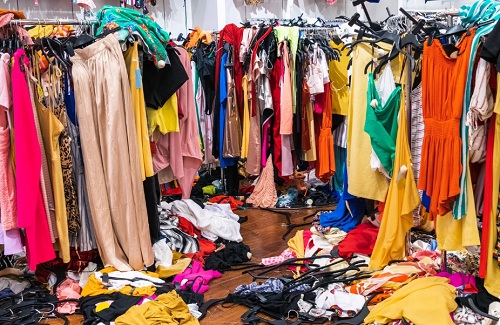 Executive Director, Secondary Materials and Recycled Textiles Association (SMART) points out, this recession is unlike any other witnessed before, and more companies are likely to go out of business.
Used clothing exports decline by half
As per UN trade data, the industry has seen an annual average of over $4billion used clothing being exported globally over five years to 2019. However, the weight of used clothing exported from March to July was around half what it was for the same period last year. Though exports improved in July, they were still down almost 30 percent compared to last year.
In the United States, the value of exports declined 45 percent from March to July compared with the same period last year. About one third of used clothes are sold in developing markets like Kenya that imported 176,000 tons of second-hand clothing in 2018, equivalent to over 335 million pairs of jeans.
Like the rest of the world, secondhand clothes business in Nairobi’s Gikomba market is sluggish. Shop assistants are being forced to sit idle while traders call out to shoppers to try their garments. Traders face not just shrinking supply but also the government’s ban of used textile imports and falling footfalls. Though the ban on used textiles imports was lifted in August after pushback from traders in Kenya and industry bodies in Europe and the US, struggle for traders like Mutisya and Anthony Kang’ethe continues as their businesses have been hit hard by supply crunch.
Commercial sale of second-hand clothing from Europe and the US to emerging markets took off in the 1990s as Africans and Eastern Europeans increasingly began demanding Western fashion. This provided much-needed release to the fashion industry whose production had doubled over the past 15 years, says Ellen MacArthur Foundation
UK produces more waste than the US
As per a 2019 UK Parliamentary report by the Environmental Audit Committee, British shoppers buy more clothes per person than any other country in Europe. About 300,000 tons of clothes go to landfills or incineration per year, the report adds. On the other hand, the US produces just under 17 million US ton of textile waste per year, says the Environmental Protection Agency. This is equivalent to around 29 billion pairs of jeans, of which, two-thirds ends up in landfills.
Though fashion retailers, including Zara owner Inditex and H&M, are encouraging shoppers to bring unwanted textiles to their stores, only a small proportion of these clothes are sold in international markets. The clothes collected by H&M are processed by I:CO, a unit of German textile recycling company Soex. Hence, the problem of textile waste is becoming bigger by the day.
H&M bullish on India despite global slowdown, continues opening stores
 Fast fashion brand H&M is optimistic about India business. Although the world’s second biggest retailer is closing stores globally, it is planning to open new ones in India; both online and offlline, reports Live Mint. Led by Janne Einola, so far, the brand has opened 48 stores in 24 cities besides launching its own portal and its retail on Myntra.
Physical expansion despite headwinds
Before COVID-19, H&M was opening one store every month in India. Now, the brand may go a bit slower but expansion will continue, says Eionala. It is currently opening a new store in Lucknow and plans to open more stores next year. Some physical stores are still closed due to local lockdowns while remaining are operating with restricted hours. The brand’s revenues from physical stores up to August 2020 declined 31 per cent while net sales declined 50 per cent. Yet, the brand plans to continue opening physical stores in India.
Focus on kids’ and casual wear
The brand also plans to focus on online operations and as well as kids wear, says Eionala. During the lockdown, H&M saw growing demand for casual wear, lounge wear and basics. Eionala says, this trend was common for both men’s and women’s apparels. However, women are showing stronger interest for casual and lounge wear, she adds.
COVID-19 has made consumers conscious about their consumption habits. According to her, changing consumption patterns will determine future course for the industry. There will be growing emphasis on sustainability and H&M will benefit particularly since it has been focusing on sustainable operations for years.
India plans
Despite pessimistic industry outlook, Eionala is confident about the brand’s future in India. It has opened almost 50 stores in the past five years and plans to open more stores over the next five years. The brand plans to also launch a loyalty program called Hello Member in the country for better conversations and personalized shopping experiences.
Besides the flagship brand, H&M also plans to launch other brands from its stable like COS, Monki and H&M home in India. It is waiting for the right opportunity to launch these brands and hopes current FDI rules support its India investment plans.
'Scotch & Soda' to open 15 new stores across Europe
Dutch fashion brand Scotch & Soda plans to open 15 new physical stores and seven new concessions by year-end across Europe, Asia-Pacific, North America, and the Middle East.
As per Fashion Network, this will include new directly-operated and franchise stores in key global cities such as Paris, Madrid, Philadelphia, Charlotte, Gothenburg, Riyadh, Mumbai, Bucharest, Dortmund, Stuttgart, and Perth.
The brand plans to launch its first digital store on Tmall in China. It recently also launched its Weibo, Little Red Book, WeChat, and Douyin social media accounts to drive awareness in the country. The label is also adding new products for the upcoming festive season and for SS22.
These include a reporter bag and a cross body in faux leather and a functional foldable tote bag made with recycled nylon. Each of these items will feature its new brand identity, and three new styles of bags will be introduced to celebrate the new logo. Their styles will be exclusive to its franchise and directly operated stores as well as online for the first season.
Footwear brands foraying into clothing struggle with supply chain issues
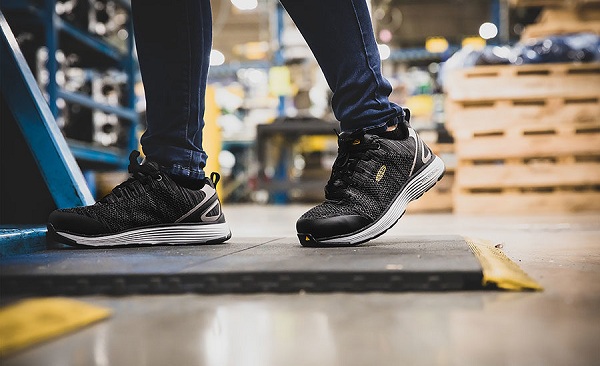
There is a growing trend amongst footwear brands to foray into clothing market. Brands Allbirds, Public Desire, Ego, Lavair are some good examples of this. As reported by Drapers Online, Manchester-based women’s footwear etailer Public Desire launched a DTC women’s wear brand Kaiia in September this year. Focusing on trend-led pieces, the brand sold 300 pieces of bralets and joggers in the UK. Similarly, online women’s footwear retailer Ego launched a collection in July 2021 with US influencer Anastasia Karanikolaou. What’s more the e-tailer recorded a 20 per cent per cent jump in sales since its launch, says CEO Adeel Fiaz. Savoring success, the etialer went on to launch a full own- women’s wear clothing collection.
On similar lines, US/New Zealand sustainable men's and women’s footwear brand Allbirds launched an activewear collection in August this year. Called Natural Run, the women’s and men’s activewear collection is retailed only on Allbirds website.
Decline in footwear retail sparks apparel foray
One major driving footwear brands into the apparel segment is the collapse of several big high street retailers over the past 18 months, including Topshop, Oasis and Warehouse. Their fall has opened up the market for entrepreneurial brands such as Public Desire to target both footwear and apparel market.
The rapid expansion of women’s wear market is also driving Public Desire’s move into clothing. On the other hand, the footwear segment does not offer many categories, says Qasim Aklaq, Managing Director, Kaiia. The footwear brand rolled out its new apparel collection in collaboration with trusted suppliers. It earlier sold some apparel wholesale through Asos and plans to launch new products every week.
Surcing challenges
Many footwear businesses that have forayed into the clothing segment recently are struggling to build sizeable clothing divisions due to sourcing challenges, says Fiaz. He points out the company is now targeting wholesale growth for apparel both with existing partner Asos and in new stockists.
Earlier known for its sustainable footwear, Allbirds launched an activewear collection this summer. The brand plans to tap the booming market and is set to grow by $157.7 billion – or by 11 per cent compound annual growth rate – between 2020 and 2024, as per market research firm Technavio.
Making a mark with the apparel lines
However, despite dip in sales many footwear brands plan to stick to their original business. E-commerce brand Shoeaholics does not plan jeopardize its reputation as a footwear expert and hence, will not foray into the clothing. Public Desire too aims to retain its identity as a footwear expert and, hence, will launch a stand-alone website for its Kaiia.
Footwear brands plan to first ensure their supply chain can cope with increased volumes and shorter lead times needed in clothing segment. They also plan to devise new marketing strategies for their foray into this segment. Only after getting these elements right, do they hope to make a mark in the apparel segment.
CFDA, BCG issue new sustainability report
The Council of Fashion Designers of America(CFDA), in partnership with the Boston Consulting Group (BCG), has issued ‘Sustainability by Design: Rethinking New York Fashion Week,’ a report that looks at guidelines and recommendations for ways the industry can reduce both waste and the carbon footprint of fashion shows, events and activities.
About 75 percent of NYFW stakeholders surveyed in the study said the companies they work for have sustainability targets for the materials they use, waste reduction, partnering with others dedicated to sustainability and energy use. But almost 40 percent of those with such targets view them only as a consideration in their planning strategies, not as a guiding principle.
Companies that have made concerted efforts to increase their sustainability practices have reduced their environmental impact considerably. For example, Burberry, Dior, Gucci and Ralph Lauren, among others, use recycled wood in their sets, send out digital invitations, travel in electric vehicles and use partnerships to offset their remaining carbon emissions, the report said. Missoni and Saint Laurent use energy-efficient LED lighting powered by biofuel-burning generators at the show.
When asked what the greatest obstacles their organization faces in moving toward sustainability for NYFW, some 45 percent said it was more expensive to be sustainable, 27 percent were unclear what goals/targets to set and said they are difficult to measure, 27 percent lack the necessary partnerships, 14 percent said it was unclear what steps/actions to take, and 4 percent said other organizations’ leadership does not view sustainability as a priority.
The study showed that consumers and NYFW stakeholders value the same sustainability practices but to varying degrees. For NYFW stakeholders, they value, in order, use of recycled/waste/scrap materials, fair/ethical labor practices and biodegradable products/packing, participating in recycle/take back programs, up-to-date waste disposal/recycling technologies, commitment to health/safety practices for workers and organic/natural materials.
The survey looked at six impact areas — Content, Sample, Production, Venue, Public Relations and Transportation/logistics — and four sustainability dimensions — Energy, Materials, Waste and Partnership — to see ways to reduce NYFW’s environmental footprint.