FW
Organizers hope ITMA 2023 is as successful as 2015 edition
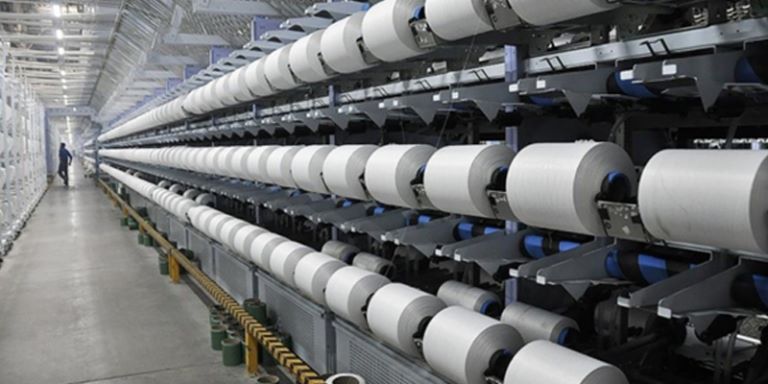
Organizers of textile and garment technology exhibition, ITMA expect the 2023 edition of the exhibition to be as successful as the 2015 edition held in Milan. They have expanded R&D efforts to launch new machines at the upcoming exhibition. It also aims to conduct face-to-face interactions with its customers and partners, says Beat Meienberger, CEO, Benninger AG/
The organizers aim to profile their products more prominently besides launching innovative solutions in warp knitting, flat knitting, warp preparation and digitalization. CEMATEX, the industry
ITMA is attended by decision-makers from the world's top textile and garment producers and leading brand owners to gather market intelligence and forge collaborative partnerships. ITMA 2023 will set the stage for the world’s top manufacturers of textile and garment technologies to unveil exciting innovations to a global audience across four key pillars; advanced materials, automation and digital future, innovative technologies and sustainability and circularity.
Gerber Technology upgrades AccuMark and Cutworks Softwares
Gerber Technology has upgraded its software offerings AccuMark® Product Family and CutWorks which will help manufactuers reduce costs and optimize the manufacturing process. Gerber’s latest software releases will enable manufacturers to handle price rise by making processes more transparent and traceable. It will help them reduce errors, improve sustainability, increase material utilizations via a unique nesting algorithm and reduce costs.
Gerber’s CutWorks software is designed to be customized based on business needs. The software accepts pattern data in a variety of formats and turns it into a cut job for a cutter. The V13 release of the software focuses heavily on improving nesting engines, maximizing precision with enhancements to ManualNest and offering more visibility into the supply chain. CutWorks allows companies to design to cost faster and without error. Gerber will offer enhanced training to ensure all operators are able to get up to speed quickly.
Gerber has enhanced its AccuMark product range includes AccuMark, AccuPlan™ and AccuNest™, The newest release focuses on adding more integration and automation for a streamlined, CAD to cut room workflow that seamlessly connects with your ERP system and other tools you’re already using. With the latest version of the AccuMark Product Family, manufacturers will not only accelerate time to market but also improve quality, reduce errors and provide better control over their final product. The latest version of Gerber’s cut planning software, AccuPlan, and automated nesting software, AccuNest, boost productivity by as much as 80% and offer an average fabric saving cost of 1.5 percent.
Pakistan refuses monetary compensation for cotton sector
The Pakistan government has refused monetary compensation for the cotton sector for export orders it booked on the presumption that Pak Rupee would further depreciate against the US dollar. Government said, the consequences of their decisions need to be borne by commercial entities themselves.
Some VAS representatives recently met Prime Minister’s Adviser on Commerce Textile and Investment Abdul Razak Dawood to seek compensation for their losses. These representatives contended that they did not book the rupees in advance presuming rupee depreciation would continue. However, the unprecedented depreciation of the US dollar and appreciation of Pak Rupee from 165 to 152 has inflicted loss to the VAS exporters.
The VAS representatives also complained about non-availability of yarn. The officials said that they have been told that not yarn availability but prices have been the bone of contention all along. The officials said All Pakistan Textile Manufacturers Association (APTMA) has already refused to support the VAS demand for monetary compensation for the loss it sustained due to its commercial decisions and its stance on the availability of yarn.
The official said that according to APTMA, all-time high cotton prices in other countries resulted in increasing yarn prices. Currently Indian markets are temporarily having excess yarn due to COVID-19 as last year their exports fell significantly. Indian merchants are willing to sell their inventory at lower prices. Despite this, APTMA has never demanded the government allow import of cotton from India. It believes that the policy on the acquisition of non-operational/ sick/ in-troubled units will address the yarn shortage by adding 1,000 tons per day or 30,000 tons per month due to the addition of 600,000 spindles to operational capacity.
Florence Mayor calls for physical edition of Pitti Uomo
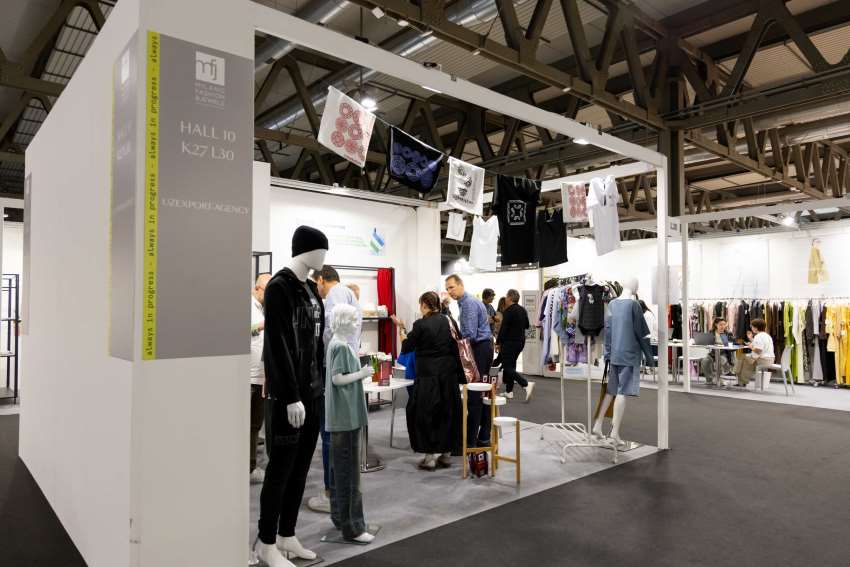
Dario Nardella, Mayor, Florence has urged the Italian government to hold the 100th edition of Pitti Uomo Show physically as it would symbolize the restarting of the Italian economy. As per a Spin-Off report, the in-person edition of Pitti will also mark a restart of all the physical trade shows in Italy, which would obviously respect all security protocols.
Other show and organization mangers such as Claudio Luti, President, Milan Design Week, Antonella Mansi, Centro di Firenze per la Moda Italiana; Claudio Marenzi, President, Pitti Immagine, and Marino Vago, President, Sistema Moda Italia, have also Nardella’s requests for physical shows.
Nardella also urged the government to change the scheduled dates for the next edition of Pitti Uomo from the current June 15-17 to mid-July. This will give buyers and companies a greater chance of attending the show in Florence, he said.
Raffaello Napoleone, CEO, Pitti Immagine has also agreed to Nardella’s proposals. The time for preparing the men’s show are very tight. The show has its times and costs as buyers need time to arrive from China and Japan also, he said.
Jeanologia launches Road to Mission Zero Collection
Jeanologia has launched its first Road to Mission Zero collection in partnership with Cone Denim. The collection showcases authentic, sustainable options from fabric to finish. The collection will launch at the upcoming Kingspins 24 show.
Cone Denim Mills and Jeanologia will present the first Road to Mission Zero collection, on the Earth Day at Kingpins24, a collection where heritage, sustainability and innovation are present from the fabric to the finish.
The collection has been developed across a full range of sustainable finishes, with a wide scale of wash levels, nice high and lows done with atmospheric finishing and keeping the authenticity of the traditional stone washed look. By integrating Jeanologia technologies and using them as part of the denim eco-system, we can eliminate highly inefficient and hazardous practices and create amazing denim and jeans without sacrificing denim’s authentic look and iconic soul.
Since 1994 Jeanologia’s mission has been to create an ethical, sustainable, and eco-efficient industry through its disruptive technology and know-how. Their laser, G2 ozone, e-flow, Smart Boxes and H2Zero, have revolutionized the textile industry. The company offers infinite design and garment finishing possibilities while saving water, energy, and chemicals, eliminating discharge and toxic emissions. Over 35 per cent of its 5 billion jeans produced worldwide every year are made with their technologies, and the biggest market brands place their trust in Jeanologia, using technology developed by the company.
Fashion Week Istanbul launches with 30 designers
Fashion Week Istanbul was launched today as virtual four-day event featuring 30 established and upcoming designers, including Dice Kayek and Zeynep Tosun, who have all produced short films to showcase their collections.
This season the biannual event is being relaunched by the Istanbul Ready-to-Wear and Apparel Exporters’ Association (IHKIB), under the leadership of the Republic of Turkey Ministry of Trade, after ending their ongoing partnership with Mercedes-Benz.
The fashion event is also being supported by the Turkey Promotion Group (TTG), the Fashion Designers Association (MTD) and Istanbul Fashion Academy (IMA) established under Turkey Exporters Assembly (TIM).
Organizers are looking to introduce Turkish designers and brands to a global audience, as they look to transform Turkey as an important hub in the global fashion industry, beyond its current identity as a leading apparel and textile manufacturer. It hopes to accelerate this through the creation of a Turkish Fashion Council, to not only nurture local talent but to help develop partnerships to drive forward the Turkish fashion industry.
On the opening day, New Gen by Istanbul Fashion Academy will place the spotlight on five young talents, Aycan Hakalmaz, Ezgi Yildirim, Beyza Eyuboglu, Avishan Daneshfar, and Essin Baris, followed by fashion films from Mehmet Emiroglu, Ceren Ocak, Niyazi Erdoğan, Nedo by Nedret Taciroğlu, Tagg, Lug Von Siga and Dice Kayek.
Other designers taking part includes Çiğdem Akın, Cihan Nacar, the Museum of Fine Clothing, Hakaan Yıldırım, Hatice Gökçe, Mehtap Elaidi, Meltem Özbek, Mert Erkan, Murat Aytulum, Nej, Nihan Peker, Özgür Masur, Özlem Kaya, Özlem Süer, Sudi Etuz, Red Bears, Tuba Ergin, Tuvanam, Y Plus, Zeynep Erdoğan, and Zeynep Tosun.
APR to increase production capacity
Asia Pacific Rayon (APR) plans to increase its production capacity to 600,000 tonne to meet the strong growth potential of viscose staple fiber (VSF) and strengthen its market position in Indonesia and export markets across the region.
The additional capacity will be achieved through improved optimization and efficiencies, and by adding 300,000-tonne viscose production facility in Pangkalan Kerinci – Riau, Indonesia where APR is co-located with sister company and fiber supplier APRIL Group.
The expansion will utilize APRIL’s current rayon grade AE pulp capacity from existing pulp production lines, with fiber supply sourced from APRIL’s existing responsibly managed renewable fiber plantations in compliance with internationally recognized forest certification standards and its sustainability policy and in keeping with the recently announced April 2030 commitments and targets.
Construction of the additional APR production lines is scheduled to commence in the second half of 2021 and will include features such as a chemical recovery process upgrade, slush-pulp processing installation and other investments aimed at reducing APR’s energy use and environmental footprint. Upon the additional lines’ completion in 2023, APR will be the world’s largest single-site integrated viscose manufacturing facility, seamlessly integrating dissolving wood pulp from APRIL’s renewable fiber plantations.
HKTDC International Sourcing Show underlines brands’ need to focus on consumers’ well-being
 In the webinar titled ‘The Perfect Storm: Future-Proofing Your Fashion Business’, Michael Ho, Marketing & Brand Partnerships Manager, Zalora, described 2020 as a year of expansion. The webinar was a part of the three fashion-related webinars hosted by the Online HKTDC International Sourcing Show recently. Ho said, as consumers were unable to travel during the pandemic, sales at most brand stores plummeted. This encouraged brands to scout for new sales channels. Zalora offered an attractive choice for such brands as it enabled them to cover losses from lack of physical sales but also increased average order frequency to 3.3 times a year.
Focus shifts to safety and comfort
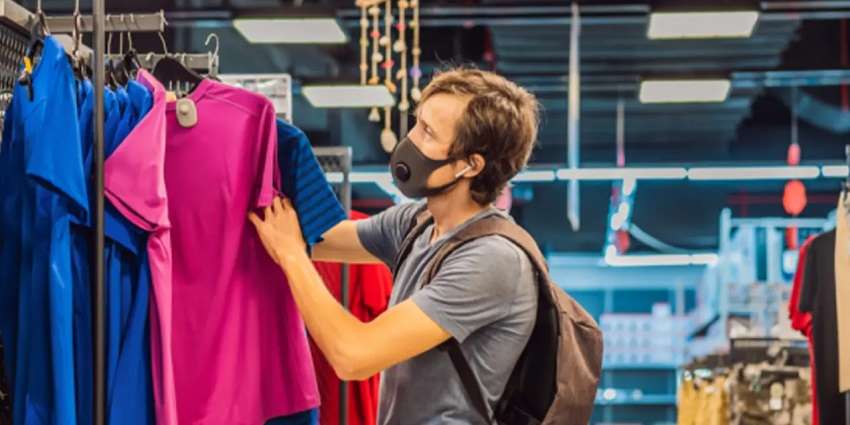
The pandemic also forced industry leaders and consumers to shift focus from aesthetics to safety and comfort, said, Edwin Eeh, CEO, Hong Kong Research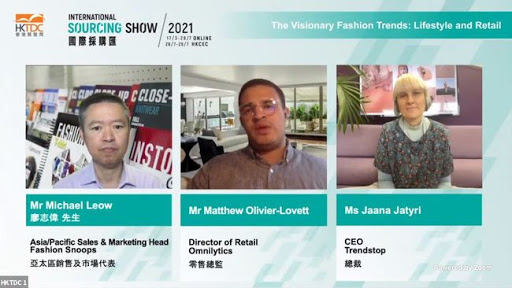 Institute of Textiles and Apparel (HKRITA) at a webinar tilted ‘What's In for Fashion: Sustainability is the New Normal?’ Consumers have also become more discerning about the materials used in their apparels and the production process, added Eeh. He advised all organizations to introduce practical innovations that can be adapted to the marketplace.
Humanity and morality to define future trends
Separation and loss experienced by many people in 2020 will define future fashion trends, pointed out Michael Leow, Marketing Head-Asia Pacific, Fashion Snoops at the webinar ‘The Visionary Fashion Trends: Lifestyle and Retail’. Leow explained, the four key trends for Spring/Summer 2022 will all be related to the restoration of humanity and morality. The first of this theme will be ‘Essential’ focusing on the emerging simplicity in people’s choices. The second theme ‘Nourish’ will focus on the well-being of consumers; the third ‘Liberte’ will reflect on their desire to be free from the pandemic induced restrictions while the last theme ‘Rebirth’ will focus on brands’ commitment towards environment and fair trade practices.
Matching customers’ requirements
To succeed, brands need to match their products with consumers’ tastes, said Jaana Jatyri, CEO, Trendstop, a trend and consumer taste forecasting agency. Jatyri predicts the industry will lose 50 per cent business and jobs in the next five year and advised fashion suppliers to use trend data to understand latest colors, prints and graphics, materials, shapes and detailing. This will ensure brands produce only items that consumers prefer buying and prevent avoid unwanted products from being dumping into the landfills.
In all, the Online HKTDC International Sourcing Show hosted a total of 17 webinars attended by over 60 industry luminaries.
PVH Foundation to support Americares’ relief efforts
The PVH Foundation, PVH Corp’s philanthropic fund dedicated to nonprofit donations and volunteer programs plans to support the annual emergency relief efforts of Americares, a health-focused relief and development organization. As a Sourcing Journal report says, the fund will ensure PVH readiness for emergencies, including pre-positioning relief supplies in disaster-prone countries. It will also help the organization maintain an international roster of on-call disaster response experts besides supporting their need assessments and deploying emergency response teams to disaster zones.
This initiative is a part of PVH’s Forward Fashion corporate responsibility strategy that besides eliminating wastes aims to form new collaborations to fight against effects of climate change on individuals around the world. Americares is involved in resolving over 30 natural disasters and humanitarian crises worldwide each year. The organization establishes long-term recovery projects and brings disaster preparedness programs to vulnerable communities. So far, it has provided more than $19 billion in aid to 164 countries.
It first partnered with the PVH Foundation earlier this year by providing bottled water, life-saving medicines, PPE and other essential relief items to families and local health centers affected by the severe winter weather in Texas.
Sintex Industries files for bankruptcy
Fraud-hit textile and yarn manufacturer Sintex Industries filed for bankruptcy after financial creditor Invesco Asset Management filed a suit against it for Rs 15.4 crore default in September 2019. As per VC Circle, Sintex Industries' subsidiaries include BVM Overseas, Sintex-BAPL and publicly listed Sintex Plastics Technology. In August last year, the non-bank lending arm of global private equity firm KKR approached the tribunal against a subsidiary of Sintex Plastics Technology to recover a debt it had sanctioned two years ago.
The unit called Sintex-BAPLowed KKR a principal sum of Rs 1,190 crore as well as interest. Sintex Industries said it has been working with lenders to bring a resolution plan in place for its business activities. Founded in 1931 at Kalol in Gujarat, it is a diversified company with its textile segment offering fabric and yarn.
For the December quarter of 2020, Sintex Industries posted a net loss of Rs 215 crore as against Rs 293 crore loss in the same quarter in 2019 and Rs 239 crore loss in the September quarter. Its total income improved to Rs 530 crore for the December quarter in 2020, from Rs 430 crore a year ago and Rs 323 crore in the September quarter.