FW
Vishal Fabrics sells 1,016,000 equity shares to promoter group
A part of the India-based Chiripal Group, and a denim manufacturing and fabric processing unit incorporated in 1985, Vishal Fabrics has sold 1,016,000 equity shares to promoter group Savitridevi V Chirpal. This increased the group’s share in the company by 1.54 per cent. The group purchased 511,000 equity shares on August 12, 2021, and subsequently another 505,000 shares on August 23. The total trades executed by the promoter group included 1,016,000 equity shares.
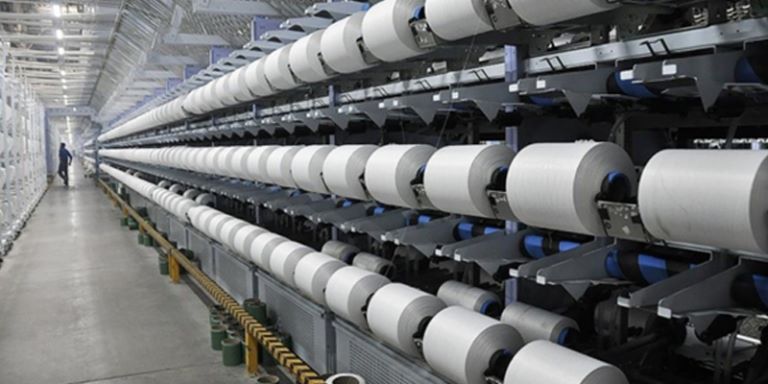
VFL constantly strives to improve and innovate with wider fabric manufacturing capacity and carbon-reducing technology across its processing units. The company’s state-of-the-art manufacturing facilities are equipped with the latest technology and deliver innovative products that adhere to international quality standards. Over the years, the company has managed to emerge as a pioneer in the textile industry, setting new standards of excellence.
Witness signatories welcome signing of new Accord by Bangladesh
Known as witness signatories, the non-governmental organization signatories to the Bangladesh Accord – Clean Clothes Campaign, Worker Rights Consortium, Maquila Solidarity Network, and Global Labor Justice-International Labor Rights Forum – have welcomed the signing of the new international safety agreement. The new agreement maintains the vital elements of ground-breaking model established by the Bangladesh Accord: legal enforceability of brands’ commitments, independent oversight of brand compliance, the obligation to pay prices to suppliers sufficient to support safe workplaces, and the obligation to cease doing business with any factory that refuses to operate safely. The successful outcome of negotiations this summer will ensure that the sweeping safety gains the Accord has delivered in Bangladesh will be maintained and extended.
The new agreement will continue the progress on fire and building safety achieved in Bangladesh over the past eight years besides expanding the program to other countries. Every responsible apparel and textile brand is expected sign this new agreement.
Ineke Zeldenrust, International Coordinator, Clean Clothes Campaign, believes, the agreement will begin the long-awaited expansion of this model that holds brands legally accountable to other countries where workers’ lives continue to be at risk.
Scott Nova, Executive Director, Worker Rights Consortium adds, the Accord will end the atrocities committed by world’s leading apparel brands on hundreds of garment workers in Bangladesh.
Global Change Award invites applications for the event’s sixth edition
The Global Change Award by H&M Foundation is accepting applications for the sixth edition of the event after a COVID-19-induced pause of one year. As per Sourcing Journal, this year’s program will focus on innovations likely to have a major impact on the world. H&M Foundation plans to evaluate various game-changing solutions addressing land, water, oceans, climate and biodiversity issues.
Erik Bang, Head-Innovation, H&M Foundation, said, the Global Change Award will seek solutions addressing climate change, protecting people and securing their future. The foundation will invite innovators and entrepreneurs to submit their early stage ideas on how to improve the sustainable footprint of the fashion industry. Applicants can apply through the H&M Foundation website through October 20. Entries are reviewed by H&M Foundation together with Accenture and KTH Royal Institute of Technology—both of which have partnered with the company on this program since launch.
Entries will also be reviewed by an international panel of experts, including Dr. Lin Li, director of global policy and advocacy at WWF International; Rachel Cernansky, Senior Sustainability Editor, Vogue Business; Mirna Inez Fernandez, Co-Founder, Reaccion Climatica; Malin Åkerman, Actress; Caroline Brown, Managing Director, Closed Loop Partners; Betelhem Dessie, CEO, ICog, Anyone Can Code; Sonam Kapoor Ahuja, Actress; and Walden Lam, Co-founder and CEO, Unspun.
CDC approves garment factory project in Kandal
The Council for the Development of Cambodia (CDC) has approved Auspicious Bag and Shoes Accessories Co’s proposal to build garment factory at Kraing Makak in Ang Snuol district in the Kandal province. The factory will be built with an investment of $2.4 million and create 380 jobs. In the last few months, CDC has approved 10 new projects worth nearly $80 million. Most of these projects involve setting up factories for garments, travel bags and footwear.
The industry ministry reported closing of 101 factories in Cambodia last year, most of them in the garment sector. By mid-May this year, 27 factories had closed due to the COVID-19 outbreak and 75 had filed for bankruptcy. Cambodia’s exports to the United States totaled to over $3 billion in the first half of this year. That was a 35 per cent increase compared with the same period in 2020. A large part of the exports constituted clothing, bags and footwear.
Incentive on apparels made from imported materials can boost exports: BGMEA
Bangladesh Garment Manufacturers and Exporters Association (BGMEA) believes, a 4 per cent cash incentive on export-oriented apparel items made from imported raw material can help double Bangladesh’s garment exports. Faruque Hassan, President, BGMEA feels, it may also increase the supply of raw materials and motivate buyers to place more orders. Further, it may increase investment in knitting, weaving, processing, brushing, sewing, bleaching, dyeing, printing, washing and finishing industries, helping Bangladesh retain market benefits after the LDC graduation, he adds.
However, spinners believe, the move will deal a devastating blow to the country's textile industry as it will involve subsidizing foreign companies with public money. Abdul Hai, Former President, Bangladesh Textile Mills Association (BTMA), also agrees, this will nullify all the huge investments made in the textile sector besides leading to millions of job losses. BGMEA has also proposed a 10 per cent incentive for non-cotton garment exports, saying it will boost exports as well as investment and employment.
BGMEA to lose 1,140 members due to non-performance
Around 1,140 readymade garment factories are likely to lose their membership with the Bangladesh Garment Manufacturers and Exporters Association (BGMEA) as they have not paid membership subscription fees and have not been in export business for years. As per a New Age Bangladesh report, BGMEA has directed 1,140 inactive members to pay their subscription fees by October 31 to continue as the member of the trade body.
The association plans to cancel memberships of factories that fail to pay subscription fees and resume business by the deadline. Some units of BGMEA member factories have remained out of business since 2013. These are unlikely to resume due to the impact of quota phase-out in the RMG sector in 2005. However, they continue to retain the membership of the trade body to take part in BGMEA elections.
Shanghai garment imports from EU double from January-July’21
Shanghai’s import of garments and accessories from the European Union (EU) doubled in the first seven months of this year, according to Shanghai customs figures.
From January to July, Shanghai’s import totaled 13.47 billion yuan (about $2.07 billion), soaring 99.9 percent year on year, and nearly two times the export volume in the same period, which logged 7.04 billion yuan.
The customs figures also showed that in the first seven months, Shanghai's import of leather and fur products from the EU totaled 11.2 billion yuan, surging by 94.8 percent year on year.
France and Italy were the major direct beneficiary countries from surging imports by Shanghai. In the first seven months, Shanghai's trade volume with the two countries reached 61.21 billion yuan and 60.02 billion yuan, respectively, growing by 39.1 percent and 49.5 percent year on year.
Meanwhile, Shanghai's imports of cosmetics and personal care products from the EU increased by 21.2 percent in the first seven months, totaling 12.52 billion yuan.
The customs attributed the import growth to Chinese customers' increasing consuming power and interest in imported garments. Exhibition platforms such as the China International Import Expo have also played an important role in introducing more and more EU products into China.
US’ kidswear imports rise by 40.08% during January-June’21
Kidswear imports by the US increased by 40.08 per cent to $1.10 million during the January-June ’21 period.
As per an Apparel Resources report, this growth is attributed to rising momentum in back-to-school shopping in the US. The growth in the US kidswear market has given Asian exporters a reason to cheer as all major shipping destinations have grown in their respective shipments to USA in H1 ’21.
China topped with $256.43 million worth of kidswear export to the US, noting 49.82 per cent yearly growth in Jan.-Jun. ’21.
India remained ahead of other neighboring countries and clocked $172.79 million worth of kids clothing shipment to the US, growing at the rate of 53.78 per cent.
Vietnam accumulated $165.43 million revenues from its kidswear export to the US in H1 ’21. The South East Asian country noted around 49.43 per cent Y-o-Y growth.
Bangladesh shipped $127.72 million worth of kids garment to the US, increasing its value by 30 per cent on yearly note. The data suggest that kidswear is going to stay strong in the US for some time and it is highly unlikely that any negative disruption will take place.
Pakistan to establish cotton cluster villages
Pakistan plans to establish cotton cluster villages to boost the crop while guaranteeing contemporary technology, said Syed Fakhar Imam, Federal Minister for National Food Security and Research.
According to Imam, Cotton has helped Pakistan economy and provided work opportunities for millions of people. He stated that one million bales contributed approximately Rs97.5 billion in revenue, and that the government had set a target of 10 million bales for the current season.
Pakistan used to export textile products worth over $15 billion annually. Last year, the country had to import 4.5 million bales of cotton for the local industry. The government is paying keen attention to white gold (cotton) and hopefully cotton would become a strategic crop in the future, he stated. He said modern farming techniques would be introduced to motivate other farmers.
The minister said that the government was striving to enhance cotton production by focusing on the seed quality, enhancing sowing area, mechanization and upgrading the research institutes. He urged the farmers to ensure clean picking of cotton so that they could fetch handsome prices for their produce.
MAS Silueta collaborates with Zena Sport for Tokyo 2020 Paralympics
MAS Silueta, a part of South Asia’s largest apparel tech company MAS Holdings, together with Australia’s Zena Sport has developed the Zena Z1 protective vest for the Australian athletes at the Tokyo 2020 Paralympics. This product aligns with MAS’ commitment to inclusivity and empowerment, protecting athletes especially in sports such as goalball, which increases the possibility of accidental contact. Research carried out by the University of Deakin’s Centre for Sports Research indicates that Zena Z1 absorbs up to 70% of impact energy, indicating significant protection to female athletes against rib and breast injuries, a common occurrence in many sports.
The product enables a high level of protection and faster post-game recovery without compromising on comfort and mobility, while also maintaining its ergonomic appeal. Being ultra-lightweight, the protective vest can be worn for long periods, while its excellent fit due to contouring and flexibility also ensure that it stays in place.
This combination of factors has led to the growing popularity of Zena Z1. The product is already used for more than 20 sports, including Australian Football, Rugby, Goalball, Skiing, Handball, Basketball and several combat sports.
In developing the protective vest, Silueta, a part of MAS Holdings, collaborated closely with the founders of Zena Sport, Brad and Donna Johnson, who recognised the need for an advanced protective vest for female athletes competing in the AFL. Having understood the significant physical implications of impact sports due to their personal involvement with the AFL, Brad and Donna Johnson realised that female adolescents faced many rib and breast injuries that go unreported, despite their impact at a critical stage of physical development.
The Zena Z1 protective wear, manufactured by MAS Holdings using two patented technologies, plays a critical role in minimizing this impact.
The product also enjoys a favorable ‘environmental footprint’. The Reaction Injection Molding Technology used by MAS has less energy consumption than other comparable techniques, helping to reduce the product’s carbon footprint, while the patented rim technology helps reduce landfill waste, compared with traditional technologies.