FW
Pakistan invites Chinese investors in textiles sector
China’s textile industry has been investing in Pakistan. Chinese investors are getting to know the comparative advantage of Pakistan’s textile sector. Both China and Pakistan enjoy their own competitive edge in the textile and garment sector, points out Vice President of China Chamber of Commerce for Import and Export of Textiles (CCCT). Since the second phase of China-Pakistan Free Trade Agreement came into effect in 2020, more Pakistani products have been able to enter the Chinese market. Tariffs on some 75 per cent of goods from both sides have been gradually reduced to zero since 2020, which has provided access to China for more high-quality products from Pakistan.
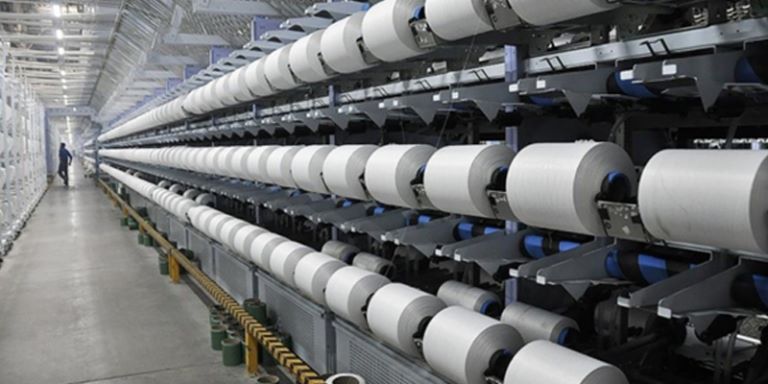
China is sharing advanced technology and experience in research, design, manufacturing, management, marketing and brand building with Pakistan. And Pakistan commands a cost-effective raw material supply and abundant human resources. So both sides are stepping up cooperation in trade, investment and resource integration and jointly exploring international markets. China is helping Pakistan's spinning mills become more cost efficient and competitive. Almost 80 per cent of the yarn and other textile products will be re-exported to China for value addition to sell the finished goods at better prices in the international market. When Chinese businessmen carry out their exports jointly with Pakistan, making use of the raw materials as well as Pakistan’s human resources, it adds to the earnings of Pakistan.
Japan’s apparel sector resorts to nearshoring
Japan's apparel makers are shifting production back to their country. Among the reasons are pressures from a weaker yen, rising overseas labor costs and shipment troubles caused by the pandemic.
The concept of nearshoring production close to consumer markets is gaining ground in the industry. Moves like this show how the supply chain disruption caused by the coronavirus pandemic has given the apparel industry reason to rethink its production strategy, signaling a shift away from overseas hubs like China and Vietnam.
Manufacturing costs are higher in Japan compared with overseas locations. Yet companies believe that the benefits, including shorter delivery times, can offset extra expenses by cutting waste and lost opportunities. Japan’s textile industry started moving production offshore in the 1970s. But now some of the cost advantages of overseas production have waned. Monthly wages in China and Vietnam have roughly doubled since 2010. Apparel companies typically have an easier time relocating production than do automakers or other industrial companies because their equipment is smaller.
Japanese company, World Co whose products sell at department stores and shopping centers, will locate most of its high-end clothing production in Japan within three to five years, up from the current level of roughly 40 per cent. Similarly TSI Holdings, which distributes Jill Stuart women's fashion and Ping golf wear brands in Japan, is considering expanding output at its domestic plants in Yamagata and Miyazaki prefectures. Automation would be used to make jackets, coats and blouses, among other products
Brother develops DTG printer designed for mass production
Brother’s GTX600 is the first direct to garment (DTG) printer designed especially for mass production. The printer can meet the dual challenges of high-quality design reproduction and industrial level activity. To keep the ink in a print ready state, the GTX600 has ink recirculation in four key areas. There are 16 ink channels jetting from staggered, industrial print heads with internal cooling fans, for continuous print operation. Also, the ink is constantly filtered and degassed to guarantee the best possible print quality up to 1200dpi. The built-in humidifier ensures that the machine always has perfect working conditions, even in difficult environments and big production halls.
Brother is a Japanese company engaged in the production of industrial sewing machines, printers and multi-functions-center machines, The GTX600 can be used with different platens for endless creative possibilities. The platens can be changed quickly to save time and their height is auto selectable which makes them adapted for any material that can possibly be printed on. The printing speed has been increased and the industrial maintenance station has been upgraded to enable continuous and fast print operations. The auto cleaning frequency is much less than any printer before, which increases the real print productivity drastically.
Inditex nine months profits up 40 per cent
Inditex gross profit for the nine months rose by 40 per cent. The gross profit margin rose 101 bps to 59 per cent. The nine-month ebitda rose 63 per cent while ebit was up a huge 248 per cent. Pre-tax profit rose 277 per cent and net income was up 273 per cent. At current exchange rates, the currency impact on sales in the second half is expected to be around plus 0.5 per cent versus the second half of 2020 and minus 5.5 per cent versus 2019. The migration to the Inditex Open Platform (IOP) is close to 97 per cent complete and all its stores are open. Sales are returning to normal levels and online sales continue to grow.
The fashion giant’s strategic transformation toward a fully integrated digital and sustainable business model is accelerating. Net income and pre-tax profit both reached historic highs in the third quarter with a strong comparison against the pre-pandemic period in 2019. And sales growth in constant currency in the three months to the end of October continued to speed up with a ten per cent increase versus 2019. Store sales have been steadily improving all year and in the third quarter they exceeded 2019 levels despite the firm having 11 per cent fewer stores.
Bangladesh sees benefits in PPE exports
Personal protective equipment (PPE) presents export opportunities for Bangladesh. The ongoing Covid-19 pandemic has provided the impetus. And manufacturing protective equipment is not seen as difficult for a country which is a garment powerhouse. So a sector like this can diversify the export basket. It is also believed PPE can induce the country to produce more value-added products, says Abul Kasem Khan, Chairperson, Business Initiative Leading Development (BUILD). Bangladesh is already making progress in the PPE sector. This is especially true in the case of 12 products, of which eight are included in the World Health Organisation’s list of PPE.
However, there are challenges. Bangladesh needs to develop the PPE industry in a strategic manner by setting up targets, extending the right incentives, ensuring public-private cooperation and following up closely on the progress and constraints. Key areas to focus on for developing the sector would be ensuring the right products, proper incentives, appropriate policies, knowledge and skills and proper use of technology and logistics. PPEs are highly regulated, with stringent quality requirements and require strong technical knowhow to produce. And this is a key challenge.
The domestic pharmaceutical industry meets 98 per cent of the domestic demand for medicine and exports drugs to 57 other countries, but it imports more than 95 per cent of its required medical devices. Foreign direct investment in the PPE industry would be needed.
Indonesia PPE exports decline
Indonesia's exports of personal protective equipment (PPE) have decreased in the second year of the pandemic reveals Central Statistics Agency (BPS) data. Increased awareness about the spread of Covid cases due to the Omicron variant is not expected to have any effect. Exports of personal protective equipment are likely to decline in 2021 compared to 2020. Exports of meltbown cloth, surgical masks, N95 respirator masks, medical protective clothing, and surgical gowns that fall into the PPE category and their raw materials decreased from January to September 2021.
Although Indonesia’s PPE exports showed a decline, the contribution of PPE to the country’s total exports of textiles and textile products is very small. Export prospect of Indonesia's PPE products contrasts the projected export of Chinese personal protective products which is expected to grow if the spread of the Omicron variant expands and triggers a spike in cases. This projection is in line with the continued increase in China's exports and imports in November 2021.
After the disaster, the recovery, this new reality has caused unprecedented disruption and, in many cases, catastrophic ramifications for thousands of garment businesses across the world. Brands are emerging from the ordeal, trying to make a fresh beginning.
Egypt explores potential in medical fabrics exports
Egypt can be an exporter of medical fabrics. This includes medical clothing such as drapes, scrubs, and gowns, gloves, facial protection, sterilization wraps, protective apparel, and others. Egypt is supporting companies to reorient part of their production into medical apparel. The International Trade Centre's SME Competitiveness Outlook report acknowledged Egypt's s potential in becoming regional leadership in exports of synthetic nonwoven fabrics, an essential material for filtered mask production.
Year 2020, was a pivotal for medical apparel due to Covid. The pandemic had a significant impact on the sector and resulted in several changes, including, among others, a surge in demand for medical clothing from the public which was required to wear face protection and from hospitals. As a consequence the market for medical apparel grew by a staggering 46 per cent and consumption is expected to grow at around five per cent until 2027in North America, Europe, Middle East and Africa. These markets represent around 75 per cent of the global sector. Due to its proximity and duty-free access, Egypt has preferential access to most of them.
However, this sector’s growth in Egypt requires innovation, sensitization of the relevant authorities on the importance of protective apparel and the ability to produce them locally, as well as by creating an enabling business environment for the local industry to grasp identified opportunities.
Walmart has huge export plans from India helping in the "Make-in-India program"
Walmart plans to export $10 billion worth of goods out of India a year by 2027. This is expected to create a network of small and medium enterprises selling to the company’s global buyers and help in the Make-in-India program and accelerate India’s progress as a manufacturing destination that can export to the world.
In India, Walmart employs about 1,40,000 staff, mainly in its Flipkart unit. With the Flipkart acquisition, Walmart also inherited the digital payment company PhonePe, which currently does about 20 billion UPI transactions a year. PhonePe has digitized 25 million small merchants and kirana stores in India. Offline merchant transactions on its platform have shown 200 per cent growth since last year. PhonePe is probably India’s largest digital payments platform and leads the industry on all key metrics which include value and volume of transactions, registered users as well as merchant coverage. The Bangalore -based firm now has a merchant network across 15,700 towns and villages, constituting 99 per cent pin codes in the country. PhonePe now has over 335 million registered users. It is also accepted at over 22 million merchant outlets across India. Using PhonePe, users can send and receive money, recharge mobiles, DTH, pay at stores, make utility payments and also buy and invest in gold and silver.
Techtextil India ’21: Steers India’s technical textile sector during a difficult year
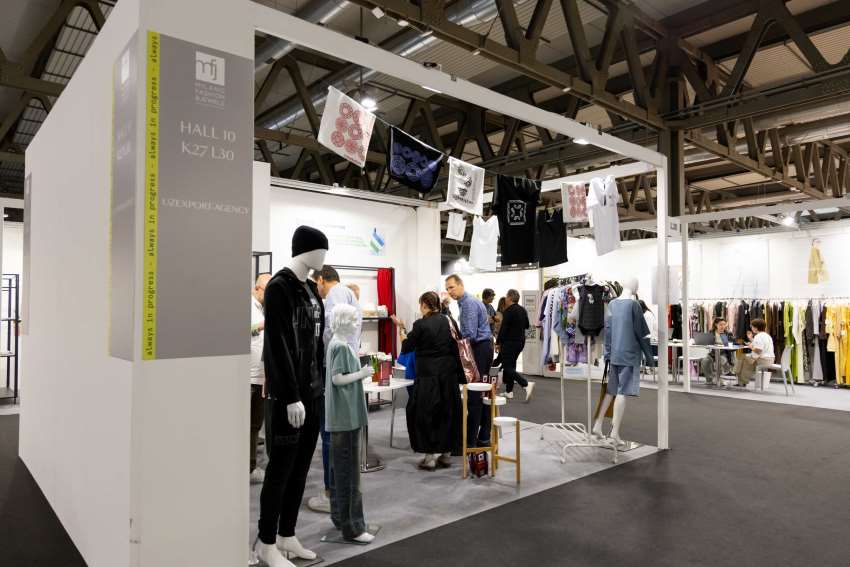
 The just concluded Techtextil india 2021 emerged as an important avenue for tehnical textile players to rebuild supplier links, promote industry integration and engage in lucrative knowledge exchange. Held at the Bombay Exhibition Centre, Mumbai, the eighth edition of Techtextil India provided a platform for technical textile sector to build a new and strong foundation in new normal. The event aimed to unite industry towards the common cause of business recovery across the value chain of technical textiles.
Exploring new opportunites
The high-profile event was inaugurated by Ajit Chavan, Secretary, Textiles Committee, Ministry of Textiles. The show was attended by over f 4,087 visitors who enjoyed the display of the latest products, technologies and innovations exhibited by over 150 technical textile brands on the show floor. Reflecting industry’s keen interest to explore new developments and opportunities in technical textiles, the event received an overwhelming response. Abhijit Kulkarni, President, Textile Engineering Group, ATE India says, the hybrid show was filled with enthusiastic buyers and customers who had many fruitful discussions with leading textile manufacturers including: Strata Geosystems India, SKAPS Industries, Reliance Composites, Paramount Textiles, and Welspun, etc.
Leading exhibitiors included Alok Masterbatches, Khosla Profile, ATE Group, Lucky International, Meera Industries, Park Non-Woven, Sarex Chemicals, SICAM, among others. They exhibited latest innovations like the specialized non-woven fabrics for high temperature filateration with membrane technology.
Success beyond expectations
Pramod Khosla, Director, Khosla Profile informs, the show received a tremendous response despite the unprecedented situation created by pandemic. A key Indian exhibitor in non-wovens, Robin Kapoor, CEO & MD, Park Nonwoven says, this year his company showcased high-efficiency media for air and liquid filtration.The company received response far beyond its expectations and looks forward to the next exhibition in 2023.
Technical textile brand, JB Ecotex exhibited eco-friendly technical textiles made with recycled dumped plastic bottles and plastic waste. “The company’s new product Renaya is a GRS certified premium recycled fibre competes with virgin fibre in each and every parameter,” says Amit Jain, Director.
Major attractions
One major attraction at the three-day fair was the German pavilion attended by top technical textile manufacturers from Germany, such as Autefa Solution Germany GmbH, DILO Systems GmbH, Emtec Electronic GmbH, etc.
Another major highlight was the first Digital Symposium that delved into a series of crucial topics in technical textiles discussing PLI schemes, FDI opportunities and policies, investment opportunities in Tamil Nadu, & New Investment Opportunities, Sustainable Technical Textiles and Global sustainable approach for Textiles with Antimicrobial Performance.
Overall, Techtextil India 2021 heralded a new beginning for the technical textiles sector and for businesses seeking to gain momentum after the tough pandemic phase.
JC Penney retails Forever 21
Department store chain JC Penney has added Forever 21 to its offerings. The partnership means JC Penney will feature a curated assortment from the fashion retailer’s line of women’s products, trend pieces and exclusive collaborations. Forever 21 and JC Penney share a mission to make the latest trends accessible to all while inspiring unique style and confidence. The addition of this brand rounds out the department store chain’s assortment and brings an exciting new element of in-the-moment fashion. The range of Forever 21 tops, bottoms and dresses at JC Penney is rooted in West Coast style and composed of new, neutral must-haves and trending design aesthetics like lush velvet and chic floral.
Forever 21’s relationship with the Generation Z customer is a perfect alignment for JC Penney, who is also committed to bringing innovation, excitement and fashion to a young consumer that understands the quickly evolving trends in fashion.
Exclusive private label brands in apparel for women’s, men’s and children’s were always a staple at JC Penney. Teen fashion retailer Forever 21 was founded in 1984 and became a multibillion dollar operation in over 40 countries. The brand specialised in the fast fashion principle as it made outfits for young teenage girls, who wanted to dress like their favorite celebrities. Forever 21 helped them by providing these fast and at affordable rates.