FW
Turkish fashion event in February
Istanbul Fashion Connection will be held February 9 to 12, 2022.
About 300 companies and brands will present themselves. The entire range of the apparel industry will be presented under one roof: women’swear, men’swear, children’s wear, denim, leather and fur. Shows-in-show with the product areas lingerie and hosiery and with bridal and evening wear complete the offer.
Istanbul Fashion Connection offers an overview of the concentrated strength of Turkish design, production quality and service offerings in the fashion industry. In the fashion hotspot of Istanbul, designers, brands, design studios, agents, producers and representatives of all retail channels will meet to expand their portfolio and develop new business areas.Istanbul Fashion Connection will take place under 2G rules and adherence to strict hygiene measures. Topics such as digital transformation, smart clothing, technical textiles and sustainability will be the focus of seminars and workshops at Istanbul Fashion Connection. Trend zones and fashion shows will provide information on current trends. For visitors, the event will offer an attractive invitation program including accommodation and transfers.
Turkey as a production location and its highquality producers meet the demands of the European fashion industry and trade and are considered a strong argument for cooperation.
Trent to take up beauty
Trent will focus on expanding its operations in the beauty market.
Tata’s retail arm is keen to tap into this significant growth opportunity after having exited the beauty space 23 years ago.Extended product line and experimentation with formats for these products are in the offing. The Tata Group had been an early player in India’s beauty industry as Simone Tata helped to launch cosmetics brand Lakme in 1953 before the business sold it to Unilever in 1998. The Tata Group then stayed away from the beauty space for over a decade due in part to the non-compete clause in its sale of Lakme. Now, after small-scale operations in the sector since 2014, Tata is ready to focus on the beauty industry once again, along with footwear and innerwear. Trent is considering launching in-house cosmetics brands as part of this initiative. The business already has its own chain of retail stores, Westside, in which it could retail the new cosmetics brands.The company continues to remain focused and committed to the accelerated store expansion agenda and also on the digital channel, as the online channel registered 95 per cent growth in the second quarter over the previous quarter.
Sri Lanka sets apparel exports target
Sri Lanka’s apparel industry has a target of $8 billion in export earnings by 2025.
Strengthening backward vertical integration and further improving sustainability credentials are vital in achieving the sector’s vision, while enhanced access to key export markets – including within the Asian region – will provide a significant boost in realizing these aspirations.
At present Sri Lanka accounts for around one per cent of the global market share of apparel exports. Efforts to strengthen backward vertical integration of Sri Lanka’s apparel value chainare critical, particularly in the current context. This would pave the way for the industry to reduce lead times and significantly increase its domestic value addition – which currently stands at around 55 per cent. The latter would also enable Sri Lanka to make greater use of preferential tariff concessions such as the Generalised Scheme of Preferences (GSP) Plus tariff concessions to the European Union (EU), a critical market for Sri Lanka in general, and apparel in specific.
Efforts are being made to attract key players in the fabric segment to invest in fabric mills in Sri Lanka. The pandemic has strongly increased the preference for near-shoring among buyers, given how Covid caused vast disruptions to global supply chains. Sri Lanka can position as a hub to serve Asia.
Indonesia feels RCEP will help footwear exports
Indonesia believes the Regional Comprehensive Economic Partnership (RCEP) will open up opportunities to increase exports of footwear.
The country’s shoe exports to RCEP countries reached 29 percent of total exports in 2020 followed by the United States at around 27 percent. RCEP participating countries are the second largest footwear export destination for Indonesia after the European Union.RCEP countries have become an important market, especially China, which showed a large increase in imports in the period 2019 and 2020.So for the Indonesian footwear industry, the ratification of the RCEP is quite urgent.In terms of market segment, Indonesian footwear products have a branded sports shoe market segment while China dominates the export of cheap footwear which also enters various countries.
But the footwear industry faces challenges in maintaining competitiveness for the domestic market.The free trade commitment contained in the RCEP will directly allow the entry of cheap products from abroad.Efforts to maintain competitiveness have not been followed by the readiness of the domestic upstream industry in supplying raw materials. Most of the raw materials are still imported from abroad, because the domestic textile industry has not fully met the needs. In the context of increasing exports, it is also necessary to maintain the domestic market and one way to do that is to maintain competitiveness.
Pakistan export earnings rise
In November 2021, Pakistan’s total export proceeds were up 32 per cent.
The upward trend in exports of value-added sectors was seen for the past few consecutive months.Rupee depreciation, greater demand from the international market helped bolster exports. Exports of home textileproducts were up by 34per cent in November 2021 over the previous year followed by a 33per cent increase in men’s garments. An increase of 68per cent in jerseys and cardigans exports was noted over the corresponding month last year.Exports of women’s garments posted an increase of 34per cent in November over the corresponding month of last year, followed by a 24per cent increase in export of leather apparel over the previous year. An increase of 127per cent was noted in the export of fruits and vegetables. Cement exports were up by 193per cent in November against the previous year.
The United States of America, China, United Arab Emirates and Netherlands remained the top destinations of Pakistan’s exports during the month of November from a year ago.Pakistan exports to the US grew 48per cent in November over the corresponding month of last year followed by a 30per cent increase to China and a 96per cent increase to the UAE.
Kontoor reduces water use
Kontoor Brands has reduced water consumption by eight billion liters since 2008.
The aim is to save ten billion liters of water by 2025. For the company’s more than 120 million units of apparel and accessories it produced in 2020, Kontoor’s teams sourced 50 per cent of its cotton sustainably, with the aim of achieving 100 per cent sustainable cotton in all products by 2025.
Kontoor Brands is a global lifestyle apparel company and owns two of the world’s most iconic consumer brands, Wrangler and Lee. Kontoor is on track to use 100 per cent preferred chemistry by 2025 and expects to announce a science-based climate target for greenhouse emissions in 2022. These goals are supported by a wide array of initiatives across Kontoor’s production chain. Kontoor is aiming to not only set and meet its own ambitious goals, but also to apply lessons learn and best practices transparently so that others can bring these innovations to life in their own manufacturing operations.
Kontoor Brands closely manages its supply chain and distribution and directly owns one-third of its manufacturing operations. The company also leverages its strong relationships with third-party manufacturers and seeks to embed sustainability in all stages of production to improve the overall impact of its products.
Texworld to be held in February
Texworld Evolution Paris will be held onFebruary 7 to 9, 2022.
Several hundred companies in the fabric and clothing sector will represent the major textile countries. Adapted to sanitary restrictions, the format of this relaunch edition will enable exhibitors from major sourcing countries to be welcomed. Apparel Sourcing Paris will be for the sourcing of finished garments, Avantex Paris for new materials and innovative processes, Leatherworld Paris for leather and related materials, and finally Texworld Paris for fabric sourcing. These will concentrate in one place the main global offer for fashion brands, from ready-to-wear to luxury.
Texworld Paris is renewing its international mission, giving buyers a forward-looking vision of spring/summer 2023’s creative trends combined with an expanded global sourcing offer. More than 200 exhibitors from 16 countries will be present. Signages will be set up to identify exhibitors offering eco-responsible products as well as manufacturers who can deliver small quantities of fabrics or finished products in small volumes.
This edition presents a very qualitative offer, notably through the Elite sector, which brings together a selection of companies chosen for their performance in terms of quality, competitiveness, responsiveness and services for the world’s leading fashion brands. This areawill this year include a panel of some 20 high-level Turkish, Pakistani, Indian and Bangladeshi exhibitors who are regulars at Texworld Paris.
India’s sewing machine market set to grow to $50.8 million in 2021
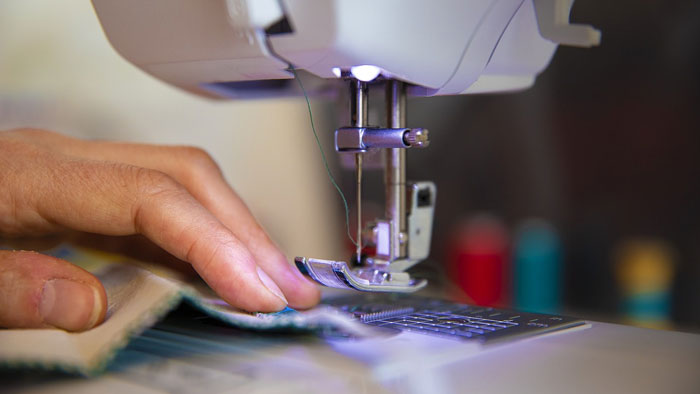
With the government pumping in investments worth over $1 billion in the last five years, the market for sewing machines in India has been expanding for the last few years. As per a Fortune Business Insights report, the market is estimated to reach $50.8 million in 2021 from $47million in 2020. The rise is on account of a growing demand for fabrics by industrial and domestic end-users. Growth will be driven by investments worth $1 billion made by the government in the last six years in initiatives such as the TechnologyUpgradation Fund Scheme and the Integrated Textile Parks.
For instance, in October 2021, the Centre announced the setting up of seven mega textile parks to generate over one lakh direct and over two lakh indirect jobs. As per India Brand Equity Foundation Report, India invested approximately $185 million in the Integrated Textile Parks and roughly $961 million in the Technology Upgradation Fund Scheme between FY 2015-16 and FY 2019-20. These investments boosted the installation of sewing machines across applications, says a Deccan Herald report.
Textile parks to boost sector growth
The setting up of seven mega textile parks will boost growth in the sector, opines an apparel exporter registered with the Federation of Karnataka Chambers of Commerce and Industry (FKCCI). A listed player in the sector, Singer India has recovered from the second pandemic wave. For the current fiscal’s half-year, the company recorded a cumulative net profit of Rs 2.67 crore. Its management has launched several initiatives to accelerate growth both in sewing machines and home appliances business, informs Rajeev Bajaj, Managing Director.
Usha International is introducing new technologies like white machines. The company is developing innovative sewing machines to cater to changing demands. It recently introduced a few modes iPad and WiFi enabled models equipped with user-friendly embroidery designing software, adds Parveen Kumarr Sahni, President-Sewing Machines Business, Usha International.
Innovations driving market
Integrating internet of things (IoT), artificial intelligence (AI) and 3D printing, several new innovations like pedal-less machines, voice guide machines, automatic zigzag machines and machines with USB ports are being introduced to drive up growth. One such innovation that has grabbed the attention of customers is the automatic zigzag machines being offered by Usha International, Singer India and Brother. Known for their accuracy, speed and flexibility, these sewing machines are witnessing an increased demand from customers.
Challenges for the sector
However, despite its current growth rate, the sector is witnessing certain challenges like the closure of manufacturing facilities, disrupted supply chains and reduction in demand of apparels due to the pandemic. One of the biggest challenges is that lack of manufacturing of industrial grade sewing machines in India. This makes India entirely dependent upon China for machines, says Inderjit Singh, President, Sewing Machine Dealers & Assemblers Association, an umbrella organization of over 300 industry players.
Singh points out, the government needs to incentivize innovations as MSMEs do not have the wherewithal to spend on R&D. He hopes, the ongoing market conditions will help boost sales leading to a strong growth of the sewing machine market in India.
US October denim imports rise
US imports of denim increased 28 per cent in October 2021 compared to a year earlier. As per Commerce Department’s Office of Textiles & Apparel (OTEXA) data, imports from Mexico grew 43 per cent. Shipments from countries of the Central American Free Trade Agreement (CAFTA) rose 29 per cent, led by a 30 per cent from Nicaragua and a 22 per cent gain from Guatemala. Columbia contributed with a 30 per cent rise. Denim imports from Vietnam remained tepid with a four per cent rise. Top supplier Bangladesh rolled along with a 31 per cent increase in the month while China saw a 17 per cent gain. Imports from Pakistan jumped 51 per cent, Cambodia rose 18 per cent and Sri Lanka was up 43 per cent. Jeans imports from Turkey increased 61 per cent in October 2021. October increases were posted by Lesotho, Madagascar, India, Macau, Italy and Japan. Declines were seen from Jordan, Ethiopia, Kenya and Tanzania.
CAFTA and US co-production for textiles and apparel supports more than a million jobs and $12 billion in two-way trade. Onshoring and nearshoring are underway, with key CAFTA countries seeing exports up anywhere from 33 per cent to 56 per cent, outpacing even major Asian exporters, a sign that the trade agreement’s existing rules are effective .
Vietnam’s apparel sector has to comply with green norms to grow
Vietnam runs the risk of losing orders from global clothing brands if domestic textile and garment manufacturers do not incorporate changes in line with sustainable and greener production, better energy conservation and assume higher responsibility for the environment, a seminar co-hosted by the Vietnam Textile and Apparel Association (VITAS) and the WWF was informed. More than 250 global fashion brands have set standards and codes of conduct responsible to the environment applicable to their suppliers. As global brands now favor green businesses in Vietnam, polluting manufacturers may face the heat. Vietnamese garment businesses are therefore expected to comply with green production, which will help them do business more effectively, generate higher profit and sustain growth rates. Garment factories are supposed to save energy and water, use environment-friendly materials and fulfill their corporate social responsibility.
For the immediate future, the implementation of sustainable development criteria may be a challenge to domestic garment manufacturers as these criteria require huge investment and personnel. However, in the long run, the credibility and brand value of the business in question will be better. For now, most enterprises involved in the garment supply chain formed by global fashion brands have adopted the green requirements for production, such as assuming their corporate social responsibility, being friendly to the environment and cutting emissions.