FW
H&M Group’s Q2 FY’22 sales rise by 12%
H&M Group’s net sales in local currencies increased by 12 percent in Q2 FY’22 spanning March 01, 2022 to May 31, 2022, compared with the corresponding period last year. A family of brands and businesses, the H&M Group is driven by the desire to make great design available to everyone, in a more sustainable way. It offers fashion, design and services that inspire and enable people to express their style while making it easier to live more circular.
The group’s brands have their own unique identity, and complement each other well. Together they offer a great variety of styles and trends within fashion and accessories, beauty and sportswear as well as interiors. While increasing the share of recycled or other more sustainably sourced materials, its brands also offerseveral services to make a sustainable lifestyle accessible to more people.
ICA Bremen organizes first Cotton Classing and Testing Training Course
Nine international delegates participated in the first Cotton Classing and Testing Training Course held since 2019.
The six-day program in Bremen, Germany, was held from May 10 – 17, 2022. It was organized by ICA Bremen and the Bremen Fibre Institute (FIBRE). The training concentrated on quality issues in raw cotton. Delegates completed training in the ICA Bremen laboratory with KarstenFroese, ICA Bremen demonstrating the manual testing area. Bill Kingdon, Managing Director, ICA Bremen believes, the course is an excellent opportunity for cotton professionals to learn about classing and testing from industry experts and paves the way for quality training.
The training incorporated a wide range of modules - from the classification of cotton from various growths to practical HVI training on the latest Uster 1000 and Premier ART2 machines. It also included a welcome meal and a farewell meal allowing delegates the perfect opportunity to network with their fellow delegates. The next ‘Cotton Classing & Testing’ training programwill be held in 2023.
HeiQ, Patagonia launch new odor control technology for textiles
Swiss IP innovator and established global brand in materials and textile innovation, HeiQ and Certified Benefit Corporation Patagonia, have jointly launched a new odor control technology for textiles. Known as HeiQ Fresh MNT, the technology is renewably sourced and derived from mint oil.
The latest addition to the HeiQ Fresh family of sustainable odor management technologies, HeiQ Fresh MNT complements the company’s mineral-based HeiQ Fresh HAX and the bio-based HeiQ Fresh FFL. The technology provides fabrics with a long-lasting odour control capability that keeps garments smelling fresh and wearers feeling clean and comfortable all day long. Based on test method ISO17299-3A using isovaleric acid, treated synthetic fibres more than double the odour control efficiency versus current industry standards.
Carlo Centoze, Co Founder and CEO, HeiQsays,HeiQ Fresh MNT is further confirmation of our dedication to enhance people’s lives with sustainable innovation. The technology allows you to wash less, saving water, detergent, energy, microfibre and prolong the life of garments. Laura Hoch, Material Innovation Engineer, Patagonia, adds, not only does HeiQ Fresh MNT keep garments fresh in a sustainable way, it performs even better than what we currently use.
Bemberg™ by Asahi Kasei collaborates with MagnoLab for a new T-shirt range
On the occasion of the 102nd edition of PittiUomo, Bemberg™ by Asahi Kasei, an international reference in men's formalwear and the world's only producer of the precious and sustainable Bemberg™, is teaming up with MagnoLab, a network of Biella-based companies, to create and display T-shirts combining environmental responsibility and aesthetic research. The contemporary cut T-shirts are being developed from sheer and other certified fiber blends including GOTS cottons and RWS wools.
The project conceived for PittiUomo 102 stems from the spirit of Bemberg™ and fits perfectly into the philosophy of MagnoLab, who aims to develop projects related to environmental responsibility through a joint and participatory approach of partners, and to create value by developing innovative products and processes with rapid testing cycles, according to a lean management model.
The new Bemberg™ x MagnoLab product range will be available to the market from June 14th, the first day of the 102nd edition of PittiUomo.
US’ denim imports from Bangladesh rise by 51% during Jan-Apr’22
US’ denim imports from Bangladesh increased by 51 per cent to $248 million from January to April 2022, shows data from Commerce Department’s Office of Textiles & Apparel (OTEXA).
As per a Textile Today report, the OTEXA data shows, US’ overall denim imports from Bangladesh grew by 0.84 per cent Y-o-Y to $1.25 billion during the January to April 2022 period.
Denim imports from Pakistan grew by 72.48 per cent to $152 million while from Vietnam grew by 40.94 per cent to $137.37 million worth of denim. Imports from China rose by 20.23 per cent to $110.64 million.
In terms of growth, Egypt performed remarkably as it noted 126 per cent growth in its denim export to the US and earned $71.70 million in January to April 2022.
As per the latest report by Research and Markets, worldwide denim market is expected to grow by $76.1 billion till 2026 from $57.3 billion in 2020. The market research firm attributed the anticipated success to factors including casualization in the workplace.
Supima to establish new industry platform to authenticate cotton
American Pima cotton brand Supima has collaborated with TextileGenesis™ to establish the new industry benchmark platform for authenticating cotton.
The Supimablockchain platform powered by TextileGenesis™ will digitally connect Supima’s comprehensive supply chain from the growers to the brand/retailers. Integrated with this digital platform, Supima’s technology partner Oritain™ will provide the forensic origin authentication for Supima cotton across the platform. The ability to independently validate the Supima content of products at every stage of the supply chain achieves unmatched authenticity and responsibility through the combination of forensic physical and digital authentication.
TextileGenesis’ will integrate its Fibercoin™ technology into Supima’s licensing program and apply to all SUPIMA® branded fiber throughout the supply chain, creating a non-fungible digital token for every kilogram of Supima cotton that can be physically and forensically verified and authenticated by Supima from the farm through to the retail shelf. This pioneering effort for cotton sourcing sets a new standard for responsibility in the global textile industry and consumer marketplace. Supima is striving to bring deeper levels of authenticity and responsibility to cotton sourcing with greater support for equity and ubiquity for all partners in the supply chain.
Siegelklarheit approves US Cotton Trust Protocol as sustainable cotton standard
An initiative of the German Federal Government, Siegelklarheit has approved the US Cotton Trust Protocol as a standard for sustainable cotton. Siegelklarheit aims to contribute to more sustainable purchasing decisions by helping consumers better understand environmental and social labels. US Cotton Trust Protocol had to grow through Siegelklarheit´s assessment system in order to be used by the members of Partnership for Sustainable Textiles (PST).
Founded in October 2014, the Partnership for Sustainable Textiles aims to improve social and ecological conditions within global textile supply chains. The Textiles Partnership orientates its work on the OECD Due Diligence Guidance and on international agreements and guidelines that define the principles of social, environmental, and economic sustainability and the framework for corporate responsibility.
The PST has developed an implementation framework and reporting format for corporate due diligence. In the context of this format PST member companies also indicate how much cotton they source and how much of it is sustainable or organic cotton, certified by recognized standards. Besides U.S. Cotton Trust Protocol, these include Better Cotton standard, the Australian myBMP standard, Cotton made in Africa, Fairtrade Cotton and CottonConnect.
SGCCI organizes first GTTF in the United States
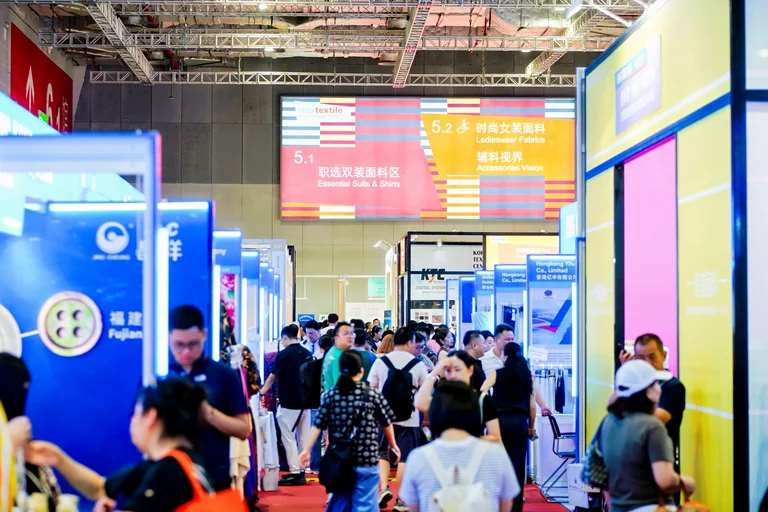
The first Global Textile Trade Fair (GTTF) was organized by the Southern Gujarat Chamber of Commerce & Industry (SGCCI) in the US to promote world’s second largest manmade fibre (MMF) manufacturing hub based at Surat, Gujarat, India.
As per a report by the American Bazaar Online, the three-day exhibition was held at Gas South Convention Center, Duluth, Georgia from June 09 to 11. It was supported by India’s Ministry of Textiles.
Inaugurated by Sebastian Barron, Field Representative, Office of the Georgia Governor, the exhibition was visited by hundreds of visitors on the first day who placed large orders with 50 Suat-based textile manufacturers.
Dr Vijay GPrabhakar, Founder Chair, US Congressman Danny K Davis’ Multi Ethnic Advisory Task Force, presented a Congressional commendation to Ashish D Gujarati, President, SGCCI for the historic initiative of bringing Indian apparel and home textiles expo to the US.
Overwhelmed with the response of US buyers, Gujarati noted that the US imports nearly $112 billion worth of apparel, clothing and home textiles annually, 58 per cent of which is MMF textiles.
Surat textile industry has recently upgraded their textile manufacturing technology and is now among the world’s best. Its products will surely find relevance in the US market, he added.
Gujarati invited home textile retailers, apparel and clothing retailers, kids wear brand owners to visit the exhibition to give a big boost to India-US bilateral trade.
PittiUomo plans physical event for 102nd edition
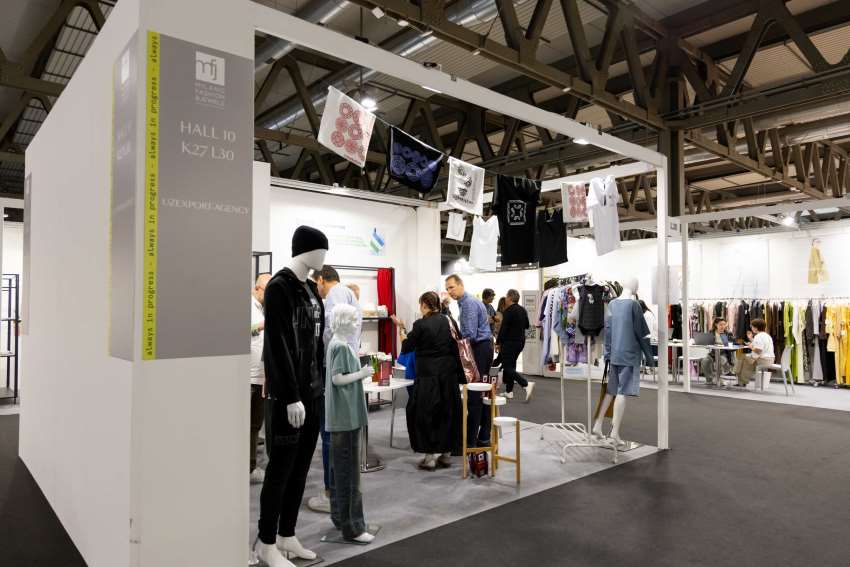
PittiUomowill return to its physical event format and traditional four-day program for the 102nd edition. Dedicated to the 2023 Spring/Summer collections, the reference trade fair for men's fashion will house 682 exhibitors, 280 of them from abroad, and 15,000 visitors from June 14 to 17 in Florence, Italy.
With the evocative theme 'Pitti_Island', Pitti Imagine promises a rich and stimulating program to visitors. British designer of Jamaican origin, Grace Wales Bonner will focus on the richness and diversity of Black culture in her work and unveil her collection during the event
PittiUomowill also support a dozen Ukrainian creatives during this 102nd edition, in response to the war that broke out in their country on February 24. It will dedicate a specific area will be dedicated to these designers in the Fortezza da Basso. The seven creativesto be showcased include: T Mosca, KaterinaKvit, The Coat, Poustovit, Ksenia Schneider, Bobkova and Litkovska, and the two craftsmen Olk Manufacture and Gunia Project.
Lotustex Textile acquires Karl Mayer’s first Link-Matic® system
Egypt-based denim manufacturer, Lotustex Textile has acquired Karl Mayer’s first Link-Matic® system for automatic batch change on Prodye®-S slasher indigo dye range
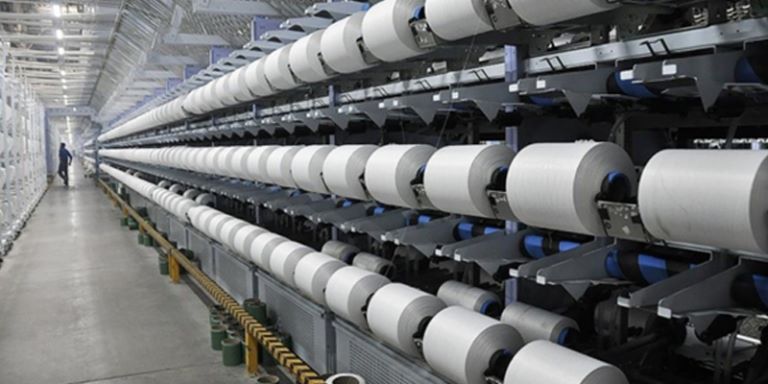
The sophisticated automation solution considerably simplifies the batch change on indigo and sizing machines, thus increasing productivity by 30 per cent, depending on the number of batch changes per day.
The solution also reduces yarn waste upto 600 million on indigo dyeing range. It saves usable yarn material with each batch – while at the same time requiring less manpower. During batch changes, only one operator is required to prepare the warper beams for entry into the machine.
A fully automatic knotting unit couples the warp yarns of the new batch to the yarns of the batch just finished.
Founded in 2019, Lotustex Textile is first company to invest in the innovative Link-matic® system in recent months in order to optimize the performance of its Prodye®-S sizing machine. Especially for its activities in the fashion sector, Lotustex Textile expects a significantly higher flexibility and cost reduction. The delivery date for the new acquisition is November 2022.