


FW
MAS supports Kenyan habitats
South Asian apparel major MAS Holdings (MAS) has partnered with The Wildlife Foundation (TWF), Kenya, to conserve 6,250 acres of the Nairobi National Park Wildlife Dispersal Area.
This initiative enables MAS and TWF to collaborate with local landowners to conserve wildlife on community- and privately-owned land.The project commenced in March 2022 and is an extension of TWF’s ongoing conservancy model through which TWF leases lands from local owners to promote wildlife conservation and better land use practices. Through this partnership, MAS has been able to expand TWF’s existing conservancy of 5,000 acres to a total coverage of 11,250 acres.
The conservancy model utilizes both monetary and non-monetary incentives to encourage landowners and local communities to keep land unfenced for wildlife and livestock to move freely in the outskirt lands of the park. This is coupled with initiatives to raise awareness on community-based conservation, place community rangers to mitigate human-wildlife conflict, train youth and women on topics such as beekeeping, biogas, and promote the use of technology to innovate solutions for conservation challenges.
MAS and TWF provide financial incentives to landowners to keep private lands open and unfenced for wildlife movement. This contributes to reducing human retaliations against lions and other predators as well as supporting to improve the education of the children in the area by providing landowners with lease payments aligned to the start of the children’s school terms.
New EU green legislation to step up sustainability efforts in Bangladesh
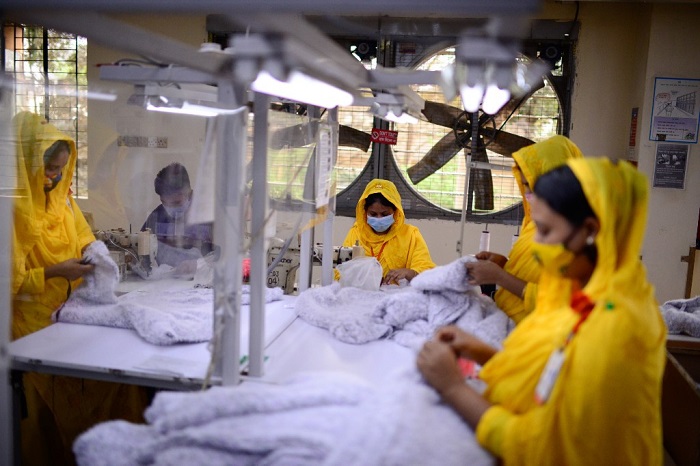
The huge amount of waste produced by the global textile industry has accelerated the need to reduce continued damage to planet Earth. Textile produces over 100 billion pieces of clothing year. This results in 84 per cent of the textile waste worth $3.7 billion being sent to landfills every year. To control this waste and create a climate-neutral continent, the European Union (EU) has introduced a set of initiatives under the European Green Deal.
Net zero emissions by 2050
Urging all 27 member states to transform EU into a modern, resource-efficient and competitive economy, the European Green Deal has set a target of achieving net zero emissions of greenhouse gases by 2050. It separates economic growth from resource use and encompasses all people and places. One of the many targets set by the Green Deal is ensuring durability and recyclability of all textile products by 2030. The deal also mandates use of recycled fibers in these products and adoption of responsible production processes.
The July plenary of the European Economic and Social Committee (EESC) urged the European Commission to align key proposals of the deal with the EU rules on sustainable products, eco-design and sustainable textiles. However, this can cause several ramifications for global apparel manufacturers, especially Bangladesh, warns Eurostat.
New heights in environmental sustainability
Bangladesh has 165 LEED-certified green garment factories. Of these, 50 are Platinum-rated, 101 Gold-rated, 10 Silver-rated and 4 LEED Certified. LEED-certified Green buildings are becoming a norm in Bangladesh with the industry working with international stakeholders to attain new heights in social and environmental sustainability.
Faruque Hassan, President, BGMEA says, the association is moving step-by-step to achieve a sustainable and circular economy. It has teamed up with P4G-funded Circular Fashion Partnership (CPF) initiative to transform to a circular fashion system for making new, low carbon footprint and responsibly-made products. The partnership includes the Global Fashion Agenda, BGMEA and Reverse Resources comprising 19 brands, 17 recyclers and 85 manufacturers onboard. Renewed vision to reduce GHG emissions
To keep pace with global strategies, BGMEA unveiled a new vision in July. The vision urges Bangladesh apparel exporters to reduce GHG emissions upto 30 per cent by 2030, increase use of sustainable materials by 50 per cent and reduce blue water footprint by 50 per cent. This will help the sector reduce energy consumption 30 per cent, encourage use of at least 20 per cent of renewable energy, ensure 100 per cent sustainability in data reporting and increase production efficiency by 60 per cent. It will also ensure setting up 80 per cent green factories.
Collaborating for industry transformation
Global buyers are also urging stakeholders to join hands to achieve sustainability goals. Collaboration is the key to ensure necessary transformation of the entire industry, feel experts.
As per McKinsey’s 2022 State of Fashion report, consumers today are keen to know the source of their materials, their production processes, and ensure transparency in treatment of workers. They are aligning with brands that adopt ethical business practices and expanding their sustainable products besides ensuring transparency of their supply chains. The Bangladesh garment industry is already adopting sustainability practices. The proposed EU legislation is likely to further speed up this process, benefitting garment manufacturers in the country.
ICAC partners with CottonConnect
CottonConnect and the International Cotton Advisory Committee will jointly undertake a series of projects.
The partnership, covering an initial period of a year, represents the primary common interest between the two organisations. Since ICAC is the only intergovernmental association representing 25 cotton producing, consuming, and trading countries worldwide, it can serve as a valuable learning platform for CottonConnect to learn through discussions on cotton issues of international significance.
CottonConnect can learn from ICAC and build on the sustainability component of cotton production, thus improving the progress and development of cotton sectors across its regions. ICAC can also learn from CottonConnect’s extensive experience and share it with other members across the globe.
ICAC's privileged relationships with major players afford it access to leading cotton researchers and scientists across the globe, who understand cotton from the field to the consumer. The CottonConnect network stands to benefit greatly from these innovations and can take advantage of those that are practical and feasible to implement. ICAC member countries may also benefit from CottonConnect's innovations in cotton.
Formed in 1939, the ICAC is an association of cotton producing, consuming and trading countries. CottonConnect helps improve the sustainability of global textile supply chains, thereby enabling producers and raw material farmers to work more responsibly and enjoy better livelihoods.
Indian exporters get RoSCTL relief
India has amended the Rebate of State and Central Taxes and Levies (RoSCTL) scheme.
So Indian garment exporters have got relief from favorable appreciation in transferable duty credit scrips. The amendment will provide relief to the garment sector and ensure maximum refund of the RoSCTL amount will help exporters meet their working capital requirements.Further, it will give an impetus to the garment sector to perform better at a much faster pace. For ensuring continuity, the scheme will continue till March, 2024.
However, exporters are still facing various issues. They want deletion of the provision making the transferee liable to RoSCTL conditions. Exporters can generate scrips immediately after the shipment of export consignments but the realisation of payment use takes months.After a certain time, customs officials had the authority to take action for recovery of the scrip amount. Now the original beneficiary of the scrip will be liable in case of non-realisation of export payments.
Under the RoSCTLscheme, the maximum rate of rebate for apparel is 6.05 per cent while for made-ups it is 8.2 per cent. However, with the deep discount, exporters were getting between 4.8 per cent to 6.4 per cent and were losing 1.2 per cent to 1.6 per cent in the shape of discount.
71% Consumers get earth-friendly, say Boston Consulting
Seventy-one percent of consumers across the world are concerned about sustainability in the apparel category.
So says a survey by global management consulting firm Boston Consulting Group. The survey involved around 19,000 consumers as participants in eight countries—Brazil, China, France, Germany, India, Italy, Japan, and the US.
But a mere 20 per cent believes their purchasing decisions can personally impact the environment and around 70 per cent are unsure about corporate claims regarding sustainability.
Sustainability is now an integral part of everyday life with consumers’ growing awareness and their stance to opt for eco-friendly products. And to sustain existing customers and lure new ones, textile and apparel companies are creating ethical robes and offering innovative products. They are also making sure that the impact is percolated till the end of the value chain and their suppliers so that no unethical practices are imbibed and followed.
Among the materials used by some shoe makers are recycled bottles for laces, castor bean oil for the insoles, recycled cardboard for packaging as well as merino wool and tree fibers for the shoe uppers. Although millennials vouch for sustainable fashion and social change, the eco-friendly factor of a fashion product are often dominated by factors such as price and value.
India’s Alok Ind launches new fiber replacing cotton
Alok Ind will launch a sheet collection named Suta. Suta fiber is a naturally wrinkle-resistant, anti-bacterial, zero shrink and quick dry yarn that boasts test standards superior to 100 per cent cotton. Alok developed the innovative yarn using its expertise in polymer-based yarns. The manmade fiber can compete directly with the hand feel of a natural cotton fiber.
The collection is made from yarns that weave into a fabric the feeling of cotton. The product has been designed to help manufacturers and retailers decrease risk and volatility driven by single source cotton. Suta can be used as 100 per cent fiber construction and can also be used in blends and with recycled yarns.
Alok is an Indian textile manufacturer with operations in both the cotton and polyester value chain. The company is primarily engaged in the business of textile manufacturing including mending and packing activities. It has four manufacturing locations. The range of products includes fabrics, garments, embroidered fabric saris and terry towels.
Alok was incorporated in 1986 and began activities with the manufacture of texturised yarn by setting up manufacturing facilities at Silvassa. In the company expanded the texturising capacity to 30 machines, knitting capacity to 40 machines and weaving capacity to 170 air jet/ rapier looms.
Eyeing Chinese share Bangladesh can step up exports to EU,UK
Bangladesh is yet to tap the full potential of the European Union and the UK markets.
It has scope for additional earnings by exporting products to these regions. One reason is that China is losing its share in the global market due to rising tensions with the west, the emerging geopolitical scenario, and the extended Covid restrictions in the former, and therefore Bangladesh can further raise its share.
China is moving away from low value-added apparels to more sophisticated ones and that also works to Bangladesh’s advantage. China’s share in the EU market in 2010 was nearly 44 per cent which declined to around 31 per cent in 2021.
In fiscal 2021-22,Bangladesh’s export earnings from the EU and the UK grew by 32 per cent. However the country faces challenges, including inefficiency in ports, complex customs procedures and lack of technological upgradation. Attracting more foreign direct investment in backward linkage, investment in non-cotton fabrics and diversification of readymade garment products can allow Bangladesh to grab a bigger share of Chinese exports.
The South Asian nation’s producers of readymade garments contribute around a fifth of its gross domestic product and more than 80 per cent of its export earnings
US T&A imports up 29 per cent
In the first seven months of 2022, imports of textiles and apparel by the US rose by 29 per cent.
US textile and apparel imports consist of cotton products, manmade fiber products, wool and silk products, and products from silk and vegetable fibers.
Apparel constituted the bulk of textiles and garments imported by the US in January 2022 to July 2022. With a 26 per cent share, China continues to be the largest supplier of textiles and clothing to the US, followed by Vietnam with 14 per cent. Among the top ten apparel suppliers to the US, imports from Indonesia and India shot up by 59 per cent and 59 per cent year-on-year respectively. Imports from Cambodia and Bangladesh too grew 55 per cent and 54 per cent respectively. Additionally, imports from Pakistan, which is among the top 10 suppliers, registered a growth of 46 per cent compared to the same period of the previous year.
In the non-apparel category, among the top ten suppliers, imports from Cambodia soared by 70 per cent year-on-year. Imports from Vietnam and Italy too climbed 27 per cent and 23 per cent respectively. On the other hand, imports from Turkey dipped by 11 per cent.
Spanish brands Inditex, H&M and Primark grow, get profitable
Spanish fashion designer brands have increased their business by eight per cent.
Inditex, H&M and Primark lead Spanish textile commerce. Traditionally, sales of the three groups have evolved better than the revenue of the sector in Spain. These groups represent 37 per cent of the total fashion sector in Spain.
They have experienced a recovery in indicators such as employment, which has already reached pre-pandemic figures. In 2021, the number of direct jobs in the sector was seven per cent higher than in 2020 and three per cent more than in 2019. Production also returned to growth with an eight per cent increase to around 13 million garments and accessories. The figure is 25 per cent lower than in 2019, when it reached an all-time high.
In terms of distribution, the number of points-of-sale of designer brands increased by one per cent. E-commerce, critical during the pandemic year, continued to gain momentum, with a growth of 55 per cent. This is the highest growth this figure has experienced since records began in 2015. In comparison to 2019, the increase was 137 per cent.
In addition, designer labels have continued to achieve success internationally: in 2021, their sales abroad soared by 30 per cent and already contributed 40 per cent of the sector's total business.
Rise in Bangladesh denim exports to the US
Bangladesh’s denim exports to the US in the first seven months of 2022 rose by 46 per cent.
In 2021, Bangladesh became the top denim exporter to the US for the second consecutive year. Currently, Bangladesh holds a 22 per cent market share of the US denim market.
Bangladesh’s denim sector has improved a lot with huge investments in denim processing plants. The fabric used to be imported but now about 60 per cent is being sourced from domestic suppliers.
A number of state-of-the-art fabric mills were established in the country due to the positive growth of denim.Bangladesh’s manufacturers now produce high-end products with increased investment in research and development, in-house design studios, and technologically advanced washing plants. However the ease of doing business needs to be further developed by resolving all the complexities related to infrastructure and ports.
Although, there has been a decline in orders as the global economy is going through an unstable situation due to war, inflation and the energy crisis. Retailers now have a surplus of goods and so are ordering less. Plummeting sales in the West amid rising inflation driven by the Russia-Ukraine war is the big cloud on the horizon for the apparel industry of Bangladesh.











