FW
H&M profit down 87 per cent
H&M’s operating profit fell by 87 per cent in the fourth quarter.
The hikes in raw materials and freight costs combined with a historically strong dollar resulted in extensive cost increases for purchases of goods.
The Swedish retailer launched a cost-cutting program in 2022 that included 1,500 job losses. Sales in the fourth quarter were up ten per cent but were flat in local currency terms. Sales from December 1, 2022, until January 25, 2023, increased by five per cent in local currencies. Since sales in the new financial year have started well, the group hopes sales, profitability, and inventory levels all improve this year since external factors are still challenging but are moving in the right direction.
The goal for next year is that of a double-digit operating profit margin from 3.2 per cent in 2022. The Swedish retailer has often ended up with large amounts of garments it has had to discount. H&M is increasing its production in Europe and looking at Latin American countries as part of an attempt to do more near-shoring and be able to respond more quickly to fashion trends.The retailer expects to have lower inventory in 2023 but capital expenditure is expected to increase 50 per cent.
Cambodian exports to EU may decline
Cambodia’s exports of garment, footwear, and travel goods to the European market are likely to decline.
Among the reasons are spillover effects from the war in Ukraine, with an especially sharp downward revisions for economies most dependent on Russian gas supply. If the energy crisis in the EU gets resolved, it will be a good sign for Cambodia’s exports to the EU. The euro area economy grew by 5.2 percent in 2021 and 3.1 percent in 2022. It is projected to grow only at 0.5 percent in 2023.
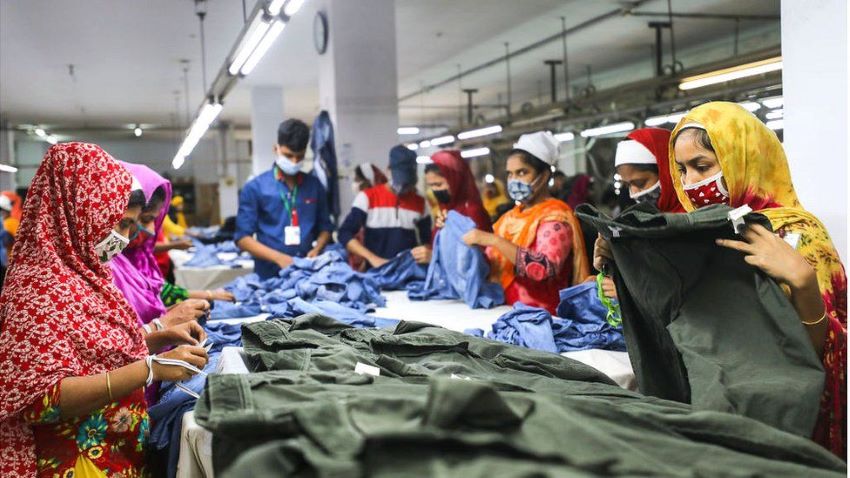
The European Union is one of the biggest markets for Cambodia’s garment products. In 2022, Cambodia exported over $9 billion worth of garments, footwear, and travel goods. The garment, footwear and travel goods industry is the largest foreign exchange earner for Cambodia. The sector consists of roughly 1,100 factories and branches, employing about 7,50,000 workers, mostly women. The garment sector is a crucial part of Cambodia. But it also sees challenges of competition that need to be addressed and require attention to keep the production chain in the garment sector.
The share of Cambodia’s exports to some other markets – outside the US and the EU – increased to 33 per cent in 2021, from just 28 per cent in 2020.
Gucci gets new creative head
Sabato De Sarno is the new creative director of Gucci. De Sarno will lead the brand’s design studio and will be responsible for defining and expressing Gucci’s creative vision across the women’s, men’s, leather goods, accessories and lifestyle collections.
Having worked with a number of renowned luxury fashion houses, he brings with him a vast and relevant experience. Sabato De Sarno began his career at Prada in 2005, moving to Dolce &Gabbana, before joining Valentino in 2009, where he held positions of increasing responsibility, finally being appointed fashion director overseeing both men’s and women’s collections.
With his deep understanding and appreciation for Gucci’s uniquelegacy, he is expected to lead the creative team with a distinctive vision that will help write an exciting next chapter, reinforcing Gucci’s fashion authority while capitalizing on its rich heritage. De Sarno will present his debut runway collection at Milan Women’s Fashion Week in September 2023.
Gucci, founded in Italy in 1921, has an extraordinary history and heritage and is one of the world’s leading luxury brands and continues to redefine fashion and luxury through highly desirable products and collections, while bringing a singular and contemporary perspective to modern luxury and celebrating creativity, Italian craftsmanship, and innovation.
Apparel Group partners with Steve Madden
Apparel Group will help expand Steve Madden’s footprint in the GCC, Africa, Egypt, Turkey and CIS countries. Currently, Steve Madden has eleven stores in the UAE and 21 stores throughout the GCC region.
Steve Madden is a fashionable American footwear brand. Apparel Group, a leading global fashion conglomerate, is the partner of choice for some of the world’s most desirable fashion brands and currently boasts more than 2010 stores throughout 14 countries, with over 78 brands.
Apparel Group’s philosophy has been to be associated with leading international brands with a vision of ensuring, increasing, and solidify their commercial status on a global scale. Apparel Group plans to open 13 new Steve Madden stores in 2023. Over the next five years, Apparel Group aims at opening 50 Steve Madden stores and launch an online platform in the GCC to provide customers with an omnichannel experience.
Apparel Group and Steve Madden are committed to fostering a strong cultural identity for the joint venture, building on Apparel Group’s long-standing history of brands and its innovative quantitative approaches that have been core to its success. This new joint venture aims to expand these strengths and bring in new and unique perspectives, expertise, and insights to better serve its customers.
Oswal Yarns releases declining financials
Oswal Yarns’ total income was Rs 0.2962 crores during the period ended December 31, 2022, as compared to Rs 0.6438 crores during the period ended September 30, 2022. Net profit / loss was Rs0.0502 crores for the period ended December 31, 2022, as against net profit / loss of Rs 0.0085 crores for the period ended September 30, 2022. EPS was Rs 0.27 for the period ended December 31, 2022, as compared to Rs 0.04 for the period ended September 30, 2022.
Total income was Rs 0.2962 crores during the period ended December 31, 2022, as compared to Rs 0.5023 crores during the period ended December 31, 2021. Net profit / loss wasRs0.0502 crores for the period ended December 31, 2022, as against net profit / loss of Rs0.0073 crores for the period ended December 31, 2021.EPS was Rs0.27 for the period ended December 31, 2022, as compared to Rs0.04 for the period ended December 31, 2021.Total income wasRs1.1561 crores during the nine month period ended December 31, 2022, as compared to Rs1.4767 crores during the nine month period ended December 31, 2021. Net profit / loss wasRs0.0646 crores for the ninemonth period ended December 31, 2022, as against net profit / loss of Rs0.0391 crores for the ninemonth period ended December 31, 2021. EPS wasRs0.35 for the nine month period ended December 31, 2022, as compared to Rs0.21 for the nine month period ended December 31, 2021.
Study highlights adverse effects of Section 301 tariffs on US businesses
The Section 301 Tariffs on American Consumers and US Businesses imposed by the Trump administration in 2018 in response to China’s unfair trade practices, seem to have boomeranged on the US doing more harm than good. A recent joint industry study has pointed out the negative Impacts on US consumers of Section 301, which was intended to compel US companies to move supply chains out of China and has affected many general segments of the average American consumer.
The joint industry study which included the United States Fashion Industry Association, the American Apparel & Footwear Association, the Footwear Retailers & Distributors of America, the National Retail Federation as well as the Retail Industry Leaders Association, elaborated on the detrimental economic impacts of Section 301 tariffs which are the taxes paid by American businesses and consumers. The report titled ‘Impacts of Section 301 Tariffs on Imports from China’ looks at the punitive tariffs that began in 2018 and provides an in-depth assessment of the impacts of the Section 301 tariffs over the last four years on US imports in segments such as apparel; footwear, travel goods and furniture imported from China.
High tariff rates on children’s footwear
The extensive report is based on US government data of responses to a survey of American companies who source their goods from China and revealed some key findings. Firstly, the negative impact of tariffs of higher costs and higher prices has fallen on US businesses and companies as well as average American families. Secondly, these tariffs have led to many other important indirect costs such as those associated with attempts to establish bifurcated supply chains. Thirdly, increased prices on consumer goods have had a detrimental impact on most American households where these represent a greater share of family income. These affected households, including the lowest 20 per cent of income groups; minority-headed households as well as families headed by individuals without a university education.
The MFN and Section 301 Tariff rates have also affected Section 301 products from China in different percentage levels in the four categories: apparel, footwear travel goods and furniture. These tariff rates are among the highest in the US tariff code and absent in the Section 301 duties on US imports from China. The American MFN duties on low-value and children’s footwear are much higher than those on other types of footwear, which is a burden on the average middle-class American family with school-going children. Section 301 duties add almost 25 per cent to the tariff burden for imported Chinese products.
However, the tariff that most heavily impacted American imports from China was on waterproof footwear. These tariffs imposed an annual direct cost on American importers of over $250 million, which escalated regularly every year to over $450 million in 2022 with no tariff exclusions granted to lessen the negative impact on footwear-sourcing companies. As per Mercatus Center, a US research centre at George Mason University, every one of the 442 footwear product exclusion requests filed was denied.
Opposition against tariff removal
Although the US apparel industry welcomed an announcement at the end of 2022 by the Biden administration to extend exclusions for many of the tariffs imposed by Trump, not everyone is agreeing to it. Many like the National Council of Textile Organizations have strongly refuted this and claimed tariffs must be retained if the US has any hopes of realizing nearshoring opportunities. These tariffs have given US manufacturers a chance to compete with others, says NCTO and the US Industrial and Narrow Fabrics Institute (USINFI). These associations which showcase the entirety of US textile production chain, have instead expressed strong support for the current Section 301 penalty tariffs on finished textiles and apparel imports from China to continue for better economic effect. With a changed US administration and the dawning of year, the global apparel industry awaits changes in the new laws for better or for worse.
Swimwear sees growing market at 5 per cent CAGR
The global swimwear market is growing at five per cent a year.
Swimwear is commonly worn by people participating in water-based activities such as swimming and bathing. It shields the wearer from chlorinated swimming pools and seawater, which contain salts that can cause skin rashes.
Product demand is being driven by the global increase in population and product innovation to meet the need for specialized clothing for water sports and poolside or beachside vacations.
Swimming is one of the most popular leisure and fitness activities globally. The demand for swimwear is increased by consumers’ interest in swimming and the number of family beach vacations, which fuels the market’s expansion. The swimwear market is expanding due to consumers’ leading healthier lifestyles and participating in more water sports like swimming. In addition, factors including the rise in women’s demand for high-end swimwear, the expansion of public and private swimming facilities, and the adoption of e-commerce platforms all contribute to the market’s rapid progress.Innovative product ranges are in high demand in the global women’s swimwear market.
It has inspired manufacturers to release cutting-edge swimwear, like swimsuits that block damaging UV radiation and smart swimwear. Thus, the development of the swimsuit market as a whole will benefit from these novel products.
Istanbul Yarn Fair focuses on cyclical economy
Istanbul Yarn Fair is on in Turkey till February 18, 2023.
The fair is a meeting place of giants of the yarn industry. Yarns from synthetic-artificial filament fibers, cotton yarns, yarns from synthetic-artificial staple fibers, yarns from wool and fine-coarse animal hair, vegetable fiber yarns, silk yarn, as well as a wide variety of yarn types, which are among the most exported yarn types in the yarn industry, are being exhibited at the fair.
In the fair, which focuses on the cyclical economy, one of the current topics of the last period, the recycled yarns to be installed in the foyer will meet the visitors in the special exhibition area with the adventure of the yarn from waste to the final product. Fair visitors will have the opportunity to see the story of a plastic bottle, as a sweater, step by step. In addition to the area where sample products of participating companies producing recycled yarn will be exhibited, visitors will meet with exhibitors at their stands for more detailed product information.
The fair, where environmentally-friendly, high-performance and high-quality products will be exhibited, is the most important commercial meeting of the international yarn industry. Last year, fair participants’ orders increased by 81 per cent while 32 per cent of the visitors made purchases during the fair.
Pak infra failure makes textile exports face hurdles
Pakistan’s textile exports are expected to fall in the fiscal year 2022 to 2023.
Customers are now asking Pakistan’s suppliers whether or not they will be able to meet deadlines and ship orders on time. Many exporters are also reluctant to book new orders as Pakistan is short of dollars and basic raw material including cotton, dyes and chemicals. Almost everything has to be imported, starting from cotton to buttons and zips in order to manufacture one single product.
Pakistan does not have a proper industrial infrastructure and it lacks a complete backup supply chain. The production of cotton crop, which is the key raw material for textile products, has dropped by 45 per cent this year. The industry needs 15 million bales of cotton. Pakistan has only produced 4.5 million bales this year. To bridge the shortfall, the textile industry has ordered cotton from the US.
Some 25 million people are associated with the sector. The country is losing market share to Bangladesh and Vietnam. In this crisis, there are indications that some global shipping companies are considering boycotting Pakistan as thousands of containers are still stuck at ports. If this happens, Pakistan’s exports will receive a blow as the country does not have any land route to connect with the world.
Levi Strauss expects better margins
In spite of higher costs and currency pressures Levi Strauss expects an improvement in gross margins for 2023.
The American company is seeing a boost from its direct-to-consumer business, with strong demand for non-denim clothing and women's apparel helping it offset slumping sales in Europe and an overall decline in wholesale revenue. However, the company does expect lower revenues in the firsthalf of the year. So it thinks of fiscal 2023 as a tale of two halves, with the first half weaker than the second half.
Nearly 40 per cent of Levi’s 2022 revenue came from categories outside denim bottoms, including chinos, leggings, tops, dresses, footwear and accessories. Levi’s projects net revenues between $6.3 billion and $6.4 billion for fiscal 2023. It expects full-year adjusted profit between $1.30 and $1.40 per share. Levi’s fourth quarter revenue fell six percent but edged past estimates while the adjusted profit topped expectations.
With shoppers now buying more office-friendly and non-denim bottoms such as formal trousers and cargo pants, there is some uncertainty around denim demand in the nearterm.With the United States on the edge of a recession, shoppers, pressured by high inflation, are spending less on discretionary items like clothing, with the denim category, in particular, set for a slowdown following a demand surge in 2021.