FW
Arab Fashion Week aims to spread ready-couture
The sixth edition of Arab Fashion Week opened recently with fallen angels, Rococo corsets, cupcake headbands and nary a kaftan in sight.
The Arab edition of fashion week is the sole event dedicated entirely to ready-couture and pre-collections.
Hosted on the Queen Elizabeth II cruise ship, the show, which prides itself on its Arab name, opened with angel-inspired and baroque kitsch collections by designers from Russia, Portugal, the UAE, the Philippines, Lebanon, Saudi Arabia and more.
Designer Furone One, loved in Dubai for his ethereal designs, opened the four-day affair with his "White Noise" resort collection, inspired by angels both cherubin and fallen. Russia's Tatiana V. Lyalina paid tribute to Marie Antoinette with a Rococo-inspired collection featuring pink heart-print pantsuits underneath bright blue fur stoles, teal velvet gowns with brooches, glitter knee boots, corsets and cupcake headbands.
The Arab Fashion Council has openly stated that it aims to spread ready-couture across the region -- a form of fashion that is financially more accessible than haute couture, but pricier and slightly more exclusive than ready-to-wear. The spread of ready-couture has not sat particularly well with traditional gatekeepers in the fashion world, but the growing influence of social media has seen its popularity continue to skyrocket.
The Arab Fashion Council is banking on that popularity to make its mark on the global scene. Arab Fashion Week now has two editions that is Dubai Arab Fashion Week, and Riyadh Arab Fashion Week.
Saudi Arabia last month hosted its own version of the event, drawing press from around the world to a lineup that included trunk shows by Jean Paul Gaultier and Roberto Cavalli but did not include men or cameras.
Wool industry needs to become more user-centric
"Low financial returns have pitched New Zealand’s crossbred wool industry into a crisis. To avert this, crossbred wool needs to be treated less like a commodity and its model overhauled to become more user-centric by the time it enters the marketplace, feels New Zealand Merino senior procurement manager Craig Adams. At the recent Farming's Social License: A Genetic Solution field day at Duncraigen Farm, near Wyndham, he observed the model used to sell crossbred wool was damaging the wool industry since it was not focused on what consumers were asking for and needed to adapt to become end-user centric."
 Low financial returns have pitched New Zealand’s crossbred wool industry into a crisis. To avert this, crossbred wool needs to be treated less like a commodity and its model overhauled to become more user-centric by the time it enters the marketplace, feels New Zealand Merino senior procurement manager Craig Adams. At the recent Farming's Social License: A Genetic Solution field day at Duncraigen Farm, near Wyndham, he observed the model used to sell crossbred wool was damaging the wool industry since it was not focused on what consumers were asking for and needed to adapt to become end-user centric.
The need to shift
The wool industry operates with an adversarial approach, which leaves the farmers vulnerable to commodity prices. Adams argued the model needed to shift to one where the value chain was aligned and there was transparency through the supply chain. The companies were willing to spend on premium products, instead of sourcing wool cheaper at auction because they wanted the confidence that the ethically-sourced story they were marketing their products with was correct.
NZ Merino has signed a seven year deal through the Ministry for Primary Industries' Primary Growth Partnership (PGP) for strong wool called Wool Unleashed, or W3, in 2016, to boost the prospects of strong wool in the same way the company has done with merino. The company has also partnered companies such as Allbirds, Glerups, Smartwool and Icebreaker to provide fine wool supplied by its farmers in contracts to international businesses. It aims to be the largest supplier of ethically sourced premium and luxury wool in the world, and they wanted to partner with people who shared the same ideas, Adams said.
Tapping new opportunities
In the past, strong wool had been mainly used for carpeting and Italian wool suits. However, to improve industry profitability it needed to shift towards looking for new users and new uses of wool. The health and lifestyle sector is an area where wool is being embraced. Glerups and All Birds shoe brands are using wool products as are clothing lines.
But NZ Merino had only just started scratching the surface of opportunities for strong wool. The company has an opportunity to target premium wool products to "elite" people who have money to spend. The aim is to be the biggest supplier of ethically sourced premium and luxury wool in the world. They are looking to partner people who share similar ideas
Vietnam export value up by 15 per cent
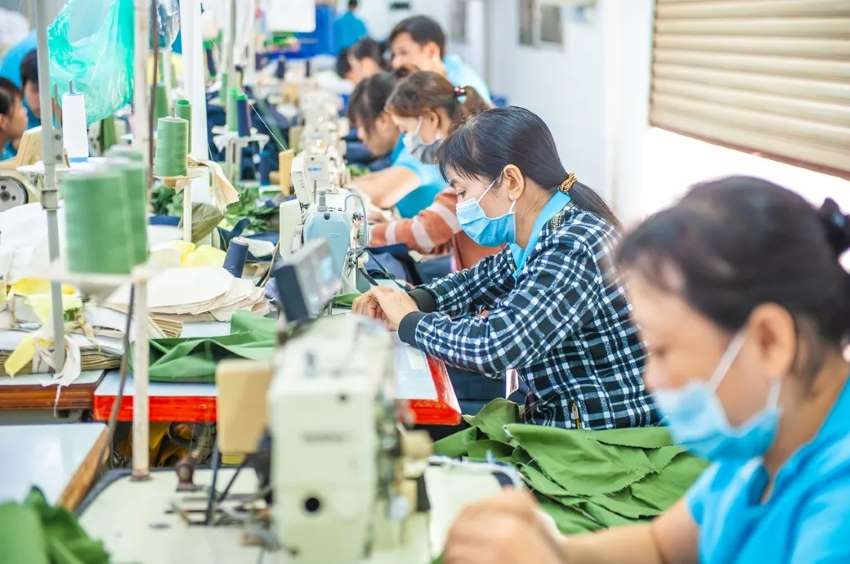
The export value of Vietnam’s textiles and garments in the first four months showed a year-on-year increase of 15.7 per cent. Export value of textiles to the United States showed a year-on-year surge of 11.6 per cent. Vietnam’s exports to the US account for 47.3 per cent of the country’s total garment export value.
The export value of textiles and garments from Vietnam to Japan was 19.6 per cent higher than the same period last year, accounting for 13.3 per cent of the total export value.
The export value of textiles and garments to South Korea increased by 14.8 per cent and 40.9 per cent, respectively, against the same period in 2017.
The value of exports to the European Union rose by 11.8 per cent. The value of exports to Asean rose by 26 per cent.
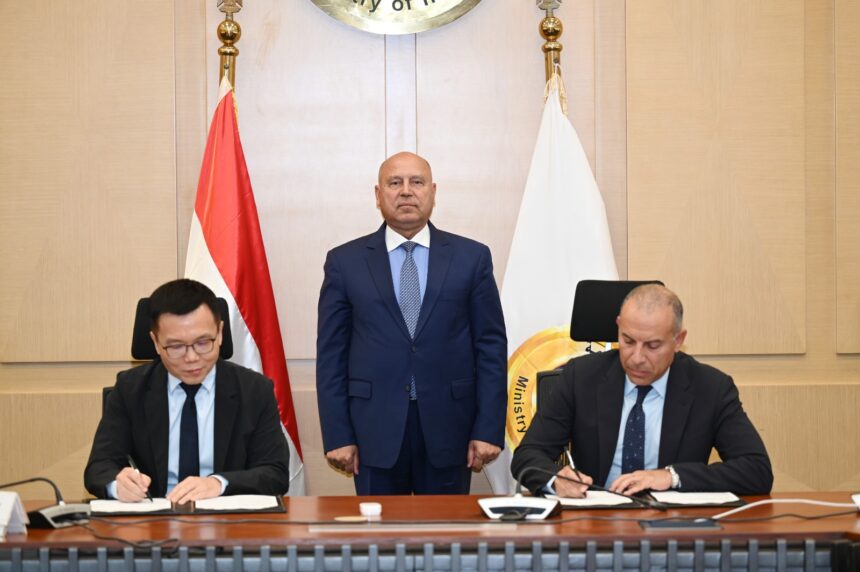
Vietnam has a target of 35 billion dollars in total textile and garment export value for this year. Enterprises have been asked to fully exploit the working capacity of their workers as well as restructure their management practices to improve labor productivity.
Besides maintaining and developing export markets such as the United States, European Union, Japan and South Korea, enterprises are focusing on developing other markets such as Asean, the Eurasian Economic Union, India and Latin America, including linkage with the distribution system in the local market.
Turkey expands ties with Uzbekistan
Uzbekistan and Turkey are planning to create a wholesale trade centre for textile products and knitted garments.The center will be inspired by similar centers created in Turkey and Europe.
The two countries have signed deals on transport, energy, and tourism. Joint ventures between the companies of the two nations for manufacturing finished textiles, hosiery, knitwear and sewing products, curtains and more could also be on the cards.
Trade between the two countries rose by 30 per cent in 2017. Uzbekistan exported textile products like cotton yarn, carpets, knitted fabrics and goods, sewing goods and more worth 109.5 million dollars to Turkey in the same year. The figure has already reached 40 million dollars for these products in the first quarter 2018.
Turkey is Uzbekistan’s third highest export destination (after Switzerland and China, and tied with Kazakhstan); on the import side Turkey ranks in the top five (after China, Russia, South Korea and Kazakhstan).
Turkish businessmen plan to invest in Uzbekistan.
Turkey was the first country to officially recognize the independence of Uzbekistan after the collapse of the Soviet Union in 1991.
Uzbekistan is ready to expand the supply of light, chemical, metallurgical, machine-building, electrical engineering, leather, footwear and agricultural products to the Turkish market.
Vietnam to foray into the Australian market
Vietnam`s textile & garment enterprises, in view of the Comprehensive and Progressive Agreement for Trans-Pacific Partnership (CPTPP) coming into effect, are stepping up efforts to infiltrate the Australian market, which had an import turnover of over US$6.2 billion in 2017 alone.
The CPTPP was signed on March 9 to facilitate economic growth and open opportunities in a market of total 499 million people and GDP of US$10.1 trillion, accounting for 13.5 per cent of world's GDP.
Vietnam's garment products export turnover to CPTPP's country members in 2017 reached US$4.8 billion, contributing 9.07% of market share. In this Australia accounted for US$6.2 billion, or 11.67 per cent as the third largest garment product importer
Sequential adopts new standard
For the first quarter Sequential Brands has reported revenues of 38.1 million dollars and a net loss of 2.3 million dollars.
It offers products in the apparel, footwear, eyewear, fashion accessories, and home goods categories. Brands in Sequential’s portfolio include Avia, William Rast, Martha Stewart, Gaiam and Caribbean Joe.
The company licenses its brands through various distribution channels to retailers, wholesalers, and distributors.
As of January 1, 2018, Sequential began using a new revenue recognition standard, ASC 606, but also provided income and earnings information in accordance with the prior year’s standard for the purposes of comparison.
Under the previous revenue recognition standard, revenue for the first quarter 2018 would have been 39.4 million dollars, flat compared to the prior year period. Net loss, however, would have been reported as 1.3 million dollars, slipping further from 1.2 million dollars in the first quarter of 2017.
Sequential remains focused on executing against its strategic plan to grow revenue, manage costs and improve its balance sheet.
After appointing a new CFO in February, the group recently signed a multi-year deal with Chinese sportswear manufacturer Beiying Sports Technology to take its sportswear brand Avia to China, with a cross-channel launch planned for later this year.
Flipkart deal will change Indian retail ecosystem
Walmart’s stake in Flipkart will have far reaching implications on the etail and retail ecosystem in India.
The takeover has potential to change the growth trajectory of e-commerce and also physical retail. Flipkart has 54 million active consumers, and with this influx of money it can double this base in a short period of time.
The existing consumer base would keep on enjoying the benefits of cost, convenience etc, and would get accustomed to it, and the new consumer base potentially would build up in deeper geographies of India. These new consumers probably would experience fashion through e-commerce before physical retail does it.
The deal presents a wonderful opportunity for niche e-commerce brands or sector-specific brands to create differentiated online experiences. However it will become increasingly difficult for smaller e-commerce players to sustain and grow on their own unless they focus on very specific niches.
This is a bitter sweet moment for India’s startup universe. It is also a validation of Flipkart’s business, processes and the team's capabilities. Walmart’s decision to retain the Flipkart leadership team and retain the brand paves the way for an interesting partnership model. Leveraging backend synergies will play out over time.
In the Indian market online is less than three per cent of the retail industry but is growing at 45 per cent.
Exhibition to focus on skilling and promote Make it British
According to Kate Hills, founder of Make it British, the campaign to encourage more people to buy British and manufacture in the UK, the greatest threat to the renaissance of British fashion is a lack of skills. According to two thirds of the UK manufacturers, the average age of their workforce is over 40 and a key challenge is how to attract more young people into the industry.
Skills and training will be high on the agenda at this year’s Make it British Live! when the UKFT (UK Fashion and Textile Association) will team up with Make it British to curate a manufacturing skills exhibition at the two-day event on May 23-24 at the Truman Brewery, London.
The exhibition will highlight the work being done to support a new generation of skilled talent to enable UK manufacturers to thrive and will include a skills consultation area with UKFT’s skills and training specialists. A key feature will be the UKFT Made It project, which aims to improve the production and sourcing skills of the UK’s fashion graduates.
Nike files lawsuit against Puma North America Inc
According to a recent report by the Portland Business Journal, Nike is filing a law suit against Puma North America Inc for patent infringement.
The complaint accuses Puma of using Nike's FlyKnit, Air and cleat assembly technologies despite Nike's requests otherwise. It also outlines the history of FlyKnit and Nike's years of research, design and development of the technology.
Nike launched the technology in 2012 with its FlyKnit Racer and FlyKnit Trainer+ running shoes. The shoes quickly became popular after athletes wore them during the London games and Nike later went on to use the technology in shoes for football (soccer), basketball, tennis and other sports.
New Gucci store goes digital
Gucci has opened a store in the US which will be the first in the world to feature the new Gucci DIY assortment including lettering in a variety of fabric and color combinations on unisex luggage and Ace sneaker.
A digital interactive tool will be unveiled at the store allowing clients to view their customized products in real time through AR technology.
The store houses women’s and men’s ready-to-wear, jewelry, accessories, and décor.
The design concept of the store was conceived exclusively to maintain the integrity of the original framework. The restored brickwork, wooden floors, tin ceiling, and iconic columns highlight the intricate cast-iron architecture that characterizes SoHo. Three different hand-painted floor designs, executed by Italian artisans, introduce color and pattern, while original steel tiles speak to the neighborhood’s industrial history.
Bold colors of turmeric orange and burgundy vivify the interior and seating is covered in Gucci prints and fabric. Luggage carts, freestanding furniture with stone inlay and vintage pharmacy fixtures display products throughout the space. Reinforcing the industrial spirit of the building, custom brass fixtures frame the brick walls.
In addition to an interactive LED wall, the store also debuts 3D video display. These innovative screens feature glasses-free 3D technology and will immerse viewers into the realm of Gucci.