FW
Surge of apparel exports to India from Bangladesh
Bangladesh’s apparel exports to India grew 167 per cent in October 2018. For Q1 the country’s apparel exports to India were $187 million. During this period woven garment exports to India were up 300 per cent from the same period last year. Knitwear exports doubled.
The remarkable surge in exports to India is attributed to foreign brands’ and retailers’ opening up a number of outlets and stores in India – which, in turn, have been sourcing heavily from Bangladesh. Foreign retailers buy a lot of garment items from Bangladesh for Indian customers, especially for the rising middle class. Last fiscal, apparel exports to the country from Bangladesh witnessed a 100 per cent gain – a trend which is still continuing.
India’s imports of readymade garments from Bangladesh during July-November 2017 rose 56 per cent compared with the same period last year. Knitted apparel imports grew 69 per cent compared to the corresponding period of the previous year. Woven apparel imports grew 51 per cent compared to the same period of 2016.
GST has led to a flood of textile imports from Bangladesh to India. The main reason is the exemption of basic customs duty on imports of garments from Bangladesh.
Sharp rise in Tanzania cotton volume
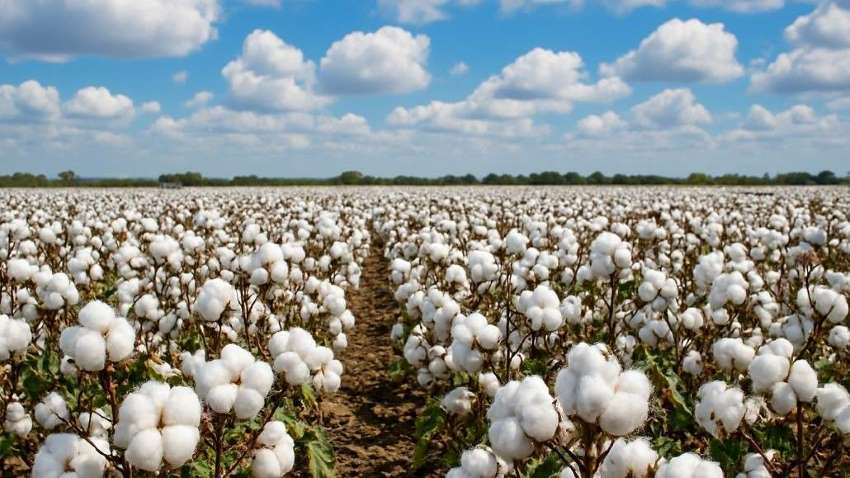
Cotton production in Tanzania has increased by 67 per cent this harvest season compared to the previous one. Care has been taken to regulate the quality of agricultural inputs. The plan is to create good environments that could increase farmers’ efficiency, productivity and eventually profit. Cotton is Tanzania’s largest export crop after coffee. It contributes 24 per cent to total agricultural exports and four per cent to total exports.
Simiyu, Shinyanga, Mwanza, and Singida regions have been cited as Tanzania’s cotton growing giants out of seven chief cotton producing Lake Zone regions. The area under cotton has seen an increase from 66 to 77 per cent depending on the region.
Cotton is one of Tanzania's key crops. Around 99 per cent of the country’s cotton is grown in the western region. Around two million of the country’s 42 million people depend on it for their livelihood. It provides around 13 per cent of the country’s foreign exchange – second only to coffee in agricultural exports. Through contract farming, cotton buyers agree to provide inputs, finance and advice on credit to primary producers of the product in return for having exclusive rights to purchase the crop at harvest time. Contract farming areas have already doubled the levels of pesticide distribution.
SAC releases 2018 Higg Facility Modules
Sustainable Apparel Coalition (SAC), the leading association for the apparel, footwear, and textile industry, recently released the 2018 Higg Facility Modules on Higg.org. The Higg Facility Modules are a part of the Higg Index, a suite of sustainability assessment tools to address value chain inefficiencies, resolve damaging practices, and achieve the environmental and social transparency consumers are demanding.
Factories can use the updated Higg Facility Environmental Module (Higg FEM) and the Higg Facility Social & Labor Module (Higg FSLM), which is accessible online for the first time, to evaluate value chain sustainability performance.
The Higg FEM assessment measures factories’ environmental management systems, energy use and greenhouse gas emissions, water use, wastewater, emissions to air, waste management, and chemical use and management. The new web-based Higg FSLM introduces the industry’s first standardized self-assessment for measuring factories’ social and labor performance.
Informed by the Social and Labor Convergence Project, the SAC developed the Higg FSLM to evaluate recruitment and hiring practices, working hours, wages and benefits, employee health and safety, and community engagement, among other areas. The SAC is working towards accreditation as a host of the converged assessment and will release a scored version of Higg FSLM at the end of 2019.
Performance Textile Fair adds new event
The 4th annual Performance Textile Fair, to be held from January 23 to 25, 2019 in Orlando, will launch a new racquet industry event co-located with the PGA Merchandise Show. The PGA Show, which has already been a main feeder for the Performance Textile Fair, will welcome the Racquet & Paddle Racquet Sports Conference this year. The addition of this new event promises to draw even more buyers interested in learning about and purchasing goods designed for the activewear crowd.
The show this year will feature 20 more exhibitors for a total of 60 from all around the world. Suppliers will include companies such as Brrr and Polartec from the US; Everest, Erictex and Fortune from the Taiwan; and Carvico of Italy. The Performance Textile Fair will present the Material Science Center, a designated space with illuminated displays showcasing the newest fabric technologies. The interactive area allows attendees to touch, feel and learn about each product.
Chinese investors eye Pakistan textile sector
Chinese investors expressed their deep desire to enter into joint ventures with Pakistan for importing high quality fabric that would help them improve bilateral trade and economic relations between the two countries. A Chinese delegation from China National Textile & Apparel Council (CNTAC) visited Punjab Board of Investment and Trade (PBIT). The objective was their keen interest in developing business in Pakistan specifically in the textile sector for changing the economic landscape of the country.
They showed immense interest in investing in Pakistan as it is amongst the largest cotton producers in the world and their high quality fabric can be exported to China thus enhancing the productivity and boosting trade relations between the two countries. They requested that Chinese investors should be provided with specific promotion incentives to deepen trade relations. They invited PBIT and potential investors from Punjab for showcasing their products in the biggest textile expos conducted in Shanghai.
Burana, CEO, PBIT told them that Minister for Industries, Commerce and Investment, Punjab is interested in visiting China with delegates from the textile sector for further economic cooperation. He proposed that a joint working group should be constituted between PBIT and CNTAC to explore possibilities of promotion & cooperation between Punjab and China specifically in textiles.
Pakistan makes progress in FTA with China
Pakistan hopes to complete the second FTA with China by June next year. Pakistan and China signed their first FTA in 2007 and since then bilateral trade – albeit increasing – has tilted heavily in favor of the latter.
The country’s trade deficit vis-à-vis China ballooned to nearly $10 billion in the last fiscal year of 2017-18. Both countries have expressed willingness to revisit products availing duty concessions, but the second round of FTA has been hanging fire for too long.
Pakistan hopes to get bilateral trade benefits with the world’s second largest economy. Pakistan will request China to remove other non tariff barriers so that it can boost exports. Duty free market access to China will boost exports of Pakistan’s made-ups.
Pakistan and China will decide how much textile, leather, and other goods can be exported to fully utilise the duty free facility. At this stage, the list of products that would be eligible for duty-free has not been prepared. There will be further discussions on finalising details of market access and the balance of payment support. Industrial cooperation will be accelerated and both sides have decided to move with the next phase with a focus on industrial expansion, agricultural revitalisation and integration of trade ties.
Cotton production in India to be over 370 lakh bales in 2018-19
The Indian Cotton Federation (ICF) has estimated cotton crop for 2018-19 in the country to be 373 lakh bales of 170 kg a bale. Production in the north zone including Punjab, Haryana and Rajasthan was expected to be 61 lakh, the central zone, 200 lakh bales (Gujarat, Maharasthra, and Madhya Pradesh), and the south zone 107 lakh bales. Production from the entire country was expected to be 373 lakh bales and imports might be 18 lakh bales. The provisional estimate for consumption was 320 lakh bales.
Without an official crop estimate, there were uncertainties about the cotton crop situation. There were also reports of a lower crop. The uncertainties were leading to hardships for cotton trade and the textile mills. According to a study by the Federation, the average crop size in the last 12 years in the country is 377 lakh bales. The average of the worst year is 348 lakh bales. For the cotton year 2018-19, around five lakh packets of cotton seeds are sold.
Except for a few pockets in Karnataka, Maharashtra, and Gujarat, all the cotton growing areas have received sufficient rain. So, the cotton production this year should be higher.
FDI in Malaysian clothing sector reaches MYR112 million
As per Malaysian Investment Development Authority (MIDA), FDI in Malaysia’s clothing and textile sector is increasing more this year on the back of a robust performance in 2017. From January to June 2018, the total investments in the sector reached MYR244.8 million ($58.73 million) of which FDI accounted for MYR112 million ($26.87million). This compares with MYR428.8 million ($102 milliion) of investments approved across 12 projects for the garment and textile sector last year where MYR322.3 million ($77.35 million) – 75.2 per cent – came from foreign investors.
All these projects put together generated 1,850 jobs comprising skilled positions for engineers, quality controllers, and highly skilled technicians. MIDA expects investments to continue to rise in 2018 based on the performance in the first half of the year. The Asian Development Bank (ADB) has also sounded positive about a rise in FDI in general during 2018.
Export of Bangladeshi cotton trousers generates $1.13 billion in revenue
Latest Otexa figures reveal, export of Bangladeshi-made cotton trousers fetched $1.13 billion in revenue during the January-September 2018 period. This was a 9.31 per cent gain on a year-to-year basis in comparison to the same time period last year. Cotton trousers made up for 27 per cent of Bangladesh’s total apparel exports to the US, the country’s single biggest country-wise export destination, in 2018.
Bangladesh’s apparel exports to the US, during the period, amounted to $4.16 billion, up 5.84 per cent from last year. The major garments exported were cotton trousers, cotton dress, knit blouse, slacks, cotton underwear and sweater. Export of slacks marked a significant rise, fetching over $59 million. This was an impressive 9.32 per cent gain from the $54 million during the period in 2017. On the other hand, export of woven shirts declined. It fetched $41 million during this time, down 1.14 per cent from previous year.
CPTPP to aid Vietnam’s textiles exports
The Comprehensive and Progressive Agreement for Trans-Pacific Partnership (CPTPP) agreement is expected to aid Vietnam's exports, especially textiles and footwear industries. One of the key contents of the CPTPP is removal of 95-98 per cent of tariff lines as soon as the agreement enters into force. The remaining tariff lines will be cut over the next seven years, moves predicted to aid the growth and export turnover of the two industries.
According to the Vietnam Textile and Apparel Association (VITAS), the CPTPP will help Vietnam accelerate its growth and make the export market more balanced. The zero-per cent tariffs will help the country’s textile and garment industries expand market share in countries with high tax rates like Canada, New Zealand and Australia.
The CPTPP sets strict requirements on product origin, which is a big challenge for Vietnamese enterprises and the textile and garment and footwear sectors in particular, as they are heavily dependent on material sources imported from China, India and other ASEAN countries.