FW
Fujitsu develops apparel sizing device
Fujitsu has created a new measuring device that promises to dramatically improve the efficiency of apparel sizing and measurements.
By pressing a special button in the device, the measurement data is transferred to the cursor position of the Windows application (such as Excel or Notepad) on the Bluetooth-paired PC through the dedicated companion app. This will enable the automatic input of values each time the measurement button is pressed, instead of manually transferring data to a recording sheet or slip, accelerating work efficiency and reducing errors in posting. By reading the special pattern printed on the back of the tape, measurements can be made in units of one millimeter. Since it isn't necessary to rewind the measure tape when continuously measuring multiple points, users can perform measurements quickly and easily. This makes it possible not only to improve the overall efficiency in the apparel industry, including for important tasks like measurement and inspecting goods, but may offer future potential uses in the transportation industry and the manufacturing industries.
Tired of ill-fitting mass-produced garments, a growing number of consumers today have turned back the clock to demand clothes made to cater to their unique body size and shapes. Custom-made apparels are making a comeback in a big way and retailers are struggling to keep up with the trend.
Egypt, Switzerland sign agreement to support textile and clothing sector
Egypt and Switzerland have signed a cooperation agreement to provide technical and financial support for the Egyptian textile and clothing sector by applying the GTEX international programme with a total fund of SwF 1.5 million (about $1.5 million). The agreement will help in developing ties between the two countries besides enhancing their economic, financial, and technical cooperation. In addition, it will help in implementing Egypt’s strategy to boost the competitiveness of industrial sectors.
The main objectives of the agreement, which will be in force until December 31, 2021, are: create more job opportunities, improve income levels for workers in the sector, and increase the added value of products and services, as well as increase exports in both new and traditional markets.
The GTEX programme is being implemented in Egypt, Morocco, Tunisia, Kyrgyzstan, and Tajikistan, and is funded and supported by the Swedish government, while the Egyptian government is providing 10 percent of the total fund.
US share in world cotton production falls
The US share in world cotton production has declined by 20 per cent from the early 2000s. However, it remains the world’s leading cotton exporter. Brazil’s cotton exports are projected to increase 10.5 per cent over the next 10 years, the largest projected growth rate among the world’s major exporters. Brazil became the world’s second-ranking cotton exporter in 2018-19. India’s cotton exports are expected to grow by 4.5 per cent over the next ten years. Improved yields have raised India’s production and exports, although bollworm resistance issues have hampered yields in recent years.
The projected growth in yield reflects continuing improvement in cultivation practices and stabilization of insect problems. India is expected to remain the world’s third-largest cotton exporter after the United States and Brazil. Exports from the 15 countries of the Economic Community of West African States are projected to experience sustained four per cent annual growth in the next decade. Improvements in technical and financial infrastructure will help boost production and exports. Exports from the other countries in Sub-Saharan Africa are projected to increase 2.7 per cent annually. Major cotton-producing countries in Central Asia are promoting investment in textile industries and exports of textile products rather than exports of raw cotton.
Small RMG units in Bangladesh go bust
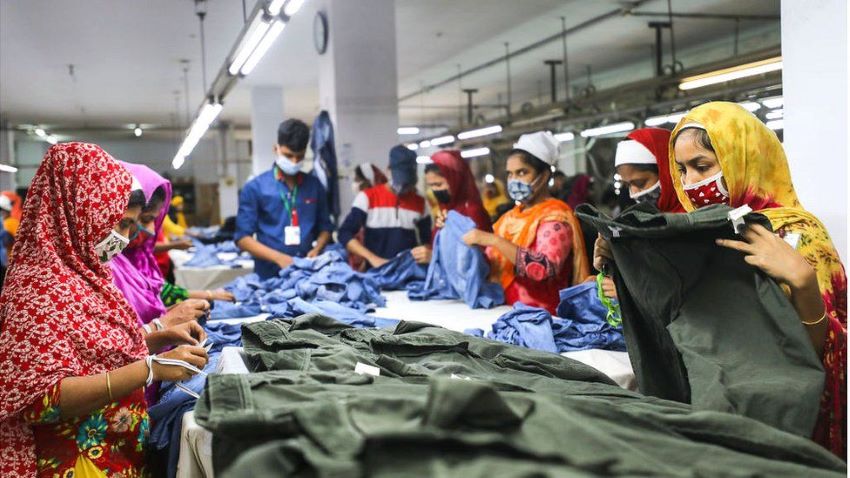
Small and medium-sized garment factories in Bangladesh are shutting down. The main reasons are: the high cost of production, lower prices offered by foreign buyers, the recent wage hike and the recent free trade agreement between Vietnam and the European Union. Many work orders are shifting to Vietnam, one of the competitors of Bangladesh, because of this free trade agreement. Another important reason is that larger firms’ sub-contracting work to small units has been restricted after the Rana Plaza building collapse in 2013. The restriction on sub-contracting is a major threat for the units as most of them are dependent on the bigger units overloaded with work orders. Now they can’t do the same job because of poor compliance. It is this that prevents retailers from placing work orders with them. Also, small garment units face capital shortages and have low negotiation skills.
There are more than 1000 small and medium units in the garment sector, each employing between 500 and 2,000 workers. About 50 small and medium-sized garment factories have shut operations since April. Closures will take the number of small and medium apparel factories that went out of business in the last one year to more than 200 units.
Primark hopes to get a strong foothold in the US market
Primark is delivering strong sales growth in the United States. The UK-based brand has a disciplined store-by-store approach. It offers trendy clothes at rock-bottom prices. It is confident it can succeed in a country that has been a graveyard for some of Britain’s biggest retailers, including Marks & Spencer, Tesco and most recently Topshop. That confidence is underlined by a move to create a supply chain closer to the US market. Primark currently sources all its clothes for the United States from its traditional suppliers, China, India, Bangladesh, Cambodia, Vietnam and Turkey - a costly exercise as stock is freighted across the Pacific through the Panama Canal and up the US eastern seaboard. The plan now is to tap suppliers from countries in Central America, such as Guatemala, Costa Rica and Mexico. Primark’s combination of value, fashionability and breadth of range can mean it can build a US business over the next decade as big as its one in Europe.
Founded in 1969, Primark trades from 373 stores in 12 countries. Profit increased nearly fourfold in 10 years - achieved without venturing into online shopping. Primark contributes more than half of the total profit of its parent, Associated British Foods, which also owns major sugar and grocery arms.
Philippines eager for FTA with the US
The Philippines is eager for a free trade agreement with the US. The hope is that this will provide preferential treatment and better market access for the country’s export items.
In the meantime Philippines is maximizing its trade privilege with the US under the Generalized System of Preferences. The GSP allows the Philippines to export a total of 5,057 products, or nearly half of the 10,600 US tariff lines, to the US at zero or reduced tariffs. However, the Philippines could lose this preferential treatment once it has been classified as an upper middle-income economy by the World Bank. The government is targeting to develop the Philippines into an upper middle-income economy by 2022. Therefore, the country could lose its GSP status that year.
Trade in goods between the Philippines and the US last year improved 7.16 percent. This makes the US the country’s third-largest trading partner next to China and Japan. Further, exports to the US grew 10.04 per cent, making it the country’s top export destination. Electronic products account for bulk of shipments. Aside from this, top exports to the United States include manufactured items, apparel and clothing, ignition wiring sets, machinery and transport equipment and coconut oil.
Nigeria hopes for cotton bonanza
Nigeria is aiming to produce up to 4,50,000 metric tons of cotton in three years. This is part of an effort to revive the textile and garment industry. Up to 3,00,000 farmers will be engaged to achieve this aim in 26 out of the 36 states of the country. Six thousand metric tons of cotton seed have been imported and an additional 2000 metric tons have been sourced locally.
The total expected yield at the end of the current season is 3,02,440 metric tons. Nigeria is aiming at accelerating a sustainable increase in the production and processing of cotton. The cotton sector aims at increasing production by 20 per cent as farmers are encouraged by better returns due to increasing cotton prices and improved yields. At one time Nigeria’s textile industry created over 8,00,000 jobs, representing 25 per cent of the total number of jobs in the manufacturing sector. There were 175 textile mills in the country during its golden era (i.e. 1985 - 1991) out of which all but 27 of them have gone under. Key challenges affecting the sector are lack of cotton lint, smuggling and counterfeiting, inadequate infrastructure, limited access to power and funding. Funds needed by manufacturers to recapitalise have been hampered by the high interest rates charged on loans by financial institutions.
Sri Lanka to host Intex South Asia this November
Intex South Asia will be held in Sri Lanka, November 13 to 15, 2019. This is the only international textile sourcing show in South Asia, where buyers from around the world meet with quality suppliers. Suppliers from 12 countries and regions will showcase yarns, apparel fabrics, denim fabrics, chemicals, clothing accessories and allied services. A textile dyes and chemicals zone from India will host leading textile chemical, dyes intermediates, pigments and auxiliaries companies. With the inclusion of this pavilion, Intex South Asia has successfully integrated the textile value chain at a single global trading platform.
The Interactive Business Forum will deliver high quality market intelligence to support industry efforts to upgrade, move up the value chain and better understand intra-regional trade and help manufacturers gain a competitive edge. The forum will feature workshops covering a range of topics, including the latest trends, market developments and technological advances in the industry and enable all to access current global market intelligence.
There is a clear shift from the west to the east. While western economies are slowing down, the economies of South Asia are among the fastest growing in the world. Industry and businesses are coming to this region and Intex South Asia aims at speeding up this process.
Harsh times for garment workers in Eastern Europe
Garment workers in Eastern Europe are coping with difficult conditions. Romania is one of Europe’s biggest garment producers and the sector is among its top exports. European fashion brands have long found a foothold in the Eastern European country, with at least 4,00,000 people employed in the industry. But a large number of Romanian garment workers are living on the poverty line, earning below the minimum wage as they are regularly abused by the factory owners. Overtime, up to 15 hours a week - often goes unpaid in Romania. Factories are poorly ventilated. Managers deny basic human rights and barely allow toilet breaks. Changes to the country’s tax code have also added to the workers’ challenges. In January 2018, the burden of social contributions payable by the employer was shifted to the employee. The new provisions, while decreasing income tax from 16 per cent to ten per cent, now provide 35 per cent in mandatory social contributions to be paid by the worker. The new fiscal move hits people who are at a higher risk of poverty. Romania’s poverty rate is already ten per cent higher than the EU’s average.
Bulgaria’s garment and textile sector accounts for around 10 per cent of the country's total exports. But unpaid salaries over the years have seen protests erupt. When Bulgaria joined the EU in 2007, there were 1,65,000 textile workers. Today only 90,000 remain.
Indian cotton stocks build up
Cotton stocks are building up in India due to sluggish exports and fresh crop arrivals in Punjab, Haryana and Rajasthan. A cotton output of 7.5 million bales is expected in Punjab, Haryana and Rajasthan, compared with 6.5 million bales last year. Cotton spot rates are hovering around the minimum support price for the commodity, down eight per cent to ten per cent from a year ago. The domestic cotton market is also suppressed due to headwinds in exports of cotton yarn, but demand for cotton seeds and better quality of fiber this season are managing to keep prices from slipping further.
Indian prices have to come down to buttress sagging exports of cotton yarn. Either domestic cotton prices needs to be at par with international prices to arrest the fall in exports or the currency valuation of the rupee and the dollar needs to be favorable for the trade. A good crop is anticipated in the current year as the condition of the standing crop is good. If the favorable weather keeps up, a record output and a high quality of cotton is expected this year. The condition of cotton plantations across the country is good and a record harvest is on the cards.