FW
H&M launches F/W collection from recycled materials
H&M’s fall/winter line is made of sustainable materials like recycled polyester, recycled brass, recycled zinc and a blend of Tencel and Refibra. Inspired by masquerade balls, the collection includes eveningwear such as softly tailored check separates, figure-fitting dresses and oversized hoodies, in an earthy color palette of light neutrals, black, with pops of orange and red.
On the lookout for new innovations, new fabrics and new processes, H&M wants to show sustainable fashion doesn’t have to look boring or beige or like a burlap sack. The vision is to lead the change towards a circular and renewable fashion industry while being a fair and equal company. Using its size and scale, it is working to catalyze systemic changes across its operations, its entire value chain and the wider industry. The aim is to engage customers and provide great fashion and design choices. About 57 per cent of all materials for H&M’s products are recycled or other sustainably sourced materials. Ninety-five per cent of cotton used by H&M is recycled or otherwise sustainably sourced.
Today, fashion and sustainability is no longer a contradiction in terms. Reusing and recycling is an important initiative across fashion. Fashion-forward designs are being made from recycled materials.
India’s apparel exports decline
Indian apparel exports to European markets and the UK declined by two or three per cent during the first four months of the fiscal. In addition to a general slowdown in EU’s import demand amid currency weakening, India’s position in the EU has been adversely affected by the preferred access to key competing nations such as Bangladesh and Vietnam, by way of free trade agreements.
While the trade war has opened up opportunities for Indian apparel exporters, there are doubts if they will be able to grab it. It would require companies to scale up their operations, maintain strict delivery schedules and meet stringent compliance requirements of the buyers in a short span of time.
Export incentives will play a crucial role in determining the ability of apparel exporters to garner a larger pie of the global apparel trade. While these incentives have proved partially useful, they have not helped Indian apparel manufacturers compete on price with their competitors. Some Indian apparel makers feel they can shift their existing manufacturing to Vietnam and Bangladesh to benefit from tariff arbitrage, labor laws, low wages, conducive business environment and, hence, better return on capital employed.
Jiangsu Sunshine Group to expand in Ethiopia
Despite Africa facing a sharp fall in global investment, Jiangsu Sunshine Group has decided to expand production in Ethiopia by about a third. The group recently held a recruitment drive in the country that received an overwhelming response. Three batches of 145 Ethiopian undergraduates were recruited for one-year training in China and the first batch went back to Ethiopia in March.
Zhao Jiang, Director-Operations, Sunshine Ethiopia Wool Textile, Jiangsu Sunshine Group feels, the country is rich in human resources with a labor force of over 50 million. It also has abundant water and power resources, without any tariffs when exporting to Europe and America.
The company began considering establishing their first overseas factory in Ethiopia in 2015 to offset the increasing labor cost in the domestic and preferential policies under the BRI.
A&E launches recycled threads
American & Efird (A&E) has released a line of 100 per cent recycled, industrial sewing threads. The launch of this product line is driven by the company’s commitment to sustainability and a surge of sustainable product pledges and commitments by prominent brands and retailers around the world. The company is known in the industry for sustainable, ethically-made sewing threads.
A&E is a manufacturer of industrial and consumer sewing threads. Known for its leadership role in innovation, product quality, and sustainability, A&E supports many of the world’s top industrial and consumer brands with thread products that require strict quality and performance. Through its global network, A&E’s products are manufactured in 22 countries, distributed in 50 countries and sold in over 100 countries. The textile thread manufacturer achieved its initial targets for zero-waste-to-landfill in 2015. American & Efird has also launched a new recycled polyester sewing thread. This is designed especially for athletic wear and high-performance apparel. The new thread is derived from recycled post-consumer plastic bottles and aims to provide textile manufacturers within the performance apparel, active wear, athleisure, and intimate apparel markets a recycled alternative to existing sewing threads. The air-entangled sewing thread is made with Repreve recycled polyester, a brand of US yarn supplier Unifi.
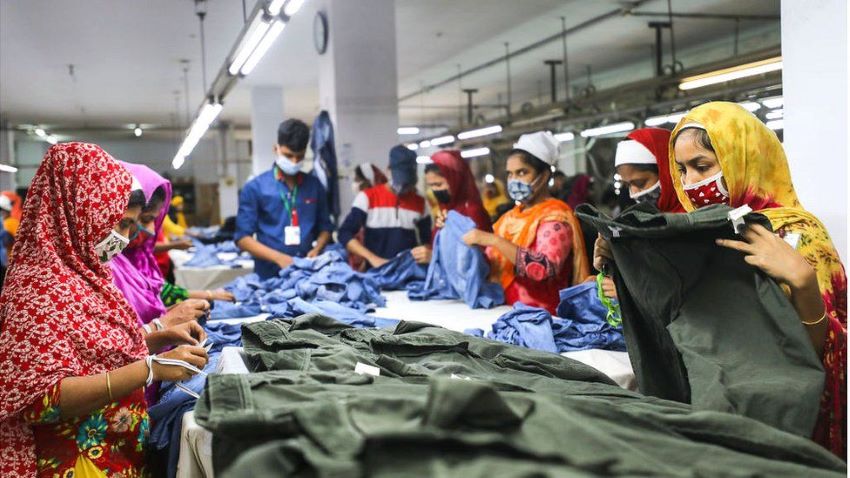
Pakistan to form an agreement similar to Bangladesh’s Accord
Miriam Neale, a health and safety expert from the Amsterdam office of Bangladesh Accord feels, Pakistan industries needs to form an agreement similar to Accord to ensure workplace safety. Since 2014, Neale has led Bangladesh Accord’s signatory engagement work supporting almost 200 companies that are signatories to implement the accord’s workplace safety programs with their suppliers. She also supported the governance processes of the accord coordinating the steering committee and protocol development.
The Accord covers factories producing Ready-Made Garments (RMG) and at the option of signatory companies, home textiles and fabric and knit accessories, she said. It has benefitted the local exporting industries besides organizing their labour force and trade unions.
The Accord was signed in the immediate aftermath to the Rana Plaza building collapse on 24 April, 2013 which killed 1,133 workers and critically injured thousands. Over 220 companies signed the five-year agreement.
Transparency gains traction as consumers seek to improve brand loyalty
"Growing awareness about sustainable and ethical fashion is encouraging the fashion industry to become more transparent about its operations. Today, consumers are more concerned about the origin of their clothes than they were earlier. They are now familiar with every aspect of their garment’s production including the source of accessories, dyeing process, factory conditions and the environmental impact of overseas shipping, etc. They have also realised the benefits of being aware about such information for their business."
 Growing awareness about sustainable and ethical fashion is encouraging the fashion industry to become more transparent about its operations. Today, consumers are more concerned about the origin of their clothes than they were earlier. They are now familiar with every aspect of their garment’s production including the source of accessories, dyeing process, factory conditions and the environmental impact of overseas shipping, etc. They have also realised the benefits of being aware about such information for their business.
A recent report by Sourcing Journal titled “Transparency: Opportunities, Obstacles & Outlook 2019” reveled around 85 per cent respondents have realised the importance of transparency in the success of their business and around 66 per cent of them have already introduced transparency initiatives while another 15 per cent plan to introduce them within the next year and 13 per cent expect to pursue these initiatives in the next 2-to-5 years.
Rising demand increases focus on transparency
The report also notes 35 per cent respondents viewed consumer demand as being the major trigger for increasing focus on transparency by brand. Around 53 per cent believe increasing consumer interest in transparency arises out of their curiosity to know everything about their products.
Around 56 per cent respondents believe focus on transparency has increased their brand’s reputation besides increasing customer’s loyalty. On the other hand, around 35 per cent measure the return on investment of their transparency efforts by how much they meet or exceed industry standards, while nearly one-quarter (24 percent) measure sales, monetary returns and good press coverage.
Transparency in supply chains and factories
Around 78 per cent executives advocate an improvement in transparency of their supply chain around 60 per cent preferred their factories and retailers to be more transparent. As per International Corporate Accountability Roundtable (ICAR), transparency improves a brand’s reputation, efficiency, legal compliance and access to capital. Around 66 per cent believe it is important for them to be known for their apparel product’s environmental impact. Out of this, 58 per cent are willing to pay around 20 per cent more prices for sustainable and eco-friendly products. Another 82 per cent would pay more for items they could recycle or dispose of sustainably.
Ensuring a fair treatment to their workers
The Global Consumer Transparency survey also indicated that around 78 per cent respondents would like to ensure fair treatment to apparel workers. An additional 78 per cent would like to understand the price dynamics of their products while 77 per cent would like to ensure their clothes are eco-friendly. Around, 81 per cent respondents expressed their willingness to buy clothes from transparent brands while 50 per cent are ready to abandon brands that make environmentally or socially harmful clothes.
Though the transparency report acknowledges improvements in accountability within the fashion industry, it advocates more government involvement to ensure that companies remain compliant with the law.
Intertextile Shanghai Apparel Fabrics to host over 4,000 exhibitors
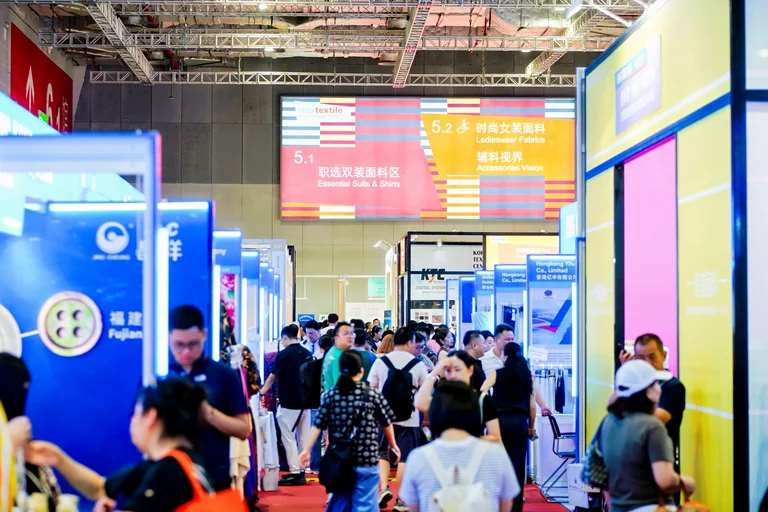
Intertextile Shanghai Apparel Fabrics, with host over 4,400 high-quality exhibitors from 33 countries and regions. The fair will feature 11 country and regional pavilions and zones with VIP buyer delegations from India, Malaysia, the Philippines, Russia, Singapore, Thailand and Vietnam, to promote more business exchanges on a global scale. The fair will be open from 25 – 27 September at the National Exhibition and Convention Center (Shanghai).
The Fringe programme
To be held across halls 4.1 and 5.1, the three-day fringe programme will cover four major topics:
• Design & trends @ Textile Dialogue
• Tech & innovation @ Talking Point
• Sustainability @ Forum Space
• Licensing opportunities @ Industry Collaboration
A/W 2020/21 Trends Forum
The designer for A/W 2020/21 trends forum is Elementi Moda S.r.l. from Milan, Italy. Ornella Bignami will host tours at the trend forum explaining the latest in design trends through fabric displays and seasonal trend stories. Roberto Ramos, Senior Vice President of Creativity and Innovation of The Doneger Group, will moderate a panel discussion and conduct short talks at the fair.
Forum Space
The Forum Space will host a series of seminars on growing sustainability trends in the textile and fashion industry. These seminars will provide the latest information on sustainable product and technologies development, as well as regulation updates.
Fashionsustain
The Fashionsustain conference on September 26 will feature high-profile speakers from the textile and fashion industry who will share their learnings from investing in sustainable innovation.
The conference will focus on the current state of innovative technology, investing in innovation and new business models as well as on the important role of pre-competitive collaboration and sourcing practices for innovating the industry.
Panel discussion: 2020 Sustainability in the Garment Supply Chain
This forum will explore how can design centres, fabrics and accessories suppliers and fashion brands work together to create a sustainable supply chain.
Product presentation: Biodegradable Polyester for a Sustainable Future
A daily introduction of BioFuze, which is a unique polyester yarn developed by Paradise Textiles that has the ability to biodegrade naturally in landfill and marine conditions.
Technology and solution: A full day programme under the theme of Industry 4.0 & Smart Factory will comprise of a panel discussion and forum, on 26 Sep at Talking Point (4.1 – K112).
2019 Smart Factory Forum: Trend and Application of Artificial Intelligence in Textile Industry
The forum will cover topics such as:
• Internet connotation and technology trend in the textile Industry
• From connection to intelligence – Consultation and diagnosis practice of intelligent transformation in the warp knitting industry
• How to reduce cost and increase effect by using intelligence system
• Application of machine vision in the textile industry
• Application of intelligent production in Cheese dyeing
Seminar on licensing trends
For the first time, Intertextile Apparel will organise a licensing seminar will look at IP and retail trends. Speakers will share licensing trends and case studies, as well as how licensing and IP can benefit the apparel industry.
The Licensing x Fashion display area in hall 4.1 (booth H48) will showcase various licensed textile products and licensing information, helping textile companies to explore new business opportunities through IP licensing.
Licensed sports merchandise growing at four per cent
The global licensed sports merchandise market is growing at four per cent. The increasing number of fitness initiative programs and campaigns on social networking sites are creating awareness about the importance of fitness and health. This is encouraging consumers to remain fit and use social media fitness apps and socially integrated fitness trackers. Growing participation in various sports and fitness activities is leading to the expansion of the global licensed sports merchandise market.
The apparel and footwear segment has a significant market share, and this trend is expected to continue. Factors such as increased participation in sports and physical training activities will play a significant role in helping the apparel and footwear segment maintain its market position. The increasing popularity of athleisure is expected to have a positive impact on the overall market growth. Athleisure outfits are made from materials that provide odor reduction, offer moisture-wicking, and have stretchability properties. This is encouraging vendors to focus on innovations and improvements in design and quality of athletic outfits, which will make them more breathable, lightweight, and waterproof.
However, rising labor cost and fluctuating raw material prices, environmental impact of production of sports merchandise, and stringent regulations for procurement of leather may hamper the growth of the licensed sports merchandise industry.
Hong Kong’s export value may decline
Hong Kong’s export value is expected to decline by four per cent this year. Asean has surpassed the US as Hong Kong’s second largest export market. In the first seven months of 2019, Hong Kong’s exports to Asean markets climbed 4.6 per cent. The US has imposed tariffs on almost all goods imported from the mainland. Inevitably, this has had an impact on Hong Kong’s exports to the US. In the first seven months of 2019, Hong Kong’s exports to the US fell 10.9 per cent.
Hong Kong’s exporters have been negatively affected by the current trade friction, with shrinking order sizes, price bargaining and cancelled orders the most common consequences. They have had to share additional tariff costs with buyers. Reduction or cancellation of orders and price reductions is more serious than before. So Hong Kong companies have relocated their production or sourcing bases to Vietnam, Cambodia and India. This will impact Hong Kong companies that provide trade-related services.
Hong Kong traders have adopted different strategies to cope with these business challenges. In addition to developing in non-US markets like Latin America and the Middle East, manufacturers have lowered unit prices, moved production/sourcing bases, downsized the company and lowered the minimum order quantity.
Liva draws attention at Yarnex
At the recent Yarnex held in Tirupur, Aditya Birla Group’s new age fabric drew a lot of attention. Its application in loungewear, camisoles, leggings, men’s briefs and vests was highlighted. Unlike other fabrics that are boxy or synthetic, Liva is a soft, fluid fabric which falls and drapes well. The new age, naturally sourced fiber, which is made into fabric in pure or blended form, transforms not only the garment but also the person wearing it. It is comfortable, soft, natural and eco-friendly.
Liva, an Aditya Birla brand, has applications in loungewear, camisoles, leggings, men’s briefs and vests. Liva has been founded on the belief that sustainability and fashion can co-exist. The four-year-old brand has rocked the market through its innovative campaigns, strong value chain and quality. The Liva accredited partner forum has about 180 wet processors consisting mostly of woven and knitting, knit processing and woven processing. One-third is netting and two-thirds is woven. Liva promises the consumer a natural fluid and fashionable fabric which has passed through an accredited value chain for quality guarantee. Saris are being made with Liva. Liva has leveraged its attributes of drape, natural sheen and softness and wants consumers to re-imagine the sari in a new way. To better suit the needs of the value chain, Liva has also introduced new blends for both occasion wear and regular wear. Liva hopes to bring innovation into the sari as a category.