FW
PRGMEA urges for industrialization and enhanced exports
Pakistan Readymade Garments Manufacturers and Exporters Association (PRGMEA) in its budget proposals for 2020-21 called for various steps to promote industrialization and enhance exports. PRGMEA urged for coming budget business friendly, lowering cost of production, paying early refunds to solve liquidity crunch, relaxing import policy for industrial raw material and uplifting exports across the country.
According to the budget proposal, PRGMEA seeks revival of SRO 1125 in its true shape and reintroduce the system of No Payment No Refund of Sales Tax for the five export-oriented sectors for one year. All stuck up claims of exporters Customs Rebates Sale Tax rebates should be released. The liquidity crunch is a major stumbling block in the way of improving exports. Apparel industry should be allowed to import fabric under SRO 492 scheme as weaving industry of Pakistan is unable to fulfil the demands of fashion wear. It is proposed that cotton yarn, the major raw material of the apparel sector should be exempted from all duties and taxes to encourage value addition.
PRGMEA suggested that the custom duty of seven per cent on import of polyester staple fibre including a range 20 per cent anti-dumping duty should be abolished to reduce the cost of production to compete in the market. Apparel industry should be allowed to import fabric under the SRO 492 scheme as the weaving industry of Pakistan is unable to fulfil demand of fashion wear.
FIEO urges acceleration of India-EU FTA
Exporters' body FIEO has urged Commerce and Industry Minister Piyush Goyal to fast-track the long-pending free-trade agreement (FTA) between EU and India and conclude it in an expeditious manner.
India and the EU are negotiating a comprehensive FTA, officially dubbed as the Bilateral Trade and Investment Agreement (BTIA), but the talks are stalled since May 2013 due to differences on several matters.
FIEO President S K Saraf said Vietnam, a strong competitor of India, has already signed a similar agreement with the EU, which is likely to be operational by July-August 2020.
With the signing of the agreement, Vietnamese products will get further edge in the EU markets as the landed price of their products would become cheaper as compared to Indian products, he said.
He said the EU-Vietnam Investment Protection Agreement has also been signed and, due to this, Vietnam will be attracting a lot of investments moving out of China particularly those with the EU as their market.
He added that due to these developments, Indian exporters are quite concerned and would request for acceleration in the process of completion of a similar agreement with the EU.
Textile Exchange releases 2025 Sustainable Cotton Challenge report
US-based global non-profit Textile Exchange recently released the 2025 Sustainable Cotton Challenge report. The purpose of the 2025 Challenge is to raise the uptake of organic and preferred cotton, which can increase smallholder farmers’ income, eliminate hazardous pesticides, reduce the use of water, pesticides and synthetic fertilizers, and improve water quality and soil health.
The Challenge was formed in 2017 when His Royal Highness The Prince of Wales convened a group of chief executive officers (CEOs) through the work of his International Sustainability Unit that existed to address critical challenges facing the world.
Those original 13 CEOs committed to working together to accelerate the use of sustainable cotton, which paved the way for other industry leaders to follow, resulting in 82 companies now committed to sourcing 100 per cent sustainable cotton by 2025.
The Challenge serves as a cornerstone for change in the apparel and textile industry by encouraging brands and retailers to commit to source cent per cent of their cotton from the most sustainable sources by 2025, a press release from Textile Exchange said.
Nepal textile association closes down on lack of government stimulus
Nepal Textile Industries Association has decided to close down as Nepal government has failed to offer any stimulus package for the textile industry which is on a verge of collapse. According to the President of the association Shailendra Lal Pradhan, the textile sector was not listed among the 44 industries in the government decision that were allowed to open partially, even though it had been severely hit by the virus lockdown with 95 percent of the factories shuttered.
The association said the government's annual financial plan did not contain any relief measures for the textile industry despite the suffering brought about by the prolonged stay-at-home order. The government had proclaimed that the textile industry would get interest subsidies, but it did not happen. And now the budget statement says the electricity tariff exemption has been removed. A lot of money has been poured into the domestic textile industry. In 2014 alone, investors pumped in another Rs1.5 billion, encouraged by the government announcement that they would get a 70 percent value added tax refund.
However, all that investment has been jeopardised with the government withdrawing the VAT adjustment facility that fabric manufacturers have been getting for the past 20 years
Under pressure for rent payments, American retailers reopen malls
Pressured by financial concerns, retailers across the US are rushing to open malls in the country. A new report from CBRE, the US commercial real estate services and investment firm, said these retailers could only pay around 10 per cent of their rents in April due to a dip in sales. Shopping centers anchored by grocery stores could also pay only 80 per cent of their normal rent payments.
Even with e-commerce options, these retailers saw a 8.7 per cent decline in sales in April as against sales in March. The estimate for total monthly sales for the retail trade and food services industry fell to $483 billion, effectively erasing three years of growth. Also, some retailers prioritized the retention of sales and management staff over making rental payments.
Simon Property Group, the largest operators of shopping malls and outlets in the US, has reopened 77 out of its 209 properties, more than a third of its portfolio, in 38 states after national closures in late March due to the pandemic. The company plans to open “approximately half” of its U.S. portfolio within the next week.
Similarly, Macerich, another large owner of malls, has also re-opened 13 of its 52 US properties in Texas, Colorado, Missouri, Iowa, Indiana and Arizona.
Indonesia exempts Indian fabrics from new import tariffs
In order to protect its domestic upstream industry from a recent surge in imports, Indonesia exempted fabrics made in India and Vietnam and synthetic yarn and curtains made in South Korea and Hong Kong from new import tariffs imposed on some textile products from May this year till November 2022, according to the country’s finance ministry.
In 2019, the Indonesian government imposed temporary additional duties on imports of textiles and textile products up to 67.7 per cent, according to Vietnamese media reports.
Moody’s Investors Index had earlier warned that the US-China trade tensions could lead to an influx of Chinese yarn, fabrics and garments into Indonesia, potentially disrupting the stable levels of demand and supply in the country.
Bangladesh RMG to lose $5 billion revenue in 2019-20: BGMEA
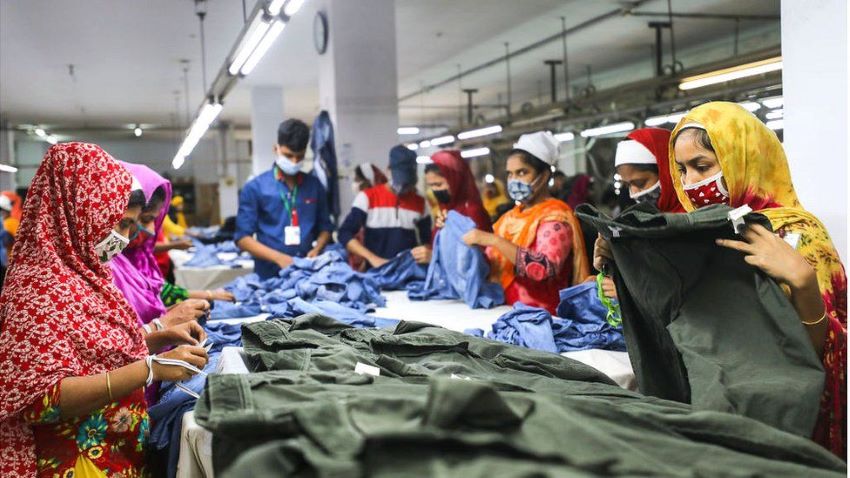
Due to the COVID-19 pandemic, the Bangladeshi apparel sector is likely to lose $5 billion revenue in 2019-20, says BGMEA president Rubina Huq. She revealed buyers have cancelled orders worth as much as $3.15 billion since the unfolding of the pandemic. This has led to factories running at only 55 per cent of their capacity with imported unused raw materials piling up in warehouses.
BGMEA estimates global consumption of clothes to fall by 65 per cent in future leading to 30 per cent slump in work orders. Due to this, factory owner may also have to lay off workers from th.is month.
However, the US’s move to cut its order from China by 52 per cent may make Bangladesh a good sourcing destination for apparel goods, views Huq, who heads the Mohammadi Group.
Therefore, to make the Bangladesh RMG industry and its supply chain sustainable, BGMEA urged manufacturers to focus on virtual marketplaces.
Increase in MSP good for cotton sowing, threat for spinners
According to ICRA, the recent decision of Cabinet Committee on Economic Affairs (CCEA) approving an increase in the minimum support prices (MSPs) for kharif crops (including cotton) for the Cotton Year 2020-21 is likely to be unfavorable for the domestic spinning sector.
The CCEA recently hiked the MSP for the medium-staple variety by Rs 260 per quintal to Rs 5,515 per quintal, while that of long-staple variety by Rs 275/quintal to Rs 5,825/quintal, translating into an increase of 5 per cent over the level fixed for CYi2020.
According to Jayanta Roy, senior VP and group head, Icra Ratings, this move may heighten challenges for the domestic spinning companies, as this comes at a time when the COVID-19 pandemic has resulted in severe demand-side pressures in the international textile markets.
Though increased MSP, timely onset of monsoon and expectation of normal monsoons augur well for cotton sowing in India, cotton crop remains highly vulnerable to pest attacks, and output/yield expectations remain contingent on these. In this context, the locust swarm which has hit several parts of western and northern India including Rajasthan, pose a looming threat for the crops as these insects feed on a large variety of crops.
Create global supply chain sustainability fund, urges Bangladesh to UK
Bangladesh high commissioner to the UK Saida Muna Tasneem has urged the UK to create a global supply chain sustainability fund for post-COVID-19 socio-economic recovery of countries victimized by the British retailers including Bangladesh. The rise in number of unethical cancellations and non-payment for manufactured apparels by UK retailers is victimizing the Bangladesh RMG industry its 4.5 million workers.
Tasneem also urged the UK to ensure equitable and affordable access to vaccines and therapeutics manufactured by the UK and other developed countries for the most vulnerable countries including LDCs. She was addressing a ‘High Commissioners’ Virtual Conference’ organized by the UK FCO (Foreign and Commonwealth Office) Minister of State for South Asia, Commonwealth, the UN and the DFID, Lord Ahmad of Wimbledon this week. Tasneem was one of the eight speakers at the conference participated by more than 48 high commissioners of the Commonwealth, UK’s Joint Head of International Engagement of the HMG Coronavirus Taskforce Alastair King Smith and UK FCO High Officials including the Commonwealth Envoy, Philip Parham.
She also briefed the conference about the innovative and unprecedented initiatives undertaken by Bangladesh premier including a $11.50 billion COVID-19-response social safety emergency aid and incentive package for protecting livelihoods of the most vulnerable faction of the society.
British FCO Minister Lord Ahmad, who chaired the virtual conference, assured Tasneem of UK’s continued engagement and support to Bangladesh’s post-COVID-19 socio-economic and sustainable development recovery.
Post lockdown, retailers adopt innovative ways to manage inventory
As mountains of apparel stock has piled up stores, distribution centers, warehouses and even shipping containers due to the COVID-19 lockdowns, retailers across the world are adopting innovative ways to get rid of it. Apparel chains including British high-street retailer Next and German sportswear brand Adidas have stashed away unsold basics, aiming to offer them next year instead. These retailers hope that easing lockdown measures will see shoppers return to stores, eager to unleash pent-up demand.
Many stores are likely to pursue a combination of holding sales as well as selling stock to off-price retailers. The mix will depend on consumer appetite, how much merchandise stores have to shift and how fast they must free up space for new collections. Some retailers are also likely to move their merchandise to online re-sale marketplaces that take a commission on sales, although that option is largely only open for high-end brands.
California-based luxury re-sale marketplace Tradesy opened a new business unit in April to deal with the jump in brands looking to sell stock they were stuck with after department stores canceled wholesale orders.
Some of the companies are also plotting a quick profit using re-sale websites. For instance, events company Luxury Experience & Co, plans to snap up merchandise at a discount, to then resell it at a higher price online at a site such as California-based Poshmark, which also makes money by taking a commission on sales.