FW
Canada’s apparel imports decline in September
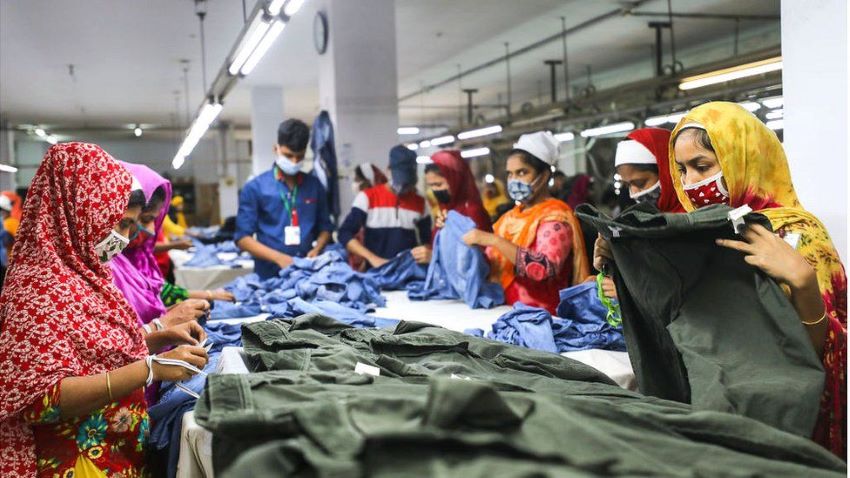
As per Apparel Resources, the apparel imports by Canada declined on both Y-o-Y basis and M-o-M basis in September ’20, owing to uncertain market conditions as analyzed and reported by Apparel Resources recently.
There were only two countries – India and USA – in top 10 importing destinations of Canada which marked growth in September over August this year; every other major shipper fell in its shipment to Canada.
India surged by 2.09 per cent in Sep. ’20 over Aug. ’20 to ship US $ 17.86 million worth of garments to Canada. However, the country could tap yearly growth and fell by 17.64 per cent as compared to Sep. ’19, making a recovery of business by just 82.36 per cent on the yearly note.
As far as the US is concerned, the benefit of revised NAFTA (now USMCA), which came into light in August, can be seen! USA shipped 2.57 per cent more garments in value terms to Canada worth US $ 20.56 million in Sep. ’20 as compared to Aug. ’20.
China, the largest apparel shipper to Canada, fell by 28.91 per cent on monthly note to $ 344.88 million in Sep. ’20 as compared to Aug. ’20 and also declined by 6.56 per cent from September ’19 figures. The drastic fall in monthly value has also caused a sharp decline in the Chinese share to the Canadian market which has come down to 38 per cent in Sep. ’20 from 45 per cent in August ’20.
Bangladesh too plummeted by 7.61 per cent in Sep. ’20 on M-o-M basis to ship US $ 104.91 million worth of garments to Canada. The country was also down on Y-o-Y basis by 3.10 per cent in September. ’20.
Replay launches denim range made from recycled materials
Italian denim brand Replay has launched a men’s and women’s denim range made entirely from recycled, recovered or repurposed materials. The new Hyperflex Re-Used collection comprises stretch jeans made from recycled polyester. Replay is also creating regenerated CCS-certified cotton. The company estimates 10 per cent of virgin cotton fibers are lost in an ordinary spinning process.
For men, the Hyperflex Re-Used collection offers 11.5 oz. straight-fit jeans in deep indigo, overdyed black slim-fit and skinny jeans. The women’s line includes a skinny fit and a super-high-rise skinny fit available in indigo, black, and medium and dark gray. The jeans retail for €150 or approximately $175.
The collection builds on Replay’s other sustainable efforts such as the Hyperflex Bio, a range of its bestselling stretch jeans made with organic cotton, recycled fabric and recycled PET bottles. Recently Nu-in also introduced its 100 per cent recycled Denim collection, made with a combination of pre- and post-consumer cotton waste that comes from production cut-offs and discarded clothes.
Next, Primark and John Lewis pledge allegiance to WRAP initiative
Next, Primark and John Lewis are amongst the first retailers to pledge their allegiance to WRAP’s Textiles 2030 voluntary initiative. As per EcoTextile, to be launched its April, the initiative will help fashion firms pivot their operations from a linear make-use-dispose to a circular model. The ten-year program will transform UK clothing and home fabrics to reduce their impact on climate change.
For this initiative, WRAP aims to on-board as many brands, retailers, NGOs and charities as possible across the industry to spark tectonic shifts to the way apparel is produced, used and subsequently discarded of, due to the immense pressure current practices are having on landfill levels.
Amongst the first batch of recruits for the Textiles 2030 initiative are: The British Fashion Council, British Heart Foundation, The British Retail Consortium, Cancer Research UK, Charity Retail Association, CTR Group, Institute of Positive Fashion, Oxfam, Recyclatex, Re-Fashion, Sainsbury’s, Salvation Army Trading Company, SOEX UK, Suez, Ted Baker, Textiles Recycling Association and Tesco.
Set to kick-off from April 2021, the initiative will adopt a target-measure-act approach, which will require clothing and textile businesses to set targets, measure their impact and track progress on both an individual business basis, and towards national targets and public reporting.
USFIA issues statement supporting US economy
The US Fashion Industry Association (USFIA) has issued a statement reiterating its support to the US economy and a fresh approach to trade policy and American participation in global alliances.
Founded in 1989, the United States Fashion Industry Association (USFIA) represents the fashion industry: textile and apparel brands, retailers, importers, and wholesalers based in the United States and doing business globally. The association aims to eliminate the tariff and non-tariff barriers that impede the industry’s ability to trade freely and create economic opportunities in the United States and abroad.
Headquartered in Washington, DC, USFIA is a respected voice for the fashion industry in front of the US government as well as international governments and stakeholders. Through its publications, educational events, and networking opportunities, USFIA also connects with key stakeholders across the value chain including US and international service providers, suppliers, and industry groups
US Cotton Trust Protocol to be included in Cotton 2040’s CottonUP guide
As per EcoTextile, the US Cotton Trust Protocol will now be included in Cotton 2040's CottonUP guide, a toolkit designed to help give companies the information they need to make responsible sourcing decisions. Set up by the non-profit organization Forum for the Future, the Cotton 2040 initiative brings together industry standards, brands and retailers, producers and existing initiatives to scale up and overcome barriers to sustainable cotton uptake.
The guide highlights the main sourcing options for sustainable cotton, provides guidance on creating a sourcing strategy, and shares case studies from companies already sourcing more sustainable cotton. US Cotton Trust Protocol is now recognized in the CottonUP guide alongside other sustainable cotton standards including BCI, CmiA, Fairtrade, myBMP, Organic and recycled cotton. ¬The US Cotton Trust Protocol is a new system that provides annual data for six areas of sustainability aligned with the UN Sustainability Goals to enable brands and retailers to better measure progress towards sustainability commitments.
Accelerating Circularity consortium publishes new report on textile-to-textile recycling
Accelerating Circularity consortium has published a new report that uncovers the potential of textile-to-textile recycling. The report focuses on the US East Coast, covering 20 states and 26 metro areas. It also focuses on polyester, cotton and manmade cellulosic fibers, which together make up 81 percent of the textile market. Within this study region, 5.2 million ton of clothing, linen and household textiles are either put into landfills or incinerated each year. In addition, 90,000 ton of textile waste is generated from mills and other industrial sources.
The report focuses on spent textiles, or those that have already gone through repair and reuse and which have no value in their current state, as the target input for recycling.
A founder member of Accelerating Circularity, Lenzing participates in the initiative for three main reasons, First, circularity is a goal within the Lenzing Sustainability strategy of Naturally Positive, the brand values the leadership of Karla Magruder and working with the companies involved in the group.
Filo plans 55th edition despite COVID-19 uncertainties
Despite uncertainties related to the resurgence of COVID-19, international b2b yarns and fabrics show Filo is planning its 55th edition, scheduled from February 24-25, 2021 at MiCo – Milan Convention Centre.
The exhibition will present product development proposals through a webinar in December. The webinar will enable Filo to reach, at one time and in a simple, efficient and quick way, all those people who are interested in participating, in Italy and abroad, from exhibitors to style department officers and journalists.
Filo is the only international trade show focusing on products of excellence; a business platform where are on show high quality collections of yarns and fibres, produced by environmentally-friendly processes, and in accordance with ethical values.
This edition will make available a digital version of the Exhibitors Guide Book on line at Filo website. The Guide Book will help visitors plan advance meetings with the most suitable firms and to exhibiting companies to get even more visibility.
EU threatens US with more tariffs over Boeing dispute
The European Union (EU) has threatened to increase tariffs on US exports amidst trade tensions centering aircraft manufacturer Boeing, reports Sourcing Journal. The EU is exercising its legal rights under the WTO’s decision, but has called upon the US to agree to both sides abandoning their respective countermeasures immediately
In 2019, US had imposed duties worth $7.5 billion on EU products as the result of a World Trade Organization arbitration decision that ruled in favor of the US and American aircraft manufacturer Boeing. At the time, the WTO confirmed U.S. lawmakers’ charges that European multinational aerospace corporation Airbus, a direct competitor, benefitted unfairly from subsidies, negatively impacting Boeing’s business. Legislators moved swiftly to impose tariffs on EU goods that would pay down the damages.
In September, though, the WTO granted the EU and Airbus license to hit back, giving the green light to impose tariffs on U.S.-made goods worth $4 billion. On Oct. 26, the intergovernmental trade organization formally authorized the implementation of countermeasures against subsidies that have benefitted Boeing.
According to Dombrovskis, European Commissioner for Trade and Executive Vice President for Economy that Works for People, the proposed countermeasures bring EU to equal footing with the US, with sizable tariffs on each side related to the aircraft subsidies. Those duties include additional 15 percent tariffs on aircrafts as well as 25 percent tariffs on a range of agricultural and industrial products imported from the US.
FESPA expo attracts over 200 exhibitors
To be held from March 9 to 12, 2021, FESPA Global Print and European Sign Expo 2021 are attracting a good line-up of exhibitors who are enthusiastic to engage with customers and prospects face-to-face rather than on digital platforms. Over 200 exhibitors have already committed to participating in Spring next year and many more in active discussions. The expanding exhibitor list includes many prominent names in screen, digital wide format and textile print, representing the entire production workflow from output technologies and workflow tools to media and inks.
The exhibition will feature latest hardware innovations from companies including Agfa, Brother, Canon, d.gen, Durst, Polyprint DTG, Zund, Summa and swissQprint; substrates from suppliers including 3A Composites, Ahlstrom Munksjö, Avery Dennison and Hexis; workflow and colour management software from vendors including Barbieri, Caldera, OneVision and ONYX Graphic; and consumables from suppliers including CHT Group, Zhuhai Print-Rite and STS Inks. Signage professionals will also be able to see the latest innovations in non-printed signage, with confirmed exhibitors including CADlink Technology Corp, Efka Led Frames B.V. and LEDIT YAKI.
Dutch Govt signs new deal to boost circularity in denim
The Dutch government has signed a new agreement with 30 leading companies to increase circularity in the country's denim industry. Known as ‘Denim Deal’, the agreement focuses on the use of recycled materials in denim garments. Brands like Mud Jeans, Scotch & Soda, and Kuyichi, have signed the agreement. These brands have committed to use at least five per cent recycled content in every pair of jeans, and create at least one million pairs of jeans with 20 per cent post-consumer recycled content.
The deal has also been signed the Ministry of Infrastructure and Water Management, the municipalities of Amsterdam and Zaanstad and the Amsterdam Metropolitan Area. The strength of the deal lies in the fact that all parties who have a role in the making and processing of denim garments can participate in it.
The deal would help reduce the denim industry's carbon footprint and the estimated 8,000 litres of water it took to make each pair of jeans.