FW
US’ kidswear imports decline by 9.67% in Jan’21: OTEXA
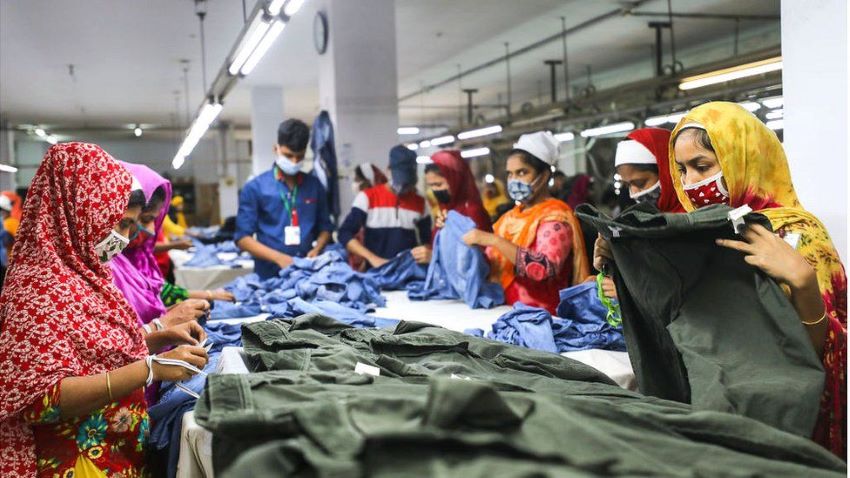
As per figures revealed by OTEXA, kidswear imports by the US fell by 9.67 per cent in January ’21.
The country imported $ 214.22 million worth of kidswear in the first month of 2021 as compared to $ 237.14 million imported during January ’20, reports Sourcing Journal.
Weight-wise, US’ imports declined by 5.28 per cent on Y-o-Y basis to 11.04 million kg. And, the per kg price of the shipment valued $19.40 in January ’21 as compared to $20.55 in January ’20.
As far as major destinations are concerned, China plunged in value-wise shipment to USA in kidswear segment, while it noted growth in weight-wise exports.
Imports from Bangladesh declined both in values and weight of the kidswear shipment on Y-o-Y basis.
India saw a miniscule decline in value-wise shipment to the US in while weight of its exports also declined marginally by just under 2 per cent.
On the other hand, imports from Vietnamincreased both in values and weight.
Adidas launches first collection in partnership with Preston
Adidas has launched its first collection in partnership with fitness brand Peloton As per Fashion Network, the Adidas x Peloton SS21 collection includes tanks, tights, shorts, hoodies, tees, crewnecks, sports bras, and joggers, available from $30-$85 via the Adidas and Peloton websites and in select Peloton showrooms.
The collection has been created in collaboration with Peloton instructors Ally Love, Robin Arzón and Cody Rigsby. The three instructors were involved in the design process to help develop a co-creation model. Together, the teams worked to produce styles and fits rooted in inclusivity and crafted with quality performance technology for high energy workouts, plus comfort for relaxed recovery days”.
Reflecting the’90s attitude, the collection features bold, neon hues such as ‘Screaming Pink’, and inspirational text graphics”. It is also size-inclusive with a range of sizing from XS-2X and designs spanning men’s, women’s, and unisex.
The marketing campaign for the collection includes a series of on-demand classes, available on the Peloton Bike, Bike+ and the Peloton App starting March 18. A live class celebrating the collection drop will take place on March 25.
Delhi High Court restrains Future Retail’s sale to Reliance Retail
The Delhi High Court has upheld the Singapore's Emergency Arbitrator's (EA) order restraining Future Retail (FRL) from going ahead with its Rs 24,713 crore deal with Reliance Retail to sell its business.
As per Economic Times, Justice J R Midha directed Future Retail to stall the deal and deposit Rs 20 lakh in Prime Minister's Relief Fund for providing COVID-19 vaccines to senior citizens of Below Poverty Line (BPL) category.
The court directed the presence of Biyani and others before it on April 28 besides attaching their properties.
The high court's order came on Amazon's plea seeking direction to order enforcement of the award by Singapore's EA on October 25, 2020, restraining FRL from going ahead with its Rs 24,713 crore deal with Reliance Retail.
Amazon, in its interim plea, has sought to restrain FRL from taking any steps to complete the transaction with entities that are a part of the MukeshDhirubhaiAmbani (MDA) Group.
DTC focus, digital transformation helps Levi Strauss face COVID-19 challenges
Despite facing extraordinary challenges in fiscal year 2020, Levi Strauss & Co kept its focus on operating with a direct-to-consumer first mindset, diversifying its portfolio by driving outsized growth in under-penetrated areas and digitally transforming our business.
Since its inception 168 years ago, Levi Strauss & Co weathered many storms including wars, economic recessions, natural disasters, and the second major global pandemic. From the start of the pandemic, its teams acted quickly to protect its employees, consumers and business, all while positioning ourselves to meet the accelerated changes that will shape the next decade.
Levi Strauss & Co. is an American clothing company known worldwide for its Levi's brand of denim jeans. It was founded in May 1853 when German immigrant Levi Strauss moved from Buttenheim, Bavaria, to San Francisco, California to open a west coast branch of his brothers' New York dry goods business. Although the corporation is registered in Delaware, the company's corporate headquarters is located in Levi's Plaza in San Francisco.
INDA to hold World of Wipes® International Conference 2021 in July
Association of the Nonwoven Fabrics Industry, INDA will hold the physical edition of its 15th annual World of Wipes® (WOW) International Conference from July 12-15 at the Atlanta Marriott Marquis, Georgia.
In this conference, WOW will explore the debate between the growing use of plastic in wipes, new developments in sustainability, growing emphasis on cleanliness brought on by COVID-19, emerging markets, regulatory changes, etc
This year’s event will open with a day and a half devoted to the WIPES Academy training and a Welcome Reception onsite. WOW will feature three days of cutting-edge conference program content, two days of tabletop displays, plus presentations from the three finalists and the announcement of the 2021 World of Wipes Innovation Award® as its finale.
The program also includes over 11 hours of face-to-face networking time to form new relationships and strengthen existing bonds over breakfasts and session breaks, the Welcome Reception, and other events to connect with industry peers.
The first session of presentations on July 13 will focus on issues related to new European Union (EU) regulations on single-use plastics and their impact on the North American wipes market.
Experts providing the latest insights on this vital topic include Anna Gergely, PhD, Director – EHS Regulatory, Steptoe & Johnson LLP, who will speak on Recent Developments Under the EU Green Deal and Plastics Strategy – Update on the Impact of the Pandemic.
Providing the perspective on the proposed Canadian plastic regulatory approach will be Karyn Schmidt, Senior Director, Chemical Regulation, Regulatory and Technical Affairs, American Chemistry Council (ACC) while Andrew Hackman, Principal Lobbyist, Serlin Haley, will talk about plastic policies in the various states within the US.
Vaccination and reopening of economy to boost US apparel sales to 2019 levels
 Though retail sales in the US declined by 3 per cent M-o-M basis in February, they increased by 2.2 per cent on Y-o-Y basis as compared to February 2019. As per the US Census Bureau retail report, apparel and accessories sales declined by 14.9 per cent in the same year-over-year comparison. Sales at department stores also declined by 17.9 per cent, says a Forbes report. Retailers now hope for Easter to boost pre-holiday sales in March.
Vaccine effectiveness and distribution directly impacts the economy Surge in vaccination rates and reopening of economy are expected to boost retail sales by around 8.2 per cent toover $4.33 trillion in 2021, says a report by National Retail Federation. Increase in vaccination will encourage shoppers to shop in physical stores and dine out.
Consumers will also be driven to increase their apparel expenditures due to their travel plans. Almost 68 per cent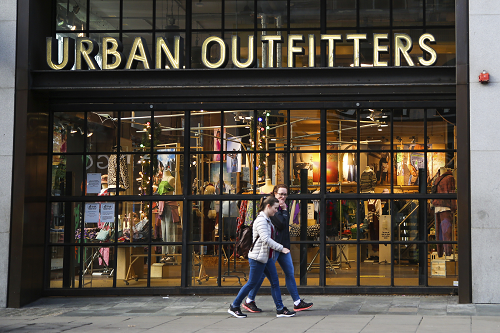 of millennials and 65 per cent of Gen Z have planned a trip abroad as compared to 57 per cent of Gen X and 42 per cent of baby boomers.
Barbara Rentler, CEO, Ross Stores expects its comparable store sales to strengthen over the year. As a result, the retailer plans to open approximately 60 new stores during fiscal 2021.
The return of typical weather patterns is driving apparel sales in North America, says Richard. A Hayne, CEO, Urban Outfitters. However, despite unfavorable weather in the first three weeks of February 2021, overall comparable store sales trend in the country was better than the fourth quarter trend of Fiscal 2020, noted TJX Companies.
Buying clothes and planning vacations
As per survey by Sezzle, a buy-now-pay-later solution provider, 39 per cent of respondents plan to take 2 to 3 vacations in 2021, with 76 per cent planning at least one vacation. Higher travel spends promote purchasing in apparel and accessories. The survey included 61 per cent respondents from the Gen Z and millennial generations and 39 per cent from Gen X and Baby Boomers. The top categories surveyed included clothing, shoes, beauty and jewelry.
Apparel’s slow recovery going forward
Ethan Chernofsky, Vice President-Marketing, Sezzle, says, the apparel sector was trending closely with overall retail visits in early January before severe weather conditions throughout the country depressed visits significantly. February has been a difficult month as severe weather patterns negatively impacted the North American business. However, post February. Urban Outfitters is seeing signs of improvement, especially in stores located in warmer climates.
February starts the spring season for many retailers
Though there are many signs of a positive trend for apparel and accessories, the continuing unpredictable environment has halted expansion plans of many retailers. COVID related factors are also impacting their future prospects. Hence, most retailers are comparing their 2021 sales to those recorded in 2019 as they do not deem 2020 sales to be suitable for comparisons.
Uster launches Quantum 4.0
Uster has launched the new Quantum 4.0 system. This world-beating innovation combines both capacitive and optical sensors in one – delivering comprehensive security, prevention and flexibility. The Smart Duo system offers the best of both worlds for intelligent yarn quality control and optimized profitability. It means mills can now focus on meeting the fast-moving market challenges, instead of pondering technical options.
For years, spinners have wished for a way to bring the best of different technologies together, for secure quality and maximum flexibility. Spinners can now access full security in quality control, ensuring the best clearing mode is applied. The Quantum 4.0 enables this through a simple Capacitive/Optical switch. This allows greater flexibility in the types of yarn which can be produced, while also dealing with factors such as humidity variations.
Today’s market trends show strong demand for compact yarns. Here, spinners can trust Quantum 4.0 to tap this potential and deal with any quality issues. The density feature, for example, protects mills from substandard cops caused by ring spinning malfunctions such as blocked compacting zones, or twist problems. The Smart Duo has the advantage of monitoring yarn density continuously and after every splice.
A further valuable innovation with Quantum 4.0 is the Blend Mix-up option, which now enables mills to identify mix-ups of different types of raw materials. This long-awaited market request detects any wrong raw material in greige and white yarns, combating the infamous, but serious, barré effect in fabrics. Cop mix-ups can happen in mills, since differences are hardly visible to the human eye. But Quantum 4.0 stops the problem before it becomes an issue, thanks to significantly improved hardware and software – all underpinned by the Smart Duo.
NCTC launches “Helpline Portal” to address the yarn supply issue
The National Committee on Textiles & Clothing (NCTC) launched a ‘Helpline Portal’ on March 12, 2021 i.e., http://citiindia.org/yarn-form/form/form.php, at Confederation of Indian Textile Industry (CITI), being one of the apex industry bodies for the textile value chain and also coordinating in this regard with various Textile Associations across the country.
T Rajkumar, Coordinator, NCTC and Chairman of CITI, stated, the portal will help fabric manufacturers facing yarn shortage and irregular supply of yarn post the details 24 x 7 on CITI's dedicated web portal i.e., http://citiindia.org/yarn-form/form/form.php, designed for the purpose. He said that CITI Secretariat would also pass on the information to the respective textile associations /export promotion councils to advise their members to post the details of non-availability/short supplies of yarn so as to find solutions on a here and now basis.
T Rajkumar also stated that since the proposed system would enable direct buyer-seller contact, it would also curb speculations, hoardings, etc., thereby speedily resolving the above issue. He has also appealed to all the stakeholders in the textile value chain to take advantage of the online service system and find solutions in a constructive manner.
Printful to add over 500 Kornit Atlas Systems in 2021
Global on-demand printing and warehousing provider Printful will add more than 50 Kornit Atlas systems during 2021 for direct-to-garment (DTG) production on demand, representing a considerable expansion of their current production capabilities. This coincides with the company’s addition of new production facilities in Los Angeles, Dallas, Charlotte, Mexico, Spain, and Canada, as well as expansion of existing facilities globally.
Named among Deloitte’s 2020 Technology Fast 500™ with three-year revenue growth of 441%, more than $722 million in goods sold by customers through the company’s online platform to date, and almost 30 million items delivered, Printful has provided a consistent model of success for on-demand fulfillment to B2B and B2C customers in the e-commerce age.
Davis Siksnans, Co-Founder and CEO believes, Kornit’s agile, versatile, efficient technologies will power the company’s success by answering its demands with ease.Kornit Digital develops, manufactures and markets industrial digital printing technologies for the garment, apparel and textile industries. Kornit delivers complete solutions, including digital printing systems, inks, consumables, software and after-sales support.
80 units in Sircilia Textile Park shut shop
Poor marketing facilities and steep hike in yarn prices have forced 80 units in Sircilla Textile Park to shut shop. The park opened in 2002-2003 with an investment of Rs 7.73 crore. It had 237 plots in it and was expected to provide direct employment to 7,000 workers.
As per the Indian Express, the park is home to nearly 25,495 of the total 35,588 weavers in the State For the last two months, no trader has shown any interest in the 1.56 crore meters of cloth which remains piled up in the units. The value of the cloth is about Rs 2 crore.The cost of the production has shot up with polyester yarn rice increasing to Rs 270 from Rs 170 per kg a few months ago. Similarly polyester cotton yarn prices have increased from Rs 175 to Rs 270 per kg.
Annaldas Anil, President, Textile Park Units Association says, even paying salaries to the workers is becoming difficult for themFor the last two months several units have shut shop.”The other factor that had seen the Textile Park go out of business is the power bills which broke the back of the unit owners. Power in the Sircilla Textile Park costs Rs 7 per unit. Because of these factors, factors owners are unable to compete with producers from other states.