FW
Consolidation and sustainability mark the way forward for Italian fashion industry

The fashion industry is in a whirlwind of consolidation. From luxury giants to high-street favorites, brands are merging, acquiring, and forming strategic partnerships at an unprecedented rate. This trend reflects a dynamic shift in the fashion landscape, driven numerous factors. For example, in August 2023, Tapestry, Inc. (owner of Coach, Kate Spade, and Stuart Weitzman) acquired Capri Holdings Limited (Versace, Jimmy Choo, and Michael Kors) for a staggering $8.5 billion. This deal, the biggest in fashion for 2023, aimed to create a powerhouse with a diversified brand portfolio and global reach, leveraging Tapestry's data analytics and direct-to-consumer expertise.
What's driving the dealmaking?
"A Running Timeline of Fashion Funding M&A Deals" by The Fashion Law attributes this trend to a number of factors. Firstly, the rise of e-commerce giants like Alibaba and Farfetch is pushing established brands to adapt and expand their online presence. Secondly, consumer preferences are shifting towards a more diverse and sustainable fashion landscape. M&A allows brands to access new customer segments and resources to cater to these evolving demands.
A prominent example is LVMH's acquisition of Tiffany & Co. in 2020 for a record-breaking $15.6 billion. This strategic move bolstered LVMH's position in the lucrative jewelry sector and further solidified its dominance in the luxury goods market.
The recent investment by G-III Apparel Group (G-III) in the All We Wear Group (AWWG) exemplifies the trend towards strategic partnerships. G-III, known for its portfolio of licensed brands like Calvin Klein and Tommy Hilfiger, acquired a significant stake in AWWG, a leading activewear and loungewear company, in 2023 [press release from G-III Apparel Group]. This move allows G-III to tap into the booming athleisure market and diversify its offerings to cater to a growing consumer segment. This M&A trend of reflects a dynamic shift in the fashion landscape, driven by numerous factors.
Evolving consumer landscape: Today's shoppers crave convenience, omnichannel experiences, and sustainable practices. Mergers allow brands to combine resources, cater to diverse customer segments, and build robust online presences.
Digital transformation: The rise of e-commerce necessitates a strong digital infrastructure. Acquisitions like Farfetch's strategic partnership with Richemont (owner of Cartier) in 2023 bolster online capabilities and tap into new markets.
Heightened competition: Fast fashion giants like Shein's IPO filing in 2023 and their acquisition of Missguided highlight the pressure to stay competitive. Mergers create economies of scale, allowing brands to compete more effectively.
Market diversification: Acquiring complementary brands allows companies to expand their reach and cater to new customer demographics.
Resource sharing: Mergers can pool resources, from manufacturing facilities to marketing teams, leading to cost efficiencies and stronger brand development.
Innovation & growth: Combining talent and expertise can foster innovation in design, technology, and sustainability practices, propelling future growth.
The bottomline is the M&A wave in the fashion industry signifies a period of strategic consolidation. As brands adapt to the evolving market dynamics, these collaborations offer the potential for growth, innovation, and a more competitive landscape for fashion globally. As Barbara Kennedy, a fashion industry analyst explains M&A offer a strategic path for fashion brands to navigate the ever-changing industry landscape. By combining resources and expertise, companies can build resilience, drive innovation, and stay ahead of the curve.
Surya Spinners installs RieterUNIblendA 81 precision blender
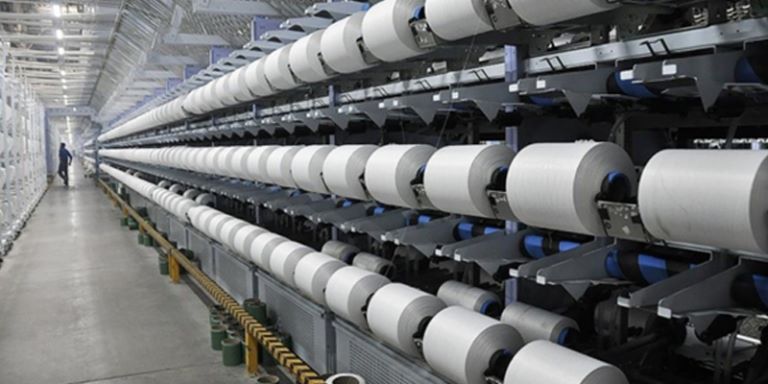
Operator of two spinning mills in Vellakovil, South India, Surya Spinners, has installed a RieterUNIblendA 81 precision blender at its mills.
Established in 2010, Surya Spinners specialises in producing recycled rotor yarns ranging from Ne 6 to Ne 40, utilised in knitted and woven garments. The recycled fibers are pre-opened with an in-house tearing unit, contributing to the company’s annual production capacity of 7,500 tons.
Previously, Surya could not maintain consistent blend quality due to its manual mixing process, which involved 70 per cent recycled cotton and 30 per cent polyester. This method was prone to human error and struggled to meet future requirements for producing different blends simultaneously.
However, the company has now streamlined this process with the fully automated UNIblendA 81 from Rieter, ensuring consistent blend quality before the fibers are fed to a bale press and prepared for the spinning mills. With precise blending within a 1 per cent tolerance, Surya Spinners anticipates doubling its production and achieving significant energy savings.
The installation of UNIblendA 81 has eliminated the need for manual intervention and ensuring consistent blend results day after day, says ThiyagarajanKuppusamy, Director, Surya Spinners. This is helping the company solidify its position as a formidable player in South India’s recycled yarn manufacturing business, he adds.
PittiImmagineUomo postpones 108th edition to June 17th
PittiImmagineUomo has postponed the dates of its 108th edition to June 17 -20, 2025 from the earlier announced dates of June 10-13, 2025. The tradeshow will be held at Fortezza de Basso in Florence, Italy.
RaffaelloNapoleone, CEO, PittiImmagine, explains, this change was made in agreement with the National Chamber of Italian Fashion to maintain a cohesive and streamlined schedule for men's fashion presentations. The repositioning of major fashion weeks prompted this shift, aiming to avoid potential inefficiencies for buyers and media outside Europe.
Napoleone also noted that this decision took into account the subsequent scheduling adjustments for the children's fashion and yarn shows, which are also held at the Fortezza.
Besides, PittiImmagineUomo No. 107 has been postponed to Jan 14-17, 2025. PittiImmagine Bimbo No.100 to Jan 22-24, 2025. PittiImmagineFilati No.96 to Jan 28- 30, 2025.
PittiImmagine Bimbo No.101 will be held from June 25-27, 2025 and PittiImmagineFilati n.97 will be held from July 01-03, 2025.
Calik Cotton signs long-terms agreement with Turkish farmers for organic cotton production
Sister company ofÇalıkDenim, ÇalıkCottonhas made significant strides in the production of organic, BCI (Better Cotton Initiative), and regenerative cotton by signing long-term agreements with local farmers in southeastern Turkey.
Venturing into cotton production, this Turkish premium denim manufacturer established Calik Cotton in 2015. By 2018, they set up a cotton ginning facility and warehouse near Şanlıurfa, Turkey. Since 2022, Çalık Denim has collaborated on an organic cotton project with Bestseller Group. In 2023, they launched their first regenerative cotton initiative with PVH Group.
Çalık Cotton's ginning facility and licensed warehouses are designed to ensure high-quality, traceable cotton production, and include a third-party laboratory for testing. To enhance transparency, the company is adding QR codes to the bales of cotton collected from the fields, enabling complete tracking of the fiber from the field to the fabric stage for its contracted customers, explains Mehmet SerdarOzcan, Sales Manager, Çalık Denim.
This tracking system offers detailed information on water, chemical, fertiliser, and electricity consumption for the cotton used, supporting sustainability goals. By adding pigments to the fiber before spinning, the entire cotton journey can be traced from the field to the store using a blockchain system. This method is more secure than traditional certification methods as these pigments are permanently embedded in the fiber and detectable at various production stages using scanners,emphasisesOzcan. Blockchain technology enables the transfer of all data from the field to the store, ensuring complete transparency and traceability, he adds.
Currently, Calik Cotton is collaborating with two major European brands on this innovative project. The company aims to set new standards in cotton production and sustainability, adds Ozcan. Spanning 90,000 sq m, its facility operates with high industry quality standards, processing 500 tons of seed cotton daily, 15,000 tons monthly, and 6,000 tons of fiber cotton monthly.
Turns GmbH launches new traceability project for recycled cotton products
A prominent player in the circular textile industry in Germany, Turns GmbH has launched a project to advance traceability and transparency for recycled cotton products. Launched in collaboration with Tailorlux GmbH, this project highlights the commitment of both the companies to sustainability by leveraging European post-consumer textile waste and physical traceability solutions to create fully circular products.
Through its partnership with Tailorlux, Turns integrates cutting-edge tracer fibers and high-resolution spectroscopy to accurately track and verify the recycled content in every textile product. This innovative approach ensures that every step, from fiber to yarn to fabric is physically verified, providing unparalleled transparency and accountability.
The pioneering project was initiated at the Altex recycling plant in Germany, where post-consumer waste clips from across Germany are meticulously sorted and processed. Altexplays a crucial role in transforming these discarded textiles into high-quality Turns recycled fibers.
Once spun into yarn, these eco-conscious fibers are woven into sustainable fabrics. Meeting stringent environmental standards, these fabricsare then fashioned into stylish garments that embody the principles of circular fashion. Each garment is embedded with Tailorlux traceability technology, ensuring that the entire journey from waste clip to finished product is fully transparent and verifiable.
The project aims to provide physical proof of recycled material content, to ensure product integrity and protect against greenwashing claims. The initiative supports the broader goals of a circular economy by promoting sustainable practices and building consumer trust, says Tobias Herzog, Managing Director, Tailorlux
Kenya’s secondhand clothing imports rise to Sh28 in fiscal 2024
The value of second-hand clothing imports by Kenya during the fiscal year ending March 2024 increased to Sh28 billion.
As per latest trade data from the Kenya National Bureau of Statistics (KNBS), the value of secondhand clothing imports by Kenya increased by 33.32 percent over the 12-month period.
The higher quality and relatively lower prices of used clothing continued to attract consumers, resulting in higher margins for traders, especially in informal markets.
The second-hand clothing market in Kenya is attracting several Chinese traders who plan to set up shops in Gikomba, Kenya’s largest informal market for second-hand goods. TeresiaWairimu, Chairperson, Mitumba Consortium Association of Kenya, notes, the number of people entering this business is increasing as it requireslittle investment
On average, a 40-ft container of used clothes costs about $50,000, including all taxes and clearance charges, say traders, KNBS data indicates, traders and households imported 206,580 tons of used clothes in the year ended March, marking a 14.53 percent increase from the previous year's 180,367 tons.
This surge in imports challenges President William Ruto’s efforts to boost the local garment and textile sector, seen as having significant potential for job creation and foreign exchange earnings through exports. The sector faces several challenges such as high labor costs and low agricultural productivity, which impacts its competitiveness in the garment export market, notes the 2024 Budget Policy Statement (BPS).
Karl Mayer North America's Textile Conference a success
The 2nd Textiles Innovation Conference by Karl Mayer North America, held from June 25-27, 2024, at the company’s Greensboro, NC headquarters, was a resounding success. With over 200 participants from the US and international attendees from Italy, Canada, and Mexico, the conference highlighted the significance of American-made textiles in global markets.
Themed around enhancing the US textile supply chain, the event featured cutting-edge presentations and discussions on product development, productivity improvements, and sustainability. Mariano Amezcua, President of Karl Mayer North America, emphasized the conference's role in connecting brands and manufacturers to strengthen the competitive edge of American-made products.
Keynote speakers included New Balance, which showcased its Made US collection, underscoring its commitment to quality and community. Kenny Wilsey from Dillard’s discussed quality standards for private labels, while Allison Hicks from Under Armour shared insights on innovative performance textiles.
The conference also spotlighted sustainability and digitalization. Unifi presented high-performance fibers from recycled materials, while KM.ON demonstrated AI applications for optimizing production and maintenance. Jessy Belle Kurig from KM.ON highlighted the impact of AI and digital twins in the textile sector.
Complementing the lectures were exhibitions by textile supply chain partners, which provided additional insights into the latest innovations in Stoll flat knitting and Karl Mayer warp knitting machines. The event underscored the ongoing evolution and collaboration within the textile industry.
Kraig Labs expands spider silk production with new agreement
Kraig Biocraft Laboratories, Inc. has announced a pivotal production agreement to scale up its recombinant spider silk technology. This new partnership follows the recent introduction of the Company's advanced spider silk production hybrids and aims to enhance manufacturing capabilities.
Under the agreement, Kraig Labs will collaborate with established silk manufacturers to retrofit their facilities for producing the Company's proprietary spider silk. This strategic move includes the development of additional production sites to boost output and meet growing demand.
Kraig Labs Founder and CEO, Kim Thompson, highlighted the importance of the new agreement in advancing commercial-scale production. He noted the Company's dedication to increasing production capacity and unlocking the potential of spider silk. The agreement is seen as a crucial milestone in scaling up and fully realizing the benefits of their technology.
The agreement signifies a major advancement in Kraig Labs mission to establish a robust, large-scale spider silk manufacturing network.
Jeanologia Miami hub directs future of US textile production
Jeanologia, a Spanish leader in eco-efficient technologies, has inaugurated a new hub in Miami's Wynwood district, propelling sustainable garment production in the Americas. This innovative center is poised to play a key role in the anticipated shift of 10 per cent of textile production back to the United States and 30 per cent closer to regions like Mexico, Central America, Colombia, and Peru within five years.
CEO Enrique Silla envisions the Miami hub as a technological support base for on-shoring and near-shoring, as well as a creative catalyst for American digital designers. He highlights Miami's symbolic role as a unifying point in the Americas.
The hub features Jeanologia’s cutting-edge sustainable technologies, including the Atmos process with G2 technology and the Indra system, which uses ozone instead of water and chemicals for garment aging. Additionally, the water treatment system ensures water is treated and reused without chemicals. Digital tools like eDesigner for virtual jeans creation and EIM for monitoring environmental impact further bolster the hub's offerings.
Jeanologia's Miami hub joins a global network of innovation centers in Hong Kong, Shanghai, Turkey, Brazil, India, Bangladesh, and Mexico. This expansion underscores the company's commitment to democratizing sustainable technology access and fostering collaboration among brands and designers.
With a significant global footprint, Jeanologia exports to 72 countries, with over 35 per cent of the world's jeans production utilizing its technologies, trusted by brands such as Levi’s, Chanel, and H&M.
Lineapelle launches new season in London and New York
Lineapelle is set to launch its autumn/winter 2025/2026 season with key events in London and New York, ahead of the main event in Milan this September. The first event, Lineapelle London, will take place on Tuesday, July 9, at the Ham Yard Hotel.
This event will feature 42 exhibitors, including 26 from Italy, with a strong presence of tanneries, fabric, synthetic producers, and accessory makers. Two fashion presentations will unveil the new trends encapsulated in the theme "An Intelligent Heart," emphasizing the integration of artificial intelligence with human emotion in the creative process.
The second event, Lineapelle New York, is scheduled for Wednesday, July 17, and Thursday, July 18, at the Metropolitan Pavilion in Manhattan. This 45th edition will host over 110 exhibitors from across the globe, including Italy, France, Spain, and the USA.
Despite economic challenges, the event remains crucial for the US market, showcasing trends through three creative seminars focused on "artisanal intelligence" and hands-on "In the Making" workshops in collaboration with Giorgio Linea.
Both events serve as precursors to the September edition of Lineapelle Milano, the premier global trade fair for luxury, fashion, and design manufacturing. The Milan event, scheduled for September 17-19 at Fiera Milano Rho, will feature a rich agenda and synergy with Simac Tanning Tech, celebrating its 50th edition.