FW
Indian government announces new measures to boost leather exports
As per the Council for Leather Exports, the measures announced by the government to push economic growth will help attract investments and boost exports of India’s leather sector. Exports in the sector declined 4.90 per cent during April-June 2019, primarily due to reduction in exports to the major market Europe which accounted for about 53 per cent of exports. The announcement to amend definition of MSMEs will further increase their concentration in leather and footwear industry and will facilitate more companies to avail government support measures. The decision to clear pending goods and services tax refunds to micro, small and medium enterprises (MSMEs) within 30 days, timely passing on rate-cuts by banks and additional credit expansion through Public Sector Banks, will help in overcoming the liquidity problems.
Considering the opportunities offered by the US-China trade conflict, the domestic leather industry is looking to register an overall export growth of 5 per cent this fiscal.
Migrant workers in Bangladesh face exploitation
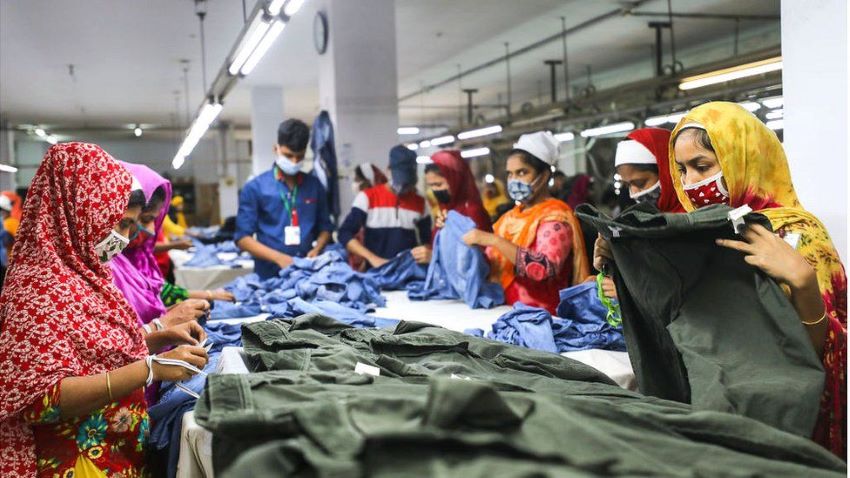
In Bangladesh, employment opportunities, climate change, natural disasters, and marriage are key triggers for migration movements from the rural to the urban sector. Dhaka and Chattogram are the destinations of 80 per cent of the country’s internal migrants. However, lack of awareness about labor standards and ethical recruitment practices are among the factors that exacerbate the vulnerabilities of migrant workers. These workers are at risk due to lack of awareness and limited capacity to implement appropriate corporate policies and management systems also contribute to vulnerabilities of workers.
Bangladesh is the world’s third largest exporter of clothing, Asia’s third in commercial services and recently an important player in the export of agricultural goods. Bangladesh has a significant market opportunity for businesses to secure their connection to a global market where the legalization of corporate responsibility, including ethical recruitment, is increasingly becoming mandatory. If Bangladesh ensures sustainable sourcing and ethical recruitment, it will increase the country’s competitiveness. There is a need to follow labor laws and promote a sustainable business model which has a good supply chain. Labor intensive business models inadvertently expose companies and workers to risks due to limited transparency in recruitment, employment and working conditions as well as migration processes.
Morocco to host Maroc in October
Maroc will be held in Morocco from October 17 to 18, 2019. The show will be segmented into five categories: fast fashion, denim, jersey/knit/lingerie, sportswear/leisure wear/technical garments, and leather/shoes. The fair offers a comprehensive overview of the Moroccan textile and garment industry from fast fashion to high-quality production of trend peaks up to offers of sustainably produced collections. The sourcing show will host 200 suppliers and 1500 attendees. The fair program will be supplemented by special B2B meetings and conferences, which deal with current production topics.
Trade uncertainty is provoking brands and retailers to re-examine their supply chains, prompting the show’s organizers to center its conference programming around the benefits to be had with closer-to-home operations. Morocco will be highlighted as one such solution, with its specialties, including knits, denim and technical textiles. The region’s infrastructure has grown thanks to an influx of foreign investments. The country consists of more than 1600 companies and over 1,90,000 garment workers. Morocco is being promoted as an attractive sourcing destination because of its close proximity to Europe and shorter delivery routes, lower ecological impact, stable political and social environments, and duty-free EU agreements. The promise of nearshoring has piqued the interest of apparel and textile companies.
Hong Kong-based garment maker Lever Style gets pragmatic about tariffs
Amid the protracted and unpredictable trade war between the US and China, a Hong Kong -based garment maker is looking to spread out its supply chain risks rather than simply move its production base out of China.
Lever Style will continue to hedge its bets and is looking at a lot more countries to spread its geopolitical risks and also cost inflation. It is constantly evaluating and seeing what’s the best combination that gives it cost effectiveness as well as agility.
Lever Style used to manufacture all its products in China a decade ago but has since moved much of its production out of the country due to rising costs. Now, the company produces in countries such as Vietnam, Cambodia and Indonesia. Lever Style is also trying to change the way it’s managed as a factory, such as by working with production partners around the region instead of going it alone. The company’s clients include fashion labels such as Coach and Paul Smith. However, garment manufacturing is labor intensive — one factor that could limit the business’ flexibility. The more labor intensive things are, the harder it is to just spread things around too much.
The US and China have imposed new tariffs on each other’s goods, intensifying a long-drawn trade dispute between the world’s two largest economies.
Egypt’s cotton exports increase 218.8 per cent in Q3 2018-19
The Central Agency for Public Mobilisation and Statistics (CAPMAS) says, Egyptian cotton exports increased by 218.8 per cent to 510,200 metric quintals during the third quarter of the agricultural season 2018-2019 from the corresponding period of the previous season.
In the quarterly bulletin of cotton for the third quarter of the agricultural season 2018/19, the consumption of local cotton reached 38,000 metric quintals compared to 39,200 metric quintals during the same period of the preceding year registering a decrease of 3 percent, because some spinning mills ceased production.
The total quantity of cotton ginned equaled 382,600 metric quintals during the above-mentioned period, compared to 47,700 metric quintals during the previous period, an increase of 701.8 percent thanks to the cotton production increase.
Egyptian cotton production is on course to rebound with help from a devalued currency and bigger cultivation area, recovering from a slide in exports of the world-famous crop since 2011 that was caused by a drop in quality.
India to increase MSME export share to 50 per cent
The Minister of MSME, Nitin Gadkari has announced that the share of MSME exports in the country will be raised to 50 per cent and sector’s gross domestic product (GDP) also to 50 per cent in the next five years. The ministry will also create 5 crore jobs in the next five years.
The minister was addressing a business summit titled ‘Globalising the Brand Khadi: The Pride of India’, organised by the Confederation of Indian Industry (CII) in Mumbai.
Calling upon enterprising people in the private sector to come forward to promote khadi, the ministry stated that the khadi sector needs to be strengthened and its turnover needs to be raised further. He also launched Tech Saksham, a CII Tech Project, aimed at accelerating MSME growth through technology enablement. CII Tech-Saksham for MSMEs, a MSME ministry-CII project, brings together technology majors Dell Technologies India, HP India, Intel India, Vodafone Idea, WhatsApp India and Yes Bank to address technological gaps faced by MSMEs in their growth.
India’s cotton textiles exports down 24 per cent
India’s exports of cotton textiles fell 24 per cent during April to July, 2019. This has led to a crisis-like situation in spinning industry. In fact, monthly exports of cotton yarn are at a five-year-low. Exports to major markets such as China have halved, and exports to Bangladesh and Korea have fallen 38 per cent and 45 per cent.
Competing countries are gaining access to various markets such as China, South Korea and Turkey, mainly on account of the preferential access given to them by the importing countries, leading to a further erosion of India’s market share. While Vietnam has increased cotton yarn exports to China by 17 per cent during the last four months, India’s share declined 16 per cent in the same period. In view of the sharp decline, many production units are shutting down and need urgent policy support. The industry wants the three per cent interest equalisation to be extended to cotton yarn since this is expected to help the cotton yarn sector and the spinning industry to minimise their losses and regain their competitiveness.
However, made-ups and garment exports are recording a positive growth mainly on account of the Rebate of State and Central Taxes and Levies scheme.
Closures hit Indian cotton spinning mills
Thousands of Indian cotton spinning mills have shut shop in the past three months. The average realization from cotton yarn has fallen six per cent in the quarter between April 2019 and June 2019. The decline in average realisation has put a question mark on the survival of cotton spinning mills, with increasing fixed costs such as labor, interest on working capital, land, plant and machinery adding to their woes. Recovery in overall sentiment is not in sight resulting in closure of many small and medium size mills and rendering thousands of workers jobless.
One reason is the decline in exports following a weak global demand. A sharp and precipitous decline, especially in cotton yarn during the last four months, by about 35 per cent, has led to a crisis situation in the spinning industry. Cotton yarn exports to China declined by 50 per cent and Bangladesh by 38 per cent and Korea by 45 per cent.
In view of the sharp decline in exports, the spinning sector is in a very critical situation. Exports of cotton textiles continued their downward spiral, declining by 24.5 per cent during April to July. During the first three weeks of August, overall cotton textile exports declined by a staggering 25 per cent.
Bangladesh machinery imports down 11 per cent
Bangladesh’s garment and textile machinery imports fell 11.04 per cent in the last fiscal year. Overall imports of capital machinery fell by 9.43 per cent. Imports of textile machinery fell 18.40 per cent while garment machinery imports plunged 3.52 per cent.
The absence of new investment and a downtrend in private credit growth caused by a crisis in the banking sector dragged down imports of capital machinery. Since no significant change took place in innovation, there was no capacity expansion in the apparel industry. In addition, the production cost rose significantly, especially after the increase in minimum wages in 2018. This rise in the production cost has impelled apparel makers to instead import yarn and fabrics. Also, the crisis in the banking sector created a cash crunch, hindering new investments. Deepening problems in the country’s financial sector hindered private investment for new projects or expansion. Businesses are wary about expansion as they already have unused capacity. A huge amount of fabrics and yarn has remained piled up at warehouses in the country’s primary textile sector. Election uncertainty was another reason for the slower private investment. Investors were cautious about opening new letters of credit to import machinery for new investment fearing it would delay the implementation of projects.
Private investment to GDP has been hovering between 22 per cent and 23.4 per cent for the last decade.
Brands add a personal touch to their digital operations
"The invasion of technology is reinventing the fashion world with customers moving away from brick and mortar stores to online shopping. However, the luxury fashion sector has, until now, remained immune to this change as here the experience of shopping in opulent boutiques is almost as important for customers as the clothes themselves. Therefore, for most luxury brands, going digital is just an effective way to add value to their business and communicate with their global market."
 The invasion of technology is reinventing the fashion world with customers moving away from brick and mortar stores to online shopping. However, the luxury fashion sector has, until now, remained immune to this change as here the experience of shopping in opulent boutiques is almost as important for customers as the clothes themselves. Therefore, for most luxury brands, going digital is just an effective way to add value to their business and communicate with their global market.
A case in point is the Thailand-based firm Club21, a distributor of luxury fashion brands such as Alexander Wang, AX Armani Exchange, Bao Bao Issey Miyake, Comme des Garcons, DKNY, Diesel, Emporio Armani, Marni, Mulberry, Pleats Please Issey Miyake, Paul Smith and Stella McCartney. The company, which has been successfully operating for four decades under the banner Club21 Asia, has always emphasised building long-term relationships with its clients through its brand trust and services.
Applying the 3C’s to attract more customers
For projecting a consistent positive image, the company applies the principle of 3Cs. Of these, the first ‘C’ stands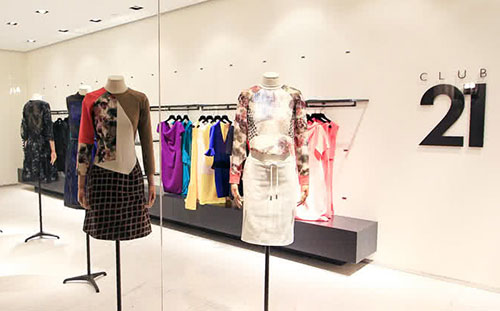 for communication. The company ensures effective communications with its clients through its online operations. It also has a presence on other social media tools such as Facebook, Instagram, YouTube, etc.
The second ‘C’ stands for Commerce. The company enables its customers to solve their queries regarding the nature of its products and their prices. For this it has started @line where the customers can leave messages even when the shops are closed. The customer service team forwards this message to the listed brands who send the pictures of their products with prices to the service teams. This service team then passes on the information to the customer.
Once a customer decides to purchase the product, the company organises for its free delivery, thus applying the third principle of offering convenience to its customers. This is the main reason the overall return rates for online purchases from the company are considerably lower than the standard 30 per cent.
Personalised attention ensures brand loyalty
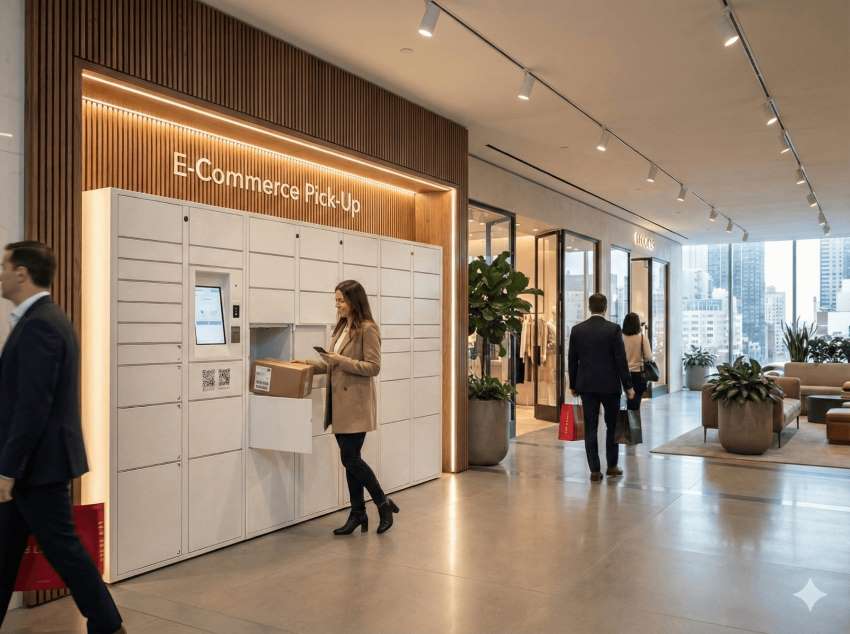
Like Club21, Pacifica Group provides its customers human interaction or personalised services that make them feel comfortable when they shop. The company ensures delivery of its products to its customers irrespective of their locations. For this, the company uses its e-commerce operations. For instance, if a customer who visits the company’s store at CentralWorld but doesn’t find a particular garment in her size, the company finds and delivers it to her. It is also uses courier mode of delivery as it ensures that the delivery reaches its customers safely besides providing them a personalized experience.