FW
India: CITI elects new office bearers
T. Rajkumar is the new Chairman of the Confederation of Indian Textile Industry. He heads Sri Mahasakthi Mills, Sri Arumuga Enterprise and Foundation One Infrastructures. He is also the Chairman of the Textile Sector Skill council and past chairman of Southern India Mills’ Association apart from being actively involved in various industrial bodies and educational institutions.
DL Sharma is the new Deputy Chairman of CITI. He is the director of Vardhman Textiles and managing director of Vardhman Yarns and Threads. He was president of the Ludhiana Management Association.
SK Khandelia is new Vice Chairman. He is the president and CEO of Sutlej Textiles and Industries. He is a chartered accountant. Through a steady application of forward thinking and a resilient strategy, he has been able to optimize Sutlej’s performance in terms of volume and profitability, which rose sharply after his takeover. Khandelia is actively involved in many industry associations and has been instrumental in initiating and implementing various philanthropic and welfare activities in his personal capacity as well as under the Corporate Social Responsibility.
Confederation of Indian Textile Industry is one of the leading industry chambers of the textile and clothing industry, representing the entire textile value chain through its leading regional and industry associations and 18 major corporate members.
Chinese fabric mills face falling orders
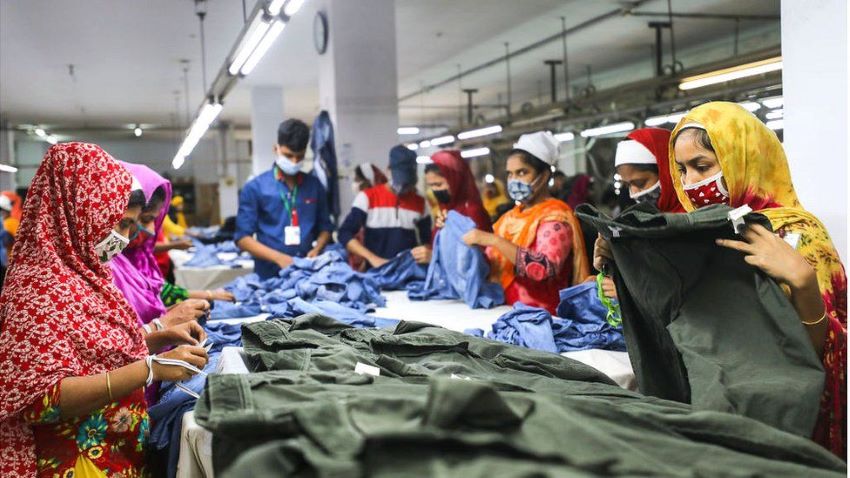
In the first half of 2019 fabric mills in China faced a decrease in orders.At the same time inventory levels remained high. So weavers had to cut or halt production. From mid to late August, the market showed signs of recovery. Enquiries and orders slightly increased compared to those in the earlier stages, but overall shipments were still limited. Sampling orders of knitting factories increased, and the overall operating rate recovered by 50 per cent or so. In September, some actual orders came in and shipments of weavers also increased slightly. However, the price continued to be weak. Dyeing mills gradually got busy, but there was still a lull compared to previous years.
In early September, with the implementation of actual orders and as weavers gave discounts regardless of cost, the inventory burden eased. But current cotton stocks were still higher than those in the same period last year. Fabric mills will be dominated by selling stocks in September. In addition, due to the long-term impact of the Sino-US trade war, some orders shifted to southeast Asian countries. In addition to the increased downward pressure on the economy, order recovery in September is not expected to be as good as in previous years and may be weaker than market expectations.
H&M’s Global Change Award to prop up startling innovations
The Global Change Award is an attempt to move the needle in a space where global consumption of textiles and shoes is on track to increase by 65 per cent by 2030.
The belief is that creativity and innovation can flip numbers in the planet’s favor and enable great transformation in the fashion industry. The Global Change Award was initiated in 2015 by the H&M Foundation. In its fifth edition the award has received more than 14,000 entries from 182 countries. Named the Nobel Prize of fashion, it aims to reduce fashion’s impact on the planet by helping groundbreaking ideas move from tissue sketch to market. The award’s aim is to inspire a new generation of creatives, scientists and entrepreneurs to reduce the planetary impact of the fashion industry through innovation.
To win, the innovation should have the potential to make fashion circular and to scale. Other criteria are a novelty, that the idea is economically sustainable, and that the innovation team is committed to making a difference and that the innovation should allow for major change in the entire industry. Several of the previous winners have on-going co-operations and pilot projects with the industry, and some are already on the market.
Bangladesh leather exports inch up
Bangladesh’s leather and leather products exports increased by 1.32 per cent in July to August of the current financial year. Exports of leather and leather goods from Bangladesh rebounded after more than two years due to higher shipments to non-traditional markets. Traditional markets are South Korea, China, European Union, US and Canada. Non-traditional ones are South Africa, India, Australia, Spain, Japan and Singapore. Moreover, the value addition to leather products was another reason behind the positive export trend. Work orders are expected to further increase after a certification is attained from the global rights body Labor Working Group. The LWG certification is awarded to companies based on points awarded for factors such as treatment and less use of water, solid waste management, chemical use and labor welfare.
The leather industry in Bangladesh has been struggling due to lack of new investment, lack of product variety, artificial leather penetration, and price hike of leather products. The US-China trade war is also blamed for the slump. China used to import raw hide and process it further to make raw material. Since the US imposed a 25 per cent tariff on a Chinese products entering the US market, including leather, China has stopped taking raw hide from Bangladesh.
UK’s leading arc flash protection specialist launches new socks range
ProGARM, the UK’s leading specialist in arc flash protection, has launched a new socks range, designed to enhance the safety of workers who work around high and low voltage electricity.The new range, made from inherently flame-resistant material, includes heavy weight socks, designed to be worn beneath work boots, as well as compression socks, which feature medical benefits, such as improved circulation to reduce tiredness in the legs and preventing conditions such as DVT, as well as a silver anti-bacterial finish to reduce odour and bacterial spread.
As a part of its ongoing commitment to safety and industry innovation, ProGARM has identified key areas that pose a risk to workers and have been developing a comprehensive range of base layers, including tops, leggings, underwear and socks, which offers the wearer the ultimate level of protection without obstructing day to day tasks.
Miles Johnson and IskoTM collaborate for a new collection
Leading denim brand, IskoTM has collaborated with renowned British fashion designer Miles Johnson to create a visionary collection that showcases the Isko R-TwoTM program.
The collection is made from a combination of reused and recycled materials. It uses cotton from IskoTM’s own production facilities, which is combined with recycled polyester derived from PET bottles. The resultant fabrics are certified with RCS (Recycled Claim Standard) certification or GRS (Global Recycled Standard) certification depending on their content.
The entire collection is made using low impact materials and responsible finishing techniques. Miles and the IskoTM teams have carefully crafted these 34 designs at the Creative RoomTM in Italy. The styles incorporate responsible design principles which include minimal washing; removable trims made of eco-metal; natural based buttons and labels; green bar tacks; embroidered rivets.
BFC to honor Giorgio Armani with Outstanding Achievement Award
The British Fashion Council (BFC) will award designer Giorgio Armani with the Outstanding Achievement Award at The Fashion Awards 2019, to be held on December 2, 2019 at the Royal Albert Hall, London. Armani will be awarded for his outstanding contribution to the global fashion industry, creativity, timeless style and attention to detail that has inspired many budding designers.
Since the establishment of his brand, Armani has designed costumes for over 200 films, starting with American Gigolo in 1980, as well as the official uniform for the English football team in 2006 and the uniforms for the Italian Olympic and Paralympic teams since 2012. The designer released his first fragrance in 1982 and his first home collection in 2000. In 2005, Armani launched his Haute Couture collection in Paris. In 2010, he opened the first Armani Hotel in Dubai followed by another one Milan in 2011.
The Outstanding Achievement Award celebrates the overwhelming creative contribution of individuals to the fashion industry, who throughout their illustrious career have constantly shaped and reshaped the fashion world through their innovation and creativity. Previous winners of the award include: Miuccia Prada, Ralph Lauren KBE, Karl Lagerfeld, Dame Anna Wintour, Terry and Tricia Jones and Manolo Blahnik CBE.
Chinese fashion comes of age as preference for local brands grows
"China, once known as the hotbed for cheap imitations of world-class designers, now prides itself for string of local brands such as Ms Min, Ming Ma and Angel Chen. These young designers, educated at the prestigious schools like the London College of Fashion and Central Saint Martin are challenging Western brands on quality and design. These homegrown Chinese designers are also reaching out to everyday shoppers in department stores across the country, while affordable fashion lines are venturing overseas with the help of trendy designs and online influencers."
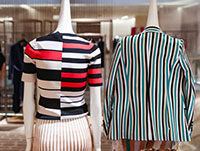 China, once known as the hotbed for cheap imitations of world-class designers, now prides itself for string of local brands such as Ms Min, Ming Ma and Angel Chen. These young designers, educated at the prestigious schools like the London College of Fashion and Central Saint Martin are challenging Western brands on quality and design. These homegrown Chinese designers are also reaching out to everyday shoppers in department stores across the country, while affordable fashion lines are venturing overseas with the help of trendy designs and online influencers.
The rise of these designers -from affordable to high end -is adding to the pressure faced by the international brands as domestic brands are using their authenticity to tell brand stories.
Growing appreciation for local designs
Chinese President Xi Jinping's effort to trump up national pride has sparked an appreciation amongst young consumers for local designs. A recent research by Ruder Finn and CSG noted, nearly 45 per cent Chinese consumers expressed their intentions to buy more domestic fashion brands in future. These brands are gaining popularity even at the Lane Crawford department store in Shanghai.
One such brand Icicle had to initially lower its prices to entice young people fresh out of school. However, as fashion courses started taking off at the Chinese Universities, the company benefited from the country’s expanding consumer market and has now established 260 stores across China. It also generates an annual operating income of 1.3 billion yuan ($188 million). In future, the company plans to upgrade its luxury offerings, which currently include T-shirts priced at about 700 yuan and a 40,000 yuan cashmere coat. In 2012, the company set up a design office in Paris to attract European talent, and last year, it acquired French brand Carven for $7.4 million.
With stores across China, Icicle now eyes the international market. The brand plans to open a flagship in Paris this September, followed by outlets elsewhere in France. According to Shouzeng Ye, Chairman of the company, quality is the key to competing with international brands like MaxMara and Burberry. The company has factories with skilled workers near Shanghai. It has also acquired sewing and knitting factories owned by foreign companies who were struggling to make profit.
Another factor Chinese brands need to consider while competing with the European brands is volume of sales. These brands need to generate about $550 million in sales to reach a comparable level to European brands.
Focusing on the middle class
While Icicle aims to target luxury shoppers, its compatriot S Deer plans to focus on the middle class customer who spend upto $70 on an average, though some items can cost over $100. Based in Nanjing, S Deer was founded in 1994 by former architect Cai Gonghe. The brand has 1,300 outlets in China, offering design oriented clothing with pleats, rough materials and embroidery. It also has three stores in Paris. It is likely to take customers away from top luxury brands towards cheaper fast fashion brands.
Though Western brands are still popular in China, consumers are emphasising more on their product’s design and quality rather than brand name. Consumers feel, local brands can balance quality and price in a better way besides increasing its sales.
Chinese brands target Western markets
However, this is also creating a stiff competition amongst the local and international brands in the Chinese market. To counter this, many Chinese brands are focusing on Western markets through a combination of online marketing and affordability. These brands are also leveraging China's supply chain to shorten their production cycles and keep up with latest trends. Shein, a Nanjing-based fast fashion e-tailer that sells exclusively to overseas markets, boasts of millions of followers on its main account on Instagram, triple that of Japan's Uniqlo.
The company, whose products sell mostly under $20 and sometimes as low as $5, has amassed 50 million customers worldwide from 224 countries. Revenue surpassed 10 billion yuan (about $1.5 billion) in 2018 -- nearly half of that of American clothing chain Urban Outfitters -just two years after hitting the 1 billion yuan mark in 2016.
A 2018 survey by consultancy PwC Lopez shows, Chinese consumers are being inspired by social media in their purchases. Globalegrow E-Commerce, the Chinese company behind Shein rivals Zaful and Rosegal, reported sales over 10 billion yuan last year. These brands are also embarking on international expansion plans just as Alibaba has announced plans to expand its partnership with New York Fashion Week to promote top and emerging Chinese designers.
However, these are just a few cases. In last 10 years, the Chinese market has been witnessing a reverse trend with aspiring Chinese fashion designers being content to stay home.
US show targets supply chain
Summer Market Outdoor Retailer was held in the US in June 2019. This is North America’s largest trade show on the outdoor industry, drawing attendees from around the world. Summer Market is all about face-to-face—it’s where products are shown, orders are written, new accounts are found, connections are made and brands are launched. This show is about buying, sourcing, strategic meetings, trend, education and networking with decision makers, influencers, stakeholders, key buyers and athletes that influence the outdoor market. On display were an array of new developments targeting the apparel supply chain.The show is a great opportunity to connect with outdoor brands. A lot of them have sustainability and chemistry programs. There is concern about chemicals and how they show up in products.
Cordura showed its softer side. The brand has traditionally been known in bags, packs and luggage but in recent years has come out with an extensive collection of blends with natural fibers and a wide range of knits and knits that are blended with cotton. Cordura has a strong portfolio of not only mills but fabrics from those mills that focus on the softer side of durability. For Unifi, Outdoor Retailer was a great platform on which to launch new products.
US knit fabric revenue up two per cent
In 2018, the revenue of US knit fabric rose 2.6 per cent.US knit fabric production in 2018 rose 2.4 per cent against the previous year. Knit fabrics exports from the US declined 5.9 per cent against the previous year. In general, knit fabric exports continue to indicate a dramatic slump. Nicaragua, Honduras and Guatemala are the main destinations of knit fabric from the US they together account for 50 per cent of total US knit fabric exports. Mexico, France, El Salvador, the Dominican Republic, Colombia, Australia, Chile and China together account for a further 33 per cent. From 2013 to 2018, the most notable rate of growth in terms of exports, among the main countries of destination, was Australia. In value terms, Honduras, Nicaragua and Mexico are the largest markets for knit fabric exports from the US, with a combined 43 per cent share. These countries are followed by Guatemala, El Salvador, Colombia, the Dominican Republic, Australia, France, China and Chile, which together account for a further 35 per cent.
Over the last five years, the average knit fabric export price has increased at an average annual rate of 8.8 per cent. The growth pace was the most rapid in 2014 when the average export price increased by 22 per cent.