FW
Phytogen renews partnership with Cotton Incorporated’s recycling program
Building on a successful first year, PhytoGen, the U.S. cottonseed brand of Corteva Agriscience, will renew its partnership with Cotton Incorporated’s Blue Jeans Go Green denim recycling program for 2020. PhytoGen will organise denim collection drives at industry events across the cotton belt to help promote sustainability and reduce textile waste.
In early 2019, PhytoGen became the first cottonseed company to collaborate with the Blue Jeans Go Green program, an initiative that upcycles denim garments into premium housing insulation and keeps denim out of landfills. PhytoGen collected 7,412 items through donation drives at cotton industry events and company locations in 2019.
Local FFA and 4-H chapters participated by collecting denim in their communities. PhytoGen presented $1,500 to the chapters donating the most denim items at each PhytoGen Blue Jeans Go Green program drive. The winning chapters were Star City FFA (Arkansas), Olton FFA (Texas), Thomas County Middle FFA (Georgia) and La Paz 4-H (Arizona).
In 2020, PhytoGen will hold denim collection drives at the Mid-South Farm & Gin Show, the Texas Cotton Ginners’ Show and the Desert Ag Conference. Prizes will be awarded to the winning FFA or 4-H chapter at each location. But anyone is welcome to participate and drop off denim during the three events.
Tukatech opens new centre in Bengaluru
Tukatech has opened its new TUK Acentre in Bengaluru, India that will bring start-up companies, e-commerce companies, brands, and supply chains on the same platform. The one-stop centre will offer services such as plotting, pattern making, grading, marker making, and sample making, and through to cut and sew and supply chain guidance. Its five-storey building designed for collaboration or private meetings will offer desks and private meeting spaces.
Designed in collaboration with Jagdish Chawla, founder of Design Wolf Studio, this unique centre goes beyond a full-service facility. Fashion professionals can take advantage of apparel CAD, 3D virtual sampling, sample cutting, and sewing. A communal micro-factory concept will assist in the production of small runs.
Tukatech is the garment and apparel industry’s leading provider of end-to-end fashion technology solutions. The TUK Acentres offer a complete array of services for fashion design and development, and the most-advanced fashion technology and industry knowledge for any type of apparel customer.
Brazilian project to strengthen organic cotton production in seven states
The new Brazilian initiative, ‘Cotton in Organic Farming Consortium’ will aid approximately 800 farming families by strengthening organic cotton production in seven Brazil states over the next two years.
The initiative is supported by the C&A Foundation along with the NGO Diaconia, Embrapa Algodão and the Fedeal University of Sergipe (UFS). It aims to reinforce the management of the Participatory Conformity Assessment Bodies (OPACs) - associations representing the families of farmers certified to issue the organic product seal.
Though cotton is the fiber most used in the fashion industry, less than 0.1 per cent of Brazilian cotton is organic. Organic cotton does not require toxic chemicals, does not damage the soil, and has a lower impact on the air and uses 71 per cent less water and 62 per cent less energy.
As cotton farming is an important source of income for producers in these regions, the transition from conventional cotton to organic farming is an opportunity to improve the lives of the farmers in Brazil.
New Popeye apparel collection unveiled at the Milano Fashion Week
Benetton Group and King Features unveiled the new Popeye x Benetton collection at the Milano Fashion week.
The collection is set to launch February 2020. It will be launched as a part of the spring/summer 2020 apparel collaboration featuring the cartoon sailorman.
In addition to Popeye being featured in United Colors of Benetton's spring/summer 2020 collection, the eco-friendly brand has also enlisted Popeye to serve as its environmental ‘green’ ambassador. His image will be put on various apparel pieces aimed at helping support work to protect the oceans. It will appear on t-shirts, dresses and sweatshirts in a variety of digital prints.
This is Popeye’s 90th anniversary. To honor the milestone, it has also been included in various licensing deals including a shaving line partnership.
Levi Strauss & Co. grants $380,000 to fellowship program
Levi Strauss & Co. (LS & Co.) is granting more than $380,000 to the second class of the brand’s fellowship program known as Collaboratory. The funding will be used for developing new approaches and innovations in the apparel supply chain that will address issues related to climate change. The projects of the Collaboratory include rescuing excess fabrics to create beautiful clothes designed by award-winning sustainable designers, creating a data platform for garment factories and textile waste recyclers for end-to-end trading and tracing, and reinventing the way goods are sent and received.
The Collaboratory is a fellowship program for social entrepreneurs who see design and sustainability as inextricably linked, and are working to create a more sustainable apparel industry. The program tackles different social and environmental sustainability challenges that are critically important to the future of the apparel industry and the planet. The first Collaboratory class focused on water. This class focused on climate change.
This class of Collaboratory fellows attended a weekend workshop at the company’s Eureka Innovation Lab, where they had the unique opportunity to work through ideas and challenges with its leaders, mentors, and sustainability and apparel industry experts, as they developed concrete, tangible plans for reducing their organisation’s, and the industry’s, climate impact.
Following the Collaboratory workshop weekend, they submitted project proposals focused on innovative and impactful solutions tied to climate change, with the opportunity to receive funding from LS&Co to implement their solutions. The ideas selected represent bold, cutting-edge ideas from leaders who represent the future of the apparel industry.
Brodelec installs first Kornit Digital Presto S system
France-based Brodelec has installed the country’s first-ever Kornit Digital Presto S system for roll-to-roll, pigment-based digital textile printing. This installation will enable the multiservice marking brand to expand its business further into customised décor and on-demand fashion.
Brodelec has partnered with Kornit for over a decade and owns several direct-to-garment print systems. Based on the demand for natural fabrics and blends in the home décor and fashion markets, the brand is now expanding its offerings to include bespoke direct-to-fabric services. Brodelec chose the Kornit Presto S as it is the only single-step solution and the fastest route from design to finished product which makes it the most efficient and eco-friendly fabric printing solution in France today.
The Kornit Presto solution provides high-quality printing for a multitude of fabric types and applications, using a single ink set. The system does not consume water in the printing process which minimises its carbon footprint.
The new Kornit Presto uses the versatile NeoPigment™ Robusto ink set, which provides superior wash and rub results, and exceptional color fastness with significantly shorter curing time and wider color gamut relative to previous and competitive digital pigment inks. Reflecting Kornit’s vigorous commitment to sustainability, Robusto inks are OEKO-TEX® Eco Passport and GOTS certified.
Kornit partners closely with Must Technologies to provide the French textile and garment industries with the latest innovations in digital printing.
Entreprenuer Marci Zaroff launches new GOTS certified luxury lifestyle brand
Internationally acclaimed "ECOlifestyle" visionary, entrepreneur and author Marci Zaroff has launched a new GOTS certified organic cotton, luxury lifestyle brand Farm to Home®
From fiber to finished product, Farm to Home is fully transparent and adheres to the high level of organic certification from the notable Global Organic Textile Standard (GOTS). The modern home collection is GOTS certified as no harmful chemicals while offering superb quality, GOTS certified as sustainable agriculture and affordability.
Farm to Home fuses modern design with high-quality and a commitment to organic products. The collection includes organic sheet sets, organic reversible quilted comfy-lets & shams, organic bath towel sets, organic throws, pillow sets and organic Robes.
Lectra unveils Industry 4.0 solutions at CISMA
Lectra unveiled its flagship Industry 4.0 solutions — Fashion On Demand by Lectra and Furniture On Demand by Lectra—as well as the new Vector Automotive iP9 fabric-cutting solution for automotive seating and interiors at the 2019 edition of the China International Sewing Machinery and Accessories (CISMA) exhibition in Shanghai.
These pioneering solutions automate the complete process from order processing to fabric cutting. Suited to the respective needs of each industry, the two solutions comprise Lectra’s Digital Cutting Platform and single-ply fabric cutting solution Virga®. They allow users to manage their workflow seamlessly for both small series and customised order production. This enables manufacturers to readily switch from mass-production to small-batch runs, as well as optimise the product personalisation process in the cutting room.
As fabric can account for up to 60-70 per cent of garment costs, Lectra has released additional versions of its cloud applications, to help fashion manufacturers in Asia make more informed development and bidding decisions. Quick Estimate generates fabric consumption simulations in seconds for accurate profitability projections throughout product development. During the RFQ process, Quick Nest marker-making software makes it possible to win new contracts by responding faster, with competitive pricing. Quick Nest furthermore brings speed and agility to production through parallel processing of marker lists.
CISMA 2019 also presented an opportune occasion for Lectra to reveal its new Vector Automotive iP9 fabric-cutting solution. It is the first solution on the market to enable zero-buffer cutting on a wide variety of materials. For automotive suppliers, this amounts to hundreds of thousands of dollars in material savings annually when compared to other solutions, an increasingly important pathway to operational excellence.
Brands step their sustainability efforts as consumer pressure mounts
"Consumers across the globe are raising their voice against the inaction of brands and governments on climate change. Protest of young consumers, led by teen activists like Greta Thunberg, is compelling companies to embrace sustainability. Various clothing brands are adopting sustainability by using eco-friendly fabrics like organic cotton. They are also reusing previous collections, abolishing the use of animal fur and sourcing their clothes more ethically."
 Consumers across the globe are raising their voice against the inaction of brands and governments on climate change. Protest of young consumers, led by teen activists like Greta Thunberg, is compelling companies to embrace sustainability. Various clothing brands are adopting sustainability by using eco-friendly fabrics like organic cotton. They are also reusing previous collections, abolishing the use of animal fur and sourcing their clothes more ethically.
Riding the green wave
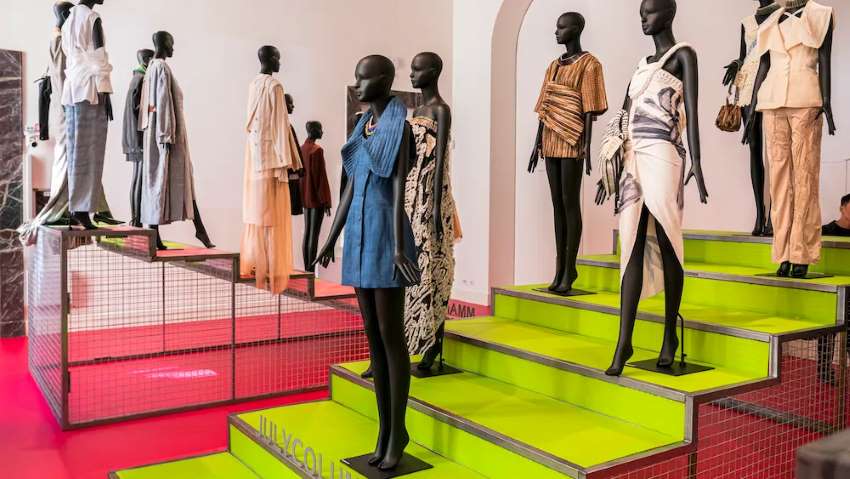
Catwalks at fashion events across the world are going green. The recent Milan Fashion Show showcased the Spring/Summer 2020 collection of United Colors of Benetton based on the theme of sea, water and sailing. Popeye the Sailor Man served as the “green” ambassador of this collection. The collection also showcased a trench coat made of paper and recycled fibers besides talking about the non-toxic natural dyes it uses.
Measurement company Nielsen is also riding the green wave with its sales of sustainable products growing by 20 per cent since 2014. For other apparel retailers such as Marks & Spencers sustainability has become the new style statement. The brand has been using Tencel fibers for its various categories like denims, tops and innerwear. These fibers are naturally wrinkle-resistant and biodegradable. They are also softer than silk, more absorbent than cotton and cooler than linen.
Closer home W, the women’s apparel brand recently launched its spring summer collection in association with Livaeco, the fashion fabric brand of the Aditya Birla group. The brand believes that this association can play a great role in contributing towards a sustainable future and help the brand to convert its goals to sustainable results. The brand has also tailored the ‘Yolo Dress’ which uses fibers that reduce carbon footprint.
Another brand that has adopted a sustainable approach to fashion is Numero Uno. The brand recently launched a new denim range known as ‘one glass water denims.’ These denims use a sustainable washing and finishing process that reduce their water and chemical consumption significantly. Narinder Singh, CMD, Numero Uno believes this process will help in reducing its reducing he harmful impact of the collection on the environment.
Meanwhile land filling culture is changing as consumers across the world now prefer to repair their damaged clothes instead of throwing them away. This shift is leading brands to respond accordingly. Marks & Spencer initiated a yearly clothes exchange program that urges customers to return their old apparel. For their every return, customers get Rs 600 voucher which they can be use for their next purchase.
Rewards for embracing sustainability
Brands are also rewarding consumers for their sustainable behaviors. Liva, from the house of Aditya Birla, has launched plantable green tag to instill awareness amongst its consumers about sustainable fashion. This tag is created using seed paper made from recycled biodegradable fibres. Post soaking in water for 5-6 hours, it can be sowed in soil.
South Korean cosmetics brand Innisfree has launched an eco-handkerchief to curtail the use tissues. This will help the brand save trees, protect forests and reduce global warming. Cosmetics retailer Kielh’s has launched a ‘recycle and get rewarded’ program which offers a stamp with each of its products. A customer who collects 10 stamps is rewarded by the brand.
Turkish machinery show in June
ITM will be held in Turkey, June 2 to 6, 2020. This is a trade fair for textile machinery and a venue for the launch of new ideas and new technologies. Held every two years, the trade fair enables participants from all over the world to collaborate and helps bring European and Asian suppliers and buyers together. It offers companies an opportunity to introduce their latest developments to a global audience. ITM 2020 is expecting to set new records in terms of the number of exhibitors and visitors. In 2018, the show hosted 1,150 exhibitors from 64 countries, registering a 20 per cent increase in country diversity compared to the previous fair in 2016. Delegations from Iran, Uzbekistan, Pakistan, Egypt, Morocco, Algeria, Panama, Czech Republic and Russia visited the show. ITM has become a brand in Turkey, both by bringing together all the players in the industry and allowing the country to keep up with the new technologies in machinery.
For Turkey 2018 was a historical year for exports, in spite of the trade wars, Brexit, rising populism and regional conflicts. Exports reached $168 billion. Target markets for 2019 include Africa as well as the South American and Asian markets.