FW
Filo plans 55th edition despite COVID-19 uncertainties
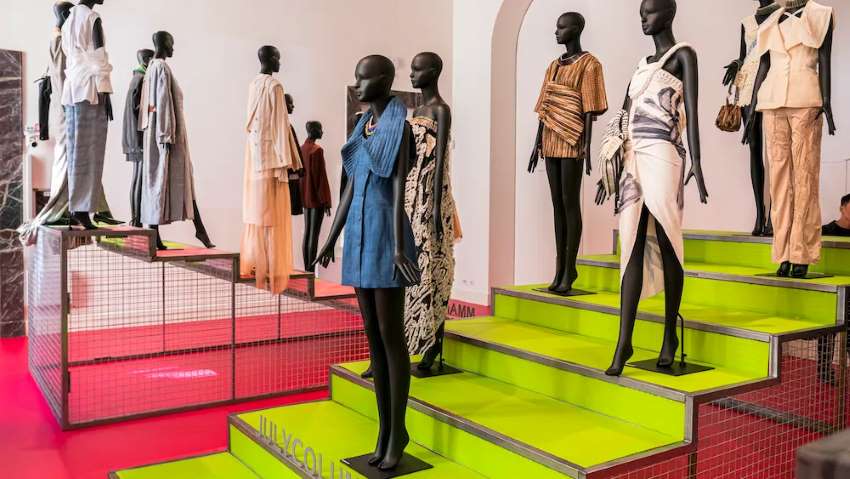
Despite uncertainties related to the resurgence of COVID-19, international b2b yarns and fabrics show Filo is planning its 55th edition, scheduled from February 24-25, 2021 at MiCo – Milan Convention Centre.
The exhibition will present product development proposals through a webinar in December. The webinar will enable Filo to reach, at one time and in a simple, efficient and quick way, all those people who are interested in participating, in Italy and abroad, from exhibitors to style department officers and journalists.
Filo is the only international trade show focusing on products of excellence; a business platform where are on show high quality collections of yarns and fibres, produced by environmentally-friendly processes, and in accordance with ethical values.
This edition will make available a digital version of the Exhibitors Guide Book on line at Filo website. The Guide Book will help visitors plan advance meetings with the most suitable firms and to exhibiting companies to get even more visibility.
EU threatens US with more tariffs over Boeing dispute
The European Union (EU) has threatened to increase tariffs on US exports amidst trade tensions centering aircraft manufacturer Boeing, reports Sourcing Journal. The EU is exercising its legal rights under the WTO’s decision, but has called upon the US to agree to both sides abandoning their respective countermeasures immediately
In 2019, US had imposed duties worth $7.5 billion on EU products as the result of a World Trade Organization arbitration decision that ruled in favor of the US and American aircraft manufacturer Boeing. At the time, the WTO confirmed U.S. lawmakers’ charges that European multinational aerospace corporation Airbus, a direct competitor, benefitted unfairly from subsidies, negatively impacting Boeing’s business. Legislators moved swiftly to impose tariffs on EU goods that would pay down the damages.
In September, though, the WTO granted the EU and Airbus license to hit back, giving the green light to impose tariffs on U.S.-made goods worth $4 billion. On Oct. 26, the intergovernmental trade organization formally authorized the implementation of countermeasures against subsidies that have benefitted Boeing.
According to Dombrovskis, European Commissioner for Trade and Executive Vice President for Economy that Works for People, the proposed countermeasures bring EU to equal footing with the US, with sizable tariffs on each side related to the aircraft subsidies. Those duties include additional 15 percent tariffs on aircrafts as well as 25 percent tariffs on a range of agricultural and industrial products imported from the US.
FESPA expo attracts over 200 exhibitors
To be held from March 9 to 12, 2021, FESPA Global Print and European Sign Expo 2021 are attracting a good line-up of exhibitors who are enthusiastic to engage with customers and prospects face-to-face rather than on digital platforms. Over 200 exhibitors have already committed to participating in Spring next year and many more in active discussions. The expanding exhibitor list includes many prominent names in screen, digital wide format and textile print, representing the entire production workflow from output technologies and workflow tools to media and inks.
The exhibition will feature latest hardware innovations from companies including Agfa, Brother, Canon, d.gen, Durst, Polyprint DTG, Zund, Summa and swissQprint; substrates from suppliers including 3A Composites, Ahlstrom Munksjö, Avery Dennison and Hexis; workflow and colour management software from vendors including Barbieri, Caldera, OneVision and ONYX Graphic; and consumables from suppliers including CHT Group, Zhuhai Print-Rite and STS Inks. Signage professionals will also be able to see the latest innovations in non-printed signage, with confirmed exhibitors including CADlink Technology Corp, Efka Led Frames B.V. and LEDIT YAKI.
Dutch Govt signs new deal to boost circularity in denim
The Dutch government has signed a new agreement with 30 leading companies to increase circularity in the country's denim industry. Known as ‘Denim Deal’, the agreement focuses on the use of recycled materials in denim garments. Brands like Mud Jeans, Scotch & Soda, and Kuyichi, have signed the agreement. These brands have committed to use at least five per cent recycled content in every pair of jeans, and create at least one million pairs of jeans with 20 per cent post-consumer recycled content.
The deal has also been signed the Ministry of Infrastructure and Water Management, the municipalities of Amsterdam and Zaanstad and the Amsterdam Metropolitan Area. The strength of the deal lies in the fact that all parties who have a role in the making and processing of denim garments can participate in it.
The deal would help reduce the denim industry's carbon footprint and the estimated 8,000 litres of water it took to make each pair of jeans.
Industry leaders call for more compassion from brands and retailers
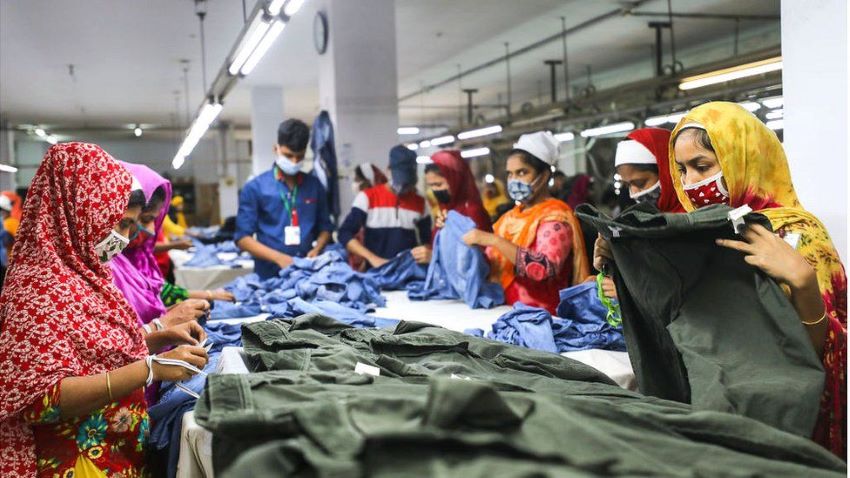
Industry leaders are urging brands and retailers to be more compassionate towards garment workers as leading European nations re-enter lockdown against a second wave of the pandemic. Christie Miedema, Campaign and Outreach Coordinator, Clean Clothes Campaign, has urged apparel brands to ensure full wages for all their supply chain workers irrespective of order placements.
Mark Anner, Director, Center for Global Workers' Rights (CGWR), has urged brands and retailers to step up and support wage assurance campaigns. He urged governments and organizations, to step up their financial support for social protection. As per a survey by the Power and Participation Research Center and The Brac Institute for Governance and Development, over 60 per cent of poor and low-income people in Bangladesh received no support, from either the public or private sectors, to help them cope with the economic impact of the pandemic.
And the 39 per cent of households which did receive support between April and June, received only the equivalent of four per cent of their lost income. The survey of 7,638 households was carried out between June 20 and July 2, 2020.
Riri Group incorporates Cobrax Metal Hub
Riri Group has reached another milestone with the incorporation of Cobrax Metal Hub, the new company in the Group which specializes in the design, development and manufacturing of metal components for the luxury and haute couture sector.
The new company is a result of the acquisition of 2Frame, a historical Italian brand in the industry, which is now an integral part of the Riri family, under the new name Cobrax Metal Hub. Thanks to this new entry, the Swiss Group has become the first sole supplier of metal accessories for the leatherwear industry, adding to its traditional range of zips and buttons a new line of products which includes all types of fastening, padlocks, snap hooks and buckles. It is an actual strategic hub, to offer the brands a single contact point for any needs and requests concerning metal accessories.
This new acquisition also makes it possible for Riri to respond, in an even faster and more effective way, to the demand for developing new articles and prototypes. By focusing on customer needs, Cobrax Metal Hub is actually able to design and develop customized products, guaranteeing continuous support in all process phases: from the search for materials, to technical and finishing solutions, the prototyping and sampling stage, to the industrialization and manufacturing stage.
Luxury brand Lyla Dumont forays into India
Lyla Dumont. a luxury couture brand from St. Barth’s, has forayed into the Indian market. The brand has caught the attention of every major fashionista in the world along with several other global brands who have reached out for collaborations.
Their CEO, Lyla Dumont co-founded this company with her mother Lisa Schiller Dumont in 2014. From couture to ready to wear, pieces that Lyla Dumont created in her collections are inspired by St. Barth’s beautiful landscape and world-famous beaches while simultaneously evoking the island’s atmosphere of ageless, easy sophistication. Simply put Lyla Dumont aims to make women of all ages feel powerful, free spirited and beautiful when they wear her pieces.
The reason the most prestigious fashion clients and the world’s most famous celebrities have all taken note of Lyla Dumont is her immense attention to detail and quality. Lyla Dumont’s Couture dresses are all hand embroidered with Japanese cut glass beads, Swarovski rhinestones and a variation of different traditional embroidery techniques, while her ready to wear pieces are only made of natural, sustainable fabrics. True to French couture tradition her dresses are stitched and finished in France with materials sourced from French and European fabric makers.
Many of Lyla’s exclusive clients such as stars like Mariah Carey, Kris Jenner, international super models and even the Middle Easters royalty each have very different tasted and design requirements to which Lyla Dumont custom designs for.
JFW Textile View Autumn/Winter exhibition to launch sustainability project
This edition of JFW Textile View Autumn/Winter exhibition will launch the‘JFW Sustainability Project targeting the enlightenment and promotion of sustainable textiles. The exhibitors at the event will include Leservoir Co which deals with EC apparel/cosmetic brands, including < la peau de gem >, previously visited the PTJ fair as a buyer. On this occasion, however, the company will join the fair as an exhibitor to initially launch a woollen product by Aoyang Wool Fabric (China) in Japan.
Thermore Japan: Founded in Milan, Italy in 1972, the company has been applying recycled polyester since 1980, making it a pioneer in the eco-oriented insulation field and it has been a constant presence at PTJ.
Tamurakoma will focus on leveraging the PTJ event to boost its customer base; ‘part from the abovementioned items, it will also showcase < comfeel > tricot material for shirting, produced by partly leveraging < C2C >, which retains water-absorbing and quick-drying properties and does not sag when worn thanks to limited vertical stretchability. This item has been applied by suburban-type menswear chains and a brushed (raised) type is also available for autumn/winter. The company has also launched an eco-project; < ecoMA >, proposing recycled cotton and nylon alongside down fabrics.
Lily Lace International has participated in PTJ several times to date, mainly showcasing raschel lace, but they will be emphasising sustainable fabrics this time around. As a raschel lace maker, it is set to showcase original patterned items, including: products made from raw material, Teijin’s recycled polyester < ECOPET >, lace blending washi and nylon, alongside tulle net among others. Besides the abovementioned, facemasks and eco-bags, both of which required for COVID-19, will also go on show.
Copenhagen Fashion Week partners with Zalando
Copenhagen Fashion Week has partnered with Zalando for the next three years. The two parties will accelerate sustainability efforts in the fashion industry.
Zalando revealed their do.MORE strategy in October 2019 with the vision to be a sustainable fashion platform with a net-positive impact for people and the planet. One part of the strategy is to continuously increase ethical standards and by 2023 only work with partners who align with them. To this end, Zalando has made sustainability assessments mandatory for both its private labels and partner brands.
Copenhagen Fashion Week unveiled its sustainability action plan at the start of 2020, which announced its ambition to transition and develop into a pioneering, sustainable industry platform. Outlining targets across not only the event itself but also setting minimum sustainability requirements for all participating brands by 2023, the sustainability action plan aims to push the fashion industry to implement necessary and comprehensive positive change, according to a press release by Copenhagen Fashion Week.
Together, both Zalando and Copenhagen Fashion Week will align across these three year action plans in order to leverage impactful change together.
The partnership between Copenhagen Fashion Week and Zalando will run from 2020-2023 and it commences as Copenhagen Fashion Week is preparing for the next edition of fashion week, to be held from February 2-5, 2021.
CAI projects lower cotton production this season
India’s cotton production for the current season (October 2020-September 2021) has been projected a tad lower compared with last year by trade body Cotton Association of India (CAI), but the natural fiber’s consumption and exports could be higher.
According to CAI initial estimates, cotton production this season is estimated to be 356 lakh bales (of 170 kg each) against 360 lakh bales last season.
The production is lower for two reasons. One, the area under cotton this year was two percent lower at 129.50 lakh hectares against 133.73 lakh hectares last year. This was mainly since farmers shifted to crops such as soybean or groundnut as cotton prices ruled lower for the most part of last season.
Second, rains in growing parts such as Telangana, Andhra Pradesh, Madhya Pradesh, Gujarat and Maharashtra have affected the crop.
Reports from Telangana say that some growers have plucked out cotton from their farms due to damaged caused by heavy rains and planted alternative crops.
The rains can affect the plucking of bolls in cotton plants later. There are two-three pluckings in the cotton plant, starting from October with the third plucking taking place around January.
Trade sources said off late, the cotton crop has been affected by diseases in some parts of the country and details are awaited.