FW
Filo organizes webinar to present its 55th edition
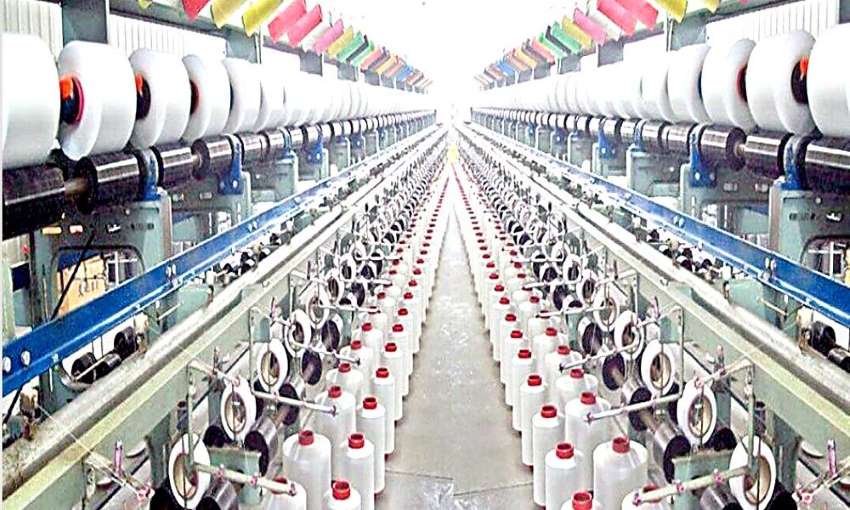
A webinar to present the 55th edition of Filo to operators and the press was held recently. The meeting had two parts. The first part had, Paolo Monfermoso, General Manager, Filo, explain the objectives and the new projects of the exhibition, while the second part saw Gianni Bologna, Creativity and Style Supervisor, describe product development proposals for the exhibition.
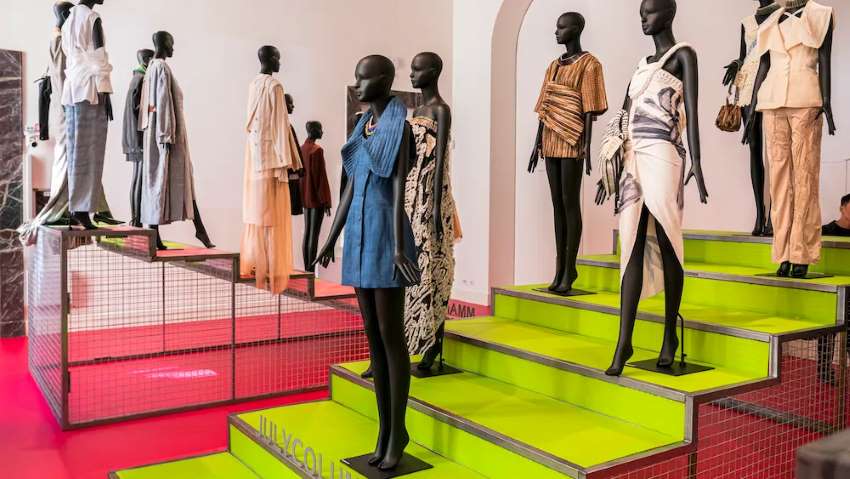
Monfermoso reflected on the difficulties and uncertainties affecting the textile industry. He advised industry leaders to step up their efforts to improve the textile supply chain in the international market. He further focused on the high participation recorded by the online presentation of the 55th edition of Filo. According to him, the webinar formula highlights the choice of presenting product development proposals through a mix of live speeches and pre-recorded videos Classified under the title, ‘single tickets, the product development proposals of the 55th Filo are divided into three sections: Re-creating, Re-thinking, Re-starting.
The three sections will showcase timeless and seasonless garments that express reassuring continuity with Italy’s handcrafted and artistic manual traditions. Filo-the international exhibition of yarns and fibers for orthogonal weaving, circular knitting and technical fabrics will be held from February 24-25, 2021 at MiCo – Milan Convention Centre in Milan.
YKK launches ViralOff zippers at Lineapelle
YKK has launched its first ViralOff zippers at the Italian trade fair Lineapelle ‘A New Point of View’’ from September 22-23, 2020. The company launched a line of zippers that are tape treated with Viraloff a technology patented by the Swedish company Polygiene, an important global reality for the hygienic treatment of garments which, applied in the finishing phase, eliminates 99 percent of viruses on fabrics in about two hours.
The chemical components of these zippers are eco-sustainable and the treatment of fabrics with an antibacterial product such as Viraloff encourages a reduction in the frequency of washing of the garments, prolonging their life cycle and the consumption of energy, water and chemical additives.
Following a philosophy of the “Cycle of Goodness”, YKK focuses on contributing to the containment of the virus that even a detail such as the zipper can offer. Moreover, the zipper is the protagonist of the motto that completes the YKK logo “Little Parts, Big Difference” and in which the Group has invested for more than 80 years.
US commerce department to investigate USITC claims
As per a Sourcing Journal report, the US Department of Commerce will continue to investigate United State International Trade Commission (USITC) claims that the US industry is being materially injured by imports of polyester- textured yarn from Indonesia, Malaysia, Thailand and Vietnam as they are allegedly sold in the US at less than fair value.
The investigation was initiated on a petition filed by US polyester textured yarn spinners Nan Ya Plastics America and Unifi Manufacturing claiming imports were being dumped in the US market below fair market value and was causing harm to their businesses. The petition listed 36 US importers of polyester textured yarn from those countries and 26 exporters combined from the four countries.
The US imported polyester textured yarn worth $38 million from the four countries in 2019. It imported another $103 million worth of the product last year from Mexico, India, Indonesia and Malaysia. The USITC public report, ‘Polyester Textured Yarn from Indonesia, Malaysia, Thailand and Vietnam’ contains the views of the commission and information developed during the investigations. It can be accessed on the USITC website.
ShanghaiTex 2021to be held in November 2021
The 20th International Exhibition on Textile Industry, ShanghaiTex 2021, will be held at Shanghai New International Expo Center, Pudong, Shanghai, from November 23-26, 2021. In response to the ‘contact-free’ trend in this e-commerce era, ShanghaiTex will invite all confirmed exhibitors to participate in the complementary online exhibition. International buyers can view the products and send instant inquiries to exhibitors on a 24/7 basis. The online + offline platform Textech will host a series of virtual and offline events and promotion services. The platform will allow exhibitors to promote their business via various channels.
ShanghaiTex will be sponsored by Orient International (Holding) Co, China Council for the Promotion of International Trade Shanghai Sub-council and China Chamber of International Commerce Shanghai Chamber of Commerce. The event will be organized by Shanghai Textile Technology Service & Exhibition Co, Shanghai International Exhibition Co and Adsale Exhibition Service.
Levi Strauss & Co urges EU to set more aggressive sustainability goals
Levi Strauss & Co has urged the European Union to set more aggressive targets for sustainability, and signed a global sustainability coalition, reports Sourcing Journal. Jeffery Hogue, Chief Sustainability Officer, Levi Strauss &Co said, the planet can’t afford for progress to take a backseat right now. As per United Nations, global carbon dioxide emissions need to fall by 45 per cent till 2030 in order to reach net zero by 2050.
Levi’s and 170 other companies and investor CEOs are calling on the European Union to establish more ambitious environmental goals. The companies recently signed an open letter urging EU heads of state and the European Commission to set an EU 2030 greenhouse gas (GHG) emissions reduction target of at least 55 percent, which will put the continent on track to becoming climate-neutral by 2050.
Levi’s also plans to improve performance within its supply chain, which makes up 63 percent of its overall carbon footprint. It pledged to reduce supply chain emissions 40 percent by 2025, a goal it will achieve by establishing new targets for suppliers and expanding its partnership with the International Finance Corporation, a global development institution focused on the private sector in developing countries.
British retail industry under pressure from online-only brands
The retail industry is facing tremendous pressure from the growth of online-only brands such as Boohoo, ASOS, and MissGuided. As per a UK financial publication, Zara owner Inditex reported 14 per cent lower sales of €6.05billion during the three months ended October, which is 14 per cent lower than a year ago. The retailer's net income fell 26 per cent to €866million while its operating and inventory costs declined 10 per cent and 11 per cent respectively in the third quarter. The retailer follows a sales model based on fast fashion with higher sourcing exposure from Turkey and North Africa, sophisticated stock management, and consolidation around flagship stores.
On the other hand, the H&M sales model is based on predictable basics from Asia and India, keener pricing, and a simple website. Production lead times from China and Cambodia are typically four to six months whereas Zara’s products can be in store from Turkey and North Africa in just three weeks. Between June and September, Britain lost 78,000 jobs in the retail sector which shows jobs outlook for the sector remains dismal, says Helen Dickenson, Chief Executive, British Retail Consortium.
Though the government's furlough scheme had been effective in preventing job losses in the previous quarter, the industry still shed 78,000 jobs between June and September this year. The pandemic has already seen multiple retailers fall by the wayside, costing shops and jobs, and retailers face further costs in 2021 from both Brexit and the return to full business rates. The combined impact of COVID, Brexit and business rates is likely to significantly impact retail employment in the future.
Dickenson advised the government to provide continued targeted support to those firms most heavily impacted by the pandemic. By supporting retailers in their return to full health, the industry will be better positioned to bolster the country's economic recovery, she said.
Immense opportunities for apparel exports to Spain: AEPC
As per AEPC, Indian apparel manufacturers, including readymade garment players have immense opportunities to increase exports to Spain as the European country imports significantly from other countries. According to AEPC, India is currently the seventh largest readymade garment supplier to Spain with export value of $817.6 million in 2019. The country exported $217.6 million worth of manmade fiber garments to Spain.
At the 'India-Spain Synergies in Apparel and Textiles' organized by the AEPC, Madan Singh Bhandari, Deputy Ambassador of India to Spain said Indian apparel manufacturers can significantly increase their exports to Spain considering the recent transformations that the sector has undergone in India.A Sakthivel, Chairman, AEPC said in the last three months there has been an increase in exports compared to last year. Corona crisis has turned out to be an opportunity as India has been able to increase its production of medical textiles, technical textiles and also MMF based garments.
US’ cotton trousers imports fall during January-October’20: OTEXA
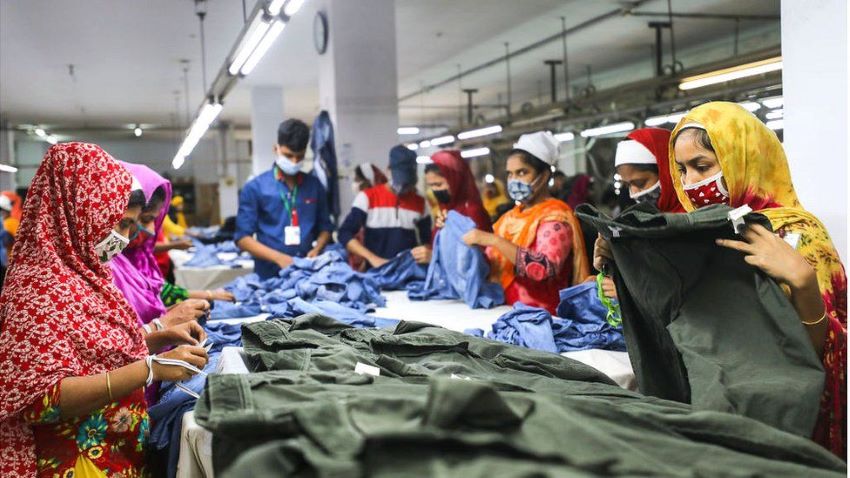
As per OTEXA figures, US’ cotton trousers import fell 25.61 per cent from January to October ’20. Total imports during this period was, $7.61 billion shrinking significantly from $10.24 billion in the same period in 2019. Out of 35 cotton trousers’ exporters to the US, only two countries managed to grow Y-o-Y basis -- Ethiopia and Myanmar. Ethiopia exported $58.34 million worth cotton trousers to the US during the period, marking 21.86 per cent surge from the same duration of 2019. On the other hand, Myanmar exported $17.68 million worth of trousers. Both showed resilience even in some other product categories made out of cotton in 2020.
Top exporter of cotton trousers to the US, Bangladesh exported $1.66 billion worth of trousers while Vietnam exported trousers worth $1.44 billion. India recorded a 34.40 per cent decline with exports value of $187.34 million. On the other hand, Jordan exported trousers worth $ 235 million during the same period.
China’s luxury market to grow by 48 per cent by year end
The Chinese luxury market is expected to grow 48 per cent to reach around $52 billion by the end of the year, says Bain’s annual China luxury report released in partnership with Tmall Luxury Division. As Business of Fashion reports, driven in part by the repatriation of luxury spending and acceleration of e-commerce adoption as a result of COVID-19 and international travel restrictions, this meteoric growth is forecasted to continue through 2025.
However, growth is likely to be uneven with China’s north and northeast regions underperforming in contrast to the south, east and southwest. Categories like leather goods and jewelry will lead this growth followed by ready-to-wear clothing and shoes, beauty and timepieces.
Bain predicts Chinese shoppers to remain cautious about travel for at least a year, making domestic destinations like Hainan key touch points for brands. It also noted that shoppers from or younger than the post-’80s generation continue to drive growth and that online shopping habits adopted mid and post-pandemic will continue to remain relevant.
Brands build momentum within the industry with new AI tools
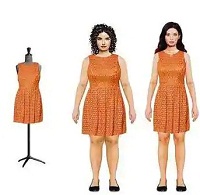 Being woven into every aspect of the industry, artificial intelligence is fast becoming an essential survival tool for fashion brands across the world. As McKinsey in its annual State of Fashion report says, AI startups with fashion and retail focus are being increasingly sought after as brands and retailers have shifted focus from brick and mortar stores to online sales.
New AI tools
As per a Live Mint report, Gurugram-based TryNDBuy, which deployed vision-based virtual layouts during the pandemic, has now gone live with brands such as Jack & Jones and Vero Moda. The retailer has engaged Zalora, a leading fashion e-tailer in Southeast Asia.
Similarly, Bengaluru-based AskSid, has introduced a chatbot known as AI bot that has helped reach a meaningful level of digital interaction with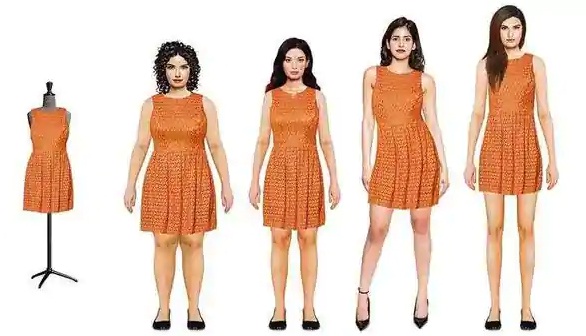 customers. The chatbot has helped the company achieve a big spike in revenue this year besides accelerating global expansion. From April-October 2020, the company’s revenues jumped almost 50 per cent, adds Sanjoy Roy, Co-founder and CEO.
AskSid currently operates in 23 countries, supports 15 international languages, and has also expanded into FMCG brands, including a top paints MNC. It recently advised a client to enter the Norwegian and Australian markets while it helped another whey protein seller shift its marketing focus from bodybuilders to people suffering from ailments such as arthritis and diabetes
Inducing a shift in consumers’ shopping behavior
Data and analytical tools like AskSid’s new AI tool help brands track shifts in demand across geographies, categories and channels. They helps brands penetrate deeper into retail analytics of their products. Tools like TryNDBuy induce consumers’ to shift their purchasing behavior from brick and mortar stores to online. They also help brands expand their product and consumer base. For instance, ‘Try Now’ icon introduced by Vero Moda in its New arrival houses a virtual trial room that offers consumers an opportunity to edit the body shape in full-screen mode.
Supported by the international VC SOSV and Taiwan-based MOX, TryNDBuy has bagged nine US patents for its computer vision modeling methods, says Nitin Vats, Founder and CEO. The MOX software has helped the startup expand into Southeast Asia by deploying its product in India. The startup is currently working on a virtual makeup solution.
Chinese apps, Youcam and Meitu, provide virtual makeup on real-time videos. However, these apps are currently unavailable in India. Makeup brand L’Oreal has also launched a solution named ModiFace that is currently limited to its own products.
AI-based startups face a unique challenge of attracting clients currently bombarded with such a plethora of virtual tryout solutions. To be successful, these startups can launch strategic tie-ups like the one introduced by TryNDBuy with Technopak Advisors. These can help them demonstrate their products before some of the leading brands and build momentum within the industry.