FW
The Hams Group selects Coats Digital’s FastReactPlan for digital transformation
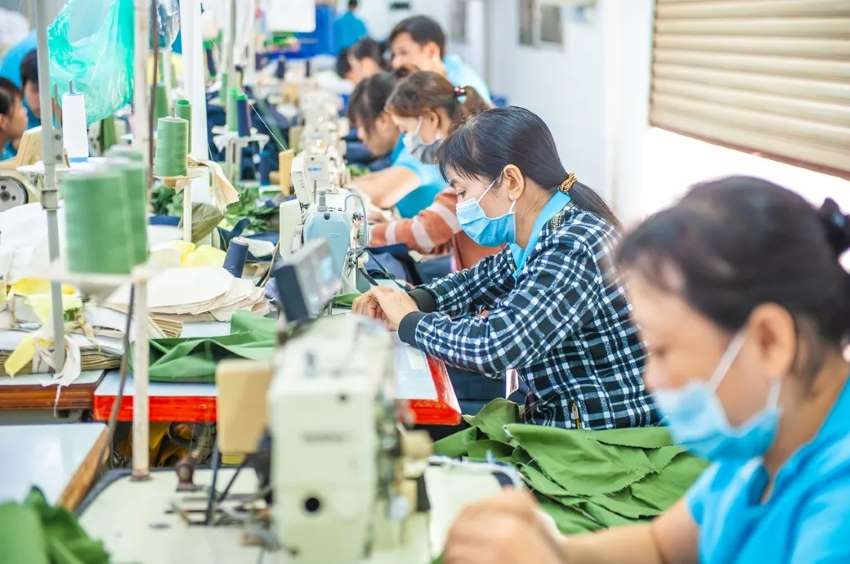
Leading vertical garment manufacturer, The Hams Group, has selected Coats Digital’s FastReactPlan as an integral part of its digital transformation agenda. The solution will enable the company to connect and consolidate information across disparate sources into one highly visual unified system. This will enable management and employees to benefit from a clear overview of planning and production capacity to ultimately support enhanced customer satisfaction and drive new business growth.
Established in 1994, The Hams Group employs over 12,000 people, boasts an annual turnover of over 95 million USD per annum, and remains one of the leading vertical textile manufacturers in Bangladesh. The company specialises in knitwear, woven garments and lingerie, and its customers include H&M, Primark, K-Mart, Next, New-Look and Kohl’s, among many others. The Hams Group’s business portfolio includes knitting, dyeing, printing and sewing businesses, as well as specialist distribution and sports apparel arms.
ShaifurRahman, Senior Director, The Hams Group, says, FastReactPlan will provide the overaching data visibility we need to optimize efficiencies, enhance our customer service by delivering smaller and increasingly complex orders on time, and enable us to future-proof our business effectively so we can better navigate our uncertain world. Most importantly, FastReactPlan will enable the group to create meaningful growth plans based on accurate insights and informed business decisions so we can now fully propel our business forwards.
Primark to bring T-shirts in A/W essentials range under Primark Cares Label
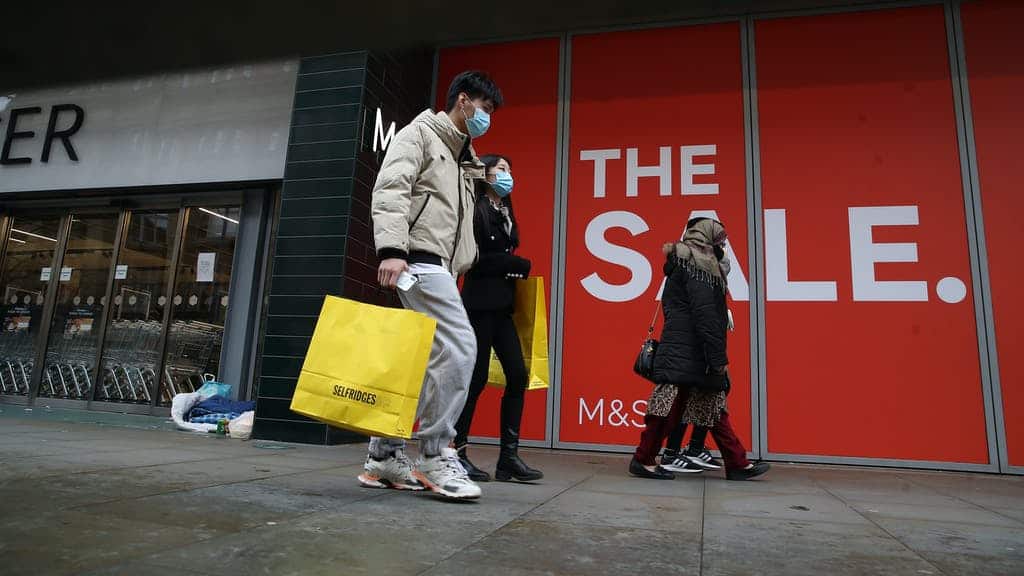
Primark aims to include all its lowest-priced T-shirts in its A/W essentials range under the Primark Cares label from this month onwards. The brand will incorporate cotton in all its lowest price T-shirts from menswear and kidswear ranges from Sustainable Cotton Program the largest of its kind of any fashion retailer.
As per a new research by Primark, around 35 per cent of UK consumers have expressed concerns over the cost-of-living crisis that prevents them from shopping more sustainably. This rises to 45 per cent amongst 18-34-year-olds.
Of the 33 per cent consumers in the 18-34-years-age bracket and 14 per cent in 35-54-year-olds say they prioritize sustainability over style when building their wardrobe. Nearly 46 per cent of those young people who care most about shopping sustainably don’t know where to find these options or how to style them
This younger age group is savvier than the previous generation of 35-54-year-olds at using hacks to dress more consciously on a budget. Around 31 per cent of them are building a capsule wardrobe and swapping while 41 per cent are selling clothes
Primark is working with fashion influencer Laura Byrnes to raise awareness of its Primark Cares label and inspire people to build a more sustainable capsule wardrobe for less, by styling up its Primark Cares essentials with the items they have in their closets already.
Almost 40 per cent of Primark clothing is already made from recycled or more sustainably sourced materials, and the fashion retailer has committed to making that 100 per cent of its clothing by 2030.
Guess’ H1FY’22 revenues rise by 8%
The first-half revenues of American fashion brand Guess Inc gained 8 per cent for the six-month period ending July 30, on the back of solid sales momentum in the second quarter.
The Los Angeles-based company’s total net revenue for the six months increased to $1.24 billion from$1.15 billion in the same prior-year period. Americas retail revenues increased 2 per cent, while retail comp sales, including e-commerce, decreased 2 per cent. Americas wholesale revenues increased 24 per cent.
Elsewhere, Europe revenues increased 9 per cent in US dollars and 23% in constant currency. Retail comp sales, including e-commerce, decreased 5 per cent in US dollars and increased 8 per cent in constant currency. Asia revenues increased 2 per cent in U.S. dollars and 11 per cent in constant currency.
Likewise, total sales for the second quarter increased 2 per cent to $642.7 million from $628.6 million in the same prior-year quarter. In constant currency, net revenue increased by 12 per cen.
Net income for the quarter fell by 60.8 per cent to $24 million from $61.1 million for the same prior-year quarter, with the earnings dive narrowing overall during the first half, down 21 per cent to $89.8 million.
Looking ahead, Guess said it expects revenues to decline by 4.5 per cent in US dollars tor the third quarter of fiscal 2023. For the full fiscal, it expects revenues to increase by around 1.5 per cent in US dollars versus fiscal 2022.
China’s PP imports decline 22.56% in July ‘22
According to the China Customs, China’s polypropylene (PP) imports declined by 22.56 per cent Y-o-Y to 324,127 metric tons in July 202 compared to the same period of last year. However, the imports increased by 3.49 per cent M-o-M. Of all, imports of homo PP imports declined 22.69 per cent Y-o-Y to 213.4kt, imports of co PP declined 26.21 per cent Y-o-Y to 95.5kt while imports ofra co PP increased by 16.02 per cent Y-o-Y to 15.2kt.
The total export volume of PP in Jul 2022 was about 114.2kt, a year-on-year increase of 67.61 per cent; among which the export of homo PP was about 104.7kt, a year-on-year increase of 74.52 per cent.
From the monthly data, the export volume of homo PP has continued to decrease in the past three months. The main reason is that the price spread between RMB market and PP CFR China market continues to narrow, and the export arbitrage window shrinks or even closes (for example, at the end of July, the RMB price has once exceeded the PP CFR China price).
From the perspective of trading partners, the main sources of imports are South Korea, the United Arab Emirates, Japan and Singapore, with a total import volume of more than 60 per cent, and the ranking has basically remained unchanged in the past three months. Overall, the import situation is relatively stable.
Egypt’s cotton exports double in 2021
Data released by the Central Agency for Public Mobilisation and Statistics (CAPMAS) shows, Egypt's cotton exports nearly doubled on a Y-o-Y basis in August 2021, with India importing the largest amount of Egyptian cotton.
By the end of last year's crop season, which ended in August 2021, Egypt’s cotton exports increased by 101.5 per cent to 1.7 million kantars from 874,000 kantars in the same period the year prior.
A rise in local production boosted Egypt’s cotton exports during the year. Production increased 33 per cent to 2.3 million kantars in 2021, an increase of around 33 percent compared to a year prior.
Around 87 per cent of Egypt’s cotton exports were imported by India, around 1.5 million kantars, according to CAPMAS.
Recently, Egypt has introduced a new auction system that allows farmers to sell their crops in line with international prices to boost production and revive the once-flourishing industry.
Lenzing joins Dutch Denim Deal
Lenzing has joined the Dutch Denim Deal, a public-private initiative that intends to accelerate sustainability and recycling in the industry.
The deal was initiated by the Dutch government and signed in October 2020. Among the goals in the deal is creating at least 3 million jeans with 20 percent or more post-consumer recycled content by the end of 2023. All of the signatories also agree to use at least 5 percent post-consumer recycled cotton across their denim collections as soon as possible.
The deal launched with 30 partners. And to-date, it has gathered signatories including brands, manufacturers and organizations. Among the deal signers are PVH Europe, Mud Jeans, Scotch & Soda, Transformers Foundation, Bossa, AGI Denim and Kipas.
Allow duty-free import of Extra Long Staple type cotton, urges Texprocil
To create a level playing field with competing countries, The Cotton Textile Export Promotion Council of India (Texprocil) has urged the Government to allow duty-free import of Extra Long Staple type.
The import duty on cotton has been removed till October 31. However, the government has exempted the specialized cotton variety ELS which is not grown commercially in India.
Tge move will help fabric and home textile exporters to fulfill orders of global brands and retailers at competitive prices and increase exports as other competing countries such as Bangladesh, China and Vietnam allow duty-free cotton imports, says ManojPatodia, Chairman, Texprocil
The annual world export of knit fabrics is about $42 billion of which India’s share is just 1.8 per cent at $763 million. The remission rate of 1 per cent fixed for cotton knitted fabrics does not fully reimburse domestic taxes. The rates for knit fabrics should be 4.3 per cent which will be in line with the rate for woven fabrics.
In the next 5-7 years, India’s textile industry can expand to $250 billion and achieve an export target of $100 billion, Patodia adds.
Rising cotton prices in India will pressurize textile players’ profit margins
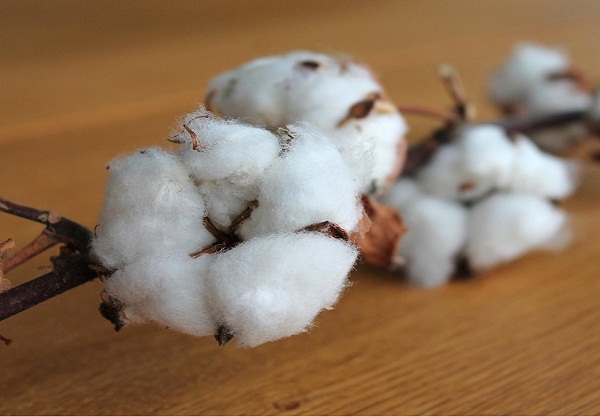
International cotton prices traded at seven-week high in August while prices in India jumped over 12 per cent during the month. The rise in cotton prices is mainly a result of crop losses due to pests and heavy rains across cotton-growing areas despite a rise in area under cultivation, says Ravindra Rao, VP-Head Commodity Research. Prices are also rising owing to defaults in imports that are causing stock depletion.
Weather, pests damage cotton crops
Atul Ganatra, President, Cotton Association of India, attributes the rise in cotton prices to low volumes caused by acute liquidity shortages. In August, cotton bales in India totaled 25,000 bales a decrease of 10,000 bales from October and November, he adds. However, the area under cotton cultivation increased to 121.3 lakh hectare during the month, says Ajay Kedia, Commodities Expert. He believes, lurking fear of pest attacks is causing cotton prices to surge coupled with the harm caused by last year’s untimely rains in October-November. The crop will continue to be affected by weather conditions and rising pest attacks, he adds. Cotton price rise has led to a decline in demand from the textile industry. Demand across the country is slow but steady, says Kedia. However, with monsoon intensifying further crop damage may occur, he warns.
Global projections decline
Cotton prices in the US are increasing on account of higher sales, exports for new season crops and lower crop production. Cotton stocks on ICE Cotton (December) jumped to its highest levels in two months as reports of deteriorating crop condition due to hot, dry weather in key growing areas, surfaced. Currently, cotton stocks in the country are trading around 118 cents per pound.
In its monthly report, United States Department of Agriculture (USDA) has cut US cotton production forecast by three million bales to 12.6 million bales for 2022-23. The country’s exports are projected to fall by two million bales to 12 million bales during the current year. US ending stocks are expected to decline to their lowest levels in a century to 1.8 million bales. Abandonment estimate by the USDA increased 1.42 million acre in a single month while textile production estimate dropped from 7.7 million bales to 2.9 million.
Demand stabilization has eased supply chain pressures and is supporting prices. However, rising cotton prices may pressurize profit margins of textile players, believes Kush Godasara, Independent Market Expert. They will have to bear this burden for a while as slackening demand makes it impossible to pass on the increased costs to consumers.
Vietnam’s garment sector aims to be less dependent on imported raw materials
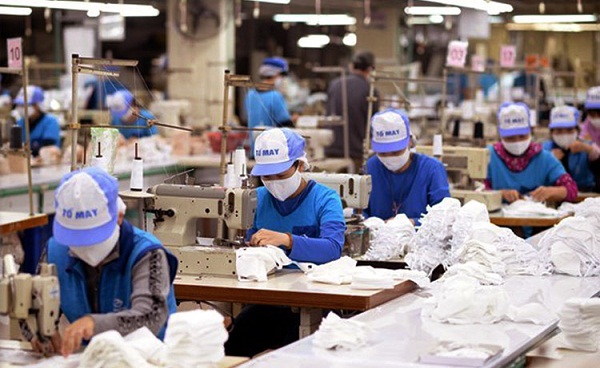
At a recent conference to connect the supply and demand of raw materials for Vietnam’s textile and garment industry, the Ministry of Industry and Trade confirmed the country has risen to be the third largest clothing exporter in the world. Organized by the Trade Promotion Department under the Ministry of Industry and Trade, the conference noted, Vietnam’s share in the global textile and garment market is 6.4 per cent behind China’s 31.6 per cent and Europe’s 27.9 per cent.
Textile and garment turnover rises by 21.6%
As per economist Huynh Thanh Dien, Europe, the US and Japan are Vietnam's three main textile and garment export markets accounting for 34.1 per cent, 16.8 per cent, and 5.3 per cent of global share respectively. Growing rapidly, Vietnam’s textiles and garments export turnover accounted for 12 per cent of the country’s total export turnover in 2021. It amounted to $40.4 billion. In the first half of 2022, Vietnam’s textile and garment export turnover increased 21.6 per cent to $23 billion against the same period in 2021.
Consumer demand decline due to inflation, COVID-19 risk
Despite growth, Vietnam’s textile and garment industry faces multiple challenges today, says Huynh Minh Vu, Deputy Director, Center for International Integration Support. Rising inflation in the US and EU has led to major demand drop in these countries. The Russia-Ukraine war has also pushed up raw material prices. The country also faces the risk of COVID-19 resurgence with sub-variants. This is affecting the textile supply chain as trading partners including China, Japan, and Taiwan have applied strict anti-pandemic measures.
Trade remedy cases rise
The industry’s performance is also being impacted by 15 new Free Trade Agreements (FTA) with 60 countries and territories that Vietnam is participating with, opines Phan Khanh An, Deputy Head-Legal Department-Trade Remedies Authority of Vietnam, Ministry of Industry and Trade. So far, foreign countries and territories have initiated over 210 trade remedy cases against Vietnamese exported goods. Of these, 22 cases are related to textile products, mainly concerning anti-dumping and safeguard measures in Turkey, the US and India. Vietnam exports around 60 per cent of recycled yarns to China. However, the Zero COVID policy being implemented by China is threatening to disrupt China’s market for recycled yarns.
New trade policies way ahead
The pandemic has made Vietnam textile and garment industry heavily dependent on imported raw materials. The country currently sources 55 per cent it is requirements of raw materials locally. Textile and garment enterprises are currently not accepting long-term orders due to the risk of low unit prices. They are urging authorities to introduce new policies to encourage investment and attract FDIs in raw material development. Many domestic enterprises are collaborating with other companies to expand their capacity and become self-sufficient in production
H&M Group collaborates with The Renewal Workshop
The H&M Group has collaborated with The Renewal Workshop to launch a new test collection made from unsold clothes that have been repaired and brought back to market through its COS (Collection of Style) branded stores.
As per a Textile Value Chain, report, this first of its kind ‘Restore’ collection developed by its internal innovation department ‘The Laboratory’ and its fashion brand COS (Collection of Style) will launch in three stores located in Berlin, Stockholm and Utrecht. The COS brand launched in 2007 and currently operates over 250 stores in more than 40 worldwide markets.
Laura Coppe, Head-Circular/Sustainable Business Development, The Laboratory, says,the brand launches new solutions for a lower impact on the environment whilst offering customers quality, beautiful products that last.