FW
HKRITA, Jeanologia, Looptworks team up for Green Machine Circular Textile Ecosystem
The Hong Kong Research Institute of Textiles and Apparel (HKRITA) has launched a tripartite initiative, the Green Machine Circular Textile Ecosystem in collaboration with Jeanologia and Looptworks. This strategic alliance transitions hydrothermal recycling from localized laboratory trials to industrial-scale application. At the core of this infrastructure is the Green Machine 4.0, a proprietary system capable of separating cotton-polyester blends and recovering polyester at a purity level of 98 per cent or higher. By eliminating the reliance on aggressive chemical processes, the technology addresses a persistent bottleneck in apparel sustainability: the inability to effectively recycle blended materials.
Engineering industrial integration
The partnership leverages the unique strengths of each participant to ensure operational viability. Jeanologia, serving as the official machinery partner, is contributing industrial-grade equipment engineered to stringent European CE high-pressure standards, ensuring the ecosystem can be deployed across global production hubs. Meanwhile, Looptworks will utilize the output to manufacture Global Recycled Standard (GRS)-certified fibers, effectively reintroducing them into the supply chain. Jake Koh, Chief Executive Officer, HKRITA, noted that the circular economy has moved beyond a theoretical goal, emphasizing that the Green Machine is now fully ‘adoption-ready’ to meet the urgent requirements of brands striving to reduce virgin resource dependency. As the global recycled textile market continues its projected expansion, this ecosystem offers a definitive pathway for manufacturers to convert waste into high-value raw material streams, despite the operational challenges of managing mixed-material input.
Focusing on circular economy and functional fiber development
A leading research center dedicated to advancing textile technology, The Hong Kong Research Institute of Textiles and Apparel (HKRITA) focuses on circular economy solutions, sustainable manufacturing, and functional fiber development. The institute collaborates extensively with global brands and manufacturers to commercialize breakthrough technologies, significantly improving efficiency and reducing the environmental footprint of the textile and apparel sector.
China strengthens apparel exports to Taiwan in Q1, FY26
In a display of enduring supply chain resilience, mainland China further cemented its status as the primary apparel supplier to Taiwan during Q1, FY26. Despite ongoing geopolitical complexities, bilateral trade intensified, with mainland exports of garments to Taiwan reaching a total valuation of $245 million. This trade volume underscores a deepening dependency, as mainland China’s market share in Taiwan increased to 48.65 per cent in Q1 2026, up from 47.92 per cent in the corresponding period of the previous year. While alternative sourcing hubs like Vietnam saw their influence wane - with their market share declining to 14.85 per cent - mainland manufacturers maintained their foothold by leveraging superior logistics and competitive cost structures.
Operational resilience and evolving cost dynamics
Industry analysts attribute this growth to the mainland’s robust industrial infrastructure, which has successfully offset global demand fluctuations. While the average unit price for garments across several markets declined by approximately 6.2 per cent due to aggressive pricing strategies, manufacturers have pivoted toward operational efficiency to protect margins. A prominent example is the widespread adoption of AI-powered inspection lines and automated stitching systems by large-scale producers like Shenzhou International, which now achieves 70 per cent automation in core knitwear production. This technological integration allows firms to absorb raw material cost volatility while meeting the stringent quality requirements of international and regional buyers. However, firms face mounting pressure, as the industry’s loss-making rate expanded to 35.6 per cent during the quarter, signaling that scaling volume remains critical to counterbalancing rising overheads.
Mainland China’s garment industry functions as the global benchmark for textile production, operating over 45,000 factories that prioritize high-volume automation and vertical integration. With a 32 per cent global export market share, the sector serves major international brands alongside domestic and regional Asian markets. Growth strategies currently center on ‘new quality productive forces,’ focusing on digital transformation, high-tech fiber development, and sustainable manufacturing processes to mitigate the impact of rising labor costs and trade protectionism.
Tamil Nadu eyes global leadership with PLI adoption
The Tamil Nadu textile and apparel sector is undergoing a structural evolution, shifting focus toward high-growth segments such as man-made fiber (MMF) and technical textiles. During a recent industry consultation in Tiruppur, Giriraj Singh, Union Textile Minister underscored the urgency for local manufacturers to utilize the national Production Linked Incentive (PLI) scheme. With the central government recently approving 96 companies under the third round of the initiative - committing over Rs 12,800 crore in investments nationwide - the window for state-level industrial expansion is narrowing. By incentivizing value-added manufacturing, the government aims to catalyze a shift away from traditional cotton-only reliance, positioning Tamil Nadu to capture a larger share of the global synthetic apparel market.
Scaling infrastructure and export ambitions
The strategic drive is not merely about capacity, but technical sophistication. Industry leaders, including the Apparel Export Promotion Council (AEPC), are pushing for targeted export revenue of $21 billion from the state by 2030. To reach this, regional stakeholders are advocating for enhanced machinery manufacturing capabilities within the knitting and weaving clusters. A case in point is the newly inaugurated GM Testing Laboratory at the South India Textile Research Association in Coimbatore, which serves as a critical infrastructure asset for exporters to ensure compliance with global organic and quality standards. As the state targets Rs 1,000 crore in technical textile investment by 2030, the integration of such testing facilities with PLI-backed manufacturing is expected to drive long-term industrial resilience and export competitiveness.
A corner of India’s textile landscape
Tamil Nadu remains the cornerstone of India’s textile landscape, accounting for approximately 23 per ecnt of the nation’s total textile exports. The state primarily focuses on knitwear, apparel, and home textiles, with an emerging emphasis on technical textiles. Industry growth is currently steered by the AEPC and regional bodies like the Tiruppur Exporters Association, which are actively pursuing a diversification strategy to boost output and move up the value chain toward synthetic fibers.
Uniqlo expands circular fashion strategy in Mainland China
Marking a shift towards its long-term lifecycle management, Uniqlo is aggressively expanding its RE.UNIQLO initiative across mainland China. The brand recently completed a comprehensive upgrade to its Shanghai flagship studios, introducing the ‘Heart Clothing Renewal’ project. This move transitions the retailer from simple garment collection toward a more sophisticated, value-added service model that incorporates upcycling and traditional Japanese Sashiko embroidery. By transforming garments - including those with minor manufacturing defects - into unique, artisanal pieces, Uniqlo is effectively tackling the industry-wide challenge of post-consumer waste while driving deeper consumer engagement with its core LifeWear philosophy.
Market integration and consumer adoption
This expansion addresses the growing demand among Chinese consumers for sustainable retail options, a trend increasingly supported by national policy shifts toward ecological civilization. Industry analysts suggest that Uniqlo’s model serves as a vital bridge in a market historically dominated by rapid consumption. By embedding craftsmanship into the repair process, Uniqlo is successfully repositioning 'second-hand' as a premium, artistic consumer choice, noted a senior retail consultant. The initiative also leverages localized partnerships with regional manufacturers to standardize these upcycling techniques. As the brand continues to scale these studios across Tier-1 cities, the objective remains clear: to standardize circularity as a core business operation rather than a supplementary advocacy campaign, effectively decoupling growth from raw material extraction.
Committed to societal contribution and textile innovation
A brand under the Fast Retailing Co Group, Uniqlo specializes in high-quality, functional casual wear under its ‘LifeWear’ philosophy. A dominant force in Asia, the brand focuses on staple categories like outerwear, Heattech and AIRism. It maintains an ambitious international expansion strategy, emphasizing sustained financial growth and sustainable manufacturing, with a deep historical commitment to societal contribution and textile innovation.
A Quest for Essence: Unveiling the 2027 A/W Trends at Intertextile Shanghai Apparel Fabrics
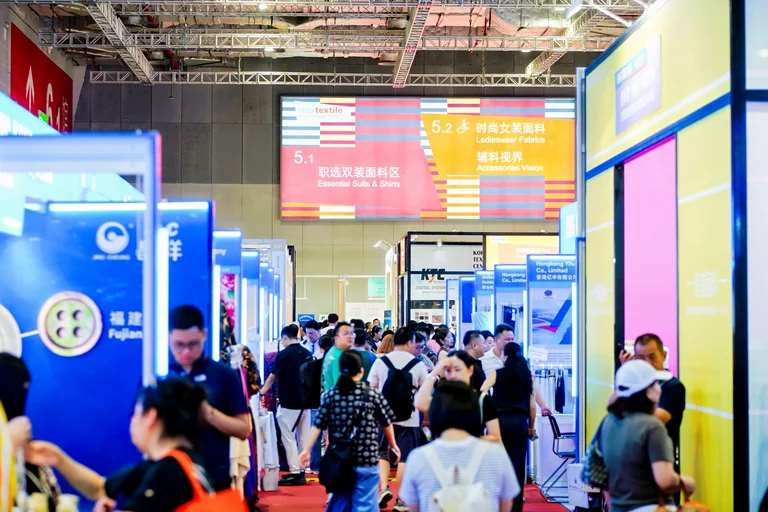
As the global textile industry looks toward the upcoming season, the Intertextile Shanghai Apparel Fabrics – Autumn Edition stands ready to set the tone for the future of fashion. Scheduled for 25 – 27 August, this year’s event is a convergence of innovation and philosophy. With a sharp focus on advanced functionality, cutting-edge sustainability solutions, and the ongoing digital transformation of the supply chain, the event invites industry professionals to explore the theme: ‘A Quest for Essence.’
At the heart of the exhibition, the Trend Forum will debut its 2027 A/W trend guide, curated to distill the complex shifts in consumer behavior into three distinct, actionable trends.
1. Feel your serenity
In a world characterized by rapid change, ‘Feel Your Serenity’ invites us to rethink urban existence. This trend bridges the gap between high-performance utility and personal wellbeing. It encourages a shift toward mobility that doesn’t sacrifice comfort, advocating for a ‘softer resistance’to the excesses of modern life. Fabrics and designs under this theme prioritize self-care, incorporating nostalgic elements of kindness with playful, experimental silhouettes that make daily life feel more balanced and intentional.
2. Live your emotions
The trend ‘Live Your Emotions’ is a return to authenticity and the principles of slow living. This narrative explores the intersection of nature and the built environment, characterized by a sense of ‘rustic elegance.’ In this space, performance-driven materials harmonize with traditional hues, creating a wardrobe that values the quiet beauty of everyday objects. By emphasizing simplicity, restraint, and timeless essentials, this trend seeks to provide comfort and emotional refuge in an increasingly digital world.
3. Plan your role
As we navigate the ambiguities of an unpredictable global landscape, ‘Plan Your Role’ offers an escape into the extraordinary. This trend celebrates the hedonistic pleasure of being stylish, embracing theatricality, elaborate fantasy, and a couture spirit. It is a bold, renewed mindset that infuses fashion with a sense of mysterious opulence, allowing the wearer to perform their identity with confidence and flair.
Expert insights at the Trend Forum
Beyond the visual inspiration, the 2027 A/W Trend Forum will feature a lead curator who will provide an in-depth analysis of these directions. Attendees will have the opportunity to delve into the latest color palettes, fabric textures, and pattern innovations that will define the upcoming season.
Combined with the event’s emphasis on technical progress and environmental responsibility, this makes Intertextile Shanghai an essential destination for designers, manufacturers, and procurement specialists. Whether you are looking to integrate sustainable practices into your production or seeking to capture the emotional pulse of the modern consumer, the ‘Quest for Essence’ provides the roadmap for success in the 2027 autumn-winter cycle.
Beyond globalization, local consumer behavior rewriting fashion retail strategy

The traditional blueprint for global fashion expansion is being rewritten. For decades, apparel companies assumed globalization would gradually create a uniform consumer profile, allowing brands to scale across markets with largely standardized strategies. Today, however, consumer behavior remains deeply local, while digital engagement has emerged as a more important measure of market position than physical presence.
In an era where consumer attention is the scarcest resource, digital visibility has become the primary determinant of retail success. For fashion brands, securing a place within consumers’ daily digital routines is now more valuable than simply expanding store networks or increasing shelf space.
Fashion discovery moves online
The consumer journey has shifted from physical stores and brand websites to digital ecosystems. Search engines, marketplaces, social platforms, and retail apps now serve as the primary gateways for fashion discovery. While search engines continue to dominate early-stage product research across Europe, Asia, and Africa, digital marketplaces have captured much of the high-intent shopping activity in North America and Western Europe. Consumers increasingly begin their shopping journeys within large platforms rather than on individual brand websites.
This shift has transformed competitive dynamics. Fashion brands are no longer competing only against rival labels; they are competing for visibility within powerful digital ecosystems that shape consumer attention and purchasing decisions. Major retail platforms have reinforced their position by expanding into premium fashion categories through exclusive collections, private labels, and designer collaborations. Their ability to convert existing digital traffic into apparel sales has made digital placement as valuable as premium retail real estate.
The localization challenge
Despite the borderless promise of e-commerce, consumer behavior remains highly regional. Different markets rely on different discovery channels. Search engines often drive aspirational browsing and comparison shopping, while digital marketplaces attract consumers with stronger purchase intent. In East Asia, localized digital ecosystems frequently influence trend adoption and consumer preferences through culturally specific content.
This creates a challenge for global fashion brands. High digital engagement does not always translate into sales or loyalty. Search traffic may reflect browsing, comparison shopping, or aspiration rather than purchase intent. Conversely, some established brands generate lower search volumes because loyal customers engage directly through apps, memberships, or repeat store visits.
The lesson for retailers is clear: digital strategies must be tailored to local market realities. A one-size-fits-all global approach is increasingly ineffective in an environment where consumer attention is fragmented across platforms and regions.
Redefining value in an inflationary era
At the same time, consumer expectations around value are changing. Capgemini Research Institute’s studies show that prolonged inflation and economic uncertainty are reshaping purchasing behavior. Consumers are demanding transparency, fairness, and meaningful value rather than relying solely on discounts and promotions.
As a result, fashion retailers are rethinking how they engage customers online. Generative AI is emerging as an important tool for delivering personalized experiences that reduce shopping friction and improve decision-making. Consumers expect AI-powered recommendations, conversational shopping experiences, and tailored product suggestions. To meet these expectations, retailers are investing in virtual stylists, automated fitting technologies, and intelligent recommendation engines.
These technologies not only improve customer engagement but also help reduce costly returns by enabling shoppers to make more informed purchasing decisions. The emphasis is shifting from product promotion to value creation through personalized experiences.
Urban Outfitters and the rise of flexible consumption
One example of this changing consumer mindset is visible in the strategy adopted by Urban Outfitters through its clothing rental platform, Nuuly. As economic pressures influence discretionary spending, many consumers are seeking affordable ways to enjoy fashion without committing to full-price purchases. Research indicates that shoppers increasingly embrace small indulgences and flexible spending options during periods of financial uncertainty.
Urban Outfitters has responded by integrating rental services into its digital ecosystem. Rather than focusing exclusively on ownership, the company offers consumers access to fashion through subscription-based rentals. By using digital signals to identify price-sensitive shoppers, the platform can emphasize rental flexibility when affordability becomes a priority. This approach allows the company to appeal to younger consumers who value access, affordability, and sustainability while maintaining engagement and protecting margins. The model highlights how retailers can use digital platforms to adapt dynamically to changing consumer priorities.
Preparing for agentic commerce
The next major shift in retail may come from AI itself. Researchers point to the emergence of agentic commerce, a model in which AI assistants research products, compare options, and even complete purchases on behalf of consumers. Consumer adoption of virtual assistants is already growing, but trust remains a significant barrier. Shoppers want clear control over when AI can act independently, while concerns about privacy and data usage continue to influence adoption.
For fashion retailers, the implications are profound. Future visibility will depend not only on reaching consumers directly but also on ensuring products can be easily discovered, evaluated, and recommended by AI systems. This requires modern digital infrastructure capable of synchronizing inventory, pricing, product information, and customer data in real time. Retailers that fail to optimize for AI-driven discovery risk becoming invisible in an increasingly automated shopping environment.
New competitive advantage
The future of fashion retail will be defined less by physical expansion and more by digital relevance. Success will depend on a brand’s ability to secure visibility within dominant digital ecosystems, deliver transparent value, and adapt to evolving consumer expectations. Companies such as Amazon have demonstrated how investments in logistics, personalization, and AI-driven commerce can translate digital dominance into retail leadership.
For the broader fashion industry, the message is clear. Visibility is becoming the new shelf space, algorithms are becoming the new storefronts, and relevance increasingly depends on how effectively brands integrate into consumers’ digital lives. In the next phase of retail competition, winning attention may prove more valuable than owning real estate.
New Zealand trade shifts as fabric gains while apparel slumps
The New Zealand T&A sector is navigating a distinct divergence in trade patterns during the first five months of 2026. While domestic retailers have adopted a cautious procurement strategy, leading to a 4 per cent Y-o-Y decline in total apparel imports, the demand for intermediate textile fabrics has increased. This trend highlights a fundamental adjustment in the local supply chain, as manufacturers prioritize raw material replenishment and localized processing over the large-scale importation of finished garments.
Strategic shift to intermediate inputs
The contraction in apparel imports - affecting both knitted and non-knitted categories - reflects a broader effort among New Zealand retailers to maintain disciplined inventory cycles amid fluctuating consumer sentiment. However, the 10.5 per cent growth in textile fabric imports suggests that domestic production capacity is being utilized more aggressively. Industry analysts suggest that this shift indicates a potential move toward ‘near-shoring’ or value-added finishing within New Zealand. By importing raw fabrics rather than finished apparel, local brands are better positioned to respond to market volatility with shorter lead times and improved margin control, essentially insulating themselves from the inventory bloat that plagued the sector in previous cycles.
FTA implications and market Outlook
The recent signing of the India–New Zealand Free Trade Agreement (FTA) in April 2026 is poised to redefine these dynamics. Once ratified, the elimination of 10 per cent tariffs on apparel and textiles will likely alter the competitive landscape. With 100 per cent duty-free access for Indian exports, local retailers are expected to optimize their sourcing networks further. The current moderation in finished goods imports is a strategic consolidation, notes a local trade consultant. As the FTA lowers entry barriers, we expect a recovery in apparel flows, but the current strength in fabric imports confirms that local players are investing heavily in their own manufacturing agility, he adds
Sectoral dynamics
The New Zealand T&A market remains primarily import-driven, relying on global hubs for the bulk of its finished goods. Key categories include casual wear and sportswear, with a growing focus on high-value, sustainable apparel. Growth plans are currently centered on leveraging new trade agreements to diversify supply chains and improve cost-efficiency. Historically, the sector has maintained a high dependence on Asian manufacturing, though current trends favor a transition toward flexible, input-oriented sourcing to support local garment development and inventory resilience.
Chhattisgarh accelerates textile ambitions with Nava Raipur development
Chhattisgarh is aggressively diversifying its industrial landscape, transitioning from a traditional mineral-heavy economy toward value-added manufacturing. The recent groundbreaking of the first major garment production facility at the Nava Raipur Textile Park signals a strategic shift for the state. Tamil Nadu-based Swift Textiles has committed an investment of Rs 235 crore to establish a state-of-the-art facility focused on knitwear and children’s apparel. Designed primarily for export markets in Europe and North America, the unit is expected to serve as an anchor for the 81-acre industrial zone. This development follows a period of intense industrial interest, with the state attracting over Rs 8 lakh crore in investment proposals across various sectors over the past 18 months.
Scaling social and economic impact
The Nava Raipur project is being optimized to deliver both commercial scale and localized socio-economic benefits. Beyond Swift Textiles, the allocation of plots to companies such as Punit Creations and Drishti Designs LLP signifies the creation of a nascent textile cluster. Collectively, these initial projects are projected to command an investment of Rs 445 crore and generate upwards of 11,000 direct jobs. State officials emphasize that the development is central to the Chhattisgarh Industrial Development Policy 2024–30, which offers robust incentives—including employment-linked support - to lure labor-intensive units. By focusing on skill development for youth from tribal regions, the state government intends to integrate rural talent into modern, high-standard garment manufacturing chains, providing sustainable livelihoods while bolstering India’s competitive standing in the global apparel export market.
A dedicated Greenfield industrial hub
Nava Raipur Textile Park is a dedicated greenfield industrial hub in Chhattisgarh offering plug-and-play infrastructure for apparel manufacturers. The park focuses on knitwear, readymade garments, and related accessories for domestic and export markets. Its growth strategy leverages fiscal incentives and strategic connectivity to scale employment-intensive manufacturing and drive regional industrialization.
Gildan Activewear secures global ESG recognition amid market headwinds
Gildan Activewear Inc has maintained its position at the forefront of corporate social responsibility, securing a spot on the ‘Canada’s Best 50 Corporate Citizens’ list by Corporate Knights for the fifth consecutive year. Furthermore, the Montreal-based manufacturer has been included in the 2026 edition of TIME’s ‘World’s Most Sustainable Companies,’ standing as one of only two Canadian firms recognized within the apparel and footwear subcategory. These honors arrive as the company continues to advance its ‘Next Generation’ sustainability strategy, which recently achieved significant milestones, including sourcing 100 per cent sustainable cotton and hitting an approximate 25 per cent reduction in water intensity per kilogram of fabric produced since 2018.
Navigating market volatility and integration
While these sustainability rankings validate Gildan's long-term governance strategy, the company is currently managing a complex market environment. Following the release of a short-seller report on June 16, 2026, which alleged sales inflation, the company’s share price faced downward pressure. In response, leadership has formally reaffirmed its fiscal 2026 financial guidance, first communicated on April 30, 2026, alongside record-breaking first-quarter results of $1.17 billion in net sales. The company remains focused on its operational integration of HanesBrands, leveraging its vertically integrated manufacturing footprint across the Americas and Asia to maintain efficiency and margin stability despite recent share price volatility.
Gildan is a leading vertically integrated manufacturer of basic apparel, including activewear, underwear, and socks. Key markets span North America, Europe, and Asia-Pacific, featuring brands like Gildan, American Apparel, and GoldToe. Growth strategies focus on scaling sustainable manufacturing, international expansion, and category diversification, supported by robust, large-scale facilities.
Rick Owens and Adidas partner for new Thermal-Tech SS27 menswear collection
Reinstating their collaborative agreement, Rick Owens and Adidas have launched their technical Spring/Summer 2027 menswear line at Paris Fashion Week. The collection addresses extreme weather variables by integrating Adidas’ advanced Climacool technology - initially engineered to cool athletes during the 2026 World Cup - into luxury streetwear. The flagship garments comprise inflatable track jackets and vests equipped with built-in cooling fans and ice packs, operating as wearable air conditioning systems designed to mitigate high temperatures.
Commercial viability and market integration
While Owens stated the objective is ‘cooling a runner’s torso as much as possible before a race,’ the retail strategy targets the lucrative intersection of high fashion and functional activewear. The global performance apparel sector is increasingly prioritizing climate-resilient merchandise. Adidas previously validated this concept by supplying inflatable cooling gear for Mercedes Formula 1 personnel, an operational case study proving that industrial thermal mechanics can successfully transition into activewear. By embedding this utility into premium fashion, both entities secure distinct product differentiation. However, market analysts project the core retail revenue will stem from the conventional items in the collection, specifically the technical running boots featuring Megaride-style soles and track pants utilizing Owens’ elongated drawstrings, ensuring a precise balance between conceptual runway presence and commercial scalability.
Teaming up to capture the premium activewear segment
Founded in 1994, Owenscorp designs luxury avant-garde apparel for niche high-fashion markets, while Adidas operates as a global sportswear manufacturer. Their renewed alliance executes a strategic growth plan to capture the premium activewear segment. Adidas anticipates steady 2026 revenue expansion, utilizing high-margin designer collaborations to drive corporate profitability.