FW
Retail’s new growth map in China, rise of premium wealth, senior spending

For decades, global fashion and retail companies built their China strategies around the rapid expansion of an aspirational middle class eager to trade up into premium products and international brands. That model is now being redefined. Rather than a broad-based consumption boom, the market is now splitting into sharply different segments. At one end are ultra-high-net-worth consumers whose spending remains remarkably resilient despite economic uncertainty. At the other is a fast growing senior population creating entirely new demand categories around health, wellness and lifestyle services. Meanwhile, traditional growth drivers such as young families and middle-income consumers are losing momentum. For global retailers, particularly European luxury houses, China is no longer a volume story. It is becoming a market defined by exclusivity and longevity.
The luxury divide widens
The distinction between luxury and ultra-luxury has become increasingly pronounced across China. While several global luxury groups have experienced softer demand, the highest tier of luxury continues to outperform. The contrast between Hermès and larger luxury conglomerates showcases this trend.
Table: The contrast between Hermès Group and LVMH Group
|
Performance indicators (FY 2025) |
Hermès Group |
LVMH Group |
|
Total Revenue |
€16 bn |
€80.8 bn |
|
Revenue Growth (Constant FX) |
+9% |
(varies by division) |
|
Recurring Operating Margin |
41% |
22% |
|
Net Profit |
€4.5 bn |
€10.9 bn |
Hermès recorded €16 billion in revenue during 2025, with 9 per cent growth at constant exchange rates while maintaining an industry-leading recurring operating margin of 41 per cent. The performance highlights the strength of a business model built on scarcity, craftsmanship and controlled supply.
In contrast, broader luxury portfolios like LVMH have faced an uneven environment. Consumers who once aspired to enter luxury categories are becoming more selective, while the wealthiest buyers continue to spend on products that offer exclusivity and long-term status value.
This difference is forcing luxury companies to rethink their positioning. The historical sweet spot between mass premium and ultra-luxury is becoming increasingly difficult to defend. Growth is concentrating at the very top of the market, where brand heritage and scarcity remain powerful competitive advantages. For global fashion groups, the implication is clear: the future of luxury growth in China will be determined less by scale and more by the ability to cultivate elite consumer relationships.
Tapping a $2.1 trillion opportunity
While luxury receives much of the attention, an equally significant opportunity is emerging from China’s demographic transformation. The country is now home to more than 320 million people aged 60 and above, creating what economists increasingly describe as the silver economy. Valued at approximately $750 billion in 2020, the sector is projected to reach $2.1 trillion by 2030, with some forecasts suggesting it could expand to RMB 30 trillion, or roughly $4.2 trillion, by 2035.
Unlike previous generations of retirees, today’s urban seniors possess greater financial resources, longer life expectancy and a stronger willingness to spend on quality-of-life improvements. Particularly in Tier-I cities, older consumers are allocating significant portions of their monthly budgets toward health, travel, wellness services and premium apparel. Average monthly spending among many affluent seniors has reached around RMB 8,000, reflecting a shift from necessity-driven purchases to lifestyle-focused consumption.
This evolution presents a substantial opportunity for retailers willing to adapt their product offerings. Categories such as functional apparel, premium leisurewear, wellness-oriented fashion and comfort-driven luxury products are becoming increasingly relevant.
The sector extends beyond merchandise. Senior-focused tourism, wellness programs and lifestyle services have recorded growth rates exceeding 20 per cent in recent periods, demonstrating the breadth of demand emerging from this demographic. For many European brands, however, the challenge lies in product architecture. Most luxury and premium labels remain heavily focused on younger consumers, leaving significant white space in the senior market.
Changing growth indices
As the silver economy expands, some of China’s former retail growth pillars are moving in the opposite direction. The most visible example is the country's declining birth rate. China's birth cohort fell to approximately 7.9 million in 2025, less than half the level recorded a decade earlier. The decline is already reshaping global supply chains and consumer industries.
Infant nutrition companies, toy manufacturers and children's apparel brands are facing a smaller addressable market. The impact has become significant enough to influence international manufacturing decisions, including the closure of facilities built to serve Chinese demand.
At the same time, younger consumers are showing markedly different purchasing behaviors than previous generations. The rise of the ‘lying flat’ movement and broader shifts toward self-care and emotional well-being, have reduced enthusiasm for traditional status-driven consumption. Many Gen Z consumers are prioritizing experiences, mental wellness and personal fulfillment over conspicuous spending.
This shift has increased competitive pressure in mid-market categories. E-commerce platforms and social commerce ecosystems have accelerated price transparency, making it increasingly difficult for brands to sustain premium pricing without clear differentiation. As a result, the middle tier of the market is experiencing both margin compression and slower growth.
A new blueprint
China’s retail market is entering a phase where demographic realities matter as much as economic growth rates. The old formula of targeting a rapidly growing middle class is giving way to a more polarized marketplace. Success depends on serving two powerful consumer groups: the ultra-wealthy and the ageing population.
For luxury houses, the path forward lies in reinforcing exclusivity, scarcity and emotional value. For broader consumer and apparel companies, the next wave of growth may come from designing products and services specifically for older consumers seeking healthier, longer and more active lifestyles.
The winners of the next decade are unlikely to be those chasing mass-market volume. Instead, they will be the brands that recognize China’s demographic transition not as a challenge, but as the foundation of a new consumer economy, one powered by premium wealth at the top and a rapidly expanding longevity market at its core.
Post-peak correction global cotton markets adjust amid shifting fundamentals

Following a period of aggressive increase, global cotton benchmarks have entered a cooling phase. The bullish momentum that propelled prices to multi-month peaks in mid-May has largely dissipated as markets undergo a widespread retreat. Traders are currently reworking expectations against revisions to global balance sheets, shifting weather forecasts, and uncertain consumer macroeconomic indicators.
Synchronized retreat
The market momentum that carried the nearby July NY/ICE futures contract to a peak near 88 cents/lb in May has faltered significantly. By June 10, values dropped to 71 cents/lb before staging a minor recovery to 72 cents/lb. This decline prompted a wholesale shift of open interest from the expiring July contract into the December NY/ICE contract, which also retreated from its mid-May peak of 88 cents/lb to stabilize near 76 cents/lb by mid-June. This downward path was reflected globally, as shown in the performance statistics below.
|
Benchmark index |
Value as on June 11 |
May values |
12-month average |
Price change (peak to June low) |
|
NY Nearby (cents/lb) |
72.5 |
81.7 |
67.1 |
-12 to -17 cents/lb |
|
A Index (cents/lb) |
83.6 |
92 |
78.6 |
-11 cents/lb |
|
CC Index (cents/lb) |
116.3 |
118.7 |
101.8 |
-5 cents/lb |
|
Indian Spot (cents/lb) |
81.3 |
87.5 |
79.4 |
-10 cents/lb |
|
Pakistani Spot (cents/lb) |
93.9 |
94 |
71.7 |
Steady (0 cents/lb) |
Regional price dynamics
The stark differences in how local pricing mechanisms reacted to international shifts reveal a fragmented global market. In a case of market defiance, Pakistani spot prices remained steady near 94 cents/lb throughout the month, creating an intriguing arbitrage environment. Because these prices did not decline alongside global benchmarks, the resulting price premium may alter near-term trade flows and raw cotton sourcing strategies.
Conversely, China’s price arc remained more insulated. The CC Index climbed steadily from December to mid-May, gaining approximately 25 cents/lb. Because this climb was supported by domestic mill utilization, which June estimates revised upward by 500,000 bales for both the 2025/26 and 2026/27 crop years the subsequent easing was mild. The index shed only 5 cents/lb from its peak, demonstrating robust internal demand compared to the volatility seen in speculative futures markets.
Dissecting the reversal
Experts attribute this correction to a combination of over-leveraged speculative positioning and improving weather dynamics. Financial speculators, who held a record net short position of 89,000 contracts in October 2025, swung to a strong net long position of 90,000 contracts by early May.
This shift mirrored the explosive rise in futures, but by May 26, speculators began liquidating their positions, easing the net long count to 80,000 contracts. Simultaneously, weather conditions have improved, with widespread moisture helping Texas and the U.S. Mid-South, while concerns regarding a dry Indian monsoon have also softened. However, looming energy inflation continues to act as a macroeconomic headwind, threatening to curtail consumer spending on discretionary retail clothing and apparel.
Supply and trade revisions
While the June USDA report held global production forecasts flat at 116.0 million bales for the 2026/27 crop year, retroactive historical revisions lowered beginning stocks by 636,000 bales. This resulted in a contraction for 2026/27 ending stocks, which dropped to 71.1 million bales. This figure represents a 5.5 million bale reduction in global warehoused supply year-over-year, placing stocks at the lower end of the ten-year historic range. The resulting stocks-to-use ratio of 58.4% approaches thresholds not seen since the 2020/21 cycle.
|
Global balance sheet (mn 480 lb. bales) |
Actual 2025/26 |
June 2026/27 |
|
World Beginning Stocks |
74.5 |
76.6 |
|
World Production |
122.7 |
116 |
|
World Mill-Use |
120.1 |
121.8 |
|
World Ending Stocks |
76.6 |
71.1 |
|
World Stocks/Use Ratio |
63.80% |
58.40% |
|
China Ending Stocks |
36.6 |
35.5 |
|
China Stocks/Use Ratio |
89.00% |
85.40% |
|
World-Less-China Ending Stocks |
40.1 |
35.6 |
|
World-Less-China Stocks/Use Ratio |
46.50% |
40.80% |
Import and export shifts
Although global trade numbers remain largely unchanged, there are significant localized shifts. Subdued processing expectations led to downward mill-use revisions for Bangladesh and Pakistan, resulting in lower import projections for the upcoming year. Conversely, India’s 2026/27 import forecast increased by 500,000 bales, indicating a growing reliance on foreign fiber. Meanwhile, Brazil and the US captured late demand for the 2025/26 marketing year, with export estimates increasing for both nations. Despite recent technical corrections, the data suggests that with shrinking ending stocks and historically low stocks-to-use metrics, a fundamental price floor remains intact.
From Runway Blueprint to Retail Rack: How Milano’s ‘Ready to Show’ shapes global fashion collections
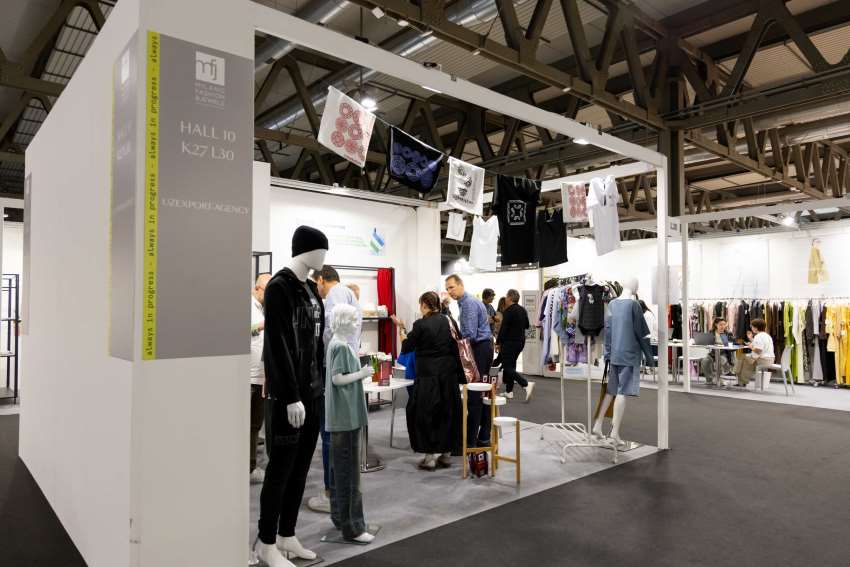
As the fashion elite prepare their calendars for the Spring/Summer 2027 runway shows, an equally vital, multi-billion-dollar machinery is quietly firing up its engines on the city's northwestern border.
From September 12 to 14, 2026, the massive Fiera Milano-Rho complex will host Ready to Show, Italy’s premier international contract clothing and fashion sourcing exhibition. Organized by Tortona Design & Fashion under the leadership of industry veteran Georges Papa, this September’s iteration is officially positioned as a cornerstone section of the Milano Fashion & Jewels hub.
While the glitz of the traditional catwalks captures the public imagination, Ready to Show represents the raw, operational muscle of the fashion industry. It is the crucial junction where international garment manufacturers, knitwear specialists, and textile innovators meet the European buyers, private labels, and major retailers tasked with bringing next season's collections to life.
Translating runway aesthetics into commercial wardrobes
This year, the strategic alignment of Ready to Show alongside the broader Milano Fashion & Jewels ecosystem is stronger than ever. The combined event is expected to draw a massive global turnout of professional visitors, bringing together hundreds of exhibitors from around the world. For over two decades, this fair has broken ground by offering non-EU manufacturers a direct gateway to European fashion houses.
In September 2026, that gateway is morphing into a highly collaborative ecosystem. Major global players, including expansive national pavilions like UN participates with its members from Armenia and the one organized by the Apparel Export Promotion Council (AEPC) representing India's top-tier manufacturers will stand side-by-side with niche artisanal producers.
The timing is surgically precise. The event serves a dual purpose for attendees by creating a direct bridge between creative concept and scalable reality. While creative directors and design teams spend their days spotting fluid draping, hyper-textured materials, and vibrant palette trends on the downtown Milan runways, their commercial counterparts the sourcing directors and private-label buyers; head straight out to the Rho exhibition floor to secure the exact production capacities, fabric weights, and patterns required to manufacture those aesthetics for the commercial high street.
Smart Outerwear, fluid silhouettes, and the new wave of Performance Athleisure
The September 2026 edition splits its focus across key manufacturing verticals designed to satisfy the strict quality and stylistic standards required by European buyers. In the apparel and structured tailoring zones, the focus centers on smart private-label outerwear, precision tailored menswear, and fluidly structured silhouettes in womenswear that can easily adapt to changing lifestyle demands. The knitwear boom takes center stage via high-demand technical knitwear production, highlighting lightweight, highly breathable, trans-seasonal yarns that cater to the consumer shift toward year-round layering and versatile separates.
Simultaneously, the active sportswear and athleisure segment spotlights performance-driven fabrics that seamlessly fuse technical utility; such as moisture-wicking weaves and four-way stretch—with modern everyday fashion aesthetics. Rounding out the floor, the sourcing of curated accessories connects buyers with premium leather goods, footwear components, hardware, and structural elements designed to feed the insatiable global demand for statement handbags, footwear lines, and complementary jewelry pieces that complete the seasonal look.
Textile exporters adopt district-led strategy to reach $100 billion target
India is recalibrating its national textile export strategy, pivoting from generalized manufacturing toward a hyper-localized, district-centric model to secure a $100 billion export valuation by 2030. Following an extensive consultative audit across 36 states and 200 districts, the Ministry of Textiles is finalizing a roadmap that leverages specific regional strengths. Rather than relying on broad industrial policies, the emerging framework prioritizes ‘District Export Action Plans’ (DEAPs), which mandate that local hubs - ranging from the apparel clusters in Tiruppur to the technical textile centers in Surat - operate as specialized units within the global supply chain. This structural shift aims to optimize logistics and manufacturing efficiency by institutionalizing the ‘Farm to Fashion’ value chain across disparate geographies.
Overcoming export headwinds through modernization
The urgency for this realignment follows a challenging FY26, where the sector faced a 2 per cent Y-o-Y decline in total exports, settling at approximately $35.80 billion. Industry experts observe while global demand remains volatile, the path forward rests on value-added segments such as technical textiles and man-made fibers. We are transitioning from volume-based competition to value-driven dominance, notes a senior industry analyst. To facilitate this, the government has integrated advanced skilling through ‘Samarth 2.0’ and provided liquidity support for MSMEs via the TReDS platform. By incentivizing the adoption of sustainable manufacturing - under the newly introduced ‘Tex-Eco’ initiative - the sector intends to neutralize the competitive advantages held by regional rivals and capitalize on recent breakthroughs in multi-lateral trade agreements with the UK and the European Union.
Strengthening the textile value chain
The Indian textile and apparel industry serves as a cornerstone of the national economy, contributing approximately 2.3 per cent to GDP and employing over 45 million people. With a target of reaching a $350 billion total market size by 2030, the government is focusing on modernizing traditional clusters, expanding technical textile production, and enhancing global market access to reach the ambitious $100 billion export benchmark.
Sri Lanka apparel sector seeks tariff parity as exports recover
Sri Lanka’s apparel and textile industry recorded its most robust monthly performance of 2026 this May, with export earnings climbing 7.96 per cent Y-o-Y to $394.14 million. This resurgence, spearheaded by a significant 15.36 per cent rise in shipments to the United States, suggests a firming of global demand following a volatile first quarter. Beyond core markets, the sector demonstrated strategic agility, with exports to non-traditional destinations expanding by 14.61 per cent, effectively diversifying the industry’s revenue stream as it navigates a complex global trade landscape.
Navigating the US tariff conundrum
Despite the encouraging monthly data, the sector faces a critical juncture regarding its long-term competitiveness in the US market. The industry is currently engaged in high-stakes discussions with the US Trade Representative regarding a Section 301 investigation. Current reports indicate Sri Lanka may face an additional 12.5 per cent tariff, a rate that exceeds the 10 per cent levy proposed for regional competitors like Bangladesh and Cambodia. Industry leadership remains focused on securing tariff parity, arguing that the recent export growth underscores a sustained buyer confidence that requires a level playing field to transition into durable, long-term expansion rather than isolated monthly gains.
Scaling sustainability for market resilience
While policymakers address tariff challenges, domestic manufacturers are doubling down on operational transparency and supply chain traceability to retain their standing as a preferred sourcing hub. This shift is essential, as international buyers increasingly align sourcing strategies with rigorous environmental and compliance benchmarks. By focusing on high-value, sustainable production - a transition supported by international development programs - Sri Lankan firms aim to differentiate themselves from high-volume, low-margin competitors. As the sector prepares for H2, FY26, the intersection of favorable export momentum and strategic policy advocacy will determine whether the industry can successfully recover the ground lost during the year’s challenging start.
A cornerstone of the national economy
Sri Lanka’s apparel industry is a cornerstone of the national economy, contributing approximately 6 per cent to GDP and employing over 350,000 workers. Specializing in high-quality lingerie, athleisure, and performance wear, the sector is currently transforming its supply chain toward circularity and digitalization to meet stringent international standards and maintain global competitiveness.
Easing of global feedstock prices boosts margins across Polyester value chain
The domestic textile sector is witnessing a recalibration of production economics following a sustained downturn in global crude oil and naphtha benchmarks. As of late June 2026, the polyester value chain - specifically producers of Polyester Staple Fiber (PSF) and Polyester Filament Yarn (PFY) - is experiencing a meaningful reduction in input costs. This softening in feedstock pricing provides a crucial buffer for manufacturers currently navigating high operational overheads, offering an opportunity for domestic spinners to optimize procurement cycles before a potential market correction.
Optimizing procurement in a volatile market
Market analysts observe, while polypropylene pricing maintains structural stability, the cost-benefit of polyester-based inputs is currently at its most advantageous point this quarter. The current pricing environment allows textile units to replenish inventory at more sustainable price levels, which is expected to support margin expansion as the market moves toward the upcoming peak season for apparel exports. We are advising our member mills to leverage the current price lag to secure long-term contracts, notes a senior representative from a major textile trade body. This strategic accumulation is particularly critical for exporters targeting price-sensitive international markets, where maintaining competitive fabric pricing remains the primary determinant of order volumes.
Rebuilding competitiveness through cost efficiency
While the immediate relief in feedstock costs is welcome, the broader textile sector remains focused on the long-term impact of this easing. Manufacturers are utilizing these savings to reallocate capital toward higher-value finishing technologies, such as moisture-wicking and antimicrobial treatments for performance apparel. This transition from basic yarn production to value-added fabric manufacturing is becoming the standard for maintaining resilience against regional supply chain disruptions. By locking in lower material costs now, firms are establishing a more robust financial foundation, ensuring that the domestic apparel industry can absorb potential volatility in global energy markets through the latter half of the fiscal year.
Driving export-led growth for textile hubs
The polyester value chain produces synthetic fibers and yarns essential for apparel, home textiles, and industrial fabrics. By transforming petrochemical derivatives like Purified Terephthalic Acid (PTA) and Monoethylene Glycol (MEG) into versatile textiles, the sector serves as the backbone for low-cost, high-performance manufacturing, consistently driving export-led growth for domestic textile hubs.
Performance Days intensifies global reach amid rising demand for functional textiles
Textile exhibition, Performance Days is intensifying its international expansion, underscored by a significant increase in demand for advanced functional fabrics. Following a successful March 2026 edition in Munich, which hosted over 470 exhibitors and thousands of industry professionals, the organization is extending its footprint by curating specialized innovation hubs at global partner events, including the Future Fabrics Expo in Brussels this June. This strategic maneuver reflects a broader industry movement toward ‘Textile-to-Textile’ circularity, as brands aggressively seek to bridge the gap between high-output athletic requirements and mandatory sustainability compliance.
Strategic innovation for a circular economy
The rising demand is largely driven by the urgent need for scalable recycling solutions. According to exhibition leadership, the focus on closed-loop systems - such as recycled down and post-industrial wool blends - has moved from a niche interest to a primary sourcing mandate. The Future Fabrics Expo has become a critical nexus for innovation-driven material development, notes Marco Weichert, CEO. By embedding its proprietary trend forums and expert-led innovation zones directly into international shows, Performance Days is positioning its sourcing platform as the technical backbone for European and global apparel brands. This integration allows designers to access vetted, circular-ready materials, effectively shortening the development cycle for Fall-Winter 2027 collections.
Navigating market turbulence through technical ddepth
While the geopolitical and economic climate remains unpredictable, manufacturers are countering uncertainty by doubling down on technical performance and material traceability. The exhibition’s recent programming has prioritized digital supply chain due diligence and AI-accelerated creative tools, signaling a departure from traditional, volume-based procurement toward value-added, data-backed material selection. As the industry prepares for the upcoming autumn summit in Munich scheduled for October 13-14, 2026, the emphasis remains on systemic solutions that reconcile extreme functional performance with the rigorous environmental standards now required by international trade regulations.
Performance Days is the leading international trade fair for functional textiles, yarns, and accessories. Founded in 2008, it serves the sports, outdoor, and workwear industries.
Headquartered in Germany, it hosts biannual events in Munich and maintains a digital sourcing platform, focusing on sustainable innovation and technical fabric developments for global brands.
Gap Inc to modernize marketing operations with AI integration
Gap Inc has formally launched a comprehensive initiative to modernize its marketing organization by integrating advanced artificial intelligence across its entire brand portfolio, which includes Old Navy, Gap, Banana Republic, and Athleta.
Announced at the Cannes Lions International Festival of Creativity, the project seeks to move beyond traditional advertising by building an AI-orchestrated ecosystem capable of real-time consumer engagement. The company is collaborating with Google Cloud, Zeta Global, and Publicis Sapient to architect a unified marketing intelligence layer, aiming to deliver hyper-personalized content and streamline campaign delivery across its owned digital channels.
Intelligent ecosystems to drive customer relevance
The core of this transformation is the deployment of Athena by Zeta, an intelligence layer designed to unify audience strategy, creative development, and campaign optimization. By leveraging Google Cloud’s Gemini models and sophisticated video generation tools like Veo, Gap Inc. intends to automate complex workflows while allowing its creative teams to focus on brand storytelling. According to Damon Berger, Senior Vice President for Marketing Shared Services, the transition is designed to remove existing data silos, enabling the company to build a marketing model that iteratively adapts to individual consumer behavior. This investment in ‘agentic capabilities’ follows the retailer's ninth consecutive quarter of positive comparable sales, reinforcing management’s commitment to tech-driven growth amid a complex retail landscape.
Future-proofing through data and design
Beyond marketing automation, Gap Inc continues to integrate artificial intelligence into the actual shopping experience, including predictive size guidance and conversational checkout flows. As the company navigates the challenges of balancing promotional intensity with brand elevation, this AI-first operating model is intended to improve operational efficiency and margin protection. By merging a legacy of cultural storytelling with a robust data foundation, Gap Inc. is positioning itself to maintain market relevance in an increasingly AI-native retail environment, where responsiveness to customer intent is becoming the primary driver of competitive advantage.
Gap Inc is a leading global retail house encompassing iconic brands like Old Navy, Gap, Banana Republic, and Athleta. The company operates approximately 3,500 stores worldwide, offering apparel and accessories for all ages. With a renewed focus on AI-led efficiency, Gap Inc. aims to sustain its current positive sales momentum.
Brand Victoria Beckham achieves profitability with $170 million revenue in FY26
Once defined by its struggle to bridge the gap between celebrity influence and sustainable profitability, the Victoria Beckham fashion and beauty empire has successfully navigated its way to a thriving business model. As of early 2026, the company is forecasting an annual revenue of approximately $170 million, marking a significant milestone in its multi-year turnaround strategy. This financial resurgence is underpinned by a departure from a rigid, founder-led operational structure toward a more delegated, performance-driven executive approach.
Digital infrastructure as a growth catalyst
A fundamental component of this success has been the overhaul of the brand's digital ecosystem. By restructuring its paid media strategy, the company has successfully optimized ROI across full-funnel marketing activities. Including AI-powered campaign deployment and a systematic reassessment of product catalogues, these efforts resulted in a 360 per cent increase in paid social revenue and 70 per cent uplift in organic revenue. Unlike legacy luxury houses that prioritize exclusivity through silence, the brand has adopted an ‘experience-first’ digital philosophy. By utilizing interactive sign-up flows that prioritize customer personalization, the brand has secured a one-in-five customer retention rate, proving that digital luxury can balance high-touch service with scalable growth.
Navigating global markets with regional nuance
Beyond digital upgrades, the brand is pursuing an aggressive physical retail strategy, with plans to establish new flagships in New York and Paris. This physical expansion is carefully balanced against regional market intelligence. In the United States and the United Kingdom, marketing communications lean into Victoria Beckham’s personal influence, consistently achieving click-through rates (CTR) of 15 per cent on featured items. Conversely, the brand adapts its narrative for markets like Australia, where engagement is driven by lifestyle-oriented content rather than direct celebrity association. Blending founder-led prestige with highly localized digital tactics, this dual-pronged strategy has positioned the company to capture the ‘conscious urban consumer,’ ensuring its relevance beyond the inner circle of fashion elite.
Founded in 2008, Victoria Beckham is a London-based luxury fashion and beauty house. Its portfolio includes ready-to-wear apparel, luxury beauty products, and eyewear. The company has moved from niche luxury toward broader global retail, supported by strategic collaborations and a strong focus on sustainable, profitable growth.
Vuori expands global presence with over 100 stores in China
California-based performance lifestyle brand Vuori is currently executing a disciplined international rollout, prioritizing top-tier urban centers in China as a cornerstone of its objective to exceed 100 global retail locations by the end of 2026. Rather than pursuing rapid, indiscriminate store proliferation, the brand is leveraging high-precision consumer intelligence to penetrate the premium athleisure segment. Recent operations in Shanghai and Beijing exemplify this refined approach, focusing on affluent urbanites who demonstrate a clear preference for minimalist, high-quality performance apparel over overtly branded activewear.
Cultivating the under-served premium segment
A critical driver of Vuori's expansion is its ability to capture the male activewear segment, which has historically been underserved by competitors favoring female-centric marketing. By maintaining a near 1:1 sales ratio between men’s and women’s apparel, the brand successfully differentiates itself in a crowded market. Industry data suggests that the brand's proprietary fabric technology - emphasizing softness and drape - has provided a significant competitive advantage in China’s rational consumption environment. Furthermore, Vuori’s localized initiatives, such as its recent Chinese New Year collection, reflect a transition toward deep cultural fluency. By avoiding stereotypical design tropes in favor of understated, versatile essentials, the brand has solidified its reputation among consumers who prioritize tactile longevity and technical performance.
Calibrating growth through digital-first integration
Vuori’s international strategy emphasizes a controlled, sequenced entry where digital foundation precedes physical manifestation. By utilizing localized e-commerce platforms to map demand prior to finalizing real estate, the company minimizes the operational risks typical of global scaling. This omnichannel rigor is supported by a valuation of $5.5 billion, providing the capital necessary to sustain premium partnerships with entities such as Pure Fitness. As the brand nears its 2026 store milestone, the focus remains on ‘community-centered retail,’ where each flagship serves not merely as a point of sale, but as an experiential hub designed to build long-term brand equity among high-income, active professional demographics.
Offering premium athletic and casual apparel
Founded in 2015, Vuori is a California-based performance lifestyle brand offering premium athletic and casual apparel. The company targets affluent urban professionals with a focus on men's and women's versatile performance wear. Valued at $5.5 billion, Vuori is currently scaling its physical retail footprint internationally, prioritizing key markets across Asia.