FW
Australian textile market shows resilience despite contraction in apparel imports
The Australian textile and apparel trade landscape is undergoing a notable transition as fiscal year 2026 data reveals divergent trends between finished garments and raw materials. According to recent Australian Bureau of Statistics (ABS) figures, apparel imports contracted by approximately 3.3 per cent during the July 2025–April 2026 period, reflecting a broader cooling in consumer demand. This decline is largely attributed to a localized cost-of-living squeeze, which has constrained household budgets and dampened retail activity across the nation. Conversely, imports of textile yarn, fabrics, and made-up articles have demonstrated counter-cyclical growth, rising by 2.4 per cent during the same timeframe. This uptick suggests that while local retailers are exercising caution with finished inventory, domestic manufacturing and processing sectors are actively sourcing raw materials to sustain operations.
Economic headwinds and future outlook
This import behavior underscores a period of heightened caution within the industry. With Deloitte Access Economics recently revising Australia’s 2026-27 GDP growth forecast downward to 1.3 per cent, the retail sector faces a sustained period of subdued expenditure. Industry analysts observe that supply chain managers are prioritizing lean inventory models to mitigate risks associated with volatile consumer confidence. Despite the apparel dip, the resilience in textile imports indicates a strategic focus on value-added manufacturing, as firms attempt to insulate themselves from the pricing pressures impacting imported finished goods. The market is recalibrating as businesses balance inflationary pressures with the necessity of maintaining operational throughput, noted one industry observer. For the remainder of 2026, the sector is expected to favor operational efficiency over aggressive expansion, awaiting stabilization in consumer sentiment.
The Australian textile ecosystem
Australia’s textile and apparel market was valued at US$ 30.3 billion in 2025, with a projected CAGR of 4.66 per cent through 2034. The sector spans raw fiber production, specialized textile manufacturing, and large-scale apparel retail. Current growth initiatives emphasize digital transformation, circular economy adoption, and sustainable material innovation.
Floods paralyze distribution network at Surat textile hub
Surat’s textile sector is currently navigating a severe operational crisis following record-breaking monsoon rainfall that has inundated over 26 major market hubs, including the critical Ring Road, Saroli, and Limbayat areas. Industry estimates suggest total financial losses exceeding Rs 200 crore, stemming from extensive damage to raw materials, finished synthetic fabrics, and essential manufacturing machinery. The growth, which saw 14 inches of rainfall in a single day, forced the Federation of Surat Textile Traders Association (FOSTAA) to mandate a temporary city-wide market closure. This disruption has paralyzed the region's distribution network, with hundreds of trucks immobilized in Saroli, leaving only a fraction of daily apparel shipments reaching domestic markets. For a hub that produces roughly six lakh crore meters of fabric annually, this shutdown represents a significant bottleneck in India's broader textile supply chain.
Infrastructure vulnerability and long-term resilience
The recent flooding has amplified industry-wide concerns regarding urban drainage and the systemic vulnerability of basement-level warehousing. Traders contend that the recurring nature of these floods - marking the eighth consecutive year of major monsoon-related disruption—underscores a critical failure in pre-monsoon civic preparedness. In response to the mounting pressure, the Gujarat state administration has announced a dedicated Rs 500 crore project aimed at creek development and enhanced flood-control infrastructure to mitigate future tidal and rainwater ingress. While the current cleanup efforts are underway, the sector faces the dual challenge of absorbing immediate capital losses and restoring investor confidence. Industry stakeholders are now advocating for government-backed compensation and infrastructure upgrades, emphasizing that without structural improvements, the ‘Textile City’ risks losing its competitive edge in both domestic and international manufacturing segments.
Surat is India’s premier manufacturing hub for synthetic sarees and embellished dress materials, housing approximately 75,000 shops across 240 markets. The industry operates with an annual turnover of Rs 1.50 lakh crore. Growth strategies focus on export expansion and value-added manufacturing, though recent performance is currently hampered by recurring extreme weather.
Lee Jeans secures European growth via strategic partnership
Following the high-profile acquisition of Lee by Authentic Brands Group (Authentic), the iconic denim label is executing a tactical expansion across Europe. Authentic has designated Experience Group as the primary operating partner for the brand in the region, a move designed to rejuvenate Lee’s presence across menswear, womenswear, and activewear segments. This partnership, set to commence following the official close of the acquisition in H2, FY26, leverages Experience Group’s established logistics infrastructure and deep-rooted knowledge of European retail dynamics. By delegating operational duties to a regional specialist, Authentic intends to harmonize Lee’s traditional denim heritage with a modern, multi-channel distribution strategy that spans wholesale, direct-to-consumer storefronts, and digital marketplaces.
Scaling through licensing excellence
The decision to entrust Experience Group with Lee’s European operations underscores a shift toward more agile, licensing-led business models within the global fashion industry. This partnership is an important step in Lee's international expansion strategy and reflects the strength of our platform model, states Henry Stupp, President - EMEAI at Authentic Brands Group. By outsourcing regional management, Authentic aims to amplify Lee’s reach while maintaining consistent product quality and brand narrative. For Experience Group, the mandate is clear: deploy its proven operational capabilities to penetrate key European markets more effectively.
This transition represents a significant milestone for Lee, which generates roughly $1.5 billion in annual retail sales globally, as it transitions into a new era of brand management.
Accelerating operational efficiency
Lee is a foundational American denim brand established over 135 years ago, recognized for its craftsmanship in workwear and casual apparel. Currently transitioning to Authentic Brands Group’s portfolio, the brand focuses on global denim lifestyle products. The new licensing strategy aims to accelerate international revenue and operational efficiency.
Levi’s evolves as a DTC powerhouse with robust revenue growth
Successfully navigating a complex retail landscape, Levi Strauss & Co is rapidly evolving into a direct-to-consumer (DTC) powerhouse. In Q2, FY26, the company reported a robust 8 per cent increase in net revenue to $1.56 billion, fueled by a 17th consecutive quarter of DTC comparable sales growth. This performance signals a decisive shift for the denim giant, which is increasingly prioritizing high-margin digital and physical storefronts over traditional wholesale dependencies. By fostering a ‘denim lifestyle’ ecosystem, the brand is capturing greater consumer data, which facilitates more precise inventory management and localized marketing strategies.
Operational resilience in a volatile market
Despite ongoing headwinds from global tariff adjustments and currency fluctuations, the company has raised its full-year 2026 revenue forecast to a 7per cent–7.5 per cent growth range. Michelle Gass, CEO attributes this momentum to the successful integration of experiential retail concepts, such as the ‘Home Turf’ store model, which emphasizes community-driven programming and personalized consumer interactions. This strategic move is complemented by the rapid expansion of e-commerce, which saw a 19 per cent rise during the quarter. The company’s ability to maintain a gross margin expansion of 10 basis points - achieved through rigorous cost optimization and favorable pricing power - demonstrates a disciplined operational approach that shields its bottom line from external supply chain pressures.
Global leader in jeanswear
Founded in 1853, San Francisco-based Levi Strauss & Co. is a global leader in jeanswear and apparel, operating brands like Levi’s, Signature, and Beyond Yoga. The company utilizes a hybrid business model of wholesale partnerships and a high-growth DTC retail strategy. Currently focused on long-term expansion through digital maturity and lifestyle product diversification, the company maintains a stable financial outlook, backed by strong quarterly earnings and continuous investment in brand innovation.
Andhra Pradesh eyes high-value production hub status with new investments
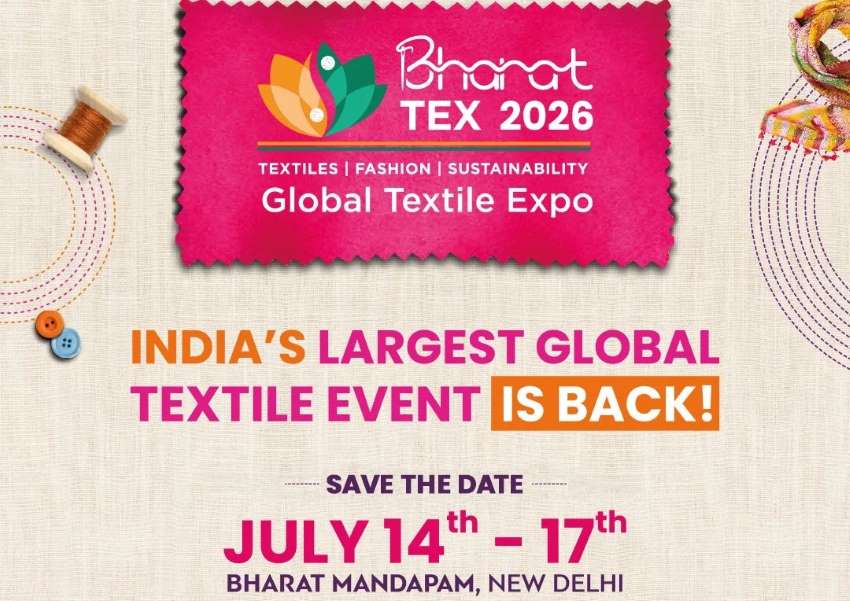
Andhra Pradesh is set to leverage the upcoming Bharat Tex 2026 platform to reposition itself from a raw material supplier to a high-value manufacturing hub. While the state currently ranks as the sixth-largest cotton producer in India, regional leadership is aggressively targeting ‘value migration’ to rectify a longstanding economic imbalance where raw yarn and grey fabric are frequently exported for finishing elsewhere. By showcasing its existing infrastructure - which includes 12 textile parks and a robust base of 106 spinning mills - the state government aims to secure commitments for downstream investments in processing, knitting, and technical textiles. This strategic shift is designed to capture the full economic potential of the state’s cotton output and transform local industrial corridors into end-to-end apparel ecosystems.
Modernizing infrastructure for global competitiveness
The state’s participation at Bharat Tex 2026 serves as a focal point for promoting its latest industrial incentives, including the ambitious Textile, Apparel and Garments Policy. Authorities are emphasizing the success of models like the Brandix India Apparel City, which provides a blueprint for the ‘fiber-to-store’ integration required to attract international retail partners. By highlighting favorable logistics, 24/7 power availability, and specialized skill-development centers in Vizag and Raydurg, the state intends to lure investors looking for viable alternatives to traditional manufacturing hubs. This push is critical as India scales its textile exports, with Andhra Pradesh aiming to minimize logistical overheads for global brands by fostering a more localized, efficient, and vertically integrated supply chain.
Pursuing a policy-driven growth plan
Andhra Pradesh is a significant player in India's textile landscape, specializing in cotton production, handlooms, and integrated apparel manufacturing. Key hubs include Vizag, Guntur, and Anantapur. The state is currently pursuing a policy-driven growth plan to expand its garmenting and technical textile sectors, supported by a stable industrial framework.
NCTO outlines counter proposal to current tariff mechanism under Section 301
In a high-stakes testimony before the Office of the United States Trade Representative (USTR), Kim Glas, President and CEO, National Council of Textile Organizations (NCTO), has outlined counter proposal to the current textile mechanism proposed under the Section 301 forced labor investigations. Glas argued, if implemented without significant modification, the administration’s existing framework could inadvertently jeopardize domestic manufacturing jobs rather than securing the supply chain against exploitative labor practices.
Strengthening domestic capacity through targeted reforms
NCTO’s counter-proposal is based on three critical reforms to ensure the mechanism serves as a catalyst for domestic growth. First, the organization is pushing to exclude raw cotton from the textile mechanism, warning, its inclusion would discourage the use of US-grown fiber and further incentivize the relocation of spinning and weaving operations to Asia. Second, the council advocated for the exemption of textile machinery and specialized inputs—those currently unavailable within the US - from additional Section 301 duties to prevent penalizing domestic manufacturers who require global equipment to remain competitive. Finally, the NCTO is urging the administration to finalize an innovative incentive program that incentivizes sourcing from the Western Hemisphere, a strategy the group estimates could create over 56,000 jobs.
Protecting the US value chain against unfair competition
The core of the NCTO’s testimony rests on the assertion that forced labor creates an artificial and predatory cost advantage that displaces US producers both domestically and abroad. By leveraging trade policy to support the U.S.-Mexico-Canada Agreement (USMCA) and the CAFTA-DR corridors, the NCTO maintains that the administration can revitalize the sector. The administration now has the opportunity to take meaningful actions to defend the industry from unfair trade practices, Glas stated in her submission. As the USTR weighs these proposed actions, the textile sector remains at a crossroads where trade enforcement will either reinforce regional supply chain integrity or deepen the reliance on volatile, labor-exploitative markets.
Strengthening domestic production capacity
The National Council of Textile Organizations (NCTO) serves as the primary trade association for the U.S. textile industry, representing the entire value chain from fiber to finished sewn products. The organization focuses on trade policy advocacy, strengthening domestic manufacturing capacity, and ensuring ethical supply chain compliance in global markets.
India struggles while China gains in home textiles exports
India’s home textile exports are grappling with a pronounced downturn, characterized by a 20 per cent decline in outbound shipments. While the broader Indian textile sector remains resilient with a 2.1 per cent growth reported during FY 2025–26, the home textile category - specifically bed linen, terry towels, and blankets - failed to maintain pace. This contraction highlights a widening competitive gap, as China consolidates its dominance with a 43 per cent global market share, leveraging its superior scale and supply chain integration to capture the bulk of recovering international demand.
Competitive realignment and market pressures
The decline is largely attributed to a sluggish recovery in discretionary spending across major Western markets, particularly the United States. While US imports from India have seen a relatively moderate decline compared to China’s sharper contraction in early 2026, Indian exporters are struggling to capitalize on the ‘China-plus-one’ sourcing strategy. Industry experts observe, while global buyers are diversifying, India’s inability to match China’s speed-to-market and cost-competitiveness in mass-market home textiles remains a significant hurdle.
Furthermore, currency fluctuations have masked the severity of this contraction in rupee terms, suggesting that India is losing real market share in labor-intensive categories where it historically held a pricing advantage.
Strategic shifts to premiumization
To mitigate margin erosion, domestic manufacturers are increasingly turning to value-added segments, such as organic cotton and high-performance synthetic blends. The recovery headline often masks category-specific distress, notes a trade consultant, emphasizing, volume-driven commodity exports are no longer sufficient to secure a competitive foothold. Consequently, firms are aligning with sustainability-focused trends and luxury bedding segments, which now account for a significant portion of value-added textile growth. Despite ongoing support through schemes like RoSCTL and RoDTEP, the sector’s long-term success depends on accelerating supply chain responsiveness and leveraging new preferential access provided by recent FTAs with the UK and EU to reclaim lost ground.
Balancing ancient skills with industrial upgrades
The Indian home textile industry specializes in cotton, linen, and blended bedding, bathroom linens, and floor coverings. Major players focus on exports to North America and Europe, targeting steady growth through product innovation and sustainability. Currently, the sector is balancing traditional craftsmanship with industrial upgrades to boost international competitiveness.
The End of Fibre Blends: Why retailers are moving toward 100% recyclable apparel

The apparel industry is entering a redesign phase as sustainability goals, regulatory pressures, and resource security unite around one central principle: material simplicity. For years, consumers were encouraged to seek out garments labeled ‘100% cotton’ or ‘100% polyester’ as a way to improve recyclability. Today, that label is becoming far more than a sustainability marker. It is being viewed as an indicator of how prepared a brand is for the next era of textile manufacturing.
While technologies capable of separating blended fabrics have advanced considerably, they remain expensive and difficult to scale. As a result, fashion companies are beginning to address the problem at its source, during product development. The move toward mono-material apparel, where garments are constructed from a single fibre family rather than a mix of cotton, polyester, elastane, and nylon, is evolving from a niche environmental initiative into a core supply-chain strategy.
For global brands facing stricter recycling requirements and mounting pressure to create circular business models, designing garments for easy recovery is becoming a commercial necessity rather than a sustainability preference.
When fibre blends become a liability
The scale of the challenge is significant. The global fashion industry generates an estimated 92 million tonnes of textile waste annually, over 85 per cent ending up in landfills or incinerators. In the European Union alone, nearly seven million tonnes of textile waste are generated every year, equivalent to approximately 16 kg per person. Yet only around 1 per cent is successfully recycled back into new clothing. The primary obstacle is fibre blending.
A typical pair of stretch jeans or performance sportswear often combines cotton, polyester, and elastane. While these combinations improve comfort and functionality, they create major complications at the end of a product’s life cycle. Mechanical recycling processes break blended fabrics into shorter fibre lengths, reducing quality and limiting reuse opportunities. Most recovered material is subsequently downcycled into industrial insulation, padding, or cleaning cloths rather than returning to apparel production.
|
Post-consumer garment waste pathways |
|
Poly-cotton blends → Chemical separation processes → High cost, limited scale |
|
100% mono-materials → Automated NIR sorting → Virgin-grade fibre-to-fibre recycling |
This challenge is becoming more and more costly as governments tighten sustainability regulations. Policies such as the European Union’s Ecodesign for Sustainable Products Regulation (ESPR) and expanding Extended Producer Responsibility (EPR) frameworks are placing greater accountability on brands for the recyclability of their products. Materials that are difficult to recover could soon carry higher compliance costs and financial liabilities.
The economics of material purity
The business case for mono-material apparel extends far beyond compliance. Modern textile sorting facilities rely on Near-Infrared (NIR) spectroscopy to identify fabric compositions at industrial scale. These systems can sort more than 50 garments per second, but they perform most efficiently when processing garments made from a single fibre type.
By eliminating complex fibre blends, manufacturers create cleaner waste streams that can move directly into advanced textile-to-textile recycling systems. This reduces the need for expensive chemical preprocessing and improves recovery yields.
The shift, however, requires innovation. Elastane and spandex have become integral to categories such as activewear, denim, and athleisure. Replacing these materials without compromising comfort requires new engineering approaches. Mechanical stretch technologies, which create elasticity through specialized yarn structures and polymer crimping techniques, are emerging as a viable alternative. For sourcing countries like India, Bangladesh, and Vietnam, this shift is driving investments in advanced yarn extrusion, finishing technologies, and precision textile manufacturing capable of delivering performance characteristics using single-origin fibre systems.
How global retailers are adapting
Few examples illustrate this transition more clearly than the initiatives being undertaken by Inditex, the parent company of Zara. Through investments in recycling technologies and partnerships with fibre innovators, the retailer is gradually increasing the share of mono-material garments across key product categories.
Table: How brands navigate domestic stock regimes
|
Supply chain |
Conventional mixed-blend program |
Advanced mono-material program |
|
Sorting Efficiency |
Manual / Multi-stage chemical assays |
Automated NIR scanning (50 garments/sec) |
|
Recycling Yield |
Low (Downcycled to insulation/wiping rags) |
High (Virgin-equivalent fiber-to-fiber spinning) |
|
Sourcing Cost Structure |
Low initial cost / High resource volatility |
Premium initial development / Stable closed loop |
|
Sourcing Risk Profile |
Exposed to 97% virgin material cost spikes |
Insulated via traceable, domestic circular contracts |
By standardizing categories such as knitwear, basics, and selected outerwear into pure lyocell or circular polyester streams, retailers can create predictable feedstock for future recycling while reducing dependence on virgin raw materials. This approach transforms discarded garments from waste into strategic inventory for future production cycles.
India positions itself for the circular textile era
India is simultaneously strengthening its role within the emerging circular textile ecosystem. The Ministry of Textiles has been supporting expansion in man-made fibre capacity to reduce reliance on imported synthetics while encouraging the development of dedicated processing zones across major manufacturing hubs in Tamil Nadu, Gujarat, and the National Capital Region.
The strategy extends beyond manufacturing. Policymakers are working to formalize textile collection networks and integrate informal waste collectors into traceable supply chains. Combined with new trade agreements that support exports to key Western markets, these efforts are positioning India as a potential supplier of circular-compliant apparel and recycled textile feedstock.
Stretch fabrics enter the circular economy
One of the most promising developments is occurring in recyclable stretch materials. The global clothing and textile recycling market is expected to grow from approximately $6.68 billion in 2026 to $9.23 billion by 2034. Within this broader market, recyclable mono-material stretch yarns are emerging as a high-growth segment.
Valued at $1.04 billion in 2026, the category is projected to reach $2.15 billion by 2036, increasing at a CAGR of 9.5 per cent. Polyester-based mono-stretch yarns currently account for 38 per cent of the market, showing recyclability is no longer limited to basic woven fabrics. Major fibre producers such as Lenzing AG, Hyosung TNC, and Unifi are focusing on textile-to-textile recycling technologies that enable true circularity rather than relying solely on recycled plastic feedstocks.
Building infrastructure for circular supply chains
The emergence of facilities such as the NCR Sustainable Textile Exchange (S-TEX) Hub highlights how recovery infrastructure is evolving alongside product design. The northern India-based facility specializes in large-scale collection, automated sorting, and preprocessing of textile waste for exporters and manufacturers.
With plans to process more than 50,000 metric tonnes annually, the hub is expanding capacity to meet growing demand for traceable, high-purity recycled feedstock. Supported by private equity investment and green financing, facilities like S-TEX demonstrate that circularity is increasingly becoming an industrial-scale business opportunity.
As regulations tighten and recycled materials become a strategic resource, the future competitiveness of fashion brands may depend less on how garments are sold and more on how effectively they are designed for recovery. In that environment, mono-material apparel is emerging as one of the most important supply-chain innovations shaping the next decade of global fashion.
US industry coalition proposes landmark trade incentive plan
In a move described as unprecedented for the sector, a unified coalition of US textile, apparel, and retail associations has submitted a formal trade incentive proposal to the Office of the United States Trade Representative (USTR). Representing the full breadth of the domestic supply chain, this rare alliance including the National Council of Textile Organizations (NCTO) and the American Apparel & Footwear Association (AAFA) - seeks to reshape regional manufacturing dynamics. The proposed mechanism allows brands to earn tariff credits by sourcing US textiles and finished apparel from Western Hemisphere Free Trade Agreement (FTA) partners, effectively providing a commercial counterweight to reliance on Asian supply chains currently under scrutiny for forced labor practices.
Incentivizing regional supply chain resilience
The initiative aims to address the volatility inherent in global sourcing by offering a ‘win-win’ framework for both domestic mills and international retailers. By enabling brands to offset Section 301 tariffs through credits linked to US-sourced inputs, the plan intends to drive billions in domestic investment and accelerate the reshoring of apparel production. Projections from the submitting groups suggest the implementation of this policy could generate over 56,000 new American manufacturing jobs and double US textile exports to the Western Hemisphere to $29 billion annually. For brands, the proposal provides a flexible pathway to manage tariff exposure while simultaneously diversifying their supplier base in a manner that aligns with tightening ESG and labor compliance standards.
Strategic shift in industrial policy
Beyond immediate tariff relief, the proposal represents a tactical transition from punitive trade measures toward a growth-oriented industrial strategy. While the USTR continues to investigate failures to enforce prohibitions on forced labor goods - with significant hearings and public comment periods concluding in July 2026 - this joint submission urges the government to adopt incentive-based trade remedies. Advocates assert, if adopted, this framework will stabilize the domestic textile sector, which faced significant headwinds throughout 2025, and solidify the Western Hemisphere as a competitive, high-value alternative to traditional manufacturing hubs.
US industry associations represent the comprehensive interests of the domestic textile and apparel sector, from fiber production to retail distribution. These groups provide strategic advocacy, regulatory analysis, and policy coordination to preserve the competitiveness of the US manufacturing base, championing regional supply chain integration and robust trade enforcement mechanisms.
Punjab targets sustainable textile processing to boost global competitiveness
The Government of Punjab is aggressively upgrading its textile value chain, placing high-tech dyeing and finishing infrastructure at the center of its latest industrial roadmap. Under the ‘Punjab Dyeing and Finishing Policy 2026,’ the state is courting both domestic and international capital to establish sustainable processing clusters near major manufacturing hubs like Ludhiana and Amritsar. This strategic intervention addresses the most fragmented segment of Punjab’s textile industry, where antiquated processing units have historically struggled to meet the stringent environmental and quality benchmarks mandated by global apparel retailers. By prioritizing common facilities such as Zero Liquid Discharge (ZLD) systems and Common Effluent Treatment Plants (CETPs), the state aims to convert its processing sector into a "green" differentiator in the northern Indian market.
Integrating digital logistics for trade efficiency
Complementing this industrial push, the state recently signed a landmark MoU with NICDC Logistics Data Services (NLDSL) on July 7, 2026. By integrating the Unified Logistics Interface Platform (ULIP) into its supply chain architecture, Punjab is digitizing the movement of textile goods to reduce operational overheads. This digital framework provides real-time visibility, enabling manufacturers to synchronize their production with global shipping schedules more effectively. The goal is to eliminate the friction that has traditionally hindered export-oriented MSMEs, noted a state commerce official, highlighting that transparent data flow is now as essential as machinery upgrades for maintaining a competitive edge in the global market.
Flexible incentives to drive large-scale investment
The processing initiative is a key pillar of the broader ‘Punjab Industrial and Business Development Policy 2026,’ which offers investors an unprecedented ‘pick-and-choose’ menu of up to 20 fiscal incentives. For textile players, this includes capital subsidies, electricity duty exemptions, and extended incentive periods reaching up to 15 years. Unlike the rigid, ‘fixed-menu’ policies typical of other Indian states, Punjab’s customizable framework allows firms to build bespoke incentive packages tailored to their specific scale and sustainability requirements.
With the state aiming to attract Rs 75,000 crore in total industrial investment this year, the focus on sustainable textile wet processing is a calculated effort to recapture value that has previously leaked to other manufacturing hubs.
Punjab serves as a pivotal hub for India’s textile industry, specializing in high-quality spinning, knitting, and garmenting. The state’s apparel ecosystem supports a vast network of MSMEs and industrial units. Currently, the government is focusing on modernizing its processing infrastructure and digitizing supply chains to accelerate export growth and ESG compliance.