


FW
Germany backs Philippines-EU trade talks for stronger ties
Germany has expressed firm support for the revival of negotiations concerning a free trade agreement between the Philippines and the European Union (EU). The German ambassador to the Philippines, Andreas Michael Pfaffernoschke, emphasized the nation's keen interest in exploring new business opportunities and fostering bilateral ties. The envoy noted the potential for increased exchanges of skilled workers and collaboration on various fronts.
Promising Prospects Ahead
Andreas Michael Pfaffernoschke, the new German ambassador to the Philippines, lauded the initiative to reopen discussions on a Philippines-EU free trade agreement. He underscored the significance of mutually beneficial economic prospects for both nations, including strengthened people-to-people relations. The exchange of skilled workers and expanding business avenues could further enhance ties between Germany and the Philippines.
Collaboration Beyond Trade
President Ferdinand R. Marcos Jr. and Ambassador Pfaffernoschke have extended their collaboration to areas beyond trade and investment. They have pledged to work closely on climate change mitigation and adaptation efforts. This collaboration underscores the shared commitment of both nations to address pressing global challenges and work towards sustainable solutions.
Trade Ties in Numbers
In the past year, Germany retained its position as the Philippines' 12th largest trading partner, 10th biggest export market, and 15th import supplier during January-October. The bilateral trade volume between the two countries amounted to $4.7 billion, encompassing $2.8 billion in exports and $1.9 billion in imports. Moreover, Germany stands as the Philippines' primary trading partner within the EU.
In a dynamic move, Germany reaffirms its support for reinitiating talks on a Philippines-EU free trade agreement, poised to invigorate trade relations and foster collaboration on multifaceted fronts.
Shifting consumer spending behaviour in Europe
A recent survey found that over 80% of consumers in the UK, France, and Germany expect the economic downturn to last more than a year. In response, more than 90% of shoppers are changing their spending habits.
Specifically, consumers are spending less (54%), eating out less (49%), purchasing fewer non-essential items (51%), shopping with less expensive brands (44%) and limiting spending on clothing, footwear, and accessories (54%)
Consumers are also more likely to shop with retailers that offer exclusive community discounts (63%). This is especially true for students (89%), healthcare workers (81%), and teachers (73%).
Loyalty programs are also becoming more popular, with over 70% of consumers interested in joining programs that offer exclusive benefits. In particular, 7 out of 10 consumers within identity-based communities are more loyal to brands that offer exclusive advantages.
These findings suggest that consumers are becoming more price-conscious and are looking for ways to save money. Retailers that can offer exclusive discounts and create emotional connections with consumers will be well-positioned to succeed in the current economic climate.
Bangladesh: Yarn consumption in RMG sector declines
Yarn consumption in Bangladesh's Ready-Made Garments (RMG) sector declined by 31.55% in the first half of the fiscal year 2022-23, as compared to the same period in the previous year. This was due to a decrease in orders from international buyers, as well as an increase in fabric imports.
According to data from the Bangladesh Textile Mills Association (BTMA), local garment factories purchased 809,351 metric tonnes of yarn during the January-June period of the previous fiscal year, reflecting a decrease of 373,080 tonnes compared to the same period in the previous year.
The decline in yarn consumption was despite the fact that the RMG sector's export earnings increased by 1.19% year-on-year in the latter half of the previous fiscal year. This was due to a shift towards producing higher-value clothing items, which led to higher prices per clothing item despite a decrease in unit exports.
The BTMA has urged the government to consider the textile sector and reduce gas prices, given that the spot market LNG rate has decreased.
The decline in yarn consumption is a worrying trend for the RMG sector, as it could lead to job losses and factory closures. The government and the industry need to work together to find ways to reverse this trend and ensure the continued growth of the RMG sector.
Bangladeshi RMG exporters face price disadvantage in US, EU markets
Bangladesh is the second-largest exporter of ready-made garments (RMG) in the world, but it faces a price disadvantage in the US and EU markets compared to its competitors.
In 2022, the average price of Bangladeshi RMG exports to the EU was USD 17.27 per kg, while India and Sri Lanka secured prices of USD 23.27 and USD 28.54 per kg respectively.
In the US market, Bangladesh's RMG exports were priced at USD 3.10 per square meter, while India and Sri Lanka commanded prices of USD 3.80 and USD 4.26 per square meter respectively.
There are several reasons for this price disadvantage. One reason is that Bangladesh's RMG industry is heavily reliant on a few sectors, with approximately 80 percent of apparel exports originating from five specific segments. This makes it difficult for Bangladeshi exporters to negotiate higher prices.
Another reason is that Bangladesh lacks a deep-sea port, which makes it difficult and expensive to export goods. This also gives foreign buyers an advantage in price negotiations.
Finally, Bangladeshi RMG factories have not invested enough in research and development, which has limited their ability to produce high-value garments.
To address these challenges, Bangladesh needs to diversify its export portfolio, invest in research and development, and improve its negotiation skills.
H&M's exit from Myanmar shifts focus to India as sourcing hub
Swedish fashion retailer H&M has announced that it will phase out its manufacturing operations in Myanmar due to reports of labor exploitation. This move is likely to shift the focus of global retailers to neighboring markets like India, which has been actively enticing them to increase their sourcing from the country.
India is a major player in the global apparel industry, and its domestic market is five to six times larger than its export market. The country has a large and skilled workforce, as well as a favorable regulatory environment for businesses. In addition, India is increasingly seen as a reliable and ethical sourcing destination.
H&M and other global retailers are already increasing their sourcing from India. For example, Uniqlo India is on track to achieve 30% domestic sourcing, while H&M India plans to add six new stores in the current year.
The exit of H&M from Myanmar is a setback for the country's apparel industry. However, it is also an opportunity for India to emerge as a leading sourcing hub in the region.
The Indian government has been taking steps to make the country more attractive to foreign investors, such as simplifying the regulatory environment and providing incentives for businesses.
Bangladesh emerges top cotton apparel exporter
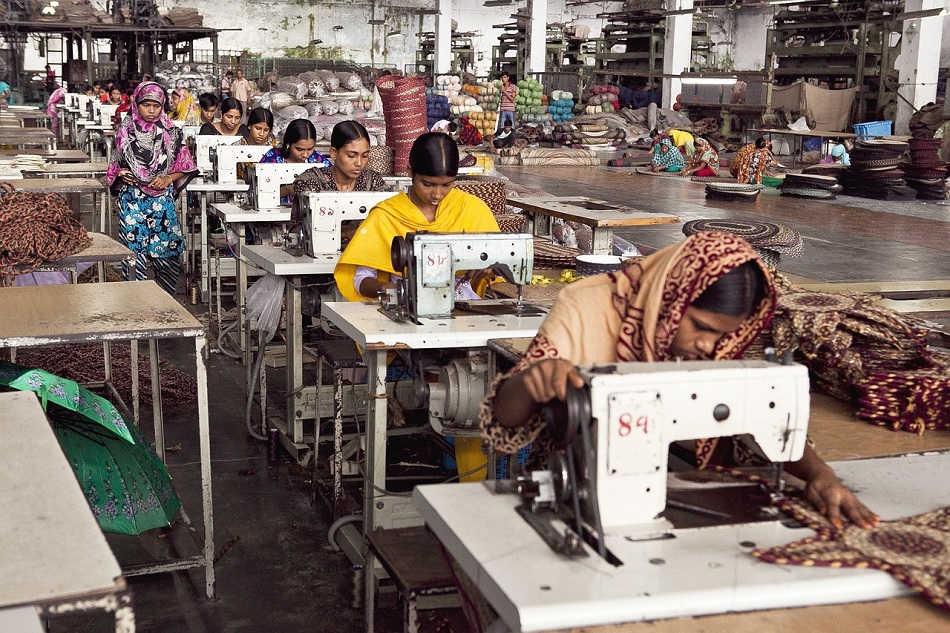
Bangladesh is on the verge of surpassing China as the world's leading exporter of cotton with global demand for cotton apparels increasing. The World Trade Organization had already identified Bangladesh as the world's second-largest garment exporter after China in 2022 and the quick upsurge has continued steadily over another year to make it the first.
One reason for this is that most American fashion apparel companies after Covid years, have reduced their sourcing from China, reallocating their sourcing to three other primary South East Asian markets: Bangladesh, India, and Vietnam. However, Bangladesh has emerged as the strongest and most competitive apparel supplier price-wise as with government help and the expertise of specialized apparel agencies, more and more spinning mills with high-tech manufacturing are being set up.
Growing cotton consumption
According to a study by the US Department of Agriculture (USDA) titled ‘Cotton: World Markets and Trade,’ Bangladesh total cotton consumption is up 800,000 bales to around 8 million, because of rising apparel exports to some of the world’s largest importing markets of the US and European Union. “Spinning mills’ operating rates in 2023-24 are expected to rise as the textile supply chain replenishes depleted stocks of yarn, fabric, and apparel; this past marketing year witnessed textile manufactures destocking and maintaining low inventories across the supply chain,” says the report.
This forecast prediction of 800,000-bales or 10 per cent, year-on-year increase in Bangladesh's cotton consumption due to escalating apparel exports in 2023-24, is expected to grow further in future.
Apparel contributes over 80 per cent to the country's total annual exports. The current export value of nearly $47 billion in woven and knitwear shipments in the fiscal year 2022-23, is almost double that of a decade ago. Besides these apparel categories, T-shirts, trousers, and sweaters continue to dominate the country’s exports and the iconic cotton T-shirt has accounted for around one-fifth of the value of Bangladeshi garment exports to Europe over the recent past.
Factories in Bangladesh are focused on making cotton-based garments and more than 70 per cent shipments comprise cotton apparel such as knitted cotton shirts and sweaters, which are helping drive record high values. The USDA report has highlighted the fact that Bangladesh will now aim to achieve more than $50 billion in apparel exports in the fiscal year 2024, which will be far more than the previous years, as the government is positive about sustaining the increased demand over the near future.
Knitted garments the most popular segment
The exports of knitted garments for men, women, and children have been the mainstay of the recent quick growth. “Apparel exports are pivotal to Bangladesh’s economic growth and stabilizing the value of the domestic currency, specifically by obtaining US dollars through foreign sales. Exports of knit apparel have been crucial to recent growth with a value that nearly tripled over the past decade. According to the Bangladesh Textile Mills Association, local textile mills meet 85 per cent of the demand for knit fabrics and about 40 per cent for woven fabric, which is mostly imported from China,” points out the USDA report.
Bangladesh has always been an attractive apparel-sourcing destination, although the challenges of the pandemic affected the country greatly. However, in recent years, the Bangladesh garment sector has been greatly helped by the government to follow an environmentally-friendly green policy, with factory buildings having become safer while turning to compliance, factory and occupational safety, and minimizing waste and excess production. Currently Bangladesh has more green garment factories than most other countries, but these factories’ share of the country’s apparel exports remains low as the other more established factories continue to hold sway.
With the odds against China, Bangladesh focuses to make cotton while the sun shines to boost its survival in an economy dependent on all kinds of global exports to survive economic downturns and impending recession.
SIMA and CAI lock horns: Indian textile industry's cotton woes continue
The Indian textile industry, primarily reliant on cotton, faces persistent hurdles due to fluctuating cotton prices and an 11% import duty on cotton, despite ample domestic cotton availability. Cotton textile exports, including ready-made garments, dropped by 23% in 2022-23 and 18% in April-June 2023. Cotton yarn exports plummeted by 50%, causing production halts and 30% job losses. To address this, Union Minister of Textiles, Piyush Goyal, established a Textile Advisory Group and introduced measures to stabilize prices and enhance global competitiveness.
Initiatives to address challenges
Export benefits like RoTDEP, reformed cotton contract terms, and a joint effort by Agriculture and Textiles Ministries to boost cotton production are in motion. Nevertheless, the 11% import duty fosters panic by influencing domestic pricing and trade. The Committee on Cotton Production and Consumption (COCPC), led by the Textile Commissioner, shapes cotton price trends, affecting the entire cotton textile value chain.
Industry appeals for stability
Chairman of The Southern India Mills’ Association (SIMA), Ravi Sam, calls upon the Cotton Association of India (CAI) to align with COCPC estimates. He challenges CAI's cotton crop, arrival, and stock estimates for 2022-23. Despite a 15-20% drop in domestic cotton prices, textile exports grew to $1,623 million in Q1 FY23-24. Yet, the recent 12% price hike could jeopardize export commitments.
Conflicting estimates impact market
Underestimating crop size pushed cotton prices up by Rs. 3,000/- per candy in days. While the Cotton Corporation of India recorded 318 lakh bales for 2022-23, CAI projected 311.18 lakh bales. Ravi Sam suggests CAI might misconstrue ginning production as the crop size. He champions COCPC estimates, stating opening stock, crop size, consumption, export, and closing stock figures.
Import duty removal and global competitiveness
To stabilize prices and boost competitiveness, Ravi Sam advocates scrapping the 11% import duty. Despite a comfortable global cotton supply, a 10-12% price hike won't significantly enhance exports. Mills are advised to be cautious as the new season's cotton enters the Northern Region market.
H&M to phase out sourcing from Myanmar over ‘Labor Abuses’
The world's second-largest fashion retailer, H&M, has announced plans to gradually phase out sourcing from Myanmar due to mounting reports of labor abuses within the country's garment factories. The move follows similar decisions by other major brands, including Inditex (owner of Zara), Primark, and Marks & Spencer.
H&M said the decision was made after "extensive deliberation" and that it was no longer possible to uphold its operational standards in Myanmar. The company is also investigating approximately 20 allegations of labor abuses, including forced overtime and wage theft.
The decision to exit Myanmar is a major blow to the country's garment industry, which employs millions of people. However, H&M said it would work with its suppliers to ensure a "responsible exit" that minimizes the impact on workers.
The company's decision is also a sign of the growing pressure on businesses to take a stand against human rights abuses. In recent years, there has been a wave of corporate activism, with companies increasingly being held accountable for their actions in supply chains around the world.
The decision by H&M and other major brands to exit Myanmar is a significant step in the fight against labor abuses. It sends a strong message to other businesses that they cannot turn a blind eye to human rights violations.
US textile, apparel imports decline in June
Overall imports fell by 4.2% from May and 16.7% from the previous year.
In June, imports of textiles and apparel experienced a decline following several consecutive months of growth. The combined volume of textile and apparel imports in June reached 8.43 billion square meter equivalents (SME), indicating a 4.2 percent drop from May and a significant 16.7 percent decline from the corresponding period of the previous year.
Specifically:
• Textile imports amounted to 6.38 billion SME, registering a 6.3 percent decrease compared to the previous month and a 13.2 percent decrease from the previous year.
• Apparel imports stood at 2.05 billion SME, revealing a 3.0 percent rise from May but a substantial 25.9 percent decrease from the previous year.
Cumulative imports for the year fell by 21.4%
Cumulatively for the year until June, imports of textiles and apparel totalled 44.8 billion SME, marking a notable 21.4 percent reduction from the previous year's figures. Within this, textile imports accounted for 33.2 billion SME, representing an 18.0 percent decrease, while apparel imports experienced a significant decline of 29.7 percent, reaching 11.6 billion SME.
Imports over the past 12 months fell by 15.2%
Considering the one-year period ending in June, the overall import volume dropped by 15.2 percent, amounting to 93.6 million SME. During this period, textile imports decreased by 13.3 percent to 67.4 billion SME, while apparel imports exhibited a substantial decline of 19.9 percent, reaching 26.2 billion SME.
World's lightest bulletproof jackets from India
In a remarkable breakthrough, researchers at IIT-Delhi have introduced the world's lightest bulletproof jackets, revolutionizing the landscape of protective gear. These state-of-the-art jackets, designed specifically for frontline soldiers, offer unparalleled protection while significantly reducing the overall weight burden.
Weighing an astonishingly low 8.2 kg, the newly developed jacket showcases extraordinary resilience, capable of withstanding up to eight bullets fired from AK-series rifles. This achievement marks a considerable advancement over the current 10.5 kg bulletproof jackets worn by the Indian Army. Additionally, an alternative variant, weighing 9.5 kg, provides exceptional resistance against six bullets from designated sniper rifles.
The inception of this ground-breaking project dates back 15 years, triggered by an insightful conversation between Professor Naresh Bhatnagar from IIT Delhi's Centre of Excellence on Personal Body Armour and an Army Major with frontline experience.
The Major emphasized the urgent requirement for lighter bulletproof jackets, given the impracticality of the existing iron-based counterparts, which weighed between 22-25 kg and hindered combat effectiveness.
Diverging from conventional approaches, IIT-Delhi's researchers integrated advanced polymer and ceramic materials into their innovative jacket design. The endeavor garnered substantial academic investment, engaging the expertise of 25 M.Tech and 12 Ph.D. students.
Endorsed by the Bureau of Indian Standards following meticulous evaluation, these jackets are slated for presentation at an upcoming NATO conference in Germany. IIT-Delhi's pioneering bulletproof technology not only elevates protective capabilities but also redefines agility, establishing a new global standard.
This achievement exemplifies India's strides in defense technology, spotlighting the unwavering commitment of academia and research to safeguarding lives on the frontlines.











