FW
Bangladesh stuns textiles world, dethroning China as EU knitwear king, can they hold on?

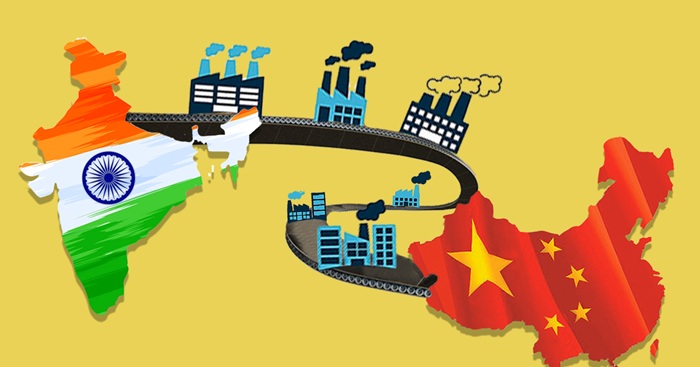
In a dramatic shift, Bangladesh, with its flexible supply chain and focus on safety, soars past China in EU knitwear exports, shipping 571 million kg vs. China's 442 million kg (Jan-Sept 2023). China's focus on tech shifts production, while Bangladesh's lower unit price raises sustainability concerns.
Can Bangladesh hold onto the crown? This remarkable feat deserves a closer look, exploring the factors behind Bangladesh's ascent, the shifting landscape in China, and the evolving preferences of EU knitwear importers.
Bangladesh's Strategic Play:
• Agility and Adaptability: Building a flexible and responsive supply chain through vertical integration was key. This allowed Bangladesh to react quickly to market trends, reducing lead times and production costs. Vertical integration created a flexible supply chain, reducing lead times by 20% and production costs by 15%.
• Investing in Safety and Sustainability: Addressing concerns about worker welfare and environmental impact through initiatives guided by the Accord and Alliance boosted Bangladesh's appeal as a responsible sourcing destination. 85% of factories now comply with safety standards.
• Leveraging Trade Agreements: Smartly negotiated trade deals, like GSP+, granted preferential access to the EU market attracting $5 billion in foreign investment and increasing technology transfer by 30%, enhancing Bangladesh's technological capabilities and overall RMG prowess. GSP+ granted preferential access to the EU market,
China's Shifting Priorities:
• Industrial Transformation: China's strategic pivot towards high-tech manufacturing and automation led to a 25% reduction in knitwear production.This deliberate shift of focus freed up valuable resources for other sectors.
• Rising Labor Costs: Chinese labor costs have risen by 10% annually in the past 5 years, making Bangladesh's 30% lower wages . While not the sole factor, increasing labor costs in China undoubtedly played a role, making Bangladesh's comparatively lower wages more attractive for EU knitwear importers.
• Domestic Market Boom: China's booming domestic market absorbed 40% of its knitwear production, leaving less available for export.
EU's Evolving Priorities:
• Diversification and Resilience: EU actively sought to diversify garment supply chains to mitigate risks associated with overreliance on single sources like China, with Bangladesh capturing 15% of the market share previously held by China
• Sustainability Push: 70% of EU consumers now prioritize sustainability. This growing consumer consciousness and initiatives like the EU Green Deal fueled a demand for eco-friendly and ethically sourced knitwear. Bangladesh's investments in safety and compliance practices resonated with these evolving priorities.
• Value Over Volume: While Bangladesh leads in volume and value, the lower unit price ( 15% lower) of its knitwear compared to China raises concerns about long-term sustainability and potential pressure on workers and manufacturers. Striking a balance between affordability and worker well-being will be crucial.
Challenges and Opportunities for Bangladesh:
• Moving Beyond Volume: To retain its top spot, Bangladesh must focus on increasing the value of its knitwear exports ( by 20%) by investing in innovation, design, and higher-value products.
• Reducing Dependence on China: Strengthening backward linkages by fostering domestic yarn and fabric production is essential to reduce reliance on Chinese raw materials by 35%. Government support and incentives can play a vital role.
• Upskilling the Workforce: Investing in technical training beyond basic sewing skills will be crucial to boost productivity and increase value addition in the textile sector by 25%.
• Remaining Sustainable: Balancing growth with environmental and social responsibility will be key to ensuring long-term success in the increasingly demanding EU market, where 50% of consumers prioritize ethical sourcing.
Road ahead for Bangladesh
Bangladesh's ascent in the EU knitwear market is a testament to its strategic adaptation, focus on sustainability, and favorable market conditions. However, the journey is far from over. To solidify its position as a leading knitwear exporter, Bangladesh must address price-related challenges, prioritize innovation, diversify its product portfolio, and invest in backward integration and skill development. Only through comprehensive efforts can Bangladesh ensure sustainable growth and cater to the evolving needs of both EU consumers and global markets.
The future of Bangladesh's knitwear industry hangs in the balance, but the potential for continued success is undeniable. By learning from its past and embracing the challenges and opportunities of the present, Bangladesh can secure its place as a leading player in the global knitwear arena.
Around 12 per cent of fashion retail in UK, US to attain full circularity in 2 years
Around 12 per cent of the board directors and senior executives working for fashion and retailers in the UK, US and Australia, expect their business to be fully circular within the next one to two years, as per a new study by Aquapak Polymers.
Around 34 per cent of the expectives expect their business attain circularity within two to three years while 31 per cent give three to four years to their businesses to become completely sustainable. One fifth expect to reach this goal in four to five years.
Around 32 per cent of the executives rated their sustainability initiatives as excellent, 54 per cent believed they were good and 14 per cent described them as being average.
Over 54 per cent of the executives described themselves as being a market leader and innovator, 39 per cent considered their business as being average and ‘following the leaders’ and 7 per cent believed their business lagged behind and needs to catchup with others.
Around 49 per cent of the executives considered sustainability as being highly important to the success of their business, 21 per cent of the respondents regarded their sustainability strategies and program as being excellent.
Over 37 per cent of the respondents considered the use of polyethylene plastic in packaging as being highly important for their sustainability strategy, while 63 per cent said it was quite important.
Aquapak has developed Hydropol™, a unique new soluble polymer which is non-toxic to marine life. Used as an alternative to conventional plastic in a wide variety of applications, the polymer provides the same functionality and performance but without the associated environmental problems. It is currently being used to make products such as garment bags, offering all the necessary features of traditional polybags: strength and puncture resistance; clarity of film; and protection from leakages and dirt.
IFDC to hold runway show during GICW
International Fashion Design Council (IFDC) plans to hold its upcoming runway show during the upcoming Global India Couture Week (GICW) in February. To be held in Jaipur, the event will showcase a wide range of Indian brands and promote sustainable fashion, says Satyajit Mohanty, Managing Director, GICW. To run from February 10-11, 2024, the fashion event will be held at the Diggi Palace and Teela-The Glamping Resort in Jaipur in association with IFDC and Black Page Fashion.
The upcoming edition will bring together both established and upcoming brands. It will focus on showcasing desi design talent. Over 50 models from cities including Jaipur, Gurugram, Delhi, Mumbai, and Pune attended the model auditions of the event that will help models boost their fashion careers.
The event is likely to be expanded on a broader scale in upcoming months, says Sidharrth Behera, Director-Operations, GICW. The fourth season of GICW featured a presentation by designer Neeta Lulla featuring actor Palak Tiwari as showstopper.
Cultivation of smaller yields of Pima Cotton to continue in 2024: Supima Cotton
Marc Lewkowitz, President and CEO, Supima Cotton believes, the current trend of producing smaller yields of American-grown Pima cotton will continue in 2024 as farmers are also cultivating other crops like corn and tomatoes to maximize returns on investments.
In the last few months, cost of raw materials for everything from equipment to energy has escalated. However, Supima’s sale price has declined from around $3.50 a pound in 2022 to about $2.35 a pound.
To boost sales Supima has launched a traceability platform called AQRe™ Project. The platform combines forensic testing from Oritain with TextileGenesis’ digital traceability. To control rising yarn costs, the platform spreads it across rest of the downstream chain says Lewkowitz.
Since its launching in July, AQRe™ Project platform has uploaded details of the quarter of the current crop year’s production. More details are expected to be uploaded as cotton production increases across the year, adds Lewkowitz.
Charles Denson added to Columbia Sportswear Company’s Board of Directors
A global leader in designing, marketing and distributing active and lifestyle apparel, footwear, accessories and equipment, Columbia Sportswear Company has appointed Charles Denson, Chairman, Funko, Inc as its new Director and Member of its Audit Committee effective January 09, 2024.
In addition to his role at Funko, Denson has also served as a director of FAH, LLC since 2016. He has also being serving as the President and CEO of Anini Vista Advisors, an advisory and consulting firm, since 2014. He held various positions in Nike, Inc from 1979 to 2014 including President of the NIKE Brand, a position he held from 2001 to 2014.
An industry veteran, Denson will bring valuable product and marketing experience to the Board of Columbia Sportswear Company, says Tim Boyle, Chairman, President and CEO.
An American Company, Columbia Sportswear Company specializes in manufacturing and distributing outerwear, sportswear and footwear. The company also produces headgear, camping equipment, ski apparel, and outerwear accessories1. Based in Portland, Oregon, Columbia Sportswear Company’s products are fortified with industry-leading technologies and tested in the Pacific Northwest.
Naia™ from Eastman to showcase new staple fiber Renew at Heimtextil 2024
Naia™ from Eastman plans to showcase its newly launched staple fiber Renew at the upcoming Heimtextil 2024.
Made from sustainable wood pulp and certified waste, the Naia™ Renew staple fiber can be easily mixed with other sustainable fibers. The fiber is with made with Eastman’s patented carbon renewal technology that helps break materials into basic building blocks. The technology makes end materials indistinguishable from those made from traditional sources. It helps the company keep waste out of landfills and incinerators while reducing carbon footprints and preserving natural resources.
Eastman plans to make nearly 50 per cent of all its products with Naia™ Renew fiber by 2025. The company also aims to reduce the fiber’s greenhouse gas (GHG) emissions by 40 per cent by 2030. Its molecular recycling technology helps recycle plastic and other waste that would otherwise end up in landfills, says Chad Doub, Global Segment Market Manager, Casual Wear & Home, Eastman.
Welspun to invest Rs 1,500 crore towards textile expansion capacity
Textile major Welspun plans to invest Rs 1,500 crore to expand its current textile production capacity.
Besides, the company also plans to expand its plastic production capacity in Telangana, Odisha and Gujarat.
The group plans to set up a green ammonia plant in Kutch with an investment of Rs 40,000 crore. It also plans to capitalise on the growing China +1 strategy demand from the global markets.
At the recently concluded Tamil Nadu Global Investors’ Meet, Welspun announced investments worth approximately Rs 6,000 crore. The company aims to grow its revenues to Rs 15,000 crore by 2026, says Dipali Goenka, CEO and Managing Director.
Q1 operating profit of Fast Retailing Co surges by 25%
Fast Retailing Co’s strong overseas sales helped the company increase its first quarter operating profit by 25 per cent.
The company’s profit during the quarter ended November 30, 2023 totaled 146.7 billion yen ($1.01 billion) compared to 117.1 billion yen a year earlier.
Fast Retailing has maintained its forecast for full-year operating profit at 450 billion yen, following record earnings of 381.1 billion yen in fiscal 2023.
The company seeks to minimise the environmental impact of its business by building supply chains that protect human rights, health, and safety. It also aims to develop recycle-oriented products; and help tackle social issues.
The company’s premier brand Uniqlo reported a large increase in revenue and profit in China during the first quarter of this fiscal. It plans to open 80 new stores across the country including Hong Kong and Taiwan. Currently, the brand has 931 outlets in mainland China and 2,434 stores across the world.
Uniqlo offers high-quality products made from highly functional materials. The brand’s apparels are available at reasonable prices.
Global luxury fashion market to grow to $198.55 billion by 2031: Straits Research
Currently valued at $123.05 billion, the global luxury fashion market is estimated to reach $198.55 billion by 2031. According to a report by Straits Research, the market will grow at 5.46 per cent CAGR during the 2023–2031period.
Growth in the global luxury fashion market will be dominated by the Asia-Pacific region which is likely to grow by 6.79 per cent during the forecast period. Growth in this region will be driven by the escalating number of billionaires in it.
Escalating disposable income of the middle class will contributes to the region’s development of the luxury fashion market.
The second highest growth will be demonstrated by Europe which is estimated to grow at 3.65 per cent over the forecast period. Growth in this region will be driven by the presence of many luxury fashion firms in countries like France and Italy and high concentration of people with exceedingly high purchasing power in numerous European nations. The growth of the tourism sector will also boost demand for luxury fashion products across the region.
Largest revenue contributor to the market, the apparel segment is projected to grow at a CAGR of 4.55 per cent over the forecast period. Growth in this segment will be dominated by men’s fashion that is projected to at 4.41 per cent CAGR over the forecast period.
Owner of the largest market share, the Gen X segment is predicted to grow at 5.35 per cent over the forecast while in terms of distribution channels, the online segment will merge as the highest contributor with a CAGR of 7.38 per cent over the forecast period.
Lacoste to set up standalone boutique in partnership with Extime Duty Free
French fashion brand Lacoste plans to open a standalone boutique at Paris Charles De Gaulie Airport in partnership with Extime Duty Free, the joint venture between Lagardère Travel Retail and Groupe ADP.
To be located in the Terminal 2E Departure Hall, the store will feature a luxurious metal façade in green shades. The texture of the store will be inspired by the skin of the crocodile. Its interiors will be designed in light, bright and airy colors to highlight the brand’s updated product offering.
The back of the store will feature a giant Lacoste crocodile logo, illuminated in neon lights on top of a bright green back wall. The feature wall will highlight its best-selling Lacoste polos, in various bright colors.
The store will stock brand’s core collection, travel pieces and gifting essentials. Customers can also elevate their shoppers experience by customising their purchases.