FW
Victoria Beckham debuts in the US market with first pop-up store at Miami
Victoria Beckham has officially established its first physical retail footprint in the United States, launching a curated pop-up boutique at the prestigious Bal Harbour Shops in Miami. Running through September 30, 2026, this location serves as a critical bridge between the brand's London heritage and its growing American clientele. The storefront is designed as a direct extension of the brand's Dover Street flagship, utilizing deep green palettes and residential-inspired wood finishes to maintain a luxury townhouse aesthetic. By integrating both fashion and beauty offerings under one roof - a first for any location outside of London—the brand is testing the efficacy of a unified, cross-category retail model in one of the world's most affluent shopping destinations.
Capitalizing on global momentum
This expansion follows a period of robust financial recovery for the fashion house, which reported a 19 per cent rise in group sales to $170 million in 2025. Including an exclusive bronze-toned capsule collection tailored for the local market, this new Miami launch demonstrates a shift toward localized, high-touch luxury engagement. Industry observers highlight, while the company previously navigated significant financial volatility, the current strategic focus on high-margin leather goods and beauty diversification has stabilized its trajectory. With double-digit revenue growth recorded for four consecutive years, this American debut underscores the brand’s transition from a high-fashion label to a diversified, globally recognized luxury powerhouse.
Focus on targeted retail expansion
Founded in 2008, Victoria Beckham is a global luxury house specializing in refined ready-to-wear, leather goods, and premium beauty products. The brand focuses on sophisticated, modern silhouettes and maintains a strong international presence. Following a successful financial turnaround, the company is now prioritizing targeted retail expansion and cross-category retail integration.
Abercrombie & Fitch refines SoHo flagship with experiential design
Abercrombie & Fitch has officially inaugurated its latest retail landmark in New York City’s SoHo district, signaling a calculated return to its historical design ethos while catering to modern consumer preferences. The new flagship moves away from the dark, high-energy interiors of the brand's past, favoring an airy, inclusive aesthetic that emphasizes natural materials and open navigation. This opening serves as a centerpiece of the company's ‘Always Ready’ retail strategy, which focuses on localized, high-traffic experiential shopping environments to capture the evolving demographic of post-pandemic Gen Z and Millennial shoppers.
Optimizing omni-channel performance
The SoHo facility functions as more than a showroom; it integrates a seamless digital-to-physical infrastructure intended to drive conversion rates. By utilizing real-time inventory visibility and personalized styling services, the brand aims to boost its ongoing growth, which saw a 13 per cent increase in Y-o-Y net sales for early 2026. Industry analyst Sarah Jenkins notes, this store serves as a key performance indicator for A&F’s broader expansion, proving, even in a digital-first era, physical touchpoints remain vital for fostering brand loyalty. With plans to scale this concept across major urban hubs, the retailer is prioritizing high-margin lifestyle apparel over mass-market discounting, aiming to maintain its current momentum in the competitive premium casual wear segment.
Company profile and strategic evolution
Abercrombie & Fitch is a global specialty retailer offering casual luxury apparel, including denim, knits, and outerwear. Expanding beyond its heritage in collegiate wear, the firm now targets diverse demographics through modern lifestyle collections. With robust financial performance in 2026, the company continues its strategic focus on store optimization.
Textech Asia 2026: Scaling industrial automation and circular manufacturing
The textile and apparel industry is currently navigating a period of intensive modernization as Textech Asia 2026, held at the Impact Exhibition Center in Bangkok, highlights the shift toward high-efficiency production systems. As manufacturers face increasing pressure to balance rising operational costs with the demand for faster market delivery, the exhibition has emerged as a central forum for showcasing automated manufacturing solutions and sustainable processing technologies. Industry participants are increasingly prioritizing the integration of digital intelligence into the factory floor, moving away from legacy manual processes toward interconnected, automated ecosystems.
Integrating intelligence into production workflows
The most significant trend at this year’s exhibition is the widespread adoption of AI-driven manufacturing tools, ranging from predictive quality control to robotic pattern cutting. Manufacturers are currently focusing on ‘data-backed efficiency,’ utilizing sensor-based tracking to optimize the precision of repetitive sewing and assembly tasks. By converting traditional manual skills into digital intelligence, firms are achieving higher consistency across large-scale orders while simultaneously reducing material wastage. This transition is essential for manufacturers aiming to maintain global competitiveness, particularly as brands demand greater transparency and speed in their supply chains.
Bridging sustainability and operational scale
Beyond automation, the discourse at Textech Asia 2026 emphasizes the commercial viability of circular manufacturing. Leading machinery providers are introducing processing technologies that facilitate resource-efficient dyeing and fabric finishing, directly addressing the stringent environmental compliance requirements of the European and North American markets. Industry leaders note that sustainability is no longer a peripheral corporate goal but a core operational necessity. By investing in closed-loop systems and waste-reduction technologies, producers are effectively de-risking their operations against future environmental regulations. As the event concludes, the consensus among global delegates is clear: the future of textile manufacturing rests on the successful synthesis of automated speed and environmental stewardship.
A strategic platform for stakeholders
Textech Asia is a premier international exhibition series for textile and apparel technology, organized by CEMS-Global USA. It provides a strategic platform for stakeholders - including machinery manufacturers and apparel producers - to explore innovations in automation, dyeing, printing, and sustainable production processes to enhance regional manufacturing competitiveness.
Corporate fashion adopts reverse logistics to unlock the $367 bn resale market

Global fashion retailers are rapidly changing their business models around resale, repair, and textile recovery as the secondhand apparel market evolves from a niche sustainability initiative into a major commercial growth engine. A new report, ‘The Rise of Brand Partnerships in Secondhand’, by circular economy specialist Bank & Vogue, shows apparel companies are increasingly partnering industrial sorting, resale, and remanufacturing operators to establish scalable circular retail ecosystems.
The transition reflects a strategic shift away from the traditional linear ‘take-make-dispose’ production system. Rising environmental regulation, inflation-driven consumer behaviour, and growing concerns over raw material volatility are pushing brands to treat recommerce not as an auxiliary business but as a long-term retail infrastructure strategy.
The economics behind the transition are substantial. The global secondhand apparel market is projected to reach $256 billion this year and to $367 billion by 2029, with growth rates outpacing conventional fashion retail. In the US, online resale channels are growing at nearly eight times the pace of traditional apparel retail, indicating that secondary fashion markets are institutional rather than peer-to-peer driven. Major brands are now integrating resale directly into their commercial operations to retain control over pricing, authentication, customer relationships, and product lifecycle value.
|
Strategic pillar |
Commercial objective |
Operational implementation |
|
Brand Protection & Equity |
Control secondary market pricing and counterfeit risks |
In-house authentication and branded resale platforms |
|
Customer Retention |
Capture value from existing product lifecycles |
Take-back credits redeemable only for first-hand inventory |
|
Regulatory Compliance |
Mitigate financial penalties from waste legislation |
Documented fiber-to-fiber recycling and sorting partnerships |
|
Supply Chain Resilience |
Reduce reliance on volatile virgin raw materials |
Industrial remanufacturing using post-consumer textile scraps |
Regulation, consumers push circular growth
Consumer behaviour has become one of the strongest catalysts behind the growth of recommerce. The report shows that 58 per cent of consumers purchased secondhand apparel over the past year, with Gen Z and Millennials driving most of the demand. More significantly, younger shoppers increasingly evaluate the resale value of garments before making first-hand purchases, transforming clothing into an asset with residual value rather than a disposable commodity.
Persistent inflation has increased this behavioural shift. Consumers seeking premium apparel at lower prices are turning to authenticated resale channels operated directly or indirectly by brands themselves. This enables companies to capture revenue from multiple stages of a garment’s lifecycle instead of relying solely on new inventory sales.
At the same time, governments are tightening oversight of textile waste. The EU’s Sustainable and Circular Textiles framework and France’s Anti-Waste for a Circular Economy law are imposing Extended Producer Responsibility obligations that require brands to manage post-consumer textile collection and recycling. As penalties for non-compliance increase, apparel companies are using circular partnerships to convert regulatory liabilities into recoverable commercial assets.
Brands build closed-loop retail systems
Many big fashion companies are embedding resale into their existing retail ecosystems rather than outsourcing it to third-party marketplaces. Outdoor apparel brand Patagonia has increased its ‘Worn Wear’ platform to facilitate repair and authenticated resale, while Levi Strauss & Co. operates ‘Levi’s SecondHand’ using its physical retail network as a collection channel for used denim products.
These programs are designed not only to generate resale revenue but also to strengthen customer retention. Consumers receive store credits for returned garments, encouraging future purchases while reducing customer acquisition costs. Instead of developing expensive sorting and reverse logistics systems internally, most brands are collaborating with specialist circular operators that already possess industrial-scale infrastructure for grading, cleaning, authentication, and inventory digitisation. This partnership model enables mainstream retailers to integrate circular commerce into existing customer relationship management and e-commerce systems with lower operational risk.
Reverse logistics the biggest challenge
Despite strong demand growth, scaling circular fashion remains operationally difficult. Traditional apparel supply chains are built around predictable flows of identical products moving from factories to stores. Circular systems, however, rely on fragmented streams of unique post-consumer garments arriving in inconsistent conditions, sizes, and materials.
Sorting and processing these garments is highly labour intensive and difficult to automate at scale. Integrating irregular secondhand inventory into conventional retail software systems also requires major capital investment. The complexity becomes clearer when examining the grading breakdown of post-consumer garments entering reverse logistics networks.
|
Inventory grading |
Inflow |
Primary commercial destination |
|
Grade A (Premium/Like-New) |
15-20% |
Direct brand resale platforms and premium vintage retail |
|
Grade B (Minor Wear) |
35-40% |
Secondary wholesale markets and value-tier recommerce |
|
Grade C (Damaged/Stained) |
25-30% |
Industrial remanufacturing, upcycling, and repair programs |
|
Grade D (End-of-Life) |
15- 20% |
Mechanical shredding, downcycling, and fiber recycling |
Only a small portion of incoming inventory is suitable for premium resale. The remainder requires industrial repair, textile transformation, or recycling infrastructure to remain commercially viable. As a result, circular retail is moving beyond resale alone and toward industrial remanufacturing. Luxury accessories brand Coach has adopted this approach through its ‘Coachtopia’ initiative, which converts unusable leather scraps and damaged bags into new accessories designed specifically around recycled materials.
The partnership between Bank & Vogue and its retail subsidiary Beyond Retro has emerged as one of the clearest examples of industrial-scale circular retail integration. The company processes over 90 million pounds of post-consumer textiles annually across North America, Europe, and Asia. High-grade garments are channelled into Beyond Retro’s retail stores and e-commerce operations, while damaged inventory is redirected into manufacturing facilities where materials are disassembled and reconstructed into new apparel under the Beyond Retro Label.
The remanufacturing division now produces more than 500,000 upcycled garments annually, shows that textile waste can evolve into a scalable raw material stream rather than a disposal burden.
This model is becoming increasingly attractive to mainstream fashion corporations as geopolitical disruptions and climate volatility intensify pressure on virgin raw material supply chains. By securing access to reusable textile inventories, brands are building alternative sourcing systems that improve supply resilience while aligning sustainability goals with profitability. What began as an environmental initiative is now emerging as a core commercial architecture for the future of global fashion retail.
Tariff Shock 2026: Forced-labor enforcement is repricing global fashion trade
Washington’s latest trade intervention signals a break in the global apparel sourcing patterns. The Office of the United States Trade Representative (Office of the United States Trade Representative) has proposed a sweeping tariff regime covering imports from 60 economies, introducing a 10-12.5 per cent duty structure tied to findings from a Section 301 investigation into forced-labor enforcement failures.
The move, detailed in the June 3, 2026 ‘Mid-Week Market Brief’, marks the most aggressive reorientation of US trade policy since the early 2020s. For the global textiles and apparel industry, already operating on thin margins and fragmented sourcing models the shift leads to a new cost layer defined less by demand cycles and more by geopolitical compliance risk. At its core, the policy reflects a shift: sourcing decisions are no longer purely commercial. They are now embedded in a matrix of enforcement exposure, customs scrutiny, and geopolitical alignment.
Two-tier tariff anchored in compliance risk
Following investigations launched in March 2026, the USTR concluded that many trading partners have failed to adequately prohibit or enforce bans on goods linked to forced labor. U.S. Trade Representative Jamieson Greer described the global framework as structurally uneven, rewarding non-compliance and penalizing regulated producers.
The response is a dual-tier tariff:
- A 10 per cent penalty tier applied to economies with partial enforcement regimes or formal commitments
- A 12.5 per cent penalty tier applied to jurisdictions deemed to lack effective forced-labor enforcement systems
The impact is disproportionately concentrated in apparel-intensive economies where supply chains are deeply embedded in global fashion manufacturing networks.
Table: Proposed tariff exposure across key apparel economies
|
Country/Region |
Proposed tariff rate |
Role in global apparel supply chain |
Status of forced labor framework |
|
China |
12.50% |
World's largest apparel exporter; primary source of synthetic fibers and cotton. |
Failed to impose/enforce prohibitions. |
|
India |
12.50% |
Massive exporter of raw cotton, yarn, and finished garments. |
Singled out; severely complicates cotton supply chains. |
|
Vietnam |
12.50% |
Key manufacturing hub for U.S. brands seeking China alternatives. |
Facing specific product-level Section 301 scrutiny. |
|
Bangladesh |
10.00% |
Second-largest global garment exporter; relies heavily on U.S. market. |
Has a partial framework/commitments in place. |
|
European Union |
10.00% |
Major luxury apparel exporter; critical textile technology hub. |
Forced Labor Regulation exists but fails to meet U.S. timelines. |
Apparel supply chains enter a stress test
The apparel industry is uniquely exposed because of its multi-layered production geography. A single garment can involve cotton grown in one country, spun in another, woven in a third, and assembled in a fourth. This fragmentation makes forced-labor verification both complex and operationally expensive.
Reduction of low-cost sourcing models
The 12.5 per cent tariff tier effectively disrupts the cost advantage of major sourcing hubs such as India and China. Brands that had diversified away from Xinjiang-linked supply chains toward South and Southeast Asia now face a secondary wave of cost inflation. Even economies placed in the 10 per cent tier, including Bangladesh and Cambodia, lose the pricing edge that underpinned fast-fashion retail economics. The result is a broad-based repricing of basic apparel categories in the US market.
Transatlantic friction and regulatory difference
Tensions are intensifying between Washington and Brussels. The European Union argues that its Forced Labour Regulation still in phased implementation until December 2027 is being prematurely penalized. European officials have warned that tariff increase beyond politically acceptable thresholds could trigger retaliatory measures, creating friction across high-value textile and luxury trade corridors. The divergence underscores a deeper fragmentation of regulatory timelines across major trading blocs.
A controlled pressure valve
To diminish inflationary shocks, the USTR has proposed a textile mechanism allowing limited tariff relief via quota-based access for compliant economies. Access is tied to reciprocal export conditions and strict compliance verification. While designed as a stabilizer, the mechanism introduces a new administrative layer. Compliance experts warn that it may shift bottlenecks from tariffs to documentation, increasing clearance times and operational overhead across logistics networks.
Logistics under pressure
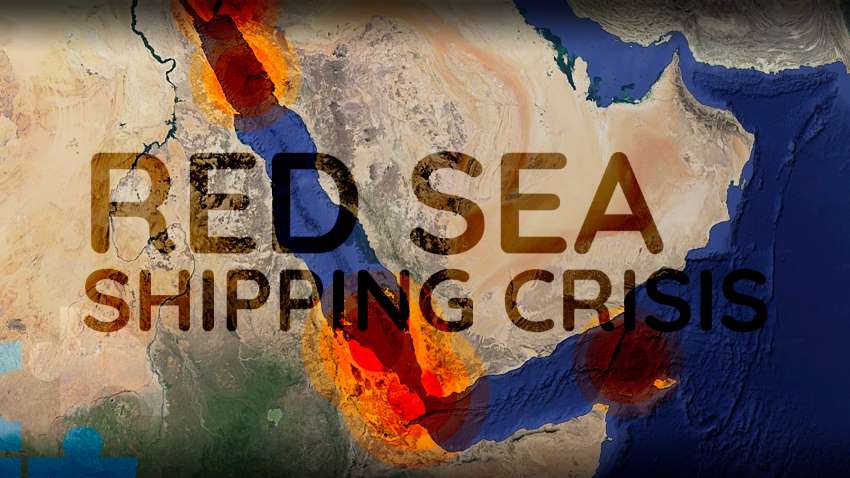
Supply chain risk is no longer confined to tariffs. Maritime instability in traditional Gulf and Red Sea corridors has forced experimentation with alternative overland routes. A notable example is the NEOM overland trucking corridor through Saudi Arabia, which offers a bypass to maritime chokepoints but adds significant cost burdens.
NEOM route vs traditional shipping
- Traditional maritime route: High geopolitical risk exposure
- NEOM overland route: +$10,000 per truck in incremental cost
- Combined with 12.5 per cent tariff exposure: Record-high landed cost for apparel imports into the U.S.
This dual pressure tariff plus logistics premium is altering landed cost structures for South Asia-to-US apparel flows.
Compliance risk becomes a core business variable
Trade experts warn that enforcement risk is becoming as consequential as production cost. As noted by Andrew Wilson of the International Chamber of Commerce, importers now carry the full burden of proof in establishing forced-labor compliance across supply chains. For large apparel brands, this introduces a vulnerability: a single flagged shipment can trigger customs holds, disrupting seasonal inventory cycles and undermining fast-fashion cadence models.
Retailers such as global mass-market apparel chains face growing uncertainty in inventory planning, as compliance failures in upstream suppliers cascade downstream into delayed or stranded goods.
A policy-led repricing of global fashion
The defining shift of 2026 is the transition from demand-driven sourcing to policy-driven cost formation. Apparel supply chains are no longer optimized solely for speed and price; they are now calibrated for regulatory survivability. Between USTR’s expanded enforcement regime, fragmented global compliance timelines, and escalating logistics volatility, the era of frictionless low-cost apparel production is effectively ending. What emerges instead is a more expensive, more bureaucratic, and structurally more volatile global apparel system where trade policy, not consumer demand, is the dominant pricing force.
Circular Samvaad 2.0 aims to transform Indian textiles from linear waste to global circular leadership
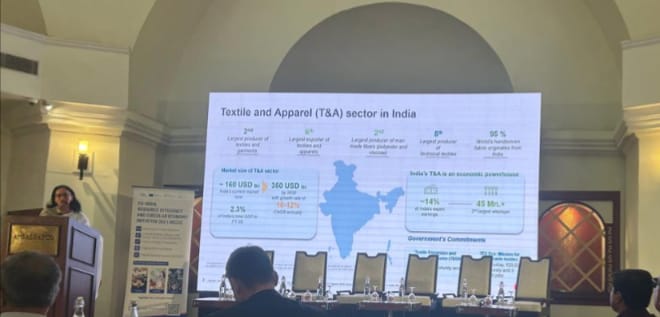
On the occasion of World Environment Day, industry leaders, policymakers, and international experts gathered in the capital yesterday for Circular Samvaad 2.0, a high-profile multi-stakeholder workshop focused on driving the Indian textile sector toward a circular and resource-efficient future.
The conference, titled "Circular Samvaad 2.0: Enhancing Circularity and Resource Efficiency in the Indian Textile Sector," was organized by GIZ India in close collaboration with the Ministry of Textiles and the Ministry of Environment, Forest and Climate Change (MoEFCC). The initiative operates under the broader EU-India Resource Efficiency and Circular Economy Initiative (EU-I RECEI), co-financed by the European Union and the German Federal Ministry for the Environment, Nature Conservation, Nuclear Safety and Consumer Protection (BMUV).
Driving the Narrative: Nature, art, and subcontinental identity
A key highlight of the event was an address by Dr. Rachna Arora of EU-I RECEI (GIZ India), who elegantly tied the technical necessity of sustainable manufacturing back to India's deeply rooted cultural history. She introduced a holistic perspective to the textile value chain, emphasizing that India's relationship with fabric has always been inherently connected to nature.
"I would like you to look at this sector of holistic living because, of course, the theme is actually nature and art," Dr. Rachna Arora stated during the session. "And I think the topic of textiles is very closely related to subcontinental art. We are just having a conversation in India and for all of us, the priority of course remains what we come out of art. The textile is something which is so close to our heart and we feel it everywhere. It is like a legacy we should make. The way the history of textiles is designed, it is about a holistic understanding of the creative. How close our textiles are, especially in India, it has been so close to nature."
Dr. Rachna Arora shared insights from ongoing field workshops, explaining that EU-I RECEI (GIZ India) has been gathering critical data over the past year to build ground-up solutions. She extended a warm welcome to the diverse audience, emphasizing that solving day-to-day industrial and environmental bottlenecks requires real-world data and multi-ministerial collaboration.
Moving Beyond Compliance: A national imperative
The Indian textile and apparel industry serves as a crucial cornerstone of the national economy, acting as a massive driver of employment and industrial growth. However, the sector faces mounting global scrutiny regarding resource usage and waste. With a staggering material intensity and rising volumes of both pre- and post-consumer textile waste, a shift away from the traditional linear "produce, use, and dispose" model is no longer optional.
Faced with impending trade changes—such as the upcoming ratification of the India-EU Free Trade Agreement and stringent European sustainability regulations, Indian manufacturers must transition to circular frameworks to maintain global market competitiveness.
To guide this transition, the event highlighted an ongoing National Study on Fostering Circular Economy in the Indian Textile Sector. This study actively looks to map the economic and employment potential of textile recycling, upcycling, and repair while aligning with emerging government frameworks like the Ministry of Textiles’ Textile Expansion and Employment (TEEM) Scheme and the Tex Eco Initiative.
A ‘Whole-of-Government’ and industry ecosystem
A defining theme of Circular Samvaad 2.0 was the recognition that the journey toward circularity is too complex for any single stakeholder to tackle alone. The event served as a collaborative bridge, uniting chambers of commerce, academic institutions, and a cross-section of ministries—including the Ministry of Housing and Urban Affairs, to align on data-driven policy recommendations.
By prioritizing responsible production, traceability, and resource efficiency, India is positioning its textile value chain not just to meet baseline environmental compliance, but to lead the global fashion market as a preferred hub for sustainable manufacturing.
From Sentiment to Sustainability: How Mumbai’s ‘Mega Post Textile Waste Initiative’ is turning emotional closet waste into economic hope
Walk into almost any Indian household, and you will find wardrobes harboring clothes that haven’t been worn in years. They aren't trash; they are memories. A saree passed down by a mother-in-law, a baby’s first outfit, a garment worn to a milestone celebration. In India, clothing is rarely just fabric; it is deeply emotional.
Yet, this sentimental attachment has inadvertently fueled a massive environmental crisis.
According to a landmark textile waste value chain report, India generates over 70 lakh (7 million) tons of textile waste annually. While the country's manufacturing sector successfully integrates pre-consumer waste back into production, the real challenge lies in what happens after a garment is bought. A staggering 58% of India's textile waste comes from post-consumer sources, with nearly two-thirds of discarded household apparel ending up in suffocating landfills or open dumps.
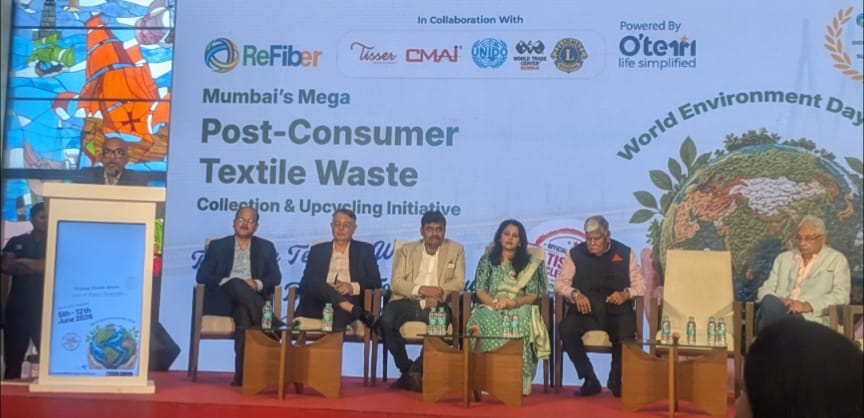
To tackle this specific hurdle, a powerhouse coalition teamed up including CMAI, Tisser, the United Nations Industrial Development Organization (UNIDO), ReFiber, O’terri, World Trade Center Mumbai, and Lions International. On World Environment Day, they officially launched the ‘Mega Used Clothes Collection & Upcycling Initiative’, Mumbai's first-ever mega post-consumer textile waste collection campaign.
The target is ambitious but highly structured: to collect 20,000 kilograms of used clothing and household textiles, diverting them from landfills and funneling them directly into a sustainable upcycling ecosystem.
The psychological challenge of the Indian closet
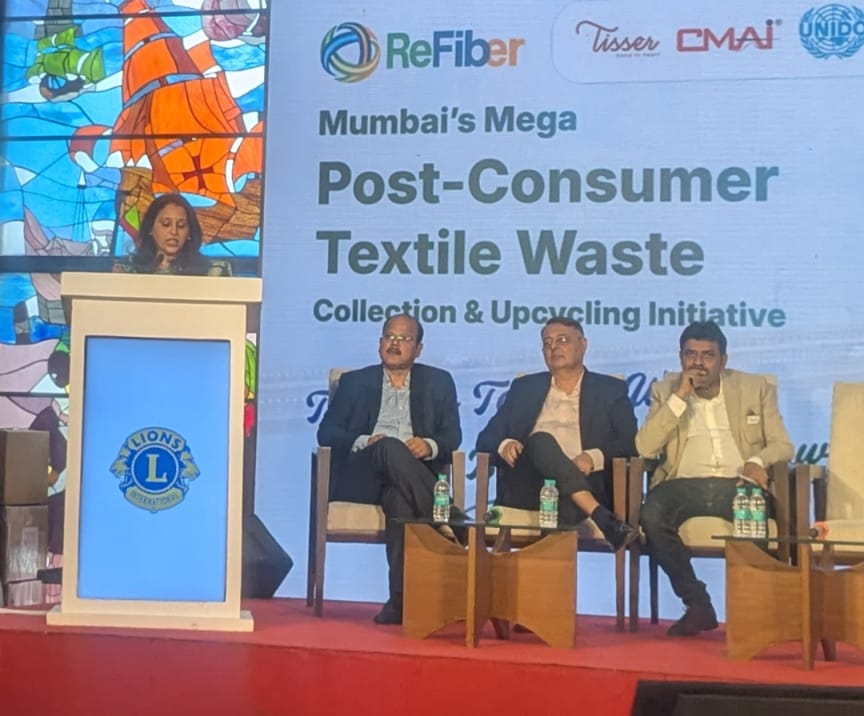
Speaking as the Chief Guest at the event, Smt. Vrunda Desai, Textile Commissioner for the Ministry of Textiles, shifted the spotlight away from industrial mechanics and directly onto consumer psychology. "You need to understand a bit about the neuropsychological mentality of women," Commissioner Desai explained warmly to the gathering. "Earlier, women used to exchange their old clothes at the door for household utensils. Every cloth, every saree, everything has an emotion, a memory... We are not able to give things away quickly."
Desai proposed a radical, empathetic solution to bridge the gap between emotional hoarding and circular economics: a personalized circular system. "Through this initiative, if you say, 'You give us your old clothes, and we will make toys out of your clothes for your wedding, or we will make curtains out of them,' then people will like to recycle. They will upcycle their own things and own them proudly again. We have to actually inculcate it into our lifestyle."
Tech-Driven Solutions: The 'Recycle and Earn' ecosystem
Recognizing that emotional appeals work best when backed by seamless execution, the campaign is introducing dedicated technology to scale up collection. The backend engine of the movement relies on a dedicated application called Refiber, powered by O’terri.
The app functions on a simple premise: consumers place an order by entering the number of clothing items and their approximate weight, then choose a local laundry partner from an integrated ecosystem to drop it off or arrange a pickup.
The idea originally sparked from everyday ground-reality challenges faced by local laundry businesses. Customers would frequently leave old clothes behind for months. The team decided to introduce a feature called "Recycle and Earn" into their aggregator platform, offering customers service discounts valid for six months to a year in exchange for responsibly discarding their textiles.
To make the movement highly accessible, 50 permanent collection points have already been established across Mumbai, fully managed by specialized backend technology.
Furthermore, the Refiber app has launched an exclusive digital marketplace for upcycled products. A consumer can donate their old garments on one side of the application, and browse beautifully resurrected, upcycled consumer goods on the other.
Moving beyond charity to self-sustaining livelihoods
For CMAI and its partners, the metric of success for the Mega Upcyclon extends far beyond the sheer weight of fabric collected. It is fundamentally an initiative anchored in social impact and women's empowerment.
Through its partnership with Tisser, an organization working on the ground with a massive network of 20,000 women artisans and workers, the collected waste will be systematically sorted, refurbished, and hand-transformed into high-value consumer products like folders, lifestyle bags, and home upholstery.
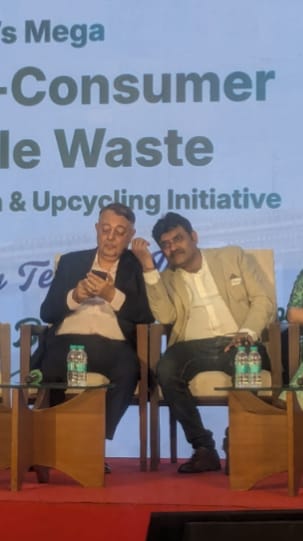
Santosh Katariya, President of CMAI, emphasized that the old linear model of "take, make, and dispose" must be aggressively dismantled. "The transition towards a circular economy cannot be achieved by industry efforts alone," Katariya stated. "Today, it’s not just about collecting used garments, it’s about creating a movement. A movement that converts waste into opportunity, protects our environment, and empowers thousands of women through recycling. The success of this initiative will be measured by the number of lives we touch."
To ensure this model outlives the initial buzz of World Environment Day, the Ministry of Textiles is focusing heavily on fiscal self-sustainability. The project has successfully integrated its Textile Recovery Facility (TRF) models onto the Government e-Marketplace (GeM) portal. This ensures that the upcycled folders, corporate bags, and upholstery created by these women artisans can be directly procured by government offices and major national conferences.
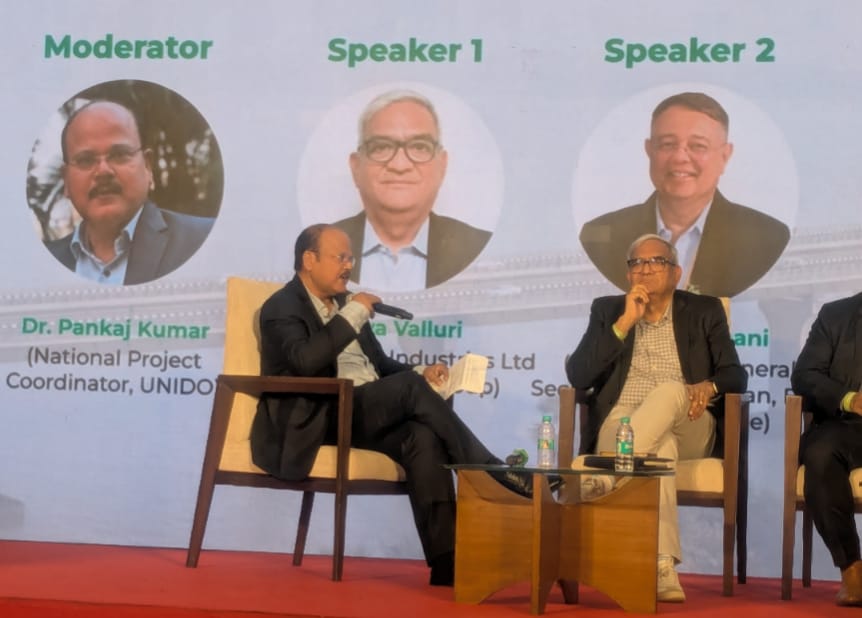
As Dr. Pankaj Kumar, National Project Manager for UNIDO, noted during the launch, India is uniquely positioned to lead the global textile sector in developing green jobs, ensuring gender equality, and minimizing hazardous chemical footprints by giving discarded cloth a second life.
The message echoing from Mumbai’s green coalition is unmistakably clear: the future of fashion cannot remain linear. By transforming personal memories into local livelihoods, Mumbai is proving that what was once written off as closet waste is actually one of the country's most valuable, untapped resources.
Australian Fashion Council targets European expansion via Paris showroom
The Australian fashion sector is embarking on its most ambitious international trade effort to date, with the Australian Fashion Council (AFC) announcing a dedicated showroom at Paris Fashion Week Womenswear SS27. Running from September 28 to October 6, 2026, the initiative aims to transcend intermittent market forays by establishing a permanent, government-backed export infrastructure. By providing a curated platform for 15 selected designers - including emerging, established, and First Nations talent - the AFC is addressing a historical deficit in coordinated international market access. This development is part of the broader $50 million Accessing New Markets Initiative (ANMI), supported by Austrade and the NSW Government, designed to integrate Australian labels into the high-value European retail landscape.
Institutionalizing long-term export resilience
For the Australian apparel industry, which currently generates $7.2 billion in annual exports, this Paris activation serves as a ‘structural step-change.’ Rather than relying on individual promotional efforts, the program offers a comprehensive export readiness framework, including pre-departure training and direct engagement with international buyers at the Australian Ambassador’s Residence. Marianne Perkovic, Executive Chairman, AFC, emphasized, the goal is to foster sustained commercial relationships rather than fleeting appearances. By aligning with the NSW Fashion Sector Strategy 2025–2028, the council is ensuring that participants receive the necessary logistical and financial support to navigate complex global trade environments. This move not only enhances the international footprint of domestic brands but also secures the industry's role as a vital economic engine, supporting approximately 489,000 jobs across the nation.
Peak national body for fashion and textile industry
The Australian Fashion Council (AFC) serves as the peak national body for the fashion and textile industry, representing a $27.2 billion sector. Its core mandate involves policy advocacy, trade diversification, and workforce development. Historically fragmented, the industry is now undergoing a digital and export-led modernization to drive long-term international competitiveness.
CMAI catalyzes digital transition for India’s apparel sector
The Indian apparel industry is witnessing a definitive structural shift as domestic manufacturers trade traditional workflows for data-centric precision. The Clothing Manufacturers Association of India (CMAI) recently spearheaded this transition at a Mumbai-based masterclass, where over 600 stakeholders explored the integration of machine learning into garment production and retail supply chains. By replacing legacy estimation methods with predictive analytics, firms are targeting a 15 per cent reduction in deadstock inventory—a critical margin booster in a sector historically plagued by overproduction. Dr CA Umang Ratani, leading the session, demonstrated how accessible AI frameworks now allow small-to-medium enterprises to automate demand forecasting and optimize fabric utilization, effectively leveling the competitive playing field against global giants.
Digital ecosystems as growth engines
Beyond operational refinement, the industry is accelerating its digital connectivity through centralized platforms like the newly launched CMAI Connect mobile application. This development serves as a strategic infrastructure piece, aggregating policy updates, networking, and procurement resources into a single digital hub. Santosh Katariya, President, CMAI, underscored, the association is not merely advocating for technological adoption but is institutionalizing comprehensive support systems, including enhanced insurance benefits to bolster member security. As manufacturers integrate these digital tools, the focus remains on transforming raw data into actionable retail intelligence, ensuring that the Indian textile sector maintains its global manufacturing relevance amidst shifting consumer demand and supply chain volatility.
Focus on digital modernization and enhanced services
The Clothing Manufacturers Association of India acts as the apex body for the domestic apparel sector, representing thousands of manufacturers, retailers, and exporters. Focusing on trade facilitation and policy advocacy, CMAI provides critical support for industry scaling. Historically established to unify the fragmented garment trade, the organization now prioritizes digital modernization, enterprise sustainability, and enhanced member services to ensure long-term sector viability.
Textile titans secure advisory roles to steer India’s export strategy
The Indian textile and apparel sector has gained significant institutional leverage with the induction of industry stalwarts KM Subramanian and Naren Goenka into the Board of Trade (BoT). As the government’s primary advisory body, the BoT oversees trade facilitation and international competitiveness, and these appointments signal a shift toward more practitioner-led policy formulation. By integrating leaders who command vast manufacturing networks, the Ministry of Commerce and Industry is positioning the sector to better navigate global headwinds, including shifting market preferences toward circularity and technical textiles.
Advancing competitiveness amid global turbulence
The move comes at a critical juncture as Indian exporters grapple with regional demand fluctuations and evolving environmental compliance standards in the European and North American markets. KM Subramanian, representing the Tiruppur knitwear hub, and Naren Goenka, a veteran of large-scale garment manufacturing, are expected to prioritize infrastructure optimization and trade facilitation. Industry analysts suggest, their presence will be instrumental in addressing the current cost-competitiveness challenges faced by domestic players against regional rivals. With recent breakthroughs like the India-Oman Comprehensive Economic Partnership Agreement (CEPA) providing tariff advantages, the focus is now squarely on scaling production capacity while integrating sustainable, tech-driven manufacturing practices to capture a larger share of the global value chain.
Powering the value chain
The Indian textile industry remains a foundational pillar of the national economy, emphasizing a shift from traditional cotton-based exports to high-value technical textiles and functional activewear. Companies such as KM Knitwear and Texport Industries exemplify this evolution, utilizing vertically integrated models to provide end-to-end solutions for global retailers. These firms focus on scalable manufacturing, consistent quality, and global supply chain integration.
With an increasing emphasis on sustainable materials - such as recycled polyester and eco-friendly fibers - the sector is reorienting toward high-growth markets to bolster long-term fiscal performance and maintain its status as a primary employment generator.