


FW
Zara continues to top BrandZ™ Top 30 Most Valuable Spanish Brands rankings
WPP and Kantar’s latest BrandZ™ ‘Top 30 Most Valuable Spanish Brands’ report indicates top five brands have maintained their position in 2019 also. Zara emerged the most valuable Spanish brand with a value of $24.8 billion. The company’s ranking in 2019 grew by 1 per cent to $103.9 billion. It was followed by telecom provider Movistar (No. 2, $21.6 billion), banking giant Santander (No. 3, $9.9 billion), finance brand BBVA (No. 4, $8.5 billion) and energy titan Iberdrola (No. 5, $5.6 billion).
CaixaBank emerged as the fastest riser with a growth of 36 per cent, followed by oil & gas brand Repsol and national airline Iberia, which both grew by 19 per cent. Created by WPP and Kantar, the valuation behind the BrandZ™ Top 30 Most Valuable Spanish Brands was conducted by brand equity research experts Kantar. The ranking combines rigorously analysed market data from Bloomberg with extensive consumer insights from over 3.7 million consumers around the world, covering more than 166,000 different brands in over 50 markets
The BrandZ Top 30 Most Valuable Spanish Brands is the most definitive and robust ranking of the country's brands available, and the brands ranked are all originally created in Spain They are either owned by a publicly listed company traded on a credible stock exchange or a private company with financials publicly available
As per Spanish consumers, the values of kindness and difference drove the growth of most of its brands. Iberia was perceived as the kindest brand in the Spanish Top 30, indexing 126 (where the average is 100). Spanish brands scoring highly on difference were worth an average of $6.9 billion, compared to $1.4 billion for those with a low difference score. Although a significant proportion of brands clearly recognise this, there is potential for many of Spain's most valuable brands to improve in this area.
TT expanding garment facility
TT is setting up two garment manufacturing facilities. In fact, the two factories have partially started in Gajraula and Avinashi. It also has plans to open a manufacturing facilities in Kolkata in the upcoming Hosiery Park. The company is looking at 20 per cent of its revenues coming from the new factories. The new facilities are likely to produce both active and casual wear. TT has been restructuring its organization for the past one year and as part of its strategic planning is bringing down its spinning capacity.
TT has a strong presence in the innerwear segment in north and east India through its flagship TT brand. It also exports yarn and fabric to 65-odd countries. The company has shifted focus from spinning to branded garments especially inner wear and casual wear. Going forward TT’s garment business is expected to grow by 30 per cent to 40 per cent, which will improve its ebitda margins and reduce the overall risk exposure to the outside environmental and economic changes happening across the globe. The company is investing in technology to connect with the distribution channel and with its consumers - this is expected to bring in huge benefits in the days to come. Apart from the TT brand, the company’s new garment brand HiFlyer is slowing gaining market acceptance. An organised company like TT is seeing many positives as it gains a competitive advantage over the large unorganised segment.
Global spandex market grows at eight per cent
The global spandex market is growing at a CAGR of eight per cent. Spandex is used in textile manufacturing applications such as leggings, gloves, cycling jerseys and competitive swimwear. Strenuous movements are involved in active sports that may require garment stretch. This stretch can result in movement restriction for the wearer. This can be overcome by using spandex material. Factors such as superior elasticity, regaining of original shape, durability, lightweight and resistance to UV light are likely to favor spandex market demand. Sportswear application is likely to witness the highest gains. Up to three per cent of spandex fiber in fabric is enough for fabric improvement and shape retention whereas high performance garments such as swimwear may contain 30 per cent.
The Asia Pacific region accounts for more than 60 per cent of the total volume and China accounts for a major chunk of the market in the Asia Pacific region. Latin America is likely to grow at significant rates owing to the growth in the sportswear and apparel industry. The market in the US is expected to grow with the recovery in the US economy post recession. But the North America spandex market share is likely to witness moderate growth rates. Europe is likely to witness below average growth rates in the near future.
Online sales benefits global knitwear sales
Sale of knitwear products through the online channel is increasing in emerging economies such as Brazil, Russia, India, China, and South Africa. Moreover, increase in penetration of smart phones across emerging economies, rise in middle class population with increasing discretionary income, and innovative and advanced e-commerce technologies are driving demand for knitwear products. Online knitwear sales are increasing due to the increase in average revenue per user (ARPU) in e-commerce knitwear products compared to ARPU of offline knitwear product sale.
Knitwear products are a major segment of the fashion industry. In terms of product type, knitwear is classified into innerwear, T-shirts and shirts, sweaters and jackets, sweatshirts and hoodies, shorts and trousers, evening dresses, suits and leggings, and accessories. Based on material type, the market is classified into natural, synthetic, and blended. On the basis of application, the market is segmented into outerwear, innerwear, sportswear and others. Based on consumer group, the market is segmented into men, women, and children.
The global knitwear industry ecosystem analysis includes value chain analysis of the global knitwear industry including natural, blended, and synthetic fabric suppliers, textile companies spanning knitwear fabric, knitwear manufacturers, knitwear products distribution and export channels, and various retail outlets including department stores, specialty stores, discount chains, and mass merchandise chains, among others.
Levi’s leads in potential sales for two years
According to YouGov Plan and Track, Levi’s has led Wrangler and Lee on the site’s metric for potential sales for the past two years. Around 32 per cent of US consumers aged 18 or older expressed their willingness to consider Levi’s when shopping for clothing, shoes, accessories or luggage. This is 10 percent more affirmative responses than Wrangler, at 22 percent, and more still than Lee, at 17 percent.
Levi’s has redefined its aesthetic through a diverse roster of collaborations, including Supreme, Vetements and even Peanuts. The brand will launch a program that allows consumers to design their own denim online. It even partnered with Gen Z marketers to launch a revamped retail store, complete with digital features and Instagram-able spaces to entice the ever-connected set.
OAR to map global clothing and footwear factories
A fashion data organisation, OAR aims to crack down on slavery and worker abuse by mapping every clothing and footwear factory in the world, with a free, open-source tool launched recently. OAR seeks to untangle opaque supply chains by identifying every factory by name and address, increasing transparency for workers and businesses.
A growing number of big brands, from sportswear giant Adidas to fashion retailers H&M and ASOS, are sharing information about their supply chains amid mounting regulatory and consumer pressure on companies to ensure their products are slavery-free. The OAR gathers data released by brands, factory groups, governments and other sources, and allows users to search for factories by brand names and locations.
According to the International Labor Organization (ILO) and rights group Walk Free Foundation, about 25 million people worldwide were estimated to be trapped in forced labor in 2016.
India’s synthetic textile capacity to increase in next three years
Synthetic textile manufacturers in India are planning capacity addition over the next two to three years. The industry saw nearly 3,00,000 tons of new capacity across the entire value chain in the past two to three years. The overall capacity of the synthetic textile value chain is now five million tons a year. China’s is 55 million tons. As against 73 per cent of polyester and 27 per cent of cotton blend in textiles globally, India continues to have a lower percentage of polyester use, of just 40 per cent in the overall textile sector. The capacity additions planned now, of around 0.5 million tons in the next two or three years, will meet domestic demand and help in higher export. The demand for polyester fiber is increasing as the demand for sports and yoga wear is increasing across the world.
Substantial growth in imports into India of manmade fiber and manmade staple fiber and textiles is not a good sign for the industry. In September 2018, input tax credit, a big blocker of working capital for the entire industry, was released. The industry expects further support in terms of a uniform tax structure and a high import duty would help.
Chinese company invests in Pakistan
Chinese private textile company Challenge Apparels will establish a state-of-the-art garment manufacturing facility in Pakistan. The aim is to enhance Pakistan’s exports and help generate thousands of new jobs in the country over the next couple of years.
Challenge Apparels is among the leading exporters to top brands around the world, especially in developed countries. Pakistan is facilitating investors through various reforms and hopes to benefit from the US-China trade war. If businessmen from China bring fabrics to Pakistan for making the finished products, and export those to the US, then they will not only able to maintain their client base but Pakistan will also benefit. Enabling Chinese textile exports this way will give a boost to Pakistan’s exports and deal with the balance of payments situation. When Chinese businessmen carry out their exports jointly with Pakistan, making use of the raw materials as well as Pakistan’s human resources, it will add to the earnings of Pakistan. Also China is helping Pakistan's spinning mills become more cost efficient and competitive. Almost 80 per cent of the yarn and other textile products will be re-exported to China for value addition to sell the finished goods at better prices in the international market.
Indonesia’s APR opens new plant in Riau
Asia Pacific Rayon (APR) opened a new plant in Pangkalan Kerinci, Riau, early this year. The plant will produce 240,000 tonne of viscose-rayon—soft fiber made from dissolved cellulose—every year.
APR recently showcased the results of its collaboration with eight Indonesian fashion designers who turned out high-fashion outfits using viscose-rayon as part of the 2019 Indo Intertex fashion and textile exhibition held at JIEXPO Kemayoran in East Jakarta.
The company hopes to showcase its fine viscose-rayon on the catwalks of Paris, Milan and New York as a part of the couture collections of many creative young designers from Indonesia trying to make it on the world stage. APR plans to exports 96,000 tonne of viscose-rayon this year, mostly to Turkey, Pakistan, Sri Lanka and Bangladesh.
Strong economy, world class infrastructure to help India deal with GSP denial
"The United States Trade Representative (USTR) recently announced, India and Turkey will soon lose their Developing Beneficiary Country (BDC) status under the General System of Preferences (GSP) of the WTO. GSP entails duty free access to less developed or developing countries to aid development. It allows the less developed countries to procure cheap raw materials for procuring high end finished goods while the latter are granted access to competitive markets at lowest barriers."
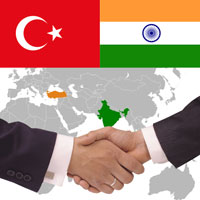 The United States Trade Representative (USTR) recently announced, India and Turkey will soon lose their Developing Beneficiary Country (BDC) status under the General System of Preferences (GSP) of the WTO. GSP entails duty free access to less developed or developing countries to aid development. It allows the less developed countries to procure cheap raw materials for procuring high end finished goods while the latter are granted access to competitive markets at lowest barriers.
GSP denial to increase import duty
If India is denied GSP benefits, import duty on Indian products exported under this scheme will increase. Indian products would be levied the Most Favored Nation (MFN) or effective applied tariff rates, which are higher than those for BDC. This would affect their price competitiveness in the US markets.
Majority products exported under the GSP belong to the micro, small and medium enterprises which are a major source of 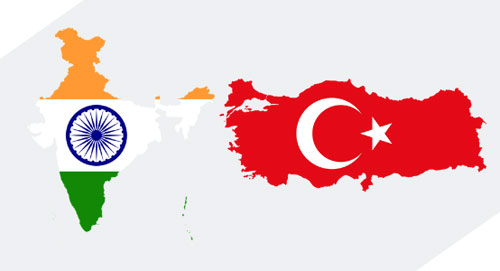 employment for the lower middle-income class of the society. Recent trade tensions between the two nations will have a spillover effect on this section- especially the semi and unskilled workforce. Unemployment figures for 2018 show a remarkable rise from previous levels. At a situation like this, unfavorable effects via the GSP might lead to unprecedented impacts on the economy.
India’s competitors in the US markets, Bangladesh, Indonesia, Brazil, Egypt, Cambodia and South Africa will continue to get duty free market access, while India will be subject to standard tariff rates. Unless Indian commodities have a genuine comparative advantage, they will lose their competitiveness.
Resolving issue through a dialogue
New Delhi can appeal to the WTO against this US action. Its policy should focus on taking a pragmatic stance and resolve the issue by engaging in dialogue with the US. The Indian government must also provide incentives to exporters such as GST relief or exemption for small and medium enterprises in order to retain their competitiveness in the global market. Alternative markets such as the EU and UAE can also be explored. New Delhi must initiate talks with these countries and set up Export Promotion Councils with additional emphasis on the intermediate goods sector. State governments should ensure that the SME sectors are provided with adequate infrastructure- both physical and financial.
To tackle uncertainty surrounding international politics and economics, especially the Trump Administration, India must create a strong domestic economy with world class infrastructure and investment. Unless this is achieved, small disturbances like these will continue to impact the global economy.











