FW
Indonesia hosts ACFIF event
The Asian Chemical Fiber Industry Federation (ACFIF) conference was held in Indonesia from April 11 and 12, 2019. The nine member countries and regions that constitute ACFIF jointly produce around 90 per cent of the world’s manmade fiber. Indonesia has emerged as a major global producer of rayon fiber and the country plans to focus and revitalize its textile industry. Work on standardization of Indonesia’s chemical and fiber product was discussed. Joint steps to establish international standards were laid out.
The fourth industrial revolution and the power of big data, digitalization and internet of things were discussed. Smart textiles and innovation of products to meet future performance demands were presented through a theme paper. Research trends and development direction were shared among delegates at the conference.
The conference theme of sustainability highlighted trends, challenges and solutions for the sustainability of polyester. Review of consumption, factors to ensure the circular economy in recycling products and the issue of micro fibers in the environment were discussed. In an effort toward improving the sustainability of chemical fibers, Europe has regulated the important issues of micro-plastics and recycling. This experience over the last decade in improving the environment and sustainability was shared and was very useful to the delegates.
Indian apparel market grows at 13 per cent: CARE ratings
The market for apparels in India grew at a CAGR of 13.8 per cent in fiscal ’18. While men’s clothing continues to have the biggest chunk of the apparel market, at 41 per cent, children’s wear at 21 per cent of the overall market is the fastest growing segment in India. Women’s wear contributes almost 38 per cent and is largely dominated by ethnic apparel such as saris and suits. However, denim is the fastest growing sub-segment for women’s wear. The robust growth in this segment can be attributed to rising income levels, rising number of working women and more college going women.
Indians spent Rs 5,408 billion on buying clothes in 2018, a jump from the Rs 1,924 billion they spent in 2010, as higher disposable incomes, greater migration to large cities, and brands opening up in non metros helped more people access branded clothing. The overall apparel consuming population in India has gone up in the last decade. A shift in demographics and a rise in the number of people residing in urban areas have helped Indian households access more brands.
Delhi, Mumbai, Bangalore, Chennai are the largest consumers of apparel in India even though less than 20 per cent of India’s population lives in these cities. These markets also have a higher penetration of women’s western wear as compared to Tier I or II cities of the country.
Bangladesh looks for better prices for RMG exports
Western retailers are reluctant to pay Bangladesh’s garment manufacturers the proper prices. The cost of production increased 30 per cent from 2014 to 2018, but prices of Bangladesh RMG products fell 7.04 per cent during the same period.
Bangladesh’s exporters do not get fair and reasonable prices for their products. Reasons include lack of negotiation skills. Exporters get lower prices for readymade garment products than what Cambodian and Vietnamese exporters get from global buyers. Buyers do not want to pay higher prices, although the cost of production will go up further with wage hike, port congestion and higher transportation cost. Another issue is that of lead time. This would be a matter in readymade garment exports in future as the country might lose the cost advantage in coming days.
Bangladesh’s readymade garment supply chain still suffers from lack of shared responsibility on the part of global buyers. Very few factories, if at all, have received financial assistance from buyers; instead they have seen reduced prices. The fundamental business model of the garment supply chain has not changed. Production remains an industry with high levels of opportunity for countries to connect to global value chains, but that has come at a price for workers.
AATCC confers ‘Future Leaders Award’ to Apurba Banerjee
AATCC gave away the ‘Future Leaders Award’ to Scientist Apurba Banerjee at the International Conference held in Fort Worth, TX, USA. The Future Leaders Award recognises promising young professionals in the fields of textiles, apparel, and related material sciences.
Banerjee is chief scientist at brrrº Inc. She joined AATCC in 2012 as a student, she presented papers each year from 2013 through 2017 at the AATCC International Conference Herman and Myrtle Goldstein Student Paper Competitions. She also received two AATCC Foundation Student Research Support Grants in 2014 and 2017. She served as president of the University of Georgia AATCC Student Chapter from 2014 to 2015, and treasurer from 2015 to 2016. She has co-authored four publications and two patents.
Banerjee currently serves on the AATCC Executive Committee on Research and is the vice chair on AATCC Technical Committee of Research. AATCC is the world’s leading not-for-profit association serving textile professionals since 1921. The association provides test method development, quality control materials, and professional networking for members in about 50 countries throughout the world. Nominees for the AATCC Future Leaders Award must be AATCC members who are 39 years old or younger and actively engaged in the greater textile or related industries.
Denim brands looking for new innovative options
Denim brands want to offer consumers something opposite from perfect stretch jeans.
Naveena offers heavy marbling and salt and pepper effects through technology that twists the yarns in an untraditional way. Soorty’s Kiss Roll collection caters to demand for nostalgia. This product range aims at effortless chic vibes with fabrications suited for everyday denim essentials and upsized unisex designs. The retro-inspired mid shades can be updated with coatings or crispy weaves for more individual looks. US Group offers rigid options with bolder indigo textures and brighter twill lines. Panther offers denim with authentic bases and vintage-inspired dirty washes.
Some brands want to start having something new to put next to the racks of dark indigo and black denim. The new version is less destroyed. Winter whites are picking up momentum. Soorty has a wide range of mid to heavy weight ecru fabrications, which complement a line of soft muted military shades. The mill is also building up its selvedge assortment, adding an ecru selvedge to the mix. The additions reflect the growing popularity for cargo and wider silhouettes. Black and inky shades of indigo remain a staple in fall collections. US Group’s Magma collection is based on deeper, richer colors that require fewer dye dips.
Gujarat hikes technical textile outlay
Technical textiles have grown over the past five years in Gujarat. Investments have jumped multifold during the period. In 2014, there were only 17 technical textile units with an investment of Rs 156 crores. Now there are 181 units and the total investment in the segment is pegged at Rs 1,775 crores. A specific credit-linked interest subsidy scheme to set up technical textile units has encouraged entrepreneurs. Some of them were already having traditional textile units in the state. The maximum investment of around Rs 475 crores came during the financial year 2017. In that year, as many as 51 new units were set up across Gujarat, especially in Ahmedabad and Surat – considered as major textile hubs in the country.
Technical textiles are significant for the growth of the entire textile industry as they are value added products manufactured primarily for technical performance and multi-functional properties with less intent on aesthetics and design. This sector is considered as a sunrise sector and it provides new opportunities to the Indian industry to have a long term sustainable future. Demand for this sector is rising due to many factors including rapid urbanisation, advances in medical technology, expansion in construction sectors, awareness on safety and environmentalism and increased spending on healthcare.
Austria to host European Forum on Eco-innovation in May
European Forum on Eco-innovation will be held in Austria on May 7 and 8, 2019. The forum will explore eco-innovation solutions and policies for improving circularity in the textile sector. It will bring together companies, public authorities, financiers, NGOs, innovators and researchers that are working on developing and deploying effective new technologies, innovative business and governance models, and policies that can deliver a circular textile economy.
The event will showcase companies and private and public sector initiatives in support of innovative solutions that make the textile sector more circular throughout the whole product lifecycle. The presentations and discussions will explore what has worked well and why, where the bottlenecks are, and how the enabling environment needs to change so that the right innovations are developed and put in place. An important objective of the event will be to formulate recommendations for future policy measures and instruments for the European Commission and public authorities at the national and local levels.
Among the issues in focus are: innovations that could lead to a more effective waste management, collection, recycling, shipment across borders; solutions for consumer engagement and awareness, including private consumers, supply chains and public procurement; and new business models that deliver circularity, including reuse, leasing, renting, sharing.
Home Expo India 2019 concludes successfully with bigger aspirations for April 2020 trade
 Home Expo India 2019, a combination of three integral segments of Handicrafts sector i.e. Home-Textiles, Houseware and Furniture concluded here today at India Expo Centre & Mart, Greater Noida.
The premium expo, organized by the Export Promotion Council for Handicrafts (EPCH), registered visit of 556 overseas buyers as well as their representatives and buying agents and retail buyers to source their focused requirements from a diverse range of international quality products under one-roof showcased by more than 375 exhibitors said Shri Rakesh Kumar, Director General – EPCH.
Countries from where buyers came included traditional markets of USA and Europe and buyers from countries like Argentina,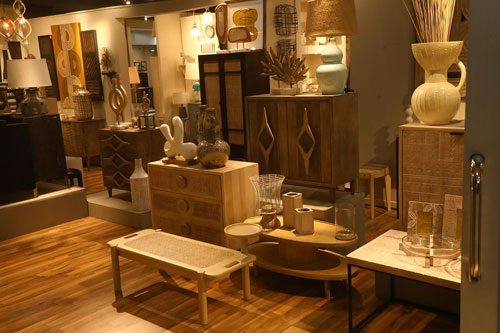 Brazil, Chile, Colombia, Germany, France, UAE, Lebanon, Kenya, Tajikistan, Russia, Taiwan, Singapore, Kuwait, Iran, Nigeria, Ghana, South Africa and Vietnam.
Shri Kumar further said that showcasing of product range through an event is a best tool to create awareness and market its potential. EPCH in India has always taken lead in promoting the Indian handicraft sector. With every step forward, the products package from India is becoming more diverse and tasteful amongst the overseas buying community. The efforts for organising product specific Home Expo India show for the last many have beard fruits by showing growth in exports of 27.13% in Furniture & accessories, in houseware and decorative 15.19% growth and in Home furnishing, flooring and home textiles 6.3% in last year.
A highly specialized and product-segmented triple show-- Home Expo India-- was the culmination of Indian Houseware and Decoratives Show , Indian Furnishings, Floorings and Textiles Show and Indian Furniture and Accessories Shows offered three opportunities to the visitors to source their requirements under one roof. Buyers also seen busy in finalising their orders on last day of the show.
The show in this edition, gave a valuable business platform to artisans and budding entrepreneurs of North Eastern Region and SC crafts of Northern India informed Shri Kumar.
EPCH is the nodal export promotion body for handicrafts in India and plays an important role of a catalyst between the exporters, buyers and the Government with the main objective of boosting handicrafts exports from the Country and also projects India’s image in the global markets as a reliable supplier of handcrafted exquisite and quality products.
GTE 2019: An opportunity to adopt world trends and technologies
Garment Technology Expo (GTE 2019) was attended by over 280 companies including leading manufacturers and suppliers of garment machinery and accessories from over 22 countries, i.e. Germany, Japan, Taiwan, China, Korea, Turkey, Italy, the US and India, etc. The show attracted a large turnout of trade visitors including exporters and domestic manufacturers.
 The 28th edition of India’s largest and much awaited garment technology trade fair, Garment Technology Expo (GTE 2019), was held at NSIC Exhibition Complex, Okhla, New Delhi. The four day show featured a right mix of technologies on garment stitching and processing by around 800 brands and companies. It was inaugurated by HKL Magu, Chairman, AEPC and Chief Guest of the event in the presence of Rajeev Dewan, Member, GEAR, Rajasthan, who was the Guest of Honor. They were joined by PNS Uppal from Okhla Garment.
The welcome address, by Ricky Sahni, Jt. Managing Director, Garment Technology Expo, was followed by felicitation of Magu Inderjit Singh Sahni, CMD of Garment Technology Expo. Addressing the attendees, Magu highlighted the latest developments and policies in the garment industry. Presenting mementos to the Chief Guest and Guest of Honor, the event concluded with a lamp lighting ceremony.
Presence of national and international garment companies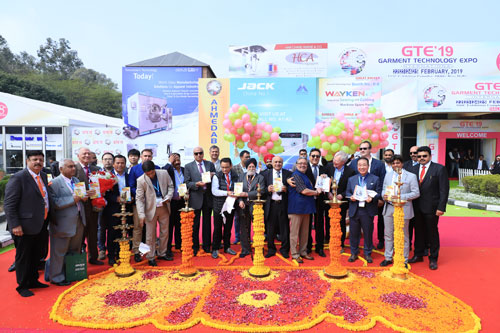
Garment Technology Expo (GTE 2019) was attended by over 280 companies including leading manufacturers and suppliers of garment machinery and accessories from over 22 countries, i.e. Germany, Japan, Taiwan, China, Korea, Turkey, Italy, the US and India, etc. The show attracted a large turnout of trade visitors including exporters and domestic manufacturers as was evident from the record online registrations from cities like Jaipur, Surat, Ahmedabad, Mumbai, Indore, Tirupur, Chennai, Bangalore, Hyderabad, Ludhiana, Amritsar, Panipat, Meerut, Varanasi, Kolkata, Agra besides overseas nations such as Bangladesh, Sri Lanka, Nepal, Burma, etc.
Garment Technology Expo (GTE 2019) was attended by renowned companies from across the textile and apparel value chain exhibiting like, HCA, IIGM, Magnum, Mehala, ALT, Ramsons, Juki, Brother, Pegasus, Tukatech, E.H. Turel, Baba Textiles, Richpeace, INL International, Zoje Sewing Machines Co., Dürkopp Adler AG, Dhaval Colour Chem, Narinder International, etc
Featuring new technologies
The show displayed innovative technologies such as CAD / CAM, spreading & cutting machines, sewing machines, knitting machines, embroidery machines, digital & screen textile printing, laundry machines, quilting machines, fusing machines, finishing equipment, , printing & packaging machines, hot air seam sealing machines, dyeing machines, dyes, fabrics, fancy yarns, non-woven bag making machine, software solutions, spares parts & attachments, accessories &trims, testing equipment, etc
Inderjit S Sahni, CMD, Garment Technology Expo noted that GTE for the last 18 years has been giving Indian garment manufacturers an opportunity to get acquainted with the latest world trends and upgrade their manufacturing processes by adopting the latest technologies in vogue internationally. Ambrish Chopra, Director, Garment Technology Expo, expressed his satisfaction about the improved infrastructure at the event. He also noted that the event is witnessing a sizeable increase in direct participation from leading manufacturers and suppliers of garment machinery and accessories from over 22 countries.
Brands ensure positive outlook for the luxury sector in 2019
"The not-so satisfactory 2018 results of luxury brands Tiffany, Ferragamo, Tod’s and Prada has not deterred them from maintaining a positive outlook for 2019. This is on account of improving brand sales. Ferragamo has already witnessed an improvement in its same-store sales. Similarly, Prada and Tiffany are still on a growth trajectory, despite a softening in recent trading. On the other hand, operating profit of luxury group Hermes crossed the €2 billion ($2.2 billion) mark, yet it failed to achieve 2017’s record level of profitability owing to higher input prices."
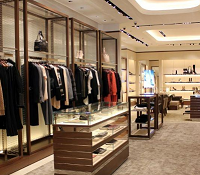 The not-so satisfactory 2018 results of luxury brands Tiffany, Ferragamo, Tod’s and Prada has not deterred them from maintaining a positive outlook for 2019. This is on account of improving brand sales. Ferragamo has already witnessed an improvement in its same-store sales. Similarly, Prada and Tiffany are still on a growth trajectory, despite a softening in recent trading. On the other hand, operating profit of luxury group Hermes crossed the €2 billion ($2.2 billion) mark, yet it failed to achieve 2017’s record level of profitability owing to higher input prices.
App to ensure customer satisfaction
Galeries Lafayette’s new flagship on the Champs-Elysées is revamping operations at its department store by focusing on styles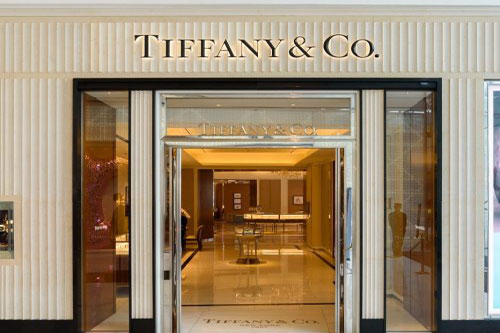 or trends, spanning gender and product categories. The store allows customers to book an appointment with one of 300 personal stylists who use an app to upload customer preferences besides recording their selections, photos of fittings and measurements.
The app can be used to talk to the stylist before, during and after the store visit. The retail group is also rolling out intelligent hangers which display the sizes of the garment that are in stock. The customer can click on their size and have it brought to the fitting room.
Beauty sector remains active with several transactions
There were several transactions in the beauty sector as well. Bain Capital acquired Maesa, a French beauty contractor and brand incubator, in a secondary buyout. Barcelona-based cosmetics group Puig made investments in emerging markets with the purchase of a minority stake in Kama Ayurveda, the leading Indian Ayurvedic brand, for some €12.5 million ($14 million), and Colombian beauty retailer Loto del Sur. Blog-inspired US beauty company Glossier also announced a $100 million Series D funding led by Sequoia Capital. The company, is now valued at $1.2 billion.
London based accessories company, ASHS, which trades under the Anya Hindmarch brand, was sold to the Marandi family, a UK investor with interests in property, hospitality and fashion. The Savigny Luxury Index (“SLI”) further solidified its gains in March as investors look forward to improving prospects for the sector in 2019; our index posted a 5.5 percent increase versus just over 2 percent for the MSCI World Index.
A threat to the industry
A study commissioned by Walpole shows, the UK’s luxury industry lobby group, a no-deal Brexit is estimated to cost the British luxury sector $8.9 billion Whilst it is clear that Britain in general and London are the prime losers of this saga, the rise of nationalism throughout Europe and the rest of the world could develop into a major threat to the luxury industry.