


FW
Bangladesh garment exports to the US up 10 per cent
Bangladesh’s garment exports to the US increased 10.10 per cent in the first two months of the year. Shipments are expected to grow exponentially if the 25 per cent duty by the US on Chinese imports comes into effect. If that materialises, many international retailers will look to Bangladesh as an alternative sourcing destination.
Bangladesh’s garment exports to the US market have been showing an upward trend over the last few months because of different reasons like the tariff war between the US and China and enhanced workplace safety. Bangladesh expects a rise in garment exports to the US as the economy is rebounding there. Bangladesh has been sending garment products facing a 15.62 per cent duty whereas the duty for other garment exporting nations is relatively low. Even then the country is competitive in the US markets.
However, despite a shift towards lower-cost manufacturing bases like Vietnam and Bangladesh, China is still the single biggest source of apparel globally. Companies still source 11 per cent to 30 per cent of their apparel from Chinese factories. While this is down from 30 per cent to 50 per cent the year before, China is still the most important source of clothing.
Thailand emerging as a new textile and garment hub
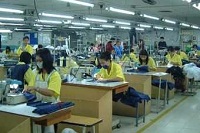 Several competitive advantages, often overlooked, are making Thailand a global production hub. The country is perfectly positioned to benefit optimally from China’s export problems. Besides, it also has an amazing demographic of young workers as against China who faces a chuck of ageing population.
Increasing tariffs and US recession to pose challenges
Although the US-China conflict offers many benefits to Thailand, the country also faces certain challenges. For instance, the increasing tariff rates is likely to impact industries that supply goods of intermediate nature as they are a part of the planetary value chain. To deal with this issue, Thailand needs to implement sound policies. A weakening of the US markets is likely to negatively impact new investments in Thailand. To avoid this, the country needs to diversify its exports. It is already increasing its trade with the world which helps it to have more diversity.
The Thailand advantage
As per well-established import and export companies it is a lot easier to move products around Thailand compared to China where there are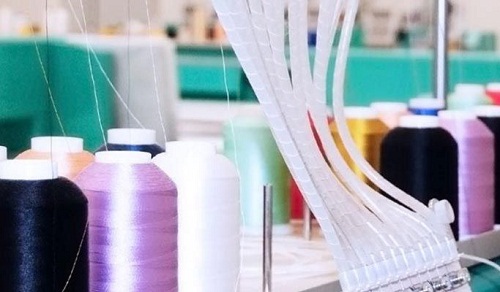 many restrictions and a lot of interprovincial tariffs which can make things complicated as far as exports are concerned. However, higher labor rates are a cause of concern as they make production at competitive rates difficult.
Another advantage that Thailand boasts of is, Bangkok is more exposed to Western influences and that influence is more evident every day. As far as advertising agencies are concerned there are many who claim that Thailand has a significantly more sophisticated marketing industry than China. Even basic things such as radio and the outdoor advertising seen on the streets is also a substantially higher quality in Bangkok compared to Beijing.
The nationalistic fervor is less forceful in Thailand. The country also offers superior quality of workmanship as against China, where though the labor is low, the quality of workmanship is also inferior.
A boost to the textile and garment industry
Thailand’s textile & garment industry, worth over $5 billion in exports in 2018, is expected to grow 5 per cent in 2019, spurred on by the US-China trade dispute. SUPA International based in Thailand is one of Asia’s largest garment manufacturers, with clients including Under Armor & Nike. It is benefiting optimally from Thailand’s skilled workforce and low labor costs in the garment manufacturing industry. This company has acted swiftly to benefit from the drastic move by President Trump – with a plan in place to expand its factory operations to ensure that it can benefit optimally from the situation. They will thus be able to accommodate many of the US clothing brands are looking to move production from China to Thailand.
Thailand’s sophisticated export facilities can handle a wide variety of export products such as electronics, machinery, motor vehicles and many other high-quality products. Also, the professional standards, service levels as well as education are of a better standard in Thailand, making it a preferred nation over China.
US esports players become brand influencers
Professional video game streamers are becoming brand influencers in the US.Esports players represent an untapped influencer category that is notable for its directness and accessibility. Customers can interact directly with these influencers in a way that is not always possible with celebrity influencers or even regular influencers who use more traditional social channels like Instagram. Esports players tap into a growing youth culture movement and have unprecedented influence among their fans. Players in this space are set to become fashion icons. They have a huge influence on the people who watch their streams. Athletic brands in particular are beginning to ink partnerships with esports players and teams in the same way they sponsor basketball or football teams. Teamwear can also be incredibly lucrative for brands, especially when the teams they work with perform well.
The esports industry is a fruitful one for sponsors and brands of all sorts. The esports community is fertile ground for brands. More than 60 per cent of esports fans are between 18 and 34 and most of these have a favorable view of brands coming into the esports space. While traditionally male-dominated, female viewership of esports has risen to make up 30 per cent of the total audience.
Smart garments dominate wearable technologies
The smart garment market is growing at 45 per cent a year. This growth is outpacing other categories in the domain of wearable technologies. Although current developments of such clothing are based more on performance wear and the winter sports category, very soon they will encompass the whole gamut of the wearable segment.
As garments are becoming smarter, the differentiating line between a traditional garment and a garment with a gadget is getting blurred. The message is clear: If the garment industry does not start dabbling in technology, technology companies will start dabbling in garment making. Digitalisation is another trend emerging faster than ever in the global apparel industry with more and more retail brands as well as apparel manufacturers embracing it.
Tech and fashion are merging together to create smart textiles without sacrificing style, comfort and practicality. Smart textiles are used in healthcare and sports and fitness applications to communicate the wearer’s location, heart rate, blood pressure and temperature. This data collection may also be useful for dementia patients, to refresh memory and alert caregivers of health status changes. Miniaturization of electronics is expected to significantly fuel market growth further. Reducing form factors may facilitate increased integration, making sensors compatible with fabric and ensuring optimum comfort and wearability.
Indo-US trade up 12 per cent
Trade in goods and services between India and the US has grown 12.6 per cent. US companies raised concerns about India’s draft e-commerce policy and issues related with mandatory data localisation requirements. They feel the draft e-commerce policy favors domestic players and does not provide a level-playing field for US firms such as Amazon and Walmart. India on the other hand has raised the issue of high import duties imposed by the US on certain steel and aluminium products. Besides, India also wants the US to relax visa provisions for Indian IT professionals and companies. The countries are locked in a tariff dispute with the US deciding to end preferential trade treatment to Indian exports, while India proposes to impose retaliatory duties on American goods. Other matters include the US concerns on medical devices, the personal data protection bill of India.
But both India and the US have agreed to engage regularly at various levels to resolve outstanding trade issues by exploring mutually beneficial and suitable solutions. The countries have agreed to deepen economic cooperation and bilateral trade by ensuring greater cooperation among stakeholders, including governments, businesses and entrepreneurs. They will explore suitable solutions, which are mutually beneficial and promote economic development and prosperity in both countries.
Hugo Boss Asia sales up four per cent
Hugo Boss sales in Asia rose four per cent in the first quarter. Worldwide sales also rose four per cent, a rate tempered by an eight per cent decline in currency-adjusted terms in the US market. First-quarter operating profit fell 22 per cent. Double-digit growth in Mainland China overshadowed a tougher market environment in Hong Kong and Macau.
While the German fashion company’s share price slumped by 19 per cent over the past year, its performance has been impacted by reorganisation costs, a higher marketing spend and the strength of the dollar. The revamp of key stores is expected to boost the company’s performance with New York and Tokyo flagships already performing well since their reopening and renovations of others in Paris and Chicago soon to be completed.
A shift in focus to a younger target demographic is also paying dividends for Hugo Boss. Sales of its Hugo brand of casual wear rose in the double digits, compensating for flat sales of the core Boss brand and a marginal decline in business apparel. First quarter online sales rose by 26 per cent and the company plans to continue to invest in digitalization. After a string of profit warnings, Hugo Boss slashed prices in China to bring them closer to European and US levels.
Fashion persists with harmful ways damaging the environment
The pace of sustainability progress in the fashion industry has slowed by a third in the past year and is not moving fast enough to counterbalance the harmful impact of the fashion industry’s rapid growth. So says Pulse of the Fashion Industry, an annual assessment of the fashion industry’s environmental and social performance.
Though the fashion industry has made some progress toward better social and environmental performance over the past year, the rate has been slower than in previous years. The improvement was due mainly to rapid progress among brands that are in the early stages of their sustainability journey and have put in place foundational measures in strategy, governance and target setting. Meanwhile, progress has slowed among larger companies that must figure out how to scale disruptive business models and harness innovative technologies. Sustainability is still far from being a key consideration in purchasing decisions. Therefore it is up to fashion leaders to drive large-scale impact and influence consumer perceptions.
By 2030, the global apparel and footwear industry will have grown by 81 per cent, exerting an unprecedented strain on planetary resources. If the industry remains on its current trajectory, the harmful consequences of increased production will become even more challenging to overcome.
Fall in value of Turkish exports in 2019
In the January to March period of 2019, Turkey’s textile exports declined by seven per cent in value and increased 3.9 per cent in quantity. The export unit value of the ready-to-wear industry declined by 10.1 per cent. The share of textiles and raw materials in Turkey’s total exports decreased to 5.6 per cent from 6.3 per cent compared to the same period of last year. Woven fabrics are the most important export product group of Turkey’s textile industry. In the first quarter of the year, woven fabrics were 23 per cent of Turkey’s total textile exports.
Turkey’s total exports increased by 3.3 per cent over January to March 2019 in which textile exports have declined, while apparel exports made no headway. The EU is the biggest market for Turkey’s exports. However in the first three months of this year Turkish textile and apparel exports to the EU fell by 10.9 per cent. Similarly exports to the Middle East fell by 10.4 per cent. But exports to Asia and Oceania in the January to March period increased by 5.5 per cent. And Turkey’s exports to the former Eastern Bloc countries increased by one per cent. Textile exports to the US decreased by 3.6 per cent while exports to Bulgaria decreased by 19.6 per cent.
Egypt’s Q1 garment exports grows two per cent
Egypt’s readymade garment exports increased two per cent in the first quarter of 2019 compared to the same period of 2018.
The United States tops importing countries of Egyptian readymade garments. Apparel created within the Egyptian Qualified Industrial Zone (QIZ) is duty free to the US. Goods made in Egyptian QIZs can use fabrics imported from third countries and remain eligible for duty-free entry into the US market, provided 35 per cent of their value is added in Egypt, including a minimum of 10.5 per cent of Israeli content. Costs incurred in the US also count towards the 35 per cent threshold. Egypt’s readymade garment exports to the UAE were up 334 per cent in the first quarter. Exports to Canada were up 84 per cent.
Egypt’s textiles and clothing sector is the most integrated on the African continent. The apparel sector is the country’s most important industrial sector; it represents 6.5 per cent of total non-petroleum. Apparel exports in 2018 rose ten per cent compared to 2017. Fifty 50 per cent of the country’s apparel production goes to the US and 30 per cent to Europe. Egypt also enjoys duty-free market access to the EU. With its fabric base and sourcing proximity to Turkey, exports to the EU are likely to increase.
Coats opens innovation hubs in three countries
Coats has opened innovation hubs in Turkey, China and the US. These dedicated centers at key locations around the world enable Coats to collaborate with a range of innovation partners including customers, brands, suppliers, universities and start-ups. They will develop pioneering new products and processes in apparel and footwear and hi-tech products for end uses in automotive, oil and gas, protective wear and telecommunications by providing creative and inspiring spaces where an innovative idea can be developed collaboratively and rapidly worked up into a prototype design which is then manufactured in a standalone pilot factory.
Coats is the world’s leading industrial thread company. Each of the hubs has a distinct areas of focus. The location of the hubs has been specifically chosen. The hub in Turkey is at the center of the automotive industry in Turkey and will drive development into that sector through its focus on composite design and engineering as well as across all Coats’ technologies. It will be key to developing an innovative range of products taking personal protection garments to the next level in terms of comfort, fit, look and safety. China is a leading hub for apparel and footwear and the hub there will have a focus on creating a sustainable product portfolio.











