


FW
Women’s clothing imports from China faces US tariffs
"For the first time, the next round of tariffs by the Trump administration will target apparel imports from China. A 10 per cent tariff will be levied on all clothing and shoes imported from China from September 1. 2019. As per Wall Street Journal’s analysis, these tariffs will have a greater impact on women’s and girl’s clothing and shoes as their imports from China was more than twice that of men and boys. The country imported around $23.5 billion worth of women’s and girl’s clothing and shoes from China in 2018."
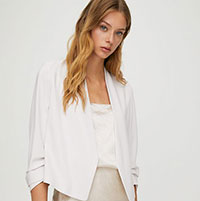 For the first time, the next round of tariffs by the Trump administration will target apparel imports from China. A 10 per cent tariff will be levied on all clothing and shoes imported from China from September 1. 2019. As per Wall Street Journal’s analysis, these tariffs will have a greater impact on women’s and girl’s clothing and shoes as their imports from China was more than twice that of men and boys. The country imported around $23.5 billion worth of women’s and girl’s clothing and shoes from China in 2018. On the other hand, it imported $10.9 billion worth of men’s and boy’s clothing and shoes during the year.
Increased capabilities, more purchasing power to drive imports
One reason US imports more female clothes from China is because the Chinese apparel industry has the capability to churn out latest trends. Also, as noted by Tamara Gureivich, an economist at the US International Trade Commission, women spend more on clothing than men. An average US household spends about $665 annually on women’s and girls’ apparel, compared to $427 spent by men.
The impending tariffs will affect most clothing purchases, as Americans spent nearly $400 billion on clothing and footwear in 2018, according to the Commerce Department. They would however lead some manufacturers to shift production elsewhere.
Tariffs to impact purchase quality and volume
Though a few importers and retailers would opt to swallow some or all of the costs—sparing shoppers, rest of them are likely to pass these tariff costs to their customers eventually. On their part, consumers will either opt to buy fewer garments or substitute items of lesser quality.
Opposing the tariffs, J. C. Penney Co said that the new tariffs would have a significant impact on its customers. Of the 19 items set to have the biggest tariff impact on the company and its customers, 13 are for women and girls, such as cotton-knit sweaters. Though women spend more on apparel and footwear than men do, even the existing tariffs on women’s clothing are higher than that on men’s clothing. Men’s clothing is usually imported from countries with whom the US has free trade agreements such as Mexico. This helps in reducing the tariffs on these items.
On the other hand, the US doesn’t have free-trade agreements with China and Vietnam, whose factories supply much of the clothing purchased by American women. This heavily impacts the imports of women’s clothing from China
Hyosung offers new fibers for denim
Korean fiber company Hyosung has a bigger range of functional and sustainable nylon and polyester fibers specially developed for consumers who want to wear jeans on all occasions and meet the challenges of climate change.
Mipan aqua X nylon and askin polyester are cooling fibers which deliver freshness with great wicking performance and a cool touch effect to denim fabrics. Aerolight fiber is a high count filament polyester fiber which gives a soft touch close to a natural fiber. Aerolight fiber is suitable for all seasons, combining the advantages of both synthetic and natural fibers. With a C-shaped cross section it provides excellent moisture management, with a softer, more natural feel than standard polyester.
Hyosung is the largest elastane producer in the world and first developed its own process for manufacturing spandex in 1992. Hyosung offers a broad range of high quality, competitively-priced fiber technologies throughout the global apparel value chain. The spandex range includes Creora dyeable spandex, Creora black spandex and Creora fresh spandex. Anticipating changing market dynamics, the company continues to develop leading sustainable solutions, such as Creora eco-soft elastane, which not only contributes energy saving for sustainability with low heat setting features, but also enables stable production of four-way stretch, with Creora Fit2 technology and warp stretch denim.
Tariff rise to impact 77 per cent textile, garment and footwear industries
The American Apparel & Footwear Association (AAFA) says, the 10 per cent tariff raise starting from September 1, 2019, will hit 77 per cent of textiles, garment and footwear. Some articles will be postponed from the first list of tariff rises to mid-December. However, the American fashion industry will still be a part of most categories with the rises in garments.
Wolverine Worldwide, one of the footwear giants, owner of Merrell, Saucony, Sperry o Keds, has started to analyse the transfer of part of its production in China due to the impact of the tariff rise. The company is accelerating its diversification plan for sourcing.
Egypt to support textile growth by planting more cotton
The Egyptian government is developing and supporting textile sector by planting and selling more Egyptian cotton. Aiming to restore the status of Egyptian Cotton globally, the government recently allocated LE 21 billion to maximise the added value of the Egyptian cotton, explaining that this plan is supervised by international consultant Warner, who prepared a comprehensive study aimed at developing this sector.
In the same context, the Central Agency for Public Mobilization and Statistic (CAPMAS) had announced in February 2019 that exports of Egyptian cotton during the period between September and November 2018 had reached 128.300 metric quintals compared to the same period of 2017, representing around 45.1 percent increase.
Mango releases 8 per cent of its suppliers
Mango, the Spanish fashion giant, has released 7.6 per cent more suppliers in 2018 compared to previous year. The group’s Sustainability Report 2018 suggests, the brand now has 561 suppliers compared to the 607 the previous year. Reduction in the number of partners has also resulted in a decline in the number factories from 1,256 factories in 2017 to 1,208 in 2018.
The company produced 146.7 million garments during 2018, compared to 136.7 million produced in 2017. It continues to concentrate 60 per cent of its production overseas, even if last year it rearranged its production map reinforcing some productive markets like Turkey or Morocco. The core of its suppliers, a total of 445 companies, is garments, while 116 are complements. Almost 80 per cent of the company’s production is based on the offshore model, where Mango is responsible only for the design of the products. In the remaining 20 per cent, the company is also involved in the purchase of the materials.
Despite reducing 11.6 per cent of its factories, China continues to be the first stocking hub for Mango. The second position is occupied by Turkey with 244 factories and the third by Morocco with 135 factories.
US women’s denim goes retro
Women’s denim brands in the US are offering a taste of nostalgia in terms of dyes, color and sustainable stories.
Premium denim 7 For All Mankind has nostalgic styles like ’90s-inspired low rise boot cut jeans as well as nods to the brand’s signature squiggle back pocket stitching. Ecru jeans are trimmed with contrast braiding and a dramatic pleated flare jean. Novelties include tie-dye jeans with a crinkled paper texture, the 70/30, 70 per cent indigo and 30 per cent bleached, and a fresh crop of pink, yellow and mineral green denim. Mavi captures the spirit of the ’90s in its women’s collection. The brand’s show piece is a figure-flattering high rise, carrot-shape jean with front yoke details and a bleached-out wash. Ética has a line of sustainable fashion denim.
Water-saving e-flow technology by Jeanologia is used through the wash process as well as a mix of hand finishing and laser finishing. The brand has layered the two techniques to achieve some unique vintage effects. Ética’s tie-dye garments include some colored with botanical dyes derived from chrysanthemums, coffee plant roots and cypress bark. The dye technique is used on jeans with deconstructed side seaming, boxy camp shirts with vintage snap buttons and tees with kimono-style sleeves.
Surat polyester production halves
Polyester fabric production in Surat has fallen by almost half from last year. One reason is GST, since its imposition growth polyester fabric production decreased 40 per cent a year. Also the higher cost of raw material, including yarn, is posing a major threat to the manmade fabric sector. Import of cheap fabrics from China, Bangladesh and other Asian countries has contributed to the decline in production.
Due to the drastic cuts in subsidies under the Amended Technology Upgradation Fund (ATUF) scheme, investments have decreased. About seven projects have been scrapped due to the reduction in subsidy under the ATUF. The restoration of the 30 per cent subsidy under the ATUF is necessary to encourage and maintain modernisation in the manmade fabric sector.
Surat is the country’s largest manmade fabric hub. It is facing issues. Prior to implementation of GST, there were 6.50 lakh power loom machines in Surat. Now the total number of weaving machines has been reduced to just 5.50 lakhs. Some 20 textile dyeing and processing mills in Surat have shut shop. One reason is falling demand for polyester. Daily production has gone down to three crore meters a day from 4.5 crore meters a day.
Manmade fiber adds two per cent to India’s GDP
The manmade fiber industry contributes two per cent to India’s GDP and provides jobs to over 18 million people directly and more than 20 million indirectly.
Manmade fiber exports contribute 16 per cent to textile and clothing exports from India. The country is the second largest producer of polyester and viscose in the world and exports the entire manmade fiber textile value chain including fiber, yarn, fabrics and made-ups to nearly 140 countries. More than 60 per cent of the exports are of value-added items such as made ups and fabrics. India produces over 1,441 million kg of manmade fibers and over 3,000 million kg of manmade filaments a year. GST on manmade fiber yarns has been reduced from 18 per cent to 12 per cent. Products such as fiber, yarn and fabric in the textile value chain are being strengthened and made competitive.
With an increasing focus on protecting the environment, the demand for manmade fibers as a substitute for cotton is growing globally. Globally, increasing price volatility, durability and sustainability concerns have made leading fashion brands gradually shift the fiber mix in favor of synthetic fibers, especially polyester and viscose. Manmade fabrics dominate global textile fiber consumption with a 72:28 ratio —manmade fabrics 72 per cent and natural fibers 28 per cent.
Global luxury apparel market expanding at 13 per cent
The global luxury apparel market is expanding by 13.2 per cent. Brands are offering numerous growth opportunities, be it in branding of products or investing huge sums of money on research and development strategies.
Luxury apparels are the symbol of class and only people with a good financial background can afford luxury apparels. The global market for luxury apparel is growing due to the increase in disposable incomes. Luxury apparels are in demand among the young generation. Another factor envisioned to boost demand is the emergence of online shopping services. It is easier to do shopping online instead of having to go places and try various outfits. Easy return facility has further boosted the market and attracted more prospective consumers. Digital marketing advertises the benefits of online shopping and enhances the urge for developing a classy taste of fashion among people.
The market is dominated by the Asia Pacific region. This region is witnessing rapid growth due with rising disposable incomes along with a change in lifestyle of people and improved standard of living especially in emerging nations of China and India. Europe, on the other hand, has already attained maturity because of the presence of many luxury brands.
Covestro develops elastic textile fibers
Covestro, based in Germany, has developed elastic textile fibers using CO2-based thermoplastic polyurethane (TPU). The elastic fibers are made with a chemical precursor, cardyon, which is partially made of CO2 instead of oil. The fibers are made from CO2-based TPUs using a technique called melt spinning, in which the TPU is melted, pressed into very fine threads and finally processed into a yarn of endless fibers. The materials can be used for stockings and medical textiles and might replace conventional elastic fibers based on crude oil.
Unlike dry spinning, which is used to produce conventional elastic synthetic fibers such as elastane or spandex, melt spinning eliminates the need for environmentally harmful solvents. A new chemical method enables carbon dioxide to be incorporated in the base material, which also has a better CO2 footprint than traditional elastic fibers. The CO2-based material could be a sustainable alternative to conventional elastic fibers in the near future.
What makes the CO2-based TPU fibers so special is their properties. They are elastic and tear-proof and so can be used in textile fabrics. Companies from the textile and medical engineering sectors have already tested the CO2-based fibers and processed them into yarns, socks, compression tubes and tapes.











