


FW
Global spunmelt nonwoven fabrics growing eight per cent
Some key factors influencing the spunmelt nonwoven fabrics market are: growth of modern healthcare in developing markets, rise in birth rate in emerging economies and increase in the geriatric population in western countries.
Spunmelt nonwoven is a fabric-like material made from staple fiber and long fiber, bonded together by chemical, mechanical, heat or solvent treatment. The term is used in the textile manufacturing industry to denote fabrics such as felt which are neither woven nor knitted. Some nonwoven materials lack sufficient strength unless densified or reinforced by a backing. In recent years, nonwoven has become an alternative to polyurethane foam. Based on application, the upholstery segment is expected to grow at a significant rate till 2026. Upholstery is the work of providing furniture, especially seats, with padding, springs, webbing, and fabric or leather covers. It is equally applicable to domestic, automobile, airplane and boat furniture, and can be applied to mattresses, particularly the upper layers, though these often differ significantly in design.
Volatility in the prices of raw materials, concerns about balancing performance and cost among small manufacturers restrict the market growth of spunmelt nonwoven fabrics.
L Brands’ half yearly revenue down one per cent
For the first half of the year L Brands’ revenue fell 1.4 per cent. The group is the owner of brands like Victoria’s Secret. This brand’s revenue fell six per cent. But another brand, Bath & Body Works, saw revenues rise by ten per cent.
L Brands, based in the US, has a total of 2,927 stores. In the second quarter of the year there were 36 store openings and 52 closures. Most of the closures were of Victoria’s Secret stores. There are a total of 37 Victoria’s Secret stores in the United States. As for stores managed by third parties, L Brand had at the end of the first half 687 stores. During the last quarter, the company opened 36 new stores under this model and closed other 23.
L Brands’ gross margin has been contracting year over year for the past few quarters. For fiscal 2019, its gross margin rate is likely to decrease year over year, mainly due to lower merchandise margins. Also, SG&A costs are expected to increase year over year, stemming from higher wage rate and inflation-related pressure. Further, L Brands’ balance sheet doesn't look healthy, owing to a high debt level. Victoria’s Secret was once known as the success formula for mass-market lingerie in the United States.
Munich Fabric Start in September
Munich Fabric Start will be held September 3 to 5, 2019. A broad spectrum of fabrics, additionals, prints or denim, manufacturing services and a supporting program will be on offer to around 20,000 visitors. The trade fair will present a range of products and innovative process solutions and cutting-edge material resources and is focused on the strategic approach of showcasing new fields of inspiration in a unique, exclusive and appropriate setting.
The trend presentations will take on a brand new form. The resource area will be extended and establish itself as the center for sustainable fabrics and additionals with proven expertise and know-how. A special opening will be the sourcing area. Keyhouse will span the fashion spectrum, from technology to sustainability, from digitalisation to new material resources and manufacturing processes, offering a wealth of cutting-edge research projects, inspiring collaborations and high-tech product and process developments.
The latest creations for buttons, ribbons, decorative stones, fasteners, lace, embroidery and labels will be presented by over 200 leading suppliers of additionals and accessories for autumn/winter ’20/’21. More than 800 fabric suppliers will demonstrate the versatile and individual ways the trend of sustainability can be understood and translated. Inspiring print designs and creative energy will be provided by textile designers and trend agencies.
China leads textile chemical consumption
China is the largest consumer of textile chemicals owing to the growing apparel and textile production and the huge production of synthetic fibers and cotton. The Asia Pacific is growing at 5.1 per cent. Textile production and chemical consumption have shifted from North America to Asia.
Textile chemicals are specialty chemicals used in the textile industry for a variety of purposes such as coloring, dyeing, and finishing. These chemicals find applications in various divisions of the textile sector that include home furnishing, industrial, and others. Owing to the changing trends in fashion technology, coupled with the growth of the apparel section of the textile industry, the critical application of textile chemicals is found to be in apparels. Consistent advances in the textile chemical market owing to innovative efforts have enhanced the efficiency of textile chemicals.
The market for textile chemicals is influenced by the rising demand for home furnishing products, the evolution of environmentally friendly chemicals required by textiles industries, and the development of packaging industries, which require large textile chemicals. In textiles, industry surfactant is used for processes such as scouring, lubrication, and dyeing and finishing. Some common surfactants are ethoxylates, fatty alcohol ethoxylate, fatty acid ethoxylate, and fatty amines ethoxylate.
Machinery CIMF fair on in Cambodia
Cambodia International Machinery Industry Fair (CIMIF) is on from August 22 to 25, 2019. The trade fair is dedicated to the textile and garment industry, featuring all the crucial aspects of the industry, such as textile machinery and accessories, apparel machinery and accessories, fibers, filaments, yarn, and fabrics. Exhibitors from 15 countries are displaying a broad range of innovative products and versatile solutions. This covers plastic, packaging, printing, agriculture, auto part and accessories, machine tools, hardware and tools, energy and electricity engineering, and lighting.
The main purpose of the event is to boost industrial development and attract foreign investors to Cambodia. Particularly, it seeks to create opportunities for manufacturers to improve their machinery through new business partnerships. Entrepreneurs can learn about the latest technology and machinery and grow and expand.
The country’s economic growth for the year is placed at seven per cent, backed by a strong performance of the garment, tourism and construction sectors. From a macroeconomic perspective, the country is strong, with garments being one of the main contributors to national growth. The EU is Cambodia’s top export destination, accounting for 40 per cent of all its exports. These have risen sharply in recent years, increasing by 227 per cent between 2011 and 2016.
China invests heavily in Vietnam
China’s direct investment in Vietnam has surged more than 60 per cent this year. China now is the third-biggest FDI investor to the country, climbing up from fifth in 2018. Vietnam is one of the favored options as the country has witnessed pledges of foreign direct investment from China surge 134 per cent from January to July. Increasing production costs in China has pushed manufacturers to relocate their factories to Southeast Asia countries which have lower costs. Vietnam is also seen as a country with a better labor supply. Another reason for the Chinese shift to Vietnam is the trade dispute with the US.
Manufacturers considering moving out of China are mainly producers engaged in low-end sectors in manufacturing, including textiles and garments, consumer discretionary and electronics packaging and assembly. But high-end industries, such as electronics and machinery, are also showing signs of relocating to Vietnam.
Vietnam is not the only one. The trade war is also benefiting countries like Cambodia, Myanmar and Bangladesh. The massive outflow of production from China is going to them. While outerwear is moving into Myanmar and Vietnam, sportswear and bottoms are moving into Cambodia. There has also been an increased general outflow into Bangladesh.
Outdoor apparels get a modern touch with new designs and styles
"It’s been nearly a decade since designers reinvented activewear for everyday use, their popularity continues to soar. This was particularly evident at the recent Outdoor Retailer Summer Market, where many brands launched their spring collections that included leggings and tailored, fitted pullovers Enhanced with new colors, upgraded performance materials and utilitarian details, these garments featured modern, contemporary designs not often associated with outdoor gear."
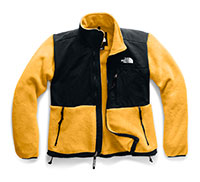 It’s been nearly a decade since designers reinvented activewear for everyday use, their popularity continues to soar. This was particularly evident at the recent Outdoor Retailer Summer Market, where many brands launched their spring collections that included leggings and tailored, fitted pullovers Enhanced with new colors, upgraded performance materials and utilitarian details, these garments featured modern, contemporary designs not often associated with outdoor gear. Though their stylisation did not represent a true deviation from the categories, it definitely signaled increased openness of consumers to connect with the natural.
Brands launch more casual and wearable styles
With consumers new found desire to go explore their natural surroundings, many brands are introducing more casual, wearable styles that easily transition from street to mountain. Mountain Hardwear, which started as a brand for climbers, introduced modern shapes and silhouettes with color palettes that are more aligned with contemporary fashion apparel. The brand also plans to launch a new range of shirts featuring graphics designed by a handful of chosen artists, all printed on organic cotton. The whimsical, eye-catching prints set the line apart from the brand’s more function-focused gear.
A new perspective to design
Jason Israel, Creative Director-Performance, The North Face says, the outdoor apparel market is currently going through a metamorphosis with consumers expecting more than a performance-driven design. This transition allows Israel and his design team to infuse a new perspective into its design to cater to people’s needs and use applications.
One of the main attractions of the brand’s Spring ’20 collection is the women’s Arque jacket, built with the brand’s signature Futurelight material. Made from nanospun, 100 per cent recycled nylon and polyester, the jacket’s lightweight waterproof shell keeps wearers safe from the elements. Its slightly asymmetrical hem has been built with covert functionality, to suit the needs of its consumers. The brand also plans to launch revamped version of its signature Denali fleece—specifically, the 1995 iteration. It will adopt trends or styles that are deeply rooted in the brand’s DNA and give them a modern and fresh look.
More styles in performance fabrics
Jenna Caccavo, Senior Trend Forecaster of Cotton Inc does not think outdoor brands will completely abandon performance fabrics. They will instead add certain selected styles to their line that are lighter on functional features. She advises mass market and fast fashion to capitalise on this growing trend which merges fashion with function.
Ashlee Peterson, of Mountain Headwear also agrees that outdoor gear is now ready to incorporate contemporary styling elements into its repertoire. Earlier an outdoor product looked, sounded and also felt like an outdoor product. But now, brands have started to blur these lines. The North Face is subverting the historical context and vision for outdoor products by combining the new apparel technologies and innovations in softer and more approachable ways. Its efforts are winning the approval of is consumers who are rushing to buy these garments.
Zimbabwe cotton output declines 52 per cent
Zimbabwe’s cotton output may decline by 52 per cent this year after a severe drought. The challenges affecting the industry include: mobile payment system being used to pay farmers; punitive rates charged by errant businesses that are heavily eroding farmers’ earnings. Farmers want cash to be made available to them in areas where there is no mobile network; lack of research and poor development of new seed varieties affecting productivity. Also, due to lack of proper regulatory enforcement, cotton companies engage in side marketing activities. While other cotton producing countries have already adopted hybrid varieties with high yield potential, Zimbabwe will this year, introduce hybrid varieties. Zimbabwe needs more varieties to suit various regions, rainfall patterns and soils so that production increases. One suggestion is for Zimbabwe to consider producing genetically modified organisms to increase production.
A scheme was introduced in 2015 to save the industry that faced imminent collapse after farmers abandoned cotton production citing poor prices and low levels of funding. The scheme has helped production to increase from 28,000 tons, the lowest output in nearly two decades, to about 1,42,000 tons last season. At its peak, Zimbabwe produced 3,52,000 tons of raw cotton in 2012.
Orissa invites textile investments
Orissa is emerging as one of the top destinations for apparel manufacturing in India. The state has identified apparel among the identified focus sectors as part of its vision for industrial development. With multiple dedicated locations identified for setting up apparel parks, competitive land rates and ready to occupy industrial sheds, Orissa, offers a compelling value proposition for units in the apparel sector. Besides offering fiscal and non-fiscal sops, the state provides additional support for development of the sector. The sector specific policy offers various incentives including employment and investment based incentives, various fiscal incentives, capital grants of 20 per cent of the project cost of the park, interest free loan up to ten per cent of the project cost, among others. Orissa offers an abundant and skilled workforce for the apparel sector.
Aditya Birla Fashion and Retail, and the export oriented firm Shahi Exports have set up units. Next Jockey may set up a garment making unit. The company proposed to invest Rs 120 crores on the unit that will generate employment for around 5,000 people. Jockey, listed as Page Industries, will be offered land at an industrial estate after its proposal is evaluated.
Hong Kong protests may hurt brand sales
The ongoing protest in Hong Kong may affect sales of luxury brands by ten per cent to 60 per cent. One risk that could drive the downside further is if the disruptions continue even beyond 2019.
LVMH sees roughly 30 per cent of its Asian sales, excluding Japan, come from Hong Kong. That translates to about an eight per cent total sales exposure in Hong Kong when viewed across LVMH’s global distribution network. If Hong Kong sales were to decline between 10 to 60 per cent year-over-year, then LVMH’s earnings per share could decrease in the range of one per cent to three per cent.
As for other brands that do business in Hong Kong, Capri Holdings’ sales exposure to Asia is relatively small at four per cent. One big concern, however, is that the company might not have as much flexibility in recouping lost sales in Mainland China. Tapestry’s sales exposure to Greater China–which includes Mainland China, Hong Kong, Macau and Taiwan–is roughly 15 per cent. About 25 per cent of sales in the region comes from Hong Kong. From an overall sales perspective, that equates to just a four per cent exposure to Hong Kong for the leather accessories firm.











