FW
New technologies can add more value to Bangladesh RMG exports: BGMEA

A massive work order from global fashion brands and buyers led to Bangladesh’s RMG exports rising 33.81 per cent to $31.43 billion during the July-March FY2021-22 period.Though the textile and garment sector in the country is witnessing an excellent flow of orders, supply gain glitches, constant power cuts and raw material price hikes are marring growth.
In 2021, Bangladesh invested Tk57.90 billion to expand spindles capacity to 745,400. Local textile millers also spruced up investments in the sector, as per BTMA data. Investment in the sector totaled $15 billion, during the year and is expected to reach $20 billion by 2025.
Increase in spinning capacity
Bangladesh invested $11 billion in spinning sector during the year to increase the number of spinning mills in the country to 100. The country has a yarn production capacity of 1.8 million tons that meets about 90 per cent of knitwear sector’s demand.Apparel and textile sector investments total BDTK80to 200 billion with enhanced production capacity expected by 2023.
Around 110garment factories have attained BGMEA memberships to set up new factories in the country including leading groups like Team Group, Urmi Group, RDM Group and Sheltech.
Team Group has invested BDT7.20 billion to construct 32 production lines denim factory, a washing plant, a sweater factory, and a blouse manufacturing unit. Similarly, Urmi Group has invested BDT 1.20 billion to construct a new 40 production lines RMG factory and it will create about 3,000 jobs.
Automation gains pace with labor shortage
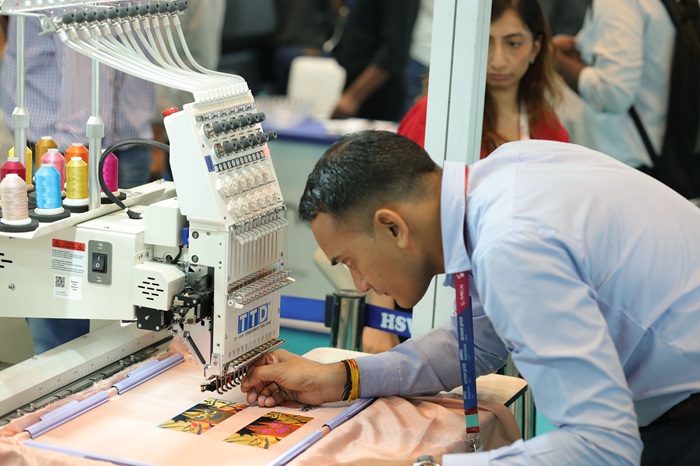
Fazlee Shamim Ehsan, Vice President, BGMEA says, the whole industry is expanding with new factories being set up and older ones reopened. Factories are either witnessing worker shortage or do not have sufficient machine. Entrepreneurs are introducing more automated machines to deal with the shortage.
Faruque Hassan, President, Bangladesh Garment Manufacturers and Exporters Association (BGMEA) says, in the last few years, the industry has become more sustainable and responsible. However, it needs to step up investments in technologies, modernization, skills, efficiency, diversification in product range, to add more value to business and competitiveness.
Vietnam’s garment, textile exports surge by 23.5% from Jan-May’22
Vietnam’s garment and textile exports surged by 23.5 per cent Y-o-Y to $18.7 billion between January and May this year as market uncertainties continued and input costs continued to rise. The revenues of Vietnam National Textile and Garment Group (Vinatex) surged by 50-per cent.
Similarly, revenues of Nam Dinh Textile Garment JSC (Natexco) surged by 23 per cent Y-o-Y to 1.02 trillion VND by May end, according to trade union president Doan Van Dung.Natexco suffered severe labor shortage throughout February and March as there were times when up to half of its workers had to take sick leave due to COVID-19 infection.
Viet Thang Corporation has been struggling to keep production going during the first quarter of the year, given that the Russia-Ukraine crisis has caused supply chain disruptions and a four-fold spike in input and fuel prices and logistics costs, says Dau Phi Quyet, Deputy Director General.
Though the company has managed to find stable supplies of inputs, it is having a shortage of imported replacements for equipment components to deal with. It earlier took six to eight weeks to receive deliveries of the replacements, which normally come from Europe. Now the shipments may take up to 12 weeks to arrive. To cut logistics costs, the corporation is prioritizing major orders instead of minor ones.
Similar challenges could potentially put the brake on Vinatex’s growth over the remaining months this year, a report by a Vietnamese news agency said.
A record inflation in decades is ravaging major economies, triggering rising inventories and declining purchasing power, having substantial effects on the company’s performance, adds Cao HuuHieu, CEO, Vinatex. He advises domestic manufacturers to prepare themselves with more flexible plans in order to promptly address any market changes.
Reconsider source tax on export products, urges BKMEA
Knitwear manufacturers and exporters in Bangladesh have urged the government to reconsider the revised source tax on export products in the proposed budget for the 2022-2023 fiscal year.
Mohammad Hatem, Executive President, Bangladesh Knitwear Manufacturers and Exporters Association (BKMEA), says, the source tax has been increased from 0.5 per cent to 1 per cent against exports.
Already the prices of raw materials, transport and freight costs have experienced a sharp hike after the pandemic and the ongoing Russia-Ukraine war has made the situation further volatile.
Production costs have risen significantly but we are not getting the fair price from the buyers accordingly, he added.
Moreover, the government has hiked the price of gas recently after hiking the fuel oil prices just a few months ago.
At such a time, the increase in source tax will additionally burden the export industry, he added.
Retain source tax for garments at 0.5%, urges BGMEA
In its response to the proposed budget for FY2022-23, the Bangladesh Garment Manufacturers and Exporters Association (BGMEA) has urged the government to retain the source tax for the garment industry at 0.5 per cent for the next five years.
Praising the government for its measures to boost garment exports, BGMEA appreciated the government for the proposed VAT exemption against sub-contracts for export. It also hailed the continuation of the cash assistance to exports, the retention of corporate tax rates at 15 per cent till FY2024-24, VAT exemption on polypropylene stamp fiber production and advance tax exemption on import of its required raw materials, exemption of Terephthalic Acid I Ethylene Glycol – needed for making Textile Grade Pet Chips –from any pre-requisite tax, reduction of sewage treatment plant (STP) import duty to 5 per cent, retention of the services charges of Mobile Financial Services out of income tax and decrease in eligibility limit for tax exemptions for persons with disabilities or third genders to 10 per cent or 25 per cent.
Over 110 Italian manufacturers to showcase textile machines at ITM 2022
Over 110 Italian textile machinery manufacturers will present their latest textile machines and technologies at the upcoming fair ITM 2022, to be held from June 14-18, 2022 in Istanbul.
Organized at the Istanbul Tüyap Fair Convention and Congress centre with the cooperation of the Italian Trade Agency (ITA) and Association of Italian Textile Machinery Manufacturers (ACIMIT), the fair will present efficient solutions to the increasing sustainability and digitalization needs of the Turkish market.
According to Federico Pellegata, Director, ACIMIT, Italian textile machinery manufacturers will also focus on economic and environmental sustainability and offer solutions to provide added value to Türkiye in this sense.
Alongwith its sustainable technology and Green Label initiatives, ACIMIT also takeS concrete steps in water, chemical and energy consumption, and leads the world in solutions that provide the highest efficiency with lower costs. The machines developed by it meet the demands of sustainable production in lines with social demands of Turkiye.
Puma, Sympatexadopt sustainable approach to recycled Polyester products
Global sports brand Puma and Sympatexhave collaborated to adopt an innovative sustainable approach to highly technical and recycled polyester-based materials and products. The two companies will launch their joint Autumn/Winter 2022 collection across global PUMA stores, leading retailers and on the brand’s website.
The partnership aims to drive consciousness and collaborative action towards bringing a positive change, says Kim Scholze, Chief Sustainable Community Manager and Head-Storytelling, Sympatex.
As a part of its Forever Better sustainability strategy, Puma focuses on using carbon intensive raw materials in its garments. In 2021, the brand expanded the use of recycled polyester to 55 per cent in its apparel products, as part of its strategy to use 75 per cent recycled polyester in its apparel and accessories by 2025.
Circularity is a non-negotiable principle for Sympatex in all its entrepreneurial activities. The brand aims to achieve complete circularity by 2030. It aims to no longer use new materials from the oil industry in the future. Instead, it will transform used textiles into new, high-quality functional textiles.
South African retailer TFG to expand local production capacity
South African fashion retailer TFG plans to expand local production capacity to reduce dependence on global supply chains, says Anthony Thunstrom, CEO.
The owner of British womenswear brands Hobbs and Whistles and the local Foschini and Markham clothing brand plans to add 10 new production units by expanding its own factories and buying new ones.
Each of these units will have between 200-400 workers and would be spread across the Cape Town and Durban regions.
TFG swung to an operating profit before finance costs of 4.8 billion rand ($310.91 million) in the year ended March 31 versus a loss of 719.2 million rand a year earlier, as it recovered from COVID-19 restrictions which forced store closures across its three markets.
The group’s revenues grew by 29.7 per cent to 46.2 billion rand, with retail turnover growth of 31.6 per cent at 43.4 billion rand. Online sales grew by 11.7 per cent and contributed 10.2 per cent to group retail turnover.
Formally known as The Foschini Group, TFG also resumed annual dividend payouts, declaring a final dividend of 330 cents per share.
Isko acquires Itema’s new rapier machine to reduce waste production
Isko has acquired Itema’s latest rapier machine, a groundbreaking innovation enhanced by the iSAVER® technology to ensure a sustainable future for the denim industry. As per a Textile World report, the rapier machine helps reduce waste production and energy use, while optimizing the fabrics’ hand-feel, aesthetic, and performance.
The new rapier machines are enhanced by the iSAVER® technology, a breakthrough mechatronic innovation that eliminates the waste selvedge on the left side of the fabric, allowing for saving in energy and raw materials, cutting in half the cotton waste that typically results from the weft yarn. All types of Isko’s innovative fabrics, with a multitude of different constructions and fiber mixtures, can now be produced using these advanced weaving technologies, with a special focus given to the R-Two™ technology in terms of its sustainable credentials.
These innovations help advance our sustainable strategy even more, says FatihKonukoğlu, CEO, Isko. Our collaboration with Itema creates a common ground of excellence that will certainly benefit the whole denim world, he adds.
Mud Jeans bags Sustainable Entrepreneurship 2022 Award
Circular denim brand Mud Jeans has bagged the Sustainable Entrepreneurship 2022 award from the King Willem I Foundation.
As per a Sourcing Journal report, since its inception, Mud Jeans has focused on closed loop and transparent manufacturing. The brand recycles each pair of its denim jeans into new pair of jeans using 92 per cent less water. The environmental impact of its entire product portfolio is calculated through life cycle assessments.
The company has also introduced a lease-a-jean program to ensure that jeans no longer worn are returned to the brand to be upcycled and eventually recycled.
The King Willem I Foundation Award is the “most prestigious business award in the Netherlands. Also known as the “Oscar of Dutch business,” it is awarded every two years to a large company, a small or midsize business (SME) and a company with a strong focus on sustainable entrepreneurship.
The King Willem I Foundation was established in 1958 to “give the national economy new impulses and thereby increase the prestige of the Dutch business community.
High visibility clothing market to reach $2.9 billion by 2031
Valued at $1.5 billion in 2021, the high visibility clothing market is expected to surge by 6.5 per cent from 2022-2031 to reach over $2.9 billion by 2031. As per a TMR Study, the market will be driven by new federal rules and regulations being implemented by important government agencies across the world to improve overall worker wellbeing and safety of workers, and also reduce the dangers connected with accidents in industrial setups and other conditions.
High visibility clothing is being adopted by workers in the industrial manufacturing, construction, transportation and warehousing businesses. Producers of this type of clothing are focusing on innovative design to attract people all over the world and access previously untapped areas to increase income, as per a Press News Wire report.
The industrial sector is adopting neon yellow, neon orange, and 3M reflective materials, which have been proven to be perfect for workers doing their task or job in low-light settings. Furthermore, to safeguard oneself from harsh heat, sunshine, moisture, and cold, end users are looking for new and lightweight high visibility gear for various working places, situations, or temperature ranges.