FW
Vietnam’s garment-textile exports to suffer in second half of the year: VITAS
Despite positive results in the first half the year, Vietnam’s garment and textile exports are likely to encounter a host of challenges in terms of market and supply chain in the second half, said Vu Duc Giang, Chairman, Vietnam Textile and Apparel Association (VITAS) at a seminar organized in collaboration with the Cotton USA. Vietnam’s textile and garment exports will grow 23 per cent Y-o-Y to $22 million with FTAs including the Comprehensive and Progressive Agreement for Trans-Pacific Partnership (CTPP), Giang says. This has boosted the domestic industry over the past five years with its regulations on product origin, he said.
Vietnam exported $5.6 billion worth of yarn last year and $3 billion in the first half of this year as investments in new technologies and digital management The sector has also shifted towards green energy and water resources, thus better meeting international standards and winning confidence of customers, Giang added.
However, escalating inflation in the US and Europe would affect orders in the third and fourth quarters of the year. The ongoing Russia-Ukraine conflict, along with surging oil and gas prices and transportation costs, would also push up production prices, Giang noted.
Than Duc Viet, General Director, Garment 10 Corporation added, the adverse impact of COVID-19 can be seen in the disruption of supply chain and logistics services. Given this, domestic enterprises said they have kept a close watch on the market to adjust their production plans, diversified material supplies, and sought new clients to maintain production.
ITM 2022 achieves €1.5 billion sales in five days
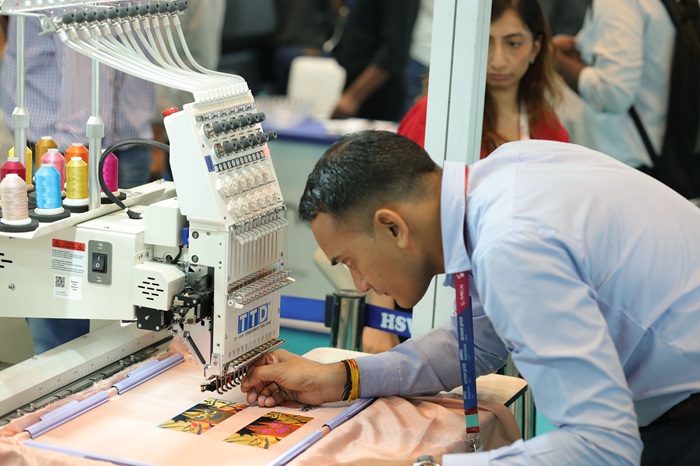
The ITM 2022 Exhibition achieved sales worth €1.5 billion in 5 days with innovations in weaving, knitting, yarns, digital printing, finishing to denim sold in large numbers. Organized by Teknik Fairs in partnership withTüyap Tüm Fuarcilik Yapim, ITM 2022, was held at Tüyap Fair and Congress Centre between June 14-18, 2022. The fair was held in 12 halls spread across on 120,000 sq. mt. and was attended by 1,280 companies and company representatives from 65 countries. Visitors included 64,500 people from 102 countries, consisting of 44 per cent international and 56 per cent domestic visitors. The fair generated a business volume of over €1.5 billion.
Due to Istanbul's ease of transportation and the absence of visa requirements, ITM 2022 Exhibition hosted thousands of visitors from all over the world. The ITM and Hightex Exhibitions will be held in Istanbul from June 4-8, 2024.
21 fashion councils collaborate for European Fashion Alliance
Twenty one national and regional fashion councils from 18 countries around Europe are collaborating to launch the European Fashion Alliance. As per a Women Wear Daily report, the councils include Camera Nazionale della Moda Italiana, founded in 1958, with around 150 members today, and France’s Fédération de la Haute Couture et de la Mode, founded in 1973, now with around 100 members.
The alliance also includes smaller organizations like the Bulgarian Fashion Association that promotes and networks designers from the Eastern European nation. The president of the alliance will be selected on a rotating basis. It will also have prescribed minimum standards for members to join the alliance, and will be funded just like the European Union with each member paying a share depending on their size and national budget.
One of the alliance’s objectives is to represent the European fashion industry at the EU government level. Additionally, the alliance will likely have the opportunity to advise on where money could best be spent. In the latest six-year EU budget for 2021 to 2027, funding for culture and the creative industries increased by 50 per cent over the last six-year budget and now totals €2.44 billion.
Besides political advocacy, the European Fashion Alliance also plans to meet around certain subjects such as, for example, craft, innovation, best practices and national specializations, as well as to encourage cross-border projects and more networking.
Duty-free access will help Bangladesh strengthen ties with Russia: BGMEA
Faruque Hassan, President, Bangladesh Garment Manufacturers and Exporters Association (BGMEA) says, a duty-free access to the Russian market will provide it a great opportunities to strengthen ties with the nation. Bangladesh can also provide Russian consumers quality goods at competitive rates, he adds.
Currently, clothes made in Bangladesh faces 5 to 20 per cent customs duty in Russia. Ttrade between the two countries faces some banking related difficulties. Hassan says, they aim to identify these barriers and resolve them. Habib Ullah Dawn, President, Commonwealth of Independent States-Bangladesh Chamber of Industry affirms, Bangladesh has signed an MoU with the Eurasian Economic Union, to facilitate a free trade agreement.
Duty-free access to Russia will enable Bangladeshi exporters to explore Russian-led Eastern European economic union markets comprising Belarus, Kazakhstan, Armenia and Kyrgyzstan besides opening the markets of the Commonwealth of Independent States as well, he adds. At present, CIS units: are Azerbaijan, Armenia, Belarus, Kazakhstan, Kyrgyzstan, Moldova, Russia, Tajikistan, Turkmenistan, Uzbekistan and Ukraine.
In fiscal 2020-21, Bangladesh's total export to Russia totalled $665.32 million and import from Russia amounted to $481.88 million. So, bilateral trade was worth only $1.1 billion. Readymade garments constitute around 90 per cent of Bangladesh’s total exports to Russia. In FY21, Bangladesh exports apparels worth $593.66 million to Russia, which can be increased further, he opines.
China: CCCT to promote high-quality development of textile industry
China Chamber of Commerce for Import and Export of Textiles (CCCT) plans to promote high-quality development of the industry and has signed a strategic cooperation agreement with the Swiss Textile Testing Institute (Testex) for this purpose.
The agreement enables CCCT to deal with green trade barriers in European and American markets effectively and promote green and sustainable development in the regions. It also helps Chinese textile and garment products and brands to establish a fashion, green and sustainable image in the international market and enhance the competitiveness of Chinese textile and garment products.
Henceforth, CCCT and Testex will provide Oeko-Tex testing and certification services to all member enterprises. The service highlights efficiency, convenience and accuracy enabling members to obtain Oeko-Tex certifications. The service includes Oeko-Tex certifications like green textile passport to European: Standard 100 by Oeko-Tex; traceable product label for transparent supply chain: Made In Green by Oeko-Tex; eco natural leather certification: Leather Standard by Oeko-Tex; eco dyes and chemicals certification: Eco Passport by Oeko-Tex and sustainable textile production certification: STeP by Oeko-Tex.
Rapid shift from informal to formal makes apparel demand unpredictable
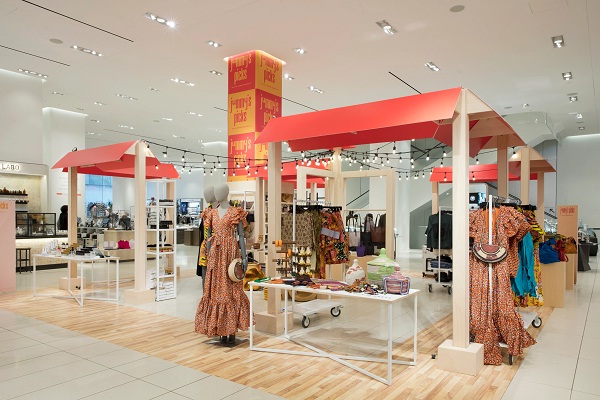
With brands compelled to deal with issues like rising inventory costs and changing customer preferences, the first quarter of the year was a mixed bag for apparel retailers. A report by Modern Retail shows, revenues of retailers including Poshmark, Revolve and TJX Companies increased between 13 and 43 per cent while those of department store conglomerate Kohl’s decreased from $3.8 billion to 3.7 billion Y-o-Y. Big retailers like Target and Walmart had to sell apparels at discounted rates due to their failure in predicting demand.
Currently, the bottom lines of apparel retailers are under tremendous pressure due to rising inflation and supply chain headwinds. Constantly evolving garment choices of consumers, from stay-at-home basics to workwear and party wear, are further adding to their woes.
Demand for formal wear surges
Most shoppers opted to buy formal garments for offices or events during the quarter. They mostly chose dresses, leading to a 150 per cent Y-o-Y growth in the category at Revolve, says Jesse Timmermans, Chief Financial Officer. At Poshmark, the category of prom dresses and wedding apparels grew 75 per cent and 39 per cent respectively.
Along with growing demand for apparels, accessories too saw a rise in sales during the quarter. High heels from ThredUp registered a 50 per cent growth in demand during the quarter while Etsy recorded increased demand for jewelry and accessories.
Activewear demand slows
Athletic, athleisure and lounge apparel remained the most-demand categories during the pandemic. However, their growth slowed for a few retailers like Kohl’s and Target. Kohl’s registered a marginal rise in demand for activewear while Target witnessed a decline in demand for basic garments. Demand for trendier apparels accelerated during the quarter with more people returning to offices or resuming active social lives, observes Christina Hennnington, EVP and Chief Growth Officer, Target.
On the other hand, athletic-focused retailers like Under Armor struggled during the quarter. The gross margins and sales of Under Armor declined while that of Foot Locker underperformed. To sustain growth, these athletic brands and retailers need to evolve their product offerings, opines Jessica Ramirez, Senior Research Analyst, Jane Hali and Associates. They need to redesign sports jackets with a smart athletic fabric or add useful features for the consumers, she adds.
Navigating through changing preferences
Changing consumer preferences, supply chain issues and a colder-than-normal spring compelled retailers like Walmart, Target and JD to offer discounted apparel during this quarter. Retailers also suffered from the quicker than expected change from informal to formalwear as consumers shifted away from spending on vacation dresses and accessories, affirms Brain Cornell, CEO, Target. Supply chain issues including rising freight and fuel costs also made it difficult for them to get their desired products at affordable prices.
This year is likely to be quite unpredictable for retailers, says Joshua Silverman, CEO, Etysy. They would have to devise new innovative strategies to engage consumers, he adds.
Class launches Smart Shop at 10th Future Fabrics Expo
The international eco hub Class launched its Smart Shop’at the 10th edition of the Future Fabrics Expo, showing once more the unique power of this education tool.
Since 2018, Class has been offering the access to its material hub,innovations to small and new generation of designers and brands through its Smart Shop, the online store of smart materials – with no minimums - which are going to change the fashion industry for the better. In fact, Class at FFE is to share the unique values of its design driven, conscious, high-tech materials, in order to start synergies with an audience characterized by the interest in responsible innovations, the main expertise of CEO and founder GiusyBettoni and her team.
Thanks to its most valuable asset in terms of education, C.L.A.S.S. offers smart solutions – from 1 meter to max 50 meters - for the contemporary wardrobe which include all the different expressions of textile ingredients: natural, transformed, innovative and back in the loop materials, giving everyone the possibility to create design, innovative and yet responsible products in line with their new generation of contemporary values.
Luxury goods market to grow to 15% next year: Bain & Co
As per a study by Bain & Company, the global luxury goods market is set to grow to 15 per cent next year, pushing the market to €330 billion, The analyst forecasts, sales of luxury goods will grow by 5 per cent to €305 billion.
The global luxury goods market grew to €288 billion ($198 billion) last year, rebounding from its worst recorded dip due to the 2020 pandemic lockdowns, according to the study commissioned by Italy's Altagamma association of high-end producers.
Sales of personal luxury goods including apparel, accessories and footwear posted high double-digit growth in the first quarter of this year, despite the first signs of economic uncertainty tied to the Russian invasion of Ukraine, the report said.
The United States and Europe have boosted growth so far this year, while sales are expected to hit a hard stop in China due to COVID-19 restrictions in key cities.
67th IIGF inaugurated in Greater Noida
Piyush Goyal, Minister of Commerce & Industry, Consumer Affairs, Food & Public Distribution and Textiles, inaugurated the 67th India International Garment Fair (IIGF) at at IEML, Greater Noida. In his address Goyal named apparel fashion, jewelry and MICE as industries that need to grow. He set the apparel exports target at 15 per cent. Goyal informed, India is moving ahead on FTAs with Canada, EU, UK and Australia. It also plans to forge new FTAs with the GCC, Israel, Eurasia and Brazil, he added.
Narendra Goenka, Chairman AEPC said, the global apparel market which was just under $1.5 trillion in 2013 is expected to generate revenues to the tune of $1.8 trillion in 2022 and $1.9trillion in 2025 before it closes to $2 trillion in 2026. India offers complete value chain solution from farm to fashion giving it a competitive edge by shortened lead times to reach buyers.
Huntsman Textile Effects to showcase extensive solutions at Techtextil
A global leader in innovative solutions and environmentally sustainable products, Huntsman Textile Effects is presenting its extensive and complete end-to-end suite of solutions for various applications, including technical and functional apparel and home and hospitality textiles, at Techtextil from June 21-24, 2022, in Frankfurt, Germany.
As per a Textile Focus report, the company is showcasing its revolutionary technology for delivering the lowest environmental impact for dyeing polyester-cellulose blends, Avitera® se Fast process. The technology combines alkali-clearable Terasil® W/WW disperse dyes and Avitera® se reactive dyes to cut processing time from around nine hours to just six. This helps mills reduce the water and energy required for production by up to 50 per cent and increase output by over 25 per cent.
The technology also delivers outstanding wet-fastness to ensure that sportswear will not bleed or stain during home laundering, or while in storage or transit. Huntsman presents eco-friendly finishes that repel water and stains to help garments look new for longer. Known as the Teflon™ EcoElite with Zelan™ R3, it is the industry’s first renewably sourced water-repellent finish containing 63 per cent plant-based materials and exceeds the performance levels.
Another product showcased by Huntsman is the Phobotex® non-fluorinated water-repellent finish. An advanced and comprehensive range of water repellent, Phobotex® can be quickly, easily and safely applied to any substrate to ensure premium softness and comfort.