FW
Garment manufacturers’ revenues to increase 9-11% this fiscal: CRISIL
Revenues of garment manufacturers could increase 9-11 per cent this fiscal to 1.25 times of the levels seen in 2020, says the SME Report 2022 by CRISIL. EBITDA margins of these manufacturers is likely to remain in the range 5 to 5.5 per cent. Over 25 per cent of micro, small and medium enterprises (MSMEs) operating in India lost 3 per cent market share due to the pandemic, while the earnings before interest, tax, depreciation and amortization (EBITDA) margins of over 50 per cent declined due to a sharp rise in commodity prices last fiscal compared to the pre-pandemic level.
The share of MSMEs in several sectors has erorded by 3 per cent while EBITDA margin erosion was equal to fiscal 2020. Despite a rise in freight rates, Ebitda margin of small fleet transport operators was impacted by 50 bps in fiscal 2022, over fiscal 2020, due to limited cost pass-through of rising fuel cost that forms about half of the total cost.
Sectors such as textiles offered a ray of hope for exports. Cotton yarn exports benefited from the US ban on Xinjiang, China-made items, besides the China+1 policy. Having 70 per cent share, the RMG industry gained from supply constraints in China, and from emerging global opportunities. Going forward, Tirupur-based garment manufacturers are likely to benefit from export orders diverted from an economically floundering Sri Lanka, says Elizabeth Master, Associate Director, CRISIL Research.
The CRISIL report covers 69 sectors and 147 clusters that achieved an aggregate revenue of Rs 47 lakh crore, representing 20-25 per cent of the GDP.
Brazil to boost Asian partnership with cotton supply to Bangladesh
Brazil is looking to enter strategic partnerships in Asia by increasing its cotton supply to Bangladesh, says Cotton Brazil at a sellers’ mission event in the country. Certified by the Brazilian Cotton Growers Association (ABRAPA), the international market development program for Brazilian cotton, Cotton Brazil, visited Bangladesh and met officials of BTMA, BGMEA, Ministry of Industries, Cotton Development Board, and some prominent textile millers including Noman Group, MAS Group, NRG Group, ISRAQ Group, Viyellatex Group, Syed Group and Salma Group in Dhaka
The delegates disclosed their aim to promote sustainability and demonstrate Brazil as a reliable partner of high-quality and traceable cotton. The event also focused on Cotton Brazil’s commitment to ensuring short-term, medium, and long-term business continuity through its promotion of Brazilian cotton export. They discussed the issue of rising cotton prices on Asian garment manufacturers and the lack of supply due to top producers’ diminishing yields of cotton last year.
To overcome cotton shortage, demand for Brazilian cotton is increasing making it the fourth largest cotton producer and second-largest exporter in global market. According to Cotton Brazil, they supplied 166,000 tons of cotton to Bangladesh as of April 2022.
ABRAPA estimates, Brazil’s area under cotton cultivation increased by 15 per cent to about 1.58 million hectare. It forecast, cotton production will increase 20 per cent to 2.82 million tons in 2022, marking it the second-best season for Brazilian cotton’s history. Moreover, Brazil projects, its total shipments will rise to 1.90 million tons for the next cycle.
Shein emerges the ‘most downloaded shopping app’: UBS survey
UBS Evidence Lab’s Global App Monitor has named Chinese fast fashion retailer Shein as ‘most downloaded’ shopping app as well as the ‘most searched-for apparel retailer in the US. The online-only retailer of inexpensive clothes, beauty, and lifestyle products grew from a $15 billion valuation in 2020 to 100 billion value in a recent funding round, as per a WSJ report.
Growth is attributed to its strong momentum with consumers, say UBS analysts. As per an AoI report, growth makes Shein an increasing threat to US specialty retailers such as American Eagle, Aberchrombie & Fitch, Urban Outfitters, Victoria’s Secret, The Gap, and department stores and off-price retailers. Despite having no network of physical stores, Shein has been ranked a top brand on TikTok and has been the second favorite website for shopping amongst teenagers for the last two years, according to Piper Sandler's semi-annual Gen Z Survey. The e-commerce company pursues an aggressive, data-driven fast-fashion business model that makes it a popular brand amongst price-sensitive consumers.
ASW 2022 to hold physical edition in Bengaluru on July 1 and 2, 2022
One of the leading events in apparel sourcing, The Apparel Sourcing Week (ASW) will organize its first physical edition after a two-years on July 1 and 2, 2022 at Sheraton Grand Hotel in Bengaluru. The two-day event will hold 10 seminars, 12 open house discussions, vendor sessions and workshops and accelerator program for start-ups, etc. It will include participants from 15 countries and over 10,000 brands, retailers, manufacturers, and analysts. Popular and established brands like the Shopper’s Stop, Being Human, Tata Cliq, Nykaa Beauty & Fashion, Adidas, Benetton, etc, will participate in the event.
Other key exhibitors such as Pacific Jeans, Giant Group, Laila Fashions, Liva, Vardhman, Reshamandi, Trace Network, Flix Stock etc, will also participate in this event. Mayank Mohindra, Director, Apparel Resources says, ASW 2022 has been curated for the industry and businesses to decode the post-pandemic business ecosystem and markets. It will also help generate productive and effective business opportunities, he adds.
The two-day will also host many thought-provoking sessions to discuss important topics such as ‘Reinventing physical retail’, ‘Fashion innovation using AI’, ‘Upcycling – the new frontier for sustainability, ‘Sourcing in times of Industry 4.0’, etc. The event also aims to encourate India-Bangladesh collaboration and promote South Asia as the global hub for apparel and textile innovations.
Euratex launches ReHubs initiative to recycle 2.5 million tons of textile waste by 2030-end.

Textile recycling industry is expected to provide social, economic and environmental benefits to around €4.5 billion by 2030. It would also create 15,000 new jobs by the period besides increasing the need for nearshoring and reshoring of textile production, as per the Techno Eonomic Study by Euratex’s ReHubs Initiative.
No large-scale plan to tackle textile waste
Completed by ReHubs in June 2022, the ‘Techno Economic Master Study’ provides valuable information on the feedstock, new technologies, organizational and financial needs to recycle 2.5 million tons of textile waste by 2030, effective launching of the the ReHubs initiative. The study states, Europe generates around 7-7.5 million tons textile waste annually, of which only 30-35 per cent is recycled. Around 85 per cent of this textile waste comes from private households and approximately 99 per cent is virgin fibers.
The European Waste law mandates all member states to separately collect the textile waste in the next two and half years. While, few countries have already launched schemes for this purpose, a large scale plan to process this waste does not exist. To achieve a fiber-to-fiber recycling of around 18 to 26 per cent by 2030, investments worth $6 billion are needed. This would help the industry scale up fiber sorting and processing efficiently. It would also enable it to achieve economic, social, and environmental benefits worth €3.5-4.5 billion by 2030.
Expanding the industry size
Launched by Euratex in collaboration with members in 2020, the ReHubs initiative would help expand the size of textile recycling industry to 6-8 billion and, create around 15,000 direct new jobs by 2030. It aims to focus on recycling fiber-to-fiber 2.5 million of textile waste by 2030. For this, it will form a leading collaboration hub with large players and SMEs from across an extended textile recycling value chain. The project will be executed in four stages.
In the first stage, textile waste will be transformed into feedstock. It will address the limitations in current sorting technologies. The project will led by Texaid AG and build a 50,000 tons facility by the end 2024.
Second stage will focus on increasing adoption of mechanically recycled fibers in the value chain. The capacity of these fibers will be expanded in the third stage by addressing technical challenges in recycling thermo-mechanical textiles. The last stage will involve creating a capsule collection with post-consumer recycled project.
Achieving Green Deal goals
Bringing together key European and world players, the ReHubs initiative aims to transform textile waste into a resource. It also aims to boost the adoption of textile circular business model at large scale. The initiative will also focus on achieving EU ambitions of a Green Deal that mandates collection of entire textile waste by 2024.
The main focus of the collaboration will be on converting societal textile waste issue into a business opportunity. It will take into consideration all perspectives on chemicals, fibers making, textiles making, garments production, retail and distribution, textiles waste collection, sorting and recycling.
To mobilize resources for the initiative, Euratex has set three stakeholder groups. These include: a Business Council of pioneering companies that will conduct the TES study; Stakeholder Forum of business, research and academia players, who will share high-level information and support future collaboration; a Task Force comprising 14 national associations to review the progress of the ReHubs initiative and align this with policy and industry developments at the national level.
Productivity enhancement can help elevate workers’ conditions in Asia’s garment sector: ILO
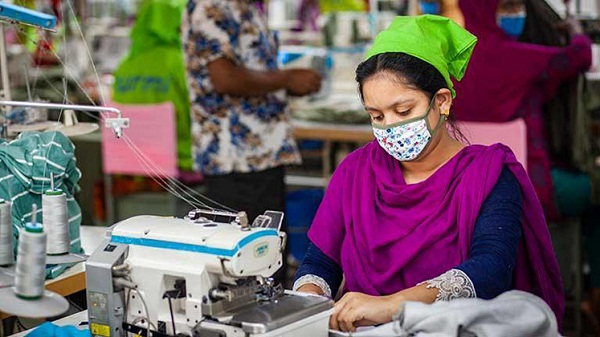
Traditionally, the global hub of garment production, Asia continues to maintain its dominance across the world. However, off late, the region’s garment sector has been facing certain challenges induced by the pandemic, says a new report by the International Labor Organization (ILO).
The report states, the sector continues to account for 55 per cent of global textiles and clothing exports, and employ 60 million workers. However, it currently faces issues including rising labor, production and process automation costs; increase in ‘reshoring’ and ‘nearshoring’ trends, and an increased emphasis on adopting a sustainable business model with minimum standard wages and working conditions. These headwinds are making workers’ future uncertain in the industry.
Workers condition continue to lag
Workers’ wages and productivity have grown across countries, futures of many companies are being determined by the respective governments’ policies and other external forces, notes David Williams, Manager-Decent Work in Garment Supply Chains-Asia, ILO.
The sector’s development follows different routes across regions. While its importance in China, Thailand and the Philippines has reduced due to diversification and upgrading, the sector continues to drive economic growth in nations including Cambodia and Bangladesh. For years, the sector depended on cheap labor to secure advantages in the global market. However, despite an increase in real wages in most countries, labor conditions continue to worsen with long working hours, unhealthy and unsafe conditions and labor abuse rampant at workplaces, adds Williams.
A major percentage of workers continue to remain susceptible to the sector’s informal nature and its temporary working arrangements.
Gender pay gap still an issue
The sector also faces huge Gender pay gaps, rues Williams. Female workers are paid much less than their male counterparts with countries having lowest female workers facing the highest gaps, he adds . Williams says, Asia’s garment sector continues to lag despite a rise in labor productivity in recent decades. Few countries in the region have managed to scale in the value chain in apparel production though most continue to engage in low-skilled operations.
He highlights a positive association between growth in labor productivity and wages in the sector. Enhancing labor productivity may help elevate workers’ pay, he advises. To ensure future success, the industry should make mutually strengthening investments, says Williams. It should generate productivity-driven high wages supported by concrete incentives from brands.
Klopman exhibits at Techtextil Frankfurt
Klopman is exhibiting at Techtextil Frankfurt, the most important trade fair for textile manufacturing and industrial production of technical textiles across all sectors, being held from June 21-24, 2022. Klopman, a leading European producer of technical fabrics for workwear, based in Italy, will launch two new product lines upholding the principles of sustainability.
The first product to be launched by the company is the Superbandmaster. Promoted under the slogan 'Join The Fabric Revolution' (#GoCircular - www.JoinTheFabricRevolution.com), the fabric is notable for its partial composition of recycled fibres derived from recycling polyester/cotton clothing. Thanks to the use of these recycled fibres, products at the end of their first cycle of use can be given a new lease of life and become part of a circular economy aimed at minimising waste.
The second breakthrough from Klopma is an evolution in the production of fabric made from Tencel™ Lyocellfibre. Born out of an established partnership with the company Lenzing, all of the Tencel™ Lyocll fibers used in Klopman's products will be carbon neutral, responding to the growing demand for functional, high-quality products that guarantee maximum environmental friendliness.
GHCL inaugurates new spinning unit in Madhurai
India's leading Chemical & Textile Company, GHCL has inaugurated its new spinning unit at Manaparai in Madurai district of Tamil Nadu.
Equipped with 39,600 ring spindles, the unit produces23 tons per day of synthetic and synthetic blend compact yarn. It is equipped with state-of-the-art textile machinery and the latest online quality control equipment combined with computerized information systems to enhance productivity and product quality.
The unit will produce Cotton/Polyester blend yarn; Cotton/Modal and Cotton/Excel blend yarn; Supima/Modal and Supima/Tencel yarn; 100 per cent VSF, Micro Modal and Tencel yarn; 100 per cent bamboo and its blend yarn; Tri-blend yarns (Cotton/Polyester/Cellulosic).
RS Jalan, Managing Director, GHCL says, with its state-of-art machinery, this facility will produce the best quality and the perfect blend of yarn. The commencement of operations at the unit will help us create more value for our customers, add value to our product basket and generate more employment opportunities in the region.
Super Tax may slow down economy: PHMEA
Rejecting the government’s 10 per cent Super Tax, Pakistan Hosiery Manufacturers & Exporters Association (PHMEA) claimed, it may slow down the economy
Kashif Zia, Chairman, PHMEA, said, the textile sector is already paying 29 per cent tax. Further taxes would damage the sector badly. The interest rate of 13.75 per cent would slow down the economy, he claimed.
Zia urged the government to bring more people into the tax net rather than imposing more taxes on existing taxpayers.
Prime Minister Shehbaz Sharif recently announced a super-tax of 10 per cent on large-scale manufacturers and industries in the country in order to address the economic woes of the country.
Government to reform RoSCTL scheme
The government plans to reintroduce a reformed tax rebate scheme for exporters merely eight months after launch, after complaints from the industry that the scheme is eroding their margins.
Introduced in October, the Rebate of State and Central Taxes and Levies (RoSCTL) scheme, provides rebate against taxes and levies already paid by exporters on inputs. The rebate is given as tradeablescrips, which exporters can sell to importers. Importers can then use these scrips to pay customs duty, instead of paying in cash. However, exporters complain these scrips are trading at a steep 20 per cent discount, defeating the purpose of the scheme.
As of now, these scrips can be traded even before export realization, with the liability falling on importers. The government feels the scrips are trading at a discount because of this risk component, and plans to make them tradeable only after full export payments are received, which would eliminate the risk factor. It also plans to double the eligibility of these scrips to 24 months from 12 months now.