FW
Fashion forecast: Decoding the Autumn-Winter 2027-2028 aesthetic
As the global textile industry grapples with rapid socio-cultural shifts, the upcoming Texworld Apparel Sourcing Paris exhibition is set to debut ‘Autopsy,’ a trend framework that moves beyond traditional seasonal narratives. Scheduled for August 31 to September 2, 2026, at the Paris-Le Bourget Exhibition Center, this edition abandons the conventional four-theme structure in favor of twelve distinct creative signals. Under the artistic direction of Louis Gérin and Grégory Lamaud, the initiative functions as a diagnostic tool, examining how digital saturation, environmental fragility, and a hunger for authenticity are physically manifesting in fabric choices and garment silhouettes.
Navigating the Tension Between Uniformity and Organic Growth
The curated signals highlight a sharp divide in contemporary design philosophy. Concepts such as ‘Normskin’ address the algorithmic standardization of modern identities, favoring modular textures and neutral palettes that reflect a global movement toward aesthetic conformity. Conversely, themes like ‘Florabiote’ and ‘Chlorolirium’ champion a radical return to nature, utilizing mossy velvets, floral jacquards, and biological structures to counter systemic exhaustion. This shift signifies a strategic move for apparel manufacturers to balance the commercial demand for mass-produced uniformity with the growing niche market for organic, high-tactility materials that offer an emotional connection to the wearer.
The evolution of materiality and human presence
The ‘Autopsy’ framework further challenges the industry to reconsider the role of the body in a hyperconnected era. Signals like ‘Decarnation’ and ‘Aquamorphosis’ explore the intersection of technology and biology, suggesting that future textiles will need to act as ‘second skins’ - fluid, polymorphic, and sensitive to environmental changes. As designers prepare for the 2027-2028 season, the focus is clearly moving toward materials that embody memory and permanence, using carbon residues, marbled textures, and eroded surfaces to ground digital-age fashion in a more tangible, human reality. This transition offers a distinct opportunity for mills and suppliers to invest in innovative finishing techniques that emulate weathered, artisanal, and sustainable aesthetics.
Trend forecasting at Texworld Apparel Sourcing Paris
Texworld Apparel Sourcing Paris is a premier trade exhibition organized by Messe Frankfurt France. It serves as a global hub for textile and apparel professionals, offering seasonal trend forecasting alongside sourcing opportunities. The event provides a collaborative space for the industry to align on color palettes, material innovations, and design directions for upcoming cycles.
Uttar Pradesh fast-tracks textile expansion with five integrated parks
Uttar Pradesh is aggressively scaling its industrial footprint in the apparel sector, with the state cabinet recently clearing the transfer of over 326 acres of land for five major Textile and Apparel Parks. Strategically located in Varanasi, Amroha, Bareilly, Sant Kabir Nagar, and Bijnor, these zones are designed to function as comprehensive ecosystems, integrating the entire value chain from fiber processing to finished garment assembly. By deploying a Public-Private Partnership (PPP) model, the government aims to de-risk private investment while ensuring the rapid deployment of essential infrastructure, including dedicated power substations and logistics connectivity.
Strategic infrastructure for industrial agility
Operating under the Sant Kabir Textile and Apparel Park Scheme, the initiative marks a shift toward modernizing the state's traditional weaving clusters into export-ready manufacturing hubs. Development is already underway at the Ramna Textile Park in Varanasi, where road connectivity tenders have been finalized and transmission infrastructure blueprints are being executed. For the remaining four sites, the state is currently preparing PPP-based tender documents to select master developers, emphasizing technical textile manufacturing and ready-made garment production. The government’s proactive approach to environmental clearances—including forest and groundwater usage permits - signals an intent to reduce project gestation periods significantly.
Enhancing value chain competitiveness
This expansion is part of a broader mandate to move Uttar Pradesh beyond traditional handloom dominance toward high-value apparel exports. By co-locating spinning, dyeing, and stitching facilities, these parks aim to mitigate the supply chain inefficiencies that have historically hindered regional manufacturers. Industry experts suggest that the integration of Northern India Textile Research Association (NITRA) feasibility studies will ensure these zones are tailored to current global demand, specifically targeting segments that require quick-turnaround capabilities. As the state moves toward finalizing the selection of developers, the focus remains on transforming the region into a cornerstone of India’s push to capture a larger share of the global synthetic and technical textile markets.
Sant Kabir Textile & Apparel Park Scheme
This government-led industrial initiative facilitates integrated textile hubs across Uttar Pradesh, focusing on the end-to-end production of ready-made garments and technical textiles. Key regions include Varanasi and Sant Kabir Nagar, targeting both domestic wholesale and international export markets. The scheme is designed to drive large-scale job creation and private capital investment through a robust PPP framework.
UK retail rebounds as heatwave spurs seasonal spending growth
The United Kingdom’s retail sector experienced a significant acceleration in May 2026, with total sales rising 3.7 per cent Y-o-Y. According to the latest British Retail Consortium (BRC) and KPMG monitor, this performance comfortably outpaced the 12-month average growth of 2.0 per cent. The primary catalyst for this upward momentum was an unseasonably warm spell that prompted a swift consumer shift toward summer-oriented categories. Clothing and footwear, in particular, returned to growth for the first time since the post-holiday period in January, as shoppers prioritized seasonal essentials like sandals, sunglasses, and lighter apparel.
Digital channels lead consumption shifts
A defining feature of May's retail landscape was the marked migration toward online platforms. As record temperatures deterred traditional high-street footfall, online non-food sales increased by 10.6 per cent compared to the same period last year. This dynamic pushed the online penetration rate for non-food items to 38 per cent, well above the 37.7 per cent 12-month average. Retailers with robust omnichannel capabilities successfully captured this demand, effectively mitigating the 0.4 per cent decline observed in physical store-based non-food sales. The data underscores a resilient digital infrastructure, with consumers increasingly leveraging e-commerce not only for convenience but as a strategic response to environmental factors.
Fragile momentum amid persistent cost pressures
Despite the May performance, industry analysts maintain a cautious outlook for the remainder of the summer. While the heatwave provided a welcome stimulus, underlying consumer confidence remains delicate due to persistent budgetary constraints. Retail executives are closely monitoring the impact of upcoming energy price cap revisions and broader geopolitical tensions, which threaten to re-ignite inflationary pressures on food and non-food goods alike. Industry leaders, including Helen Dickinson, CEO, BRC, have emphasized, while the recent sunshine bolstered trade, sustaining this momentum will require careful management of operational costs and continued pressure on the government to address the tax burdens currently weighing on both retailers and household spending power.
World’s most mature market
The UK retail sector is one of the world's most mature and digitally integrated markets, characterized by a mix of high-street giants, specialized boutiques, and large-scale out-of-town retail parks. Major categories include food and grocery, apparel, and lifestyle electronics. The industry is currently defined by aggressive omnichannel adoption, a focus on cost-efficient supply chain management, and significant investments in AI-driven personalization to maintain customer loyalty amid ongoing macroeconomic volatility.
YKK expands Indian manufacturing hub with $150 million investment
Japanese fastening giant YKK Corporation has formalized plans to establish a third manufacturing facility in India, signaling a major endorsement of the country’s role as a primary global textile and apparel production center. The project, centered at ‘Origins by Mahindra’ in Chennai, Tamil Nadu, involves a capital infusion of approximately US$ 150 million. Designed to integrate YKK’s proprietary fastening technologies, the expansive 149,936-sq-m site is slated for completion by February 2028. This move effectively creates a balanced, high-efficiency production network that complements the company’s existing two factories in Haryana, northern India, ensuring enhanced responsiveness to the growing requirements of both domestic and export-oriented garment manufacturers.
Scaling infrastructure for regional demand
The Chennai expansion serves as a strategic response to the shifting landscape of international supply chains. As global brands continue to diversify their sourcing maps, the southern Indian hub provides YKK with vital logistical proximity to major textile clusters and ports. This infrastructure alignment is critical for maintaining delivery timelines in a sector that increasingly prioritizes agility and regional supply chain stability. By expanding its local footprint, the company aims to move beyond simple product supply, instead functioning as a localized partner capable of meeting specific design and technical standards required by modern garment exporters.
Anchoring Long-Term Economic Integration
Beyond the immediate manufacturing capacity, YKK’s investment underscores a commitment to regional integration. The facility is expected to catalyze local job creation and community development, reflecting a broader trend where multinational suppliers are becoming deeply rooted in their host markets. With this facility, YKK is positioning itself to capitalize on the sustained momentum in Indian manufacturing, providing the fastening solutions necessary for the country to scale its output in performance wear, technical textiles, and fast-fashion segments alike. This investment effectively secures YKK's readiness to support India’s long-term trajectory as a central pillar of the global apparel value chain.
A subsidiary of Japan’s YKK Corporation, YKK India specializes in the production and distribution of high-quality fastening products, including metallic and non-metallic zippers. With operations spanning South Asia and the Middle East, the company focuses on supporting large-scale apparel manufacturers through advanced manufacturing and localized supply-chain agility.
Established in India in 1995, the subsidiary has consistently scaled its footprint, maintaining a robust production network that serves as a cornerstone for international fashion brands sourcing within the region.
Li-Ning accelerates global retail expansion through strategic athlete partnerships
As the global sportswear sector experiences a period of intensified competition, Chinese athletic giant Li-Ning is aggressively scaling its international presence. Moving beyond its historical stronghold in domestic markets, the firm is revitalizing its global retail strategy by emphasizing premium technical apparel and high-performance footwear. This expansion effort is anchored in a deliberate approach to athlete-led brand positioning, focusing on building long-term credibility through partnerships with high-profile professional athletes rather than relying on transient marketing collaborations.
Strategic shift in global retail architecture
Li-Ning’s current expansion phase prioritizes a sophisticated ‘phygital’ retail experience, integrating high-end brand houses in key international fashion capitals with localized digital storefronts. By upgrading its supply chain to accommodate rapid-turnaround cycles for limited-edition technical collections, the company is positioning itself to capture a larger share of the professional sports and lifestyle apparel segments. Industry analysts point to this shift as a transition from a product-export model to a brand-centric operation, where the focus remains on the proprietary ‘Li-Ning’ design language and performance-enhancing material science.
Sustaining growth in competitive ,arkets
Despite macroeconomic fluctuations, Li-Ning has reported robust financial health, supported by a growing consumer base in South and Southeast Asia. The company’s ability to navigate complex global logistics while maintaining margins on premium performance lines has provided the necessary liquidity for its 2026 store rollout plans. By investing in regional flagship locations that emphasize product storytelling and community engagement, Li-Ning is successfully diversifying its market footprint, effectively insulating itself from the volatility typical of emerging retail landscapes. As the brand continues to refine its global narrative, its ability to integrate cultural relevance with high-performance utility will be the critical differentiator in ccy sustaining its upward trajectory.
An urban fashion specialist
Li-Ning is a leading Chinese athletic apparel and footwear company, established in 1990 by the eponymous Olympic gymnast. The brand specializes in high-performance sports equipment, urban fashion, and professional basketball gear. Headquartered in Beijing, it focuses on rapid global retail expansion and premium technical innovation across international markets.
Mango accelerates French retail footprint with €66 million investment
Spanish fashion powerhouse Mango has formalized a significant capital commitment of €66 million aimed at expanding its physical retail presence across France. Announced at the Choose France Summit in Versailles, the strategic investment covers the 2026–2028 period and underscores the company’s intent to reinforce its position in its largest international market. The plan mandates the opening of 45 new points of sale, maintaining an aggressive rollout of 15 stores annually. This expansion is designed to bolster local employment, with each new site expected to generate approximately 15 jobs, further cementing the brand's integration into regional French economies.
Broadening reach through regional penetration
A core element of this growth strategy involves moving beyond major metropolitan hubs like Paris and Lyon to capture smaller and medium-sized cities. Mango will enter 10 new locations, a decision that aligns with the company’s existing distribution model, where over 80% of its current French network is already situated outside the largest urban centers. By prioritizing these regional markets, the retailer is successfully balancing its high-visibility flagship presence with widespread localized accessibility. This approach not only facilitates a stronger consumer connection but also supports the brand’s omnichannel architecture, which seeks to merge physical storefronts with digital and phygital solutions to provide a seamless customer journey.
Scaling operations amid market maturity
Having operated in France for over three decades, Mango views this investment as a vital progression rather than a market entry. Since 2022, the company has added over 12,500 square meters of retail space, demonstrating a consistent upward trajectory. The current phase focuses on both the establishment of new boutiques and the ongoing optimization of existing real estate to maintain competitive standards. As the brand deepens its penetration across all French regions, this €66 million infusion serves as a barometer for its broader European growth strategy, which is currently running in parallel with expansions in markets such as Italy and the United Kingdom.
Offering urban-contemporary styles
Mango is a prominent international fashion group that designs, manufactures, and markets apparel and accessories for women, men, and children. Operating in over 170 cities in France, the company focuses on urban-contemporary styles and omnichannel retail. Historically, Mango entered the French market in 1994, steadily evolving from a boutique operation to a major retail force with over 250 points of sale today. The company continues to prioritize premium brand elevation and digital integration to drive sustainable growth.
China Wave redefines creative authorship at Pitti Uomo 110
The international fashion landscape is witnessing a structural transformation as the ‘China Wave’ platform enters its fifth iteration at the 110th edition of Pitti Uomo in Florence. Taking place from June 16–19, 2026, at the historic Fortezza da Basso, the showcase marks a decisive departure from traditional manufacturing-centric export models. By securing a premium location at the core of the exhibition - directly adjacent to the event’s central ‘The Pool’ installation - the platform is signaling that Chinese design culture has reached a state of maturity that demands a seat alongside global luxury and heritage houses.
From manufacturing base to creative epicenter
The transition is underscored by a strategic shift in brand narrative. Rather than prioritizing volume-led production, participating designers are emphasizing individual creative language and cultural identity. This evolution is perhaps best exemplified by the diverse portfolio on display: from the multi-brand expansion of industry stalwart Septwolves which continues to leverage its integration of the Karl Lagerfield brand, to the avant-garde aesthetic of Zifei Wang. The latter, having gained significant international momentum, is slated to join the official Milan Fashion Week calendar in September 2026. This trajectory highlights an industry-wide move toward ‘creative authorship,’ where the export of design philosophy and brand heritage increasingly outpaces the export of raw apparel goods.
Navigating global cultural realignment
In an environment marked by shifting consumer demographics and geopolitical uncertainty, the China Wave initiative is evolving into a vital cultural interface. By curating a selection of brands like Swof, Care, Soarin and Kimusso - each blending artisanal heritage with modern, deconstructive silhouettes - the platform provides international buyers and department stores with a nuanced view of contemporary Chinese design. This movement suggests that Chinese fashion houses are no longer merely responding to global trends but are actively contributing to a new, internationally relevant aesthetic system that balances cultural depth with futuristic clarity, effectively challenging long-standing Western-centric narratives in the premium menswear sector.
Fujian Septwolves Industry
Fujian Septwolves Industry is a leading Chinese menswear company founded in 1990. It specializes in urban business-casual apparel and diversified multi-brand management, including the operation of Karl Lagerfeld in Greater China. The firm focuses on digital retail integration and premium brand elevation to capture affluent, fashion-forward consumer cohorts.
Textile sector navigates precarious recovery amid geopolitical headwinds
The global textile and apparel industry is signaling a tentative shift toward stabilization, though industry leaders remain wary of the underlying volatility. Data from the 38th ITMF Global Textile Industry Survey indicates, while business sentiment and order backlogs have rebounded from their March lows, the recovery is characterized by a ‘fragile cushion’ rather than structural growth. Global capacity utilization has increased up to 74 per cent, and the business situation balance has improved to −17 percentage points, yet these metrics languish well below historical performance averages.
Input costs squeeze manufacturing margins
Manufacturers are currently caught in a complex cost-price tug-of-war. With crude oil prices hovering around the US$ 100 mark due to the ongoing conflict in Iran, producers are facing a 50 per cent rise in gasoline and energy costs compared to early spring. Because synthetic fibers such as polyester and nylon are derivative products of petrochemical feedstocks, this inflationary pressure is forcing mills to navigate narrow profit windows. Industry analysts note, firms are currently hesitant to pass these additional costs to consumers, fearing that price hikes will further suppress already delicate demand levels.
Geographic disparities in industrial output
Market recovery remains starkly fragmented across regional hubs. Africa has emerged as a surprising leader in order intake and business expectations, whereas traditional manufacturing powerhouses in East Asia continue to struggle with both domestic conditions and export-driven uncertainty. While segments closer to the retail end of the value chain have shown resilience, the upstream textile machinery and raw material sectors remain mired in stagnation. Whether these green shoots of recovery survive the remainder of the year depends heavily on stabilizing energy markets and the mitigation of broader geopolitical risks currently disrupting global supply chains.
Fostering industry resilience
The International Textile Manufacturers Federation (ITMF) serves as a premier global forum for the textile value chain, representing manufacturers across spinning, weaving, and finishing sectors. Headquartered in Switzerland, the organization provides critical data insights and policy advocacy to support its worldwide membership. ITMF’s ongoing work focuses on fostering industry resilience, promoting sustainable manufacturing practices, and navigating the complexities of international trade. While the federation maintains a positive outlook through advocacy and networking, its current financial climate is heavily influenced by energy-driven inflationary cycles and shifting global trade routes.
Global textile regulation tightens, forcing realignment across fashion supply chains
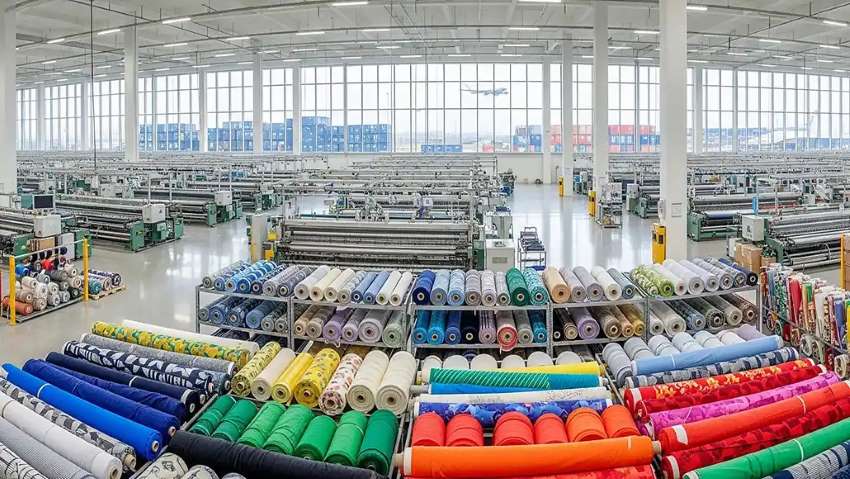
Global fashion and consumer goods supply chains are entering a decisive regulatory transition as Extended Producer Responsibility (EPR) frameworks for textiles move from policy design to enforceable market. According to the ‘Mapping of Global Extended Producer Responsibility (EPR) for Textiles’ report by the Global Fashion Agenda, governments across Europe, the Americas, and Asia are rapidly converting voluntary sustainability commitments into binding statutory obligations. The shift is deciding how apparel companies account for end-of-life garment costs, moving textile waste from a municipal burden to a producer-level financial liability embedded directly into operating margins.
As regulatory frameworks mature, end-of-life management is no longer treated as an external environmental issue but as a core cost variable, one that directly influences pricing strategy, procurement models, and product design decisions. At the centre of this is the growing role of Global Fashion Agenda, which has tracked how jurisdictions are synchronising enforcement timelines while diverging in implementation mechanics.
Compliance a balance sheet variable, not a CSR exercise
Commercial and municipal data trends indicate that post-consumer textile volumes are rising steadily, placing mounting pressure on waste collection systems. Under emerging EPR regimes, this pressure is being structurally redirected back to producers through mandatory fees, recycling obligations, and traceability requirements. Rather than relying on voluntary corporate sustainability programs, regulators are now implementing enforceable cost-transfer mechanisms. These frameworks are designed to shift financial responsibility for collection, sorting, and recycling from municipal authorities to brand owners.
This shift effectively converts environmental exposure into a predictable production cost. For retailers, this means environmental compliance is no longer discretionary or reputational it is becoming embedded in unit economics. Analysts say companies failing to internalize these liabilities into product pricing models risk sustained margin compression, particularly as environmental levies expand across key consumer markets.
Fragmented regional rulebooks redefine supply chain
The global regulatory environment is not integrating into a single model. Instead, it is fragmenting into regional enforcement systems that differ significantly in scope and operational requirements. Europe is increasing mandatory infrastructure investments in automated textile sorting and digital traceability systems. The Americas are prioritizing collection efficiency metrics and minimum recycled content thresholds, placing pressure on upstream sourcing decisions. In Asia, policy frameworks are aligning industrial production quotas with recycling and waste-processing integration targets.
This difference is creating a multi-layer compliance environment that complicates inventory planning and cross-border distribution. Apparel brands operating global supply chains must now reconcile multiple regulatory definitions of compliance for the same product category. The result is a growing requirement for digital product identification systems enabling item-level tracking across production, retail, and post-consumer stages. Without such systems, firms face escalating audit risk and potential penalties tied to inaccurate reporting of material composition and recovery rates.
From linear production to circular cost engineering
The operational implications of EPR enforcement are forcing a redesign of core supply chain logic. Traditional linear models based on production, consumption, and disposal are being replaced by circular system that integrate recovery and recycling at the design stage.
|
Operational pillar |
Legacy model |
EPR-compliant model |
|
Product Engineering |
Virgin material blending for cost efficiency |
Monomaterial design enabling easier recycling |
|
Supply Chain Structure |
Linear flow from production to landfill |
Closed-loop recovery and collection integration |
|
Financial Liability |
End-of-life waste externalized |
Per-unit environmental cost internalized in pricing |
This shift is redefining how value is measured across the apparel lifecycle. Product design teams are prioritising recyclability over aesthetic or short-term cost optimisation, while procurement divisions are reassessing supplier contracts based on circular compatibility. Financially, environmental obligations are moving from off-balance-sheet externalities to direct cost inputs, reshaping profitability models across mid- and large-scale fashion enterprises.
Recycling infrastructure gap emerges a core issue
Despite growing regulatory momentum, the supporting infrastructure for textile recycling remains underdeveloped. Chemical recycling systems for blended fibres remain capital intensive and unevenly distributed, limiting scalability. This mismatch between regulatory ambition and industrial capacity is creating a bottleneck in compliance execution. Brands are responding by redesigning materials to reduce complexity in downstream processing, particularly by limiting blended synthetics and increasing mono-fibre usage.
At the same time, strategic partnerships between apparel companies and waste management operators are emerging as a mechanism to secure long-term access to sorting and recycling capacity. These joint ventures are being structured to lock in processing volumes ahead of anticipated surges in compliance-driven demand.
Market implication
The shift from voluntary sustainability frameworks to enforceable EPR systems is a structural one for retail economics rather than a compliance adjustment. As one industry briefing notes, companies that fail to integrate garment recovery costs into fixed production assumptions risk rapid erosion of market valuation within a short operational cycle. The defining challenge is not regulatory interpretation but capital allocation specifically, how brands finance redesign, infrastructure upgrades, and reverse logistics systems simultaneously.
Circularity is therefore no longer a design philosophy. It is becoming a capital-intensive operational requirement embedded in pricing, sourcing, and logistics strategy. The outcome is a global retail landscape where environmental regulation functions as a primary determinant of competitive positioning, reshaping both cost structures and supply chain geography over the next investment cycle.
Luxury’s new power axis, US dominance, China reset, Gulf surge
As the post-China luxury order takes shape, the US is emerging as the industry’s most dependable growth engine, while Japan, the Gulf, and India rise as the next decisive demand corridors. The global luxury industry is entering a decisive new chapter, one defined less by tourist-led splurges in Paris and Milan and more by domestic wealth concentration, currency-led arbitrage, and a sharper pursuit of value. The most striking signal of this reset lies in the spending table itself: the US now commands £80 billion in annual luxury spending, dwarfing China’s £33 billion and reaffirming its role as the sector’s primary profit pool. This realignment mirrors the broader “luxury recalibration” flagged by McKinsey for 2026, where brands are pivoting away from price-led expansion and back toward creativity, service, and craftsmanship.
The new centre of gravity
The country-wise spending data reveals more than simple market size; it maps the redistribution of global luxury confidence. The US lead at £80 billion is not merely a function of affluent demographics but of high-net-worth resilience and a renewed retail footprint strategy, with luxury retail square footage in the market having expanded sharply in 2025 as maisons doubled down on local demand. The table’s US row therefore reflects a deeper strategic truth: luxury’s most reliable customers are now buying closer to home, supported by equity market wealth effects, digital asset gains, and stronger clienteling ecosystems.
Table: Countrywise annual luxury spending
|
Country/Region |
Annual spending (£ bn) |
Market dynamics (2025-26) |
|
US |
80 |
High-net-worth resilience; growth in retail square footage. |
|
China |
33 |
Normalization phase; shift toward "social retail" models. |
|
Japan |
24 |
Inbound tourism surge; favorable FX driving "luxury arbitrage." |
|
France |
20 |
Strong local Tier-1 demand; Paris remains a global hub. |
|
UK |
16 |
Constraints due to lack of tax-free shopping for tourists. |
|
UAE |
10 |
Highest net inflow of HNWIs; permanent luxury residency hub. |
China’s £33 billion, by contrast, captures a market in shift. While still the world’s second-largest luxury consumer, the table’s normalisation phase descriptor is critical. Bain’s 2026 China luxury outlook suggests that after two years of decline, recovery remains fragile and segment-specific, with consumers increasingly rewarding brands that deliver true value through design relevance, cultural resonance, and tighter pricing logic. Fashion and leather goods remain under pressure, validating the narrative shift from conspicuous consumption to selective acquisition.
Japan’s £24 billion position is perhaps the table’s most fascinating data point. Tokyo’s resurgence is less about domestic demand alone and more about tourism-led luxury arbitrage, where exchange-rate advantages have converted the country into Asia’s most attractive premium shopping destination. In effect, Japan is monetising the very repatriation trend Europe is losing.
Europe’s tourist premium begins to fade
France £20 billion and UK’s £16 billion, point to a widening difference inside Europe. France remains insulated by Paris’s enduring Tier-I local and international prestige, preserving its role as the symbolic capital of luxury. Yet even here, the dependence on tourism is being challenged by changing travel flows and higher domestic shopping conversion in origin markets.
The UK’s softer position, constrained by the absence of tax-free shopping incentives, underlines how policy now directly shapes luxury demand geography. In a market where tourist wallets are increasingly important, fiscal frictions can quickly redirect spend to Paris, Milan, Dubai, or Tokyo.
Dubai’s wealth magnet and the rise of the new guard
The UAE’s £10 billion market size may appear modest relative to the US, but strategically it punches far above its weight. The reference to the world’s highest HNWI inflow is central to understanding why Dubai and Abu Dhabi have evolved from travel retail nodes into permanent luxury consumption ecosystems.
This matters because residency-led wealth migration creates stickier demand than airport or holiday retail. Luxury boutiques, branded residences, fine jewellery, bespoke tailoring, and hospitality-led retail are converging into a single consumption universe. The Gulf is no longer an adjunct to Europe’s luxury map; it is increasingly a self-sustaining capital of ultra-premium spending.
South Korea’s £13 billion and the identification of India and Southeast Asia as the next frontier reinforce the broadening of luxury’s geographic base. Here, the growth is being led not just by wealth creation but by cultural export power, aspirational premiumisation, and digitally native luxury discovery.
The aspirational consumer drunch
Yet beneath the top-line spending numbers lies a more fragile undercurrent. The industry’s recent dependence on aggressive price hikes has materially shrunk the aspirational base. Bain estimates the global luxury customer pool fell from roughly 400 million in 2022 to 340 million by 2025, a decline that has forced brands to reassess the economics of exclusivity.
This is where the comparison to Adidas’ assortment simplification becomes relevant. Luxury groups such as Kering and LVMH are increasingly prioritising SKU discipline, stock rationalisation, and hero-product storytelling over indiscriminate seasonal churn. The operational objective is clear: reduce capital tied up in slower-moving inventory while restoring emotional heat around timeless icons.
The Burberry Shenzhen-style social retail model offers an important blueprint in this context: blending immersive digital engagement with physical craftsmanship to rebuild relevance among younger Chinese luxury consumers.
Why jewellery is winning the category war
The category split embedded in the broader market narrative is especially revealing. Watches and jewellery, with a 27 per cent market share, have decisively outperformed soft luxury categories, supported by their growing perception as long-term stores of value. McKinsey’s 2026 outlook similarly identifies jewellery as the fastest-growing fashion and luxury category by unit sales, powered by self-gifting and investment logic.
Leather goods and footwear, by comparison, are facing visible price resistance. Consumers are becoming far less tolerant of inflationary price ladders that are not matched by craftsmanship or innovation upgrades. This difference is pushing brands to rethink assortments, margin mix, and replenishment cycles.
The backend becomes the battleground
What the spending table does not explicitly show, but the operational data increasingly confirms is that the next phase of luxury competition will be won in the backend. AI-led demand forecasting, supply chain visibility, and compliance with anti-destruction sustainability laws in Europe and California are becoming as important as creative direction.
In 2026, the sector’s winners are likely to be those that combine creative scarcity with data precision. The talent war is therefore shifting beyond ateliers and design studios toward analytics, retail tech, and intelligent merchandising.
At €1.44 trillion in total ecosystem value, luxury remains one of global retail’s most margin-resilient sectors. But its future growth will no longer be powered by broad-based aspiration alone. Instead, it will depend on how effectively brands align with America’s domestic wealth engine, Asia’s value-conscious rebound, and the Gulf’s residency-led affluence corridors. The era of easy global tourist-led luxury growth is fading. In its place is a more disciplined, regionally polarised, and operationally intelligent industry, one where repatriated spending, not passport traffic, now defines the balance of power.