FW
Pakistan imposes duty on yarn imports
Pakistan has imposed regulatory duty on yarn imports. Yarn traders say the current duty structure of yarn should be maintained and no duty should be levied on imports of yarn. They say that as a result of the regulatory duty yarn manufacturers would increase their prices according to the landed cost of imported yarn and as a result the price of finished textile products would also increase and have a double impact on inflation.
They say yarn manufacturers should not be allowed to capture the market with their low quality and high cost of production despite the huge difference in duty structure.Traders feel that instead of imposing the regulatory duty, efforts should be made to increase effective production capacity.
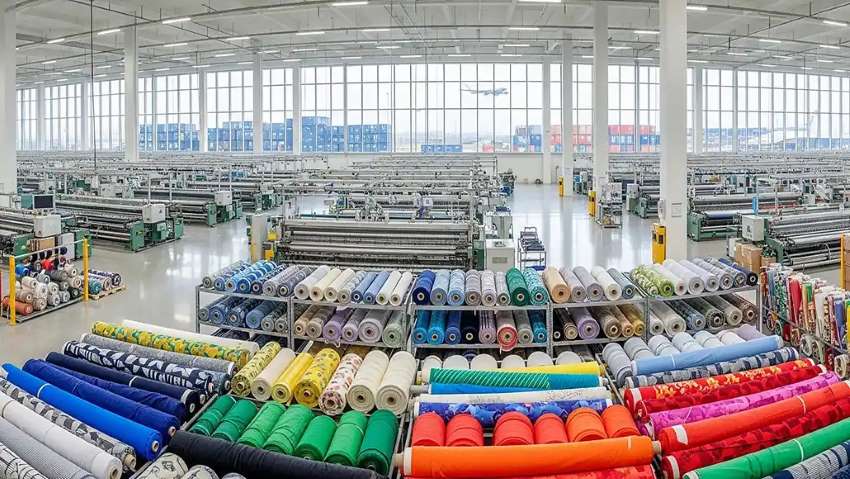
Pakistan is an importer of polyester filament yarn which is the main raw material in textiles because yarn is not a finished product. Cotton has been replaced by yarn and the textile industry in Pakistan is largely dependent on imported yarn.Pakistan’s textile and apparel industry is the backbone of the economy, constituting eight percent of GDP, 40 percent of the industrial labour force and more than 60 percent of the country’s exports while its manufacturing share is 46 percent.
Germany hosts recycling conference
Advanced Recycling Conference (ARC) was held in Germany, November 14 to 15, 2022.
From dissolution to enzymolysis, gasification, pyrolysis, solvolysis, and thermal depolymerisation, ARC introduced the versatile and innovative landscape of advanced recycling solutions that reach way beyond conventional recycling.
Participants from 21 countries discussed future opportunities and celebrated technological success stories. Advanced recycling refers to any process that reaches beyond mechanical recycling, it also includes chemical and specialised physical recycling technologies. Speakers covered topics such as technologies, sustainability, policy and regulation, as well as co-operation, financing, and digitalisation.
Exhibitors presented their innovative services, strategies and technology solutions. During the seven panel discussions participants submitted more than 300 questions and proved the intense need for dialogue and exchange. The active participation emphasised the high interest in advanced recycling solutions and the need for multi-perspective discussion. Presentations and speakers emphasized the importance of collaboration, partnerships, and fusions. While ambitious recycling targets are an important driver for investment and development, the current political framework is still lacking relevant details, especially with regard to chemical and other advanced recycling technologies. Technological pioneers are currently exploring and implementing ways to actively shape the path towards a truly circular economy, by developing technologies to recycle a wide array of waste into high-value chemicals.
FTA with Australia will help Indian exporters
The free trade agreement with Australia will help boost India’s garment exports.
The duty-free access for the sector to Australia under the trade pact will bring Indian exporters at par with global competitors and make local products competitive.This will also provide a good opportunity for Australian companies to embrace the China plus one policy.
Australian companies are eagerly waiting to forge stronger ties and source garment and textiles products from India and this deal will be a shot in the arm for them.Australia has traditionally been a major trading partner for the Indian garment industry with Indian exports occupying a share of about four per cent of total Australian garment imports.The zero-duty deal with Australia will help keep Indian factories fully utilised during its lean period with orders for spring and summer products that Indian players are best in. The free trade agreement would open huge business opportunities for Australian clothing brands to source from India considering the strengths of the domestic garment industry in terms of variety of raw material availability.
India offers the world a complete value chain solution from farm to fashion and has a competitive edge by shortened lead times to reach buyers. India is one of the largest producers of cotton, silk and jute, technical textiles and viscose and produces all types of synthetic fibers, polyester, nylon and acrylic.
Indonesian used clothes imports up 607 per cent
Indonesia’s import value of used clothes skyrocketed 607 per cent year on year from January 2022 to September 2022.
The trend of thrifting or buying used clothes at low prices has mushroomed in Indonesia in recent years. The large import value of used clothes even beats the import value of knitted and non-knitted clothing and accessories.
However, imports of used clothing products are threatening the domestic textile industry. Tens of thousands of workers in the domestic textile industry have been retrenched. In the country’s textile industry there has been a decline in the workforce from August 2021 of 1.13 million people to 1.08 million people in August 2022. This means that around 50,000 workers have lost their jobs. The number is likely to increase, given the news that a wave of layoffs in the textile industry began to spread in September 2022.
The global crisis as a result of the impact of the Russian-Ukrainian war is also being felt by the textile industry in Indonesia.Indonesia’s textile exports have dropped dramatically after the Russia-Ukraine war. The loss of this export market has made textile companies in Indonesia overstock. Because, on the other hand, the domestic market is not available since it is flooded with imported products. So this condition causes domestic textile products to go nowhere and the impact of which has been that textile companies in Indonesia are experience overstock. This has also caused textile companies to take policies to lay off their employees.
Abercrombie posts surprise quarterly profit
Resilient demand has led to a surprise quarterly profit for Abercrombie & Fitch. So the American apparel retailer is optimistic about the holiday season.
The company’s shares that lost nearly half of their value this year were up about 19 per cent after the company also reported third-quarter sales above Wall Street estimates, defying inflation’s impact on non-essential spending. So the company expects the fourth quarter to mirror more pre-pandemic holiday.
Abercrombie & Fitch’s attempt to revamp its inventory to get rid of casual and athleisure apparel that have fallen out of fashion and bring in new styles have attracted wealthier shoppers who remain unperturbed by decades-high inflation. Abercrombie expects fourth quarter net sales to fall about two per cent to four per cent in fiscal 2022, compared with analysts’ average estimate of a 6.3 per cent drop.
Abercrombie & Fitch has invested in loyalty programs and developed its direct-to-consumer and omnichannel capabilities. All of these steps have contributed to an improved top and bottomline. The company undertook a massive rebranding initiative in 2014, moving away from the reputation it had built over the past decade. The company’s store count has been reduced; stores now have a smaller footprint with larger fitting rooms, and are integrated with technology.
Fifa tees come from India’s Tirupur
Tirupur has shipped T-shirts, tracksuits, and caps to Qatar for the Fifa World Cup.
Some 17 garment consignments have been dispatched to Doha from Kerala. This export has helped Tirupur’s garment exporters and brought them some cheer.
Tirupur’s apparel exports fell 21 per cent in October 2022 from October 2021. Of this, knitwear exports, which Tirupur is known for, fell almost 40 per cent. And this was the third straight month knitwear exports contracted. Average capacity utilisation at garment exporting units in Tirupur is 30 per cent now. The US, EU and the UK account for 85 per cent of shipments from Tirupur. With high inflation in these economies, clothing is not a priority for consumers now. Further, with buyers saddled with huge stocks, they are postponing delivery. This has resulted in stocks piling up at the producers’ end.
Tirupur in Tamil Nadu started out as a knitwear cluster but has since completely changed into the nation’s center for worldwide textile manufacture.By becoming a truly sustainable global apparel-making center, Tirupur has created a precedent. Currently, India's knitwear cluster has undergone a complete transformation into a major global center for the production of garments.For the last ten years, the cluster has been strictly pursuing the ZLD model and along the way has also taken up multiple projects aimed at reducing its carbon footprint significantly.
Indian garment exports set to cross 30 billion dollars: CareEdge Ratings
India’s readymade garment exports are expected to cross 30 billion dollars by 2027. So says CareEdge Ratings.
Trade agreements with key nations and the declining share of China in the readymade garment market are likely to benefit India as its exports are expected to grow at a compound annual growth rate of 13 per cent.
Having adequate raw material and a large labour workforce, India is well poised to grab the opportunity in the global readymade garment market. India has a very good presence across the cotton textile value chain from fiber to fabric, while it has a limited presence in manmade fiber, which is expected to get a boost by the expected free trade agreement with the UK and the PLI scheme.
Further, having a presence across the entirevalue chain reduces transportation costs and lead time, thereby providing a cost effective solution to customers.
So by 2027 India can have a 4.9 per cent share in world garment exports as against the current share of around three per cent.India’s share in global garment exports has remained sluggish from 2017 to 2021. Countries such as Bangladesh and Vietnam have captured a large part of China’s declining share in global garment exports.
ICAC to have virtual meeting
ICAC will have a virtual meeting on November 29 to December 1, 2022.
The theme will be regenerative agriculture. Because the ICAC is of the opinion that research is the lifeblood of the cotton industry’s development, a session at every plenary meeting is dedicated to a technical topic.
For the upcoming plenary meeting, that topic is how regenerative agriculture can contribute to a sustainable cotton industry. There will be presentations on soil organic carbon and soil health and improving cotton’s sustainability in the tropics. After the presentations are complete, there will be a discussion regarding the topic of the 2023 technical seminar session.
Formed in 1939, the International Cotton Advisory Committee (ICAC) is an association of cotton producing, consuming and trading countries. It acts as a catalyst for change by helping member countries maintain a healthy world cotton economy, provides transparency to the world cotton market by serving as a clearinghouse for technical information on cotton production and serves as a forum for discussing cotton issues of international significance.
In addition, members can take advantage of the ICAC’s global network of cotton researchers, whose expertise covers the supply chain from farm to textile manufacturing, and have free access to its cutting-edge technologies like the voice-based app and virtual technology cotton training program.
Nigerian textiles need attention
The textile industry in Nigeria is in a bad state. Smuggling is a major problem. Textile workers face job losses and the industry is unable to operate at optimal capacity. There is a gap between official policy pronouncements and implementation.
The Cotton, Textile and Garment (CTG) fund set up in 2008 hasn’t had much effect. While some of the policies such as the ban on textile imports between 2003 and 2007, the introduction of the Export Expansion Grant (EEG), and the textile and cotton intervention funds did bring succour to the industry there has been a reversal of policies by successive governments rather than strengthening and sustaining the policy measures.Money has been wasted on bailing out power companies.
Unless clear pathways for industrialization have been established the country will continue to witness a high level of unemployment and restiveness. Employment generation and employee retention, as well as poverty eradication, largely depend on the amount of value addition through industrialisation and the degree of diversification of the economy. The textile industry remains the key driver of sustainable jobs and development for most national economies of developing nations like Nigeria. Tax waivers for textile-based industries can encourage investment and encourage fair competition.
Pure London to showcase elegant collections
Pure London will be held in the UK, February 12 to 14, 2023.
This is the UK’s leading fashion buying event and will reveal an inspirational line-up of brands and designers. Premium Womenswear will showcase elegant and high-end collections.Purely Sustainable will present ethical and sustainable brands who are leading the industry in this arena. British brand Fika is a slow-process fashion range blending sustainability, community and consciousness.
The collection is designed to feel amazing and empower women so they can enjoy the good things in life.A dedicated space for all things intimate, Pure Body will be home to chic athleisure collections, lingerie, swimwear, hosiery and nightwear from vibrant international labels.
From functional everyday styles to delicate luxury and high-performance sportswear, Body will cover it all.Advocating the power of personal transformation through yoga on and off the mat, Karai Yoga,a super-luxe premium yoga brand,will offer luxury contemporary yoga wear for yogis or aspiring yogis looking for a distinct and unique image that stands out with distinctively magnificent high shine and dazzling vibrant colours.
Gen-Z is the destination for fun, trend-led and ready-to-order fashion and Novaencapsulates this perfectly. A mix of innovative and wearable designs, Nova is a one-stop-shop with a distinctive style.