FW
Bharat Tex 2024 to focus on forging a sustainable future and robust supply chains
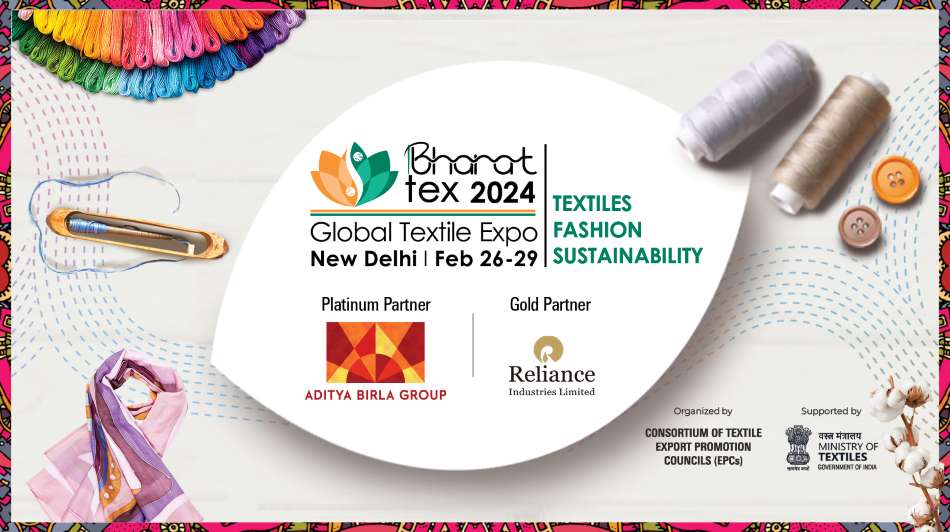
Scheduled from February 26-29, 2024, in New Delhi, Bharat Tex 2024 is poised to be a global textile mega event with a keen focus on sustainability and building resilient supply chains. This four-day gathering is being organised by 11 Textile Export Promotion Councils, in conjunction with Ministry of Textiles.
Bharat Tex 2024 aims to comprehensively cover the entire textile value chain, offering a diverse array of activities including exhibitions, knowledge sessions, thematic discussions, Government-to-Government (G2G) meetings, Business-to-Business (B2B) networks, Memoranda of Understanding (MoU) signings, product launches, thematic and interactive pavilions, and various other engaging events.
Expected to draw a distinguished audience, the event is looking to attract policymakers, global CEOs, and more than 3,500 exhibitors from across the globe. Additionally, it will host 3,000 overseas buyers and attract the attention of over 40,000 domestic buyers.
Bharat Tex 2024 is set to feature dedicated pavilions highlighting Sustainability and Recycling, along with thematic discussions centered on resilient global supply chains and digitization. Attendees can explore interactive fabric testing zones, witness product demonstrations, and partake in masterclasses conducted by craftspeople boasting a rich heritage spanning three generations.
Tailored to captivate top-level policymakers, business CEOs, textile visionaries, international networks, designers, and master craftspeople, Bharat Tex 2024 promises exclusive, invitation-only discussions with policymakers and offers unique partnership opportunities with global businesses. The event aims to facilitate meaningful engagements, enabling businesses and institutions to explore sourcing opportunities in cutting-edge areas such as sustainable supply chains and evolving global manufacturing models.
Spanning 2,00,000 sq. m area, the exhibition will showcase a diverse range of products, including apparel, home furnishings, floor coverings, fibers, yarns, threads, fabrics, carpets, silk, textiles-based handicrafts, technical textiles, and more. Bharat Tex 2024 is poised to be a dynamic platform where innovation, sustainability, and tradition converge in the global textile landscape.
Sustainability issues wear out global denim segment
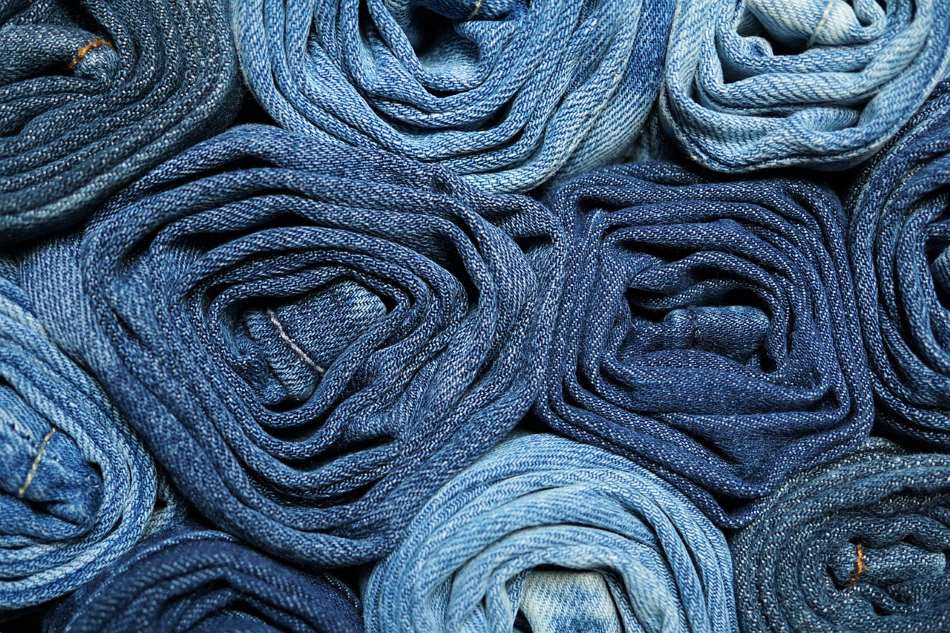
After the crazy times of Covid, the way we see denim is changing. Now, everyone's into being eco-friendly and thinking more about the planet. The fashion world, dealing with money ups and downs and global issues, isn't growing as fast. Big clothing companies had big plans for denim, but now it's not the superstar anymore; it's more about keeping things steady.
Even fancy brands are all about going green. Making denim, it turns out, isn't great for the environment. Levi Strauss spilled the beans on making their famous 501 jeans – it takes a whopping 3,000 liters of water and pumps out 20 kg of carbon dioxide and other gases before it even hits the store. Growing the cotton needed for jeans uses lots of pesticides and fertilizers, which aren't good for people or the planet. And forget natural indigo dye – now it's all synthetic, with nasty stuff like formaldehyde and cyanide.
In some poorer countries where they make jeans, they let the leftover dye go into rivers and seas. And making cool-looking jeans involves more chemicals like sandblasting, stonewashing, and acid-washing. It's a real mess for the environment. Indeed, the denim world needs to rethink things to keep up with the push for a more eco-friendly future.
Slowdown in global market growth
As per the ‘Global Strategic Business Report on Denim Jeans’ published by GlobeNewswire, global denim jeans market, valued at approximately $70.1 million last year, is projected to touch about $114.6 million by 2030. This represents a 6.3 per cent compound annual growth rate (CAGR) during the 2022-2030 forecast period. However, the growth is facing obstacles due to sustainability concerns, disruptions in global supply and distribution chains, and consumers tightening their purse strings.
In 2022, the denim jeans market in the US was estimated at $20 million, a front-runner in this sector. China, bouncing back strongly in post-Covid as the world's second-largest economy, is expected to reach a market size of $25.9 million by 2030, at an impressive 8.9 per cent CAGR over the forecast period. Other countries contributing significantly to denim market sales include Japan, growing at 3.4 per cent, and Canada, at 5.1 per cent. Within Europe, Germany is anticipated to grow at 3.9 per cent CAGR. Despite these positive projections, challenges such as sustainability issues and supply chain disruptions are influencing the trajectory of the global denim market.
Trade shows boost sustainably awareness
However, even in this scenario, denim trade shows are still happening worldwide, although many in the industry are unsure about the future of this market. The Denim Premiere Vision Trade Show, a major event in Milan held in November, drew approximately 2,322 attendees – a 15 per cent increase from 2022. And despite the turnout, some exhibitors reported a dip in sales, with an overall decrease of around 20 per cent in 2023.
The current fashion scene showcased a comeback of vintage and worn-in styles, featuring loose-cut full cotton designs rather than the previously popular skinny jeans. Stretch denim seems to be taking a backseat.
A standout player in sustainability, Milan-based Pure Denim, a leading luxury denim fabric developer known for innovation, shone the spotlight on its exclusive Smart Indigo dye technology. This process involves an electrochemical application followed by a protective coating derived from orange peel and a finishing touch via the EcoSonic ultrasound system and other cutting-edge natural methods.
Indeed, these high-profile trade shows serve as crucial platforms for denim suppliers to connect with premium and luxury brands globally, signaling a renewed interest in this segment. With growing emphasis on eco-friendly manufacturing practices that reduce pollution, water, and energy use, many global denim brands are paving the way for a more sustainable future in the denim industry, promising long-term profitability.
Fashion brands tread cautiously with chemically recycled fabrics

Fashion brands have not fully embraced sustainable practices involving chemical recycling, particularly in adopting innovative methods to transform old textiles into new ones for a more eco-friendly approach. High-tech materials like circulose-containing viscose, utilized in these fabrics, are not readily available and come with a significantly higher cost compared to traditional virgin materials derived from oil, cotton, and wood.
Despite increased awareness of plastic waste crisis in the post-COVID era, there is lack of enthusiasm among fashion brands to prioritize the use of these environmentally friendly materials. This trend raises concerns, with environmentalists predicting by 2050, global plastic waste could accumulate to a staggering 400 million metric tonnes. A recent National Institute of Environmental Health Sciences (NIEHS) report ‘Plastics: The Potential and Possibilities’ underscores India alone contributes an average of 3.4 million metric tonnes of plastic waste annually.
The heightened focus on creating a greener environment in a post pandemic world emphasizes the urgency of addressing the plastic waste issue. However, the slow adoption of sustainable practices in fashion industry remains a significant obstacle to making meaningful progress in combating this environmental crisis.
Apparel segment tackles plastic waste
As plastic waste is predominantly non-biodegradable, it undergoes a slow breakdown into smaller fragments over decades, posing a persistent threat to various animal, plant species. The fashion industry is gradually addressing this issue by moving beyond the production of biodegradable bags and is actively engaged in transforming fashion through the utilization of recycled plastic, although there is still room for improvement.
One promising avenue is recycled polyester, which utilizes fibers derived from plastic bottles. This approach offers a significant opportunity to repurpose plastic waste more efficiently and diminish the carbon footprint of the fashion sector. Circulose, a pulp typically made from recycled cotton, is gaining popularity in the creation of clothing materials, particularly in combination with circulose-containing viscose, producing fashionable garments that offer an excellent fit.
Renewcell AB, a Sweden-based company specializing in circulose production, introduced its first commercial recycling plant in 2022 with a substantial capacity of manufacturing 60,000 metric tons of pulp. Despite this, the company has faced challenges, experiencing low order levels from major retailers such as Zara, H&M, and Levi Strauss. Meanwhile Renewcell reports recent stock value decline of over 80 per cent and an operating loss of $17 million for the first nine months of 2024.
Recycled polyester, circulose gain popularity
Zara and H&M have incorporated circulose-containing viscose into many of their garments, offering a luxurious, silky feel that drapes elegantly, especially suited for fitted tops and dresses. Renewcell's pulp, a key component in circulose, proves versatile, as it can be spun into yarn, woven, or knitted into fabrics. Remarkably, a ton of cellulose can yield three tons of viscose fibers, translating to approximately 20,000 T-shirts.
H&M, as the primary shareholder in Renewcell, is actively committed to increasing the use of recycled materials, aiming for 30 per cent by 2025. Inditex, a major player in the fashion industry with 621,244 tons of clothing sold last year, is similarly focused on incorporating 25 per cent new sustainable fibers by 2030.
However, not all fashion retailers are aligning with sustainability goals. Boohoo, a UK-based online fashion retailer, faced criticism for not upholding its promise of sustainable clothing. Allegations of low pay and poor working conditions in their factories have tarnished the company's efforts to supply items at lower costs.
The adoption of recycled polyester is touted as a greener alternative, consuming significantly less energy than virgin polyester production and resulting in fewer greenhouse gas emissions. Sustainable fabric production not only aids in conserving water resources but also mitigates the adverse effects associated with traditional textile production, which often involves the use of harmful chemicals. As the apparel industry looks ahead, embracing sustainable practices emerges as a crucial pathway to a more environmentally conscious future.
250 brands to attend 60th Salon International de la Lingerie
Around 250 brands are expected to attend the 60th edition of Salon International de la Lingerie.
To be held at the Porle de Versailles in Paris, the trade show will showcase lingerie, corsetry, activewear, loungewear, hosiery and men’s underwear.
Launched in 1963, Salon International de la Lingerie is the world’s biggest lingerie trade show. The event showcases lingerie, corsetry, activewear, loungewear, hosiery, men's underwear, swimwear and wellness products.
In this year’s event, the "Natural Elegance", zone will showcase natural materials in lingerie and loungewear. The zone will also focus on eco-responsibility and certifications. The "Weaving Heritage", zone will showcase Lyon's textile heritage around jacquard and interwoven yarns, will be showcased.
Adopting a new format, the event will hold three shows dedicated to three themes of refinement and embellishments, colors and the season’s ‘it’ products and key pieces.
The event will also host conferences to introduce new product trends, materials and market. It will also organise a discussion on men's underwear, relocation, innovation and partnerships.
Over 35,000 visitors attend 27th TITAS in Taiwan
Held in Taipei, Taiwan, the 27th edition of TITAS — Taipei Innovative Textile Application Show — was attended by 35,000 visitors from 15 countries. The exhibition housed 381 international exhibitors from 11 countries. It focused on the theme, “Sustainability, Functional Applications and Intelligent Manufacturing” with each of its exhibitor booths showcasing sustainable, recyclable and/or circular products, future concepts and/or even demonstrated results.
Held at the Nan-gang Exhibition Centre, TITAS was organised by the Taiwan Textile Federation (TTF) in partnership with Taiwan’s International Trade Administration of the Ministry of Economic Affair. The show generated future business opportunities excess of $47 million during its three days.
Taiwan Textile Research Institute (TTRI) showcased a wide array of textile related research activities at the exhibition developed within the institute primarily for Taiwan’s textile industry.
Companies including Tokyo-based YKK Group, Singtex Industrial Co. Ltd., Taiwan, and TTRI collaborated to develop a functional garment where all components are produced from a singular polymer.
The TITAS Trend Forum displayed over 100 different fabric and component samples to showcase technical developments presented t by Taiwan’s participating exhibitors.
China’s garment export decline 8.8% from Jan-Oct’23
Weak international orders caused China’s garment exports to decline by 8.8 per cent between January and October this year, as per the China Chamber of Commerce for Import and Export of Textiles.
As per the report, in the first 10 months of the year, China exported clothes worth $133.5 billion. It the first six months of the year, its exports sank by 6.1 per cent Y-o-Y. In October, apparel exports dipped 0.7 per cent from the same period in 2019, compared with a surge of 17.6 percent in the first six months from 2019
China’s apparel exports to the Western Countries declined by 15.3 per cent during the first ten months of the year ended October 31, 2023 from $77.3 billion during the same period last year. This accounted for 57.9 per cent of the country’s total clothing exports, a contraction of 4.5 percentage points from the previous year.
China’s garment exports to countries along the Belt and Road route surged by 3.1 per cent Y-o-Y from January to Octobe $38.3 billion. Its exports to Kazakhstan and Tajikistan increased by 70.8 per cent and 45.2 per cent, respectively, while those to Africa soared 15.7 per cent to $7.3 billion.
Kenya targets $2 billion apparel exports to the US, EU by 2030
Richard Cheruiyot, Chairman, Export Processing Zone (EPZA), says, Kenya plans to increase the value of its apparel exports to the US and European Union to $2 billion by 2030. By 2025, the country will increase the value of these exports to $1billion. It currently exports $544 million worth of apparel to the two markets.
To achieve this target, Kenya plans to revive its textile factors to benefit cotton farmers, grow local industries and create jobs for the youth. The US is also providing $55 million for the expansion of the EPZA
The sector also benefits from the use of advanced technologies and development of the Green Energy Park in Olkaria Naivash. The Green Energy Park will provide a stable and renewable energy source for industries within the park, including those involved in apparel production.
EPZA also plans to increase its land under cotton cultivation from the current 40,000 acres 100,000 acres next year, with a target of 300,000 acres in the next 3 years. It is negotiating with a South Korean company to produce synthetic fibers.
ERCA's REVECOL: Pioneering Circular Solutions
ERCA Textile Chemical Solutions, through its revolutionary REVECOL range, continues to redefine sustainability and circularity in the textile industry. Following successful collaborations with industry giants Patagonia and YKK at ITMA last June, REVECOL maintains its commitment to responsible innovation. The company, driven by a 100% Made in Italy, end-to-end certified production process, ingeniously transforms discarded vegetable oils into a comprehensive suite of cutting-edge chemical auxiliaries.
In a bid to communicate the ethos of responsible innovation, REVECOL adopts a visually striking image symbolizing its core values as essential "bricks." This innovative approach not only communicates the brand's commitment but also reflects its unique attributes, including circularity, safety, high performance, and versatility across textile fibers.
The latest additions to the REVECOL range, comprising 18 new-generation chemical auxiliaries, have garnered critical certifications such as GRS, RCS, ZDHC Chemical Gateway, bluesign, and GOTS. Impressively, the bluesign Academy collaborates with REVECOL to establish Product Carbon Footprints (PCF), certifying a significant reduction in CO2 emissions compared to conventional chemistry.
ERCA's relentless pursuit of environmentally friendly processes earns them the prestigious European Responsible Care Award 2023 from Cefic. This accolade acknowledges ERCA TCS' dedication, embodied in the REVECOL range, to climate neutrality, circularity, and the transition to safe and sustainable chemicals. With a focus on sustainability and carbon neutrality, REVECOL emerges as a transformative force, turning environmental challenges into certified, high-performance solutions for textiles across all fiber types.
Spring Fair 2024: Unveiling trends in Home, Gift, and Fashion
Registration has commenced for the highly anticipated Spring Fair 2024, a premier marketplace in the UK encompassing Home, Gift, Fashion, and Everyday categories. The event, scheduled from February 4th to 7th, 2024, at NEC Birmingham, boasts the return of renowned brands such as Suck UK, Oli Olsen, Paladone, and many others.
The Spring Fair, a testament to the resilience and dynamism of the home and gifting industry, promises a magical experience centered around product discovery. Soraya Gadelrab, Event Director, expresses excitement about the return of established brands and emphasizes the show's dedication to showcasing a diverse array of products across 13 sectors.
In the Gift category, SUCK UK LTD is set to unveil its fresh wellness range, 'mello,' while Oli Olsen anticipates introducing 15 new products and presenting brands like Helio Ferretti and The Gift Label Amsterdam.
Home, Living & Décor will feature the comeback of Turner Bianca and Riva Home, offering sought-after brands such as Catherine Lansfield and Hyperion. Meanwhile, Moda welcomes back Rock Luggage and Primehide, showcasing stylish luggage and premium leather goods.
Spring Fair, with its rich history of over 70 years, remains a vital platform for industry players to explore the latest trends and products. The 2024 show promises an efficient layout focused on enhancing the buyer's experience across key destinations - Home, Gift, Moda, and Everyday - and 13 distinct sectors. Attendees can anticipate a vibrant showcase of returning and new brands, embodying the essence of discovery and innovation in retail.
Birla Cellulose tops Canopy's sustainability ranking for Fourth Consecutive Year
Birla Cellulose, a leading Man-Made Cellulosic Fibers (MMCF) producer under Grasim Industries Ltd., has clinched the top spot in Canopy's Hot Button Report 2023. This marks the fourth consecutive year that Birla Cellulose has received the prestigious 'Dark Green Shirt' rating, highlighting its unwavering commitment to preserving ancient and endangered forests and championing circular solutions. The Hot Button Report, issued annually by Canopy, a non-profit environmental organization, serves as a crucial tool for fashion brands in evaluating MMCF suppliers' forest fiber sourcing practices.
H.K. Agarwal, Managing Director of Grasim Industries Ltd., expressed pride in Birla Cellulose's recognition, emphasizing the company's dedication to sustainable wood sourcing, forest conservation, innovation, and transparent operations. The company actively collaborates with global MMCF producers to support the Convention on Biological Diversity's goal of conserving 30% of terrestrial ecosystems by 2030.
Birla Cellulose remains a leader in industry collaboration, working closely with key stakeholders, including Canopy, Fashion for Good, and Circular Fashion Partnership, to drive circularity in the fashion sector. Nicole Rycroft, Executive Director of Canopy, congratulated Aditya Birla for their consistent efforts in removing ancient and endangered forests from the MMCF supply chain.
Canopy's Hot Button Report is recognized as an essential guide for fashion brands seeking responsible sourcing from MMCF producers committed to biodiversity and deforestation mitigation. With over 550 global brands prioritizing partnerships with environmentally conscious producers, this signifies a significant industry shift towards sustainability, reflecting a collective annual revenue of over US $1 trillion. The 'dark green shirt producer' ranking, achieved by Birla Cellulose, underscores the highest adherence to CanopyStyle requirements, emphasizing conservation, transparency, traceability, and next-generation solutions.
Birla Cellulose, as the pulp and fiber business of the Aditya Birla Group, operates 12 environmentally efficient sites globally, employing closed-loop technologies and recycled materials for sustainable MMCF production. The company's fibers, derived from renewable wood, contribute to a lower carbon footprint and resource consumption. Active collaboration with upstream and downstream partners further amplifies Birla Cellulose's positive impact on the sustainability of its value chain.