FW
UK footwear show Moda to be held in August
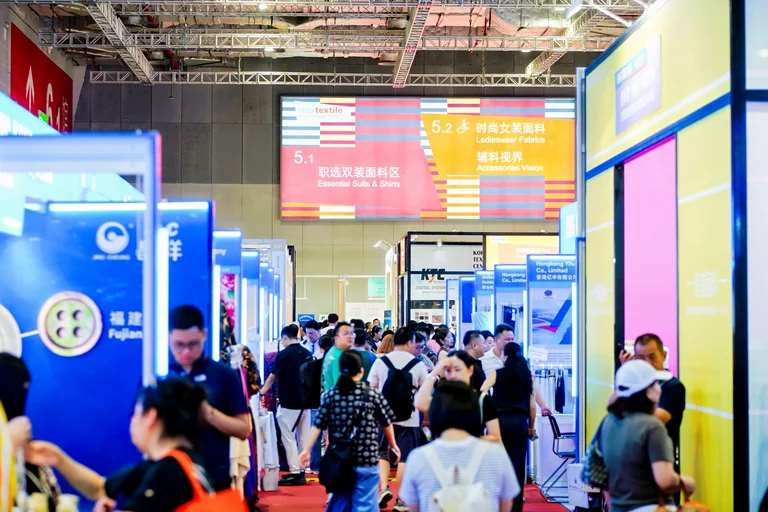
Moda will be held in the UK from August 4 to 6, 2019. This footwear show encompasses women’s, men’s and children’s collections in a curated line-up that attracts footwear buyers from the industry’s biggest names. Moda is also the season’s most important source of information on new ideas in retail, advice on how to solve key challenges of retail today and inspirational stories from leading lights from across the industry. All of this is brought together in its content program running throughout the show, which every season includes a diverse program of seminars and discussion panels and a more intimate series of retail workshops. Visitors will be offered the largest and most diverse footwear collections in the UK.
The heart of UK fashion, Moda is the key meeting place for mainstream fashion, delivering a high quality and cost-effective platform for mid-market brands and ensuring a commercially viable and convenient buying environment for retailers across the UK and Ireland. Bringing together over 1,200 collections under one roof to deliver the complete season’s overview to over 9,000 fashion buyers, the show also brings fashion to life on 16 catwalk shows throughout the three days to inspire buyers and sell brands, alongside a comprehensive retail-focused seminar program, interactive workshops and networking events.
Turkey’s moves up the ranks among denim exporting countries
Turkey has emerged the fourth largest denim exporter in the world. This has been made possible by investments made in the 1980s and subsequent projects. The country has a two per cent share in denim fabric exports and a seven per cent share in denim clothing exports. Proximity to Europe is a geographical advantage. Also since speed is a crucial part of production, industrialists who could adapt to the requested capacity and quality standards have achieved success in production and export without difficulty.
Turkey’s textile industry is looking for greener pastures outside its traditional radar. The country is looking at markets which have a large middle-class consumer base. Turkey once produced clothing for foreign brands. It has now become a country that creates its own brands and directs world denim fashion with its designs and technological products. Global firms are carrying out their production activities in countries like Tunisia, Egypt, Italy, Morocco, and Bangladesh because of the cost advantage. So Turkey’s denim fabric exports to these countries have increased.
China, Bangladesh, Vietnam, Italy, Mexico, the US, Tunisia and Egypt are prominent markets for Turkey’s denim fabric exports. The US, the EU, Japan, Hong Kong, Germany, Spain, the UK, the Netherlands and Denmark are priority target markets for denim clothing.
CFDA reveals the schedule for New York Fashion Week Spring 2020
The Council of Fashion Designers of America (CFDA) has revealed the schedule for the New York Fashion Week Spring 2020. The NYFW will commence on May 31, 2019 with shows from New York City-based label Monse to be held at 3 p.m. and Alexander Wang at 8 p.m. The rest of the schedule, including both New York Fashion Week: Men’s Spring-Summer 2020 and NYFW: June - a combination of Resort and Spring-Summer 2020, will be held from June 2 to June 6.
The 2019 CFDA Fashion Awards will be held on June 3, followed by other noteworthy events including Daisuke Obana’s N.Hoolywood show on June 4 and NYC-based men’s brand Freemans Sporting Club’s show on June 5.
The men’s shows will kick off with New York Men's Day (NYMD) on June 3, where 14 designers will present simultaneously across two time-slots throughout the day. The show will be held at the event’s new location across Hudson Yards.
Launched by the CFDA in 2015, NYFW: Men's has struggled to establish a strong presence on the international fashion calendar, and this season several brands made headlines for switching from New York to Paris to present their men’s collection.
India faces tariff issues with RCEP
India has resisted RCEP demands on tariff reduction. India fears the RCEP demand to eliminate tariffs on 90 per cent of the traded goods will have a disastrous effect on its already struggling micro, medium and small sector.
Apart from being reluctant to slash tariffs for political economy reasons, India has expressed its reservations over inclusion of e-commerce in the RCEP talks. The RCEP draft is opposed to data localisation, while India fears the monopoly power of digital giants.
Perhaps exasperated by the slow progress over the talks, China is in favor of a RCEP that consists of Asean plus Japan, China and South Korea. This move leaves out India, Australia and New Zealand. It would seem that India is in a tight spot but the bright side of this story is that there are a number of Japanese, Korean and Chinese companies who would, in fact, prefer a tariff wall for finished goods. Moreover, China is turning into a high cost producer, and needs lower tariffs and a softer currency in days to come. To that extent, India’s export markets in the Asean may not recede in a hurry. India can keep domestic interests in mind, while being flexible in certain areas. For instance, India can offer to liberalise foreign participation in education, accountancy and legal services.
Hyosung to launch creora ActiFit at Outdoor Retailer Summer Market 2019
The world’s largest spandex manufacturer Hyosung has developed new high-performance creora® ActiFit spandex and this will be launched at the Outdoor Retailer Summer Market in Denver from June 18-20, 2019. The spandex provides long-lasting durability, UV and chlorine resistance, and superior recovery required of cycling, swimming, triathlon and adventure racing apparel where athletes can encounter numerous environmental surroundings. The multi-sport apparel made with creora® ActiFit spandex will give athletes the confidence to focus on their sport and not be bothered by what they are wearing.
At Outdoor Retailer, Hyosung will also feature a collection of multi-functional, sustainable fabrics and apparel under its in-house Fashion Design Center’s 2020 Megatrends ‘Connected, beyond’ presentation – Protect the Body and ECO-nomy.
ECO-nomy ‘connected with responsible thinking’ is a viewpoint where sustainability is a business. Brands will need to evolve to create more circular business models to win consumers over as they become more interested in the transparent process of sustainable materials and design.
High pile fabrics come into athleisure
Athleisure is beginning to expand beyond simple stretch fabrics into more luxurious high-pile fabrics, such as velvet, velveteen and velour. Yoga pants are no longer considered the only athleisure garment. Athletic brands have picked up on the trend to add more velvet and velour yoga pants, track suits and lounge wear to their product lines. High-pile fabrics are defined by a three dimensional texture with very visible pile of fibers on the surface creating a soft, smooth texture. Modern high-pile fabrics also include sweat-wicking and breathability. And now, with the addition of sweat-wicking and breathability, they even have a place in modern consumers’ workout regimens. Unlike the thick and heavy velvets of previous generations, modern velvet is lightweight, stretchy and breathable, all the while maintaining its soft-brushed finish.
High-pile fabrics can be used on both outer and inner layers of clothing. The soft, cozy fabric makes an ideal inner lining to enhance comfort and warmth. While high-pile fabrics can be produced using weaving, warp knitting and weft knitting, weft knitting is the preferred method. As more customers are looking for clothes that are warm, comfortable, and moisture-wicking, the new generation of breathable and lightweight three-layer high-pile is bound to be a welcome addition to the athleisure market.
Everlane partners with Bluesign
Everlane is partnering Bluesign in an effort to move toward more sustainable textile manufacturing practices. This partnership will ensure working with the cleanest materials possible and advance toward reducing their environmental impact. Their aim is to lead the change toward an honest and sustainable supply chain.
Bluesign is a textile production-focused auditing body. Bluesign’s standards were developed in the interest of providing safe consumer products, reducing the impact of manufacturing on people and the environment, and promoting the responsible use of resources. Everlane, launched in 2011, has a revolutionary message about material and supply chain traceability. The organization works with brands and manufacturers to improve operations throughout their supply chains. The brand has mindful of its impact on the environment through the materials and processes it uses.
As a subscriber to the Bluesign system, Everlane’s textile production partners are subject to the group’s independent verification program. Everlane’s Clean Silk collection is being produced by a Bluesign-certified silk manufacturer. All silk produced by Everlane will be dyed and washed with 100 per cent recycled water and 100 per cent renewable energy by 2022. In October 2018, Everlane announced that it would remove all virgin plastic from its supply chain by 2021.
Columbia Sportswear to concentrate on supply chain management
The US government’s latest proposal to levy tariffs on Chinese imports has forced Columbia Sportswear to concentrate on managing its supply chain rather than its sales operations. The levies have also led the company to hold back its distribution projects. The company plans to pass on some of this financial pain to its customers by increasing the prices of its apparels.
The company had been spared in the initial rounds of tariffs. However, earlier this month, the US proposed a 25 per cent tariff on additional $300 billion worth of Chinese imports that included apparels and footwear. The company has also moved some of its distribution projects to other countries in order to take advantage of more stable business regions for the near term.
India: CITI to put forth White Paper on textile and clothing industry
The Confederation of Indian Textile Industry (CITI), the apex industry chamber covering the entire spectrum of the textile and clothing industry for both domestic and export markets, will submit the ‘White Paper’ to the new Union Textile Minister to provide policy support to the textile and industry.
CITI will request the government to provide the much needed policy support to the industry. This will not only achieve the revolutionary initiative of ‘Make in India’ but also make Indian textile and clothing sector a $350 billion industry by 2024-25.
The last five-years have been a period of consolidation, policy disruptions and shaping up of a new India where many structural reforms took place in the Indian economy and specifically in the textile and clothing industry. The industry has gone through a phase of consolidation where exports stagnated, aggressive state policies directed investments and domestic demand was disturbed due to demonetisation, banking restructuring and implementation of Goods and Services Tax (GST).
Bangladesh import of African cotton on the rise
Africa has become the largest source of cotton for Bangladesh. Last year, Bangladesh imported 37.06 per cent of its requirement of the white fiber from East and West African countries. At the same time, 11.35 per cent of the cotton came from the Commonwealth of Independent States, 11.14 per cent from the US, 4.65 per cent from Australia and 9.65 per cent from the rest of the world.
In Africa, there are three cotton zones: East Africa, West Africa, and Central Africa. These are well known for high-quality and long staple length. Bangladesh’s cotton imports will continue to be commensurate with the expansion in spinning. Last year, Bangladesh imported 8.28 million bales of cotton. In dollar terms, the imports are worth three billion dollars. The country produced 1.65 lakh bales of cotton last fiscal year, which is less than three per cent of the country’s annual demand for 10 million bales. The hope is to produce 2.5 lakh bales of cotton by 2021, which will meet nearly seven per cent of the local consumption. Cotton has helped farmers in Bangladesh cultivate land which used to previously stay fallow due to lack of irrigation facilities. Cotton imports are proving to be a major drain on foreign exchange reserves in Bangladesh.